Short-pattern turbine meters for in-plant gas allocation and burner control
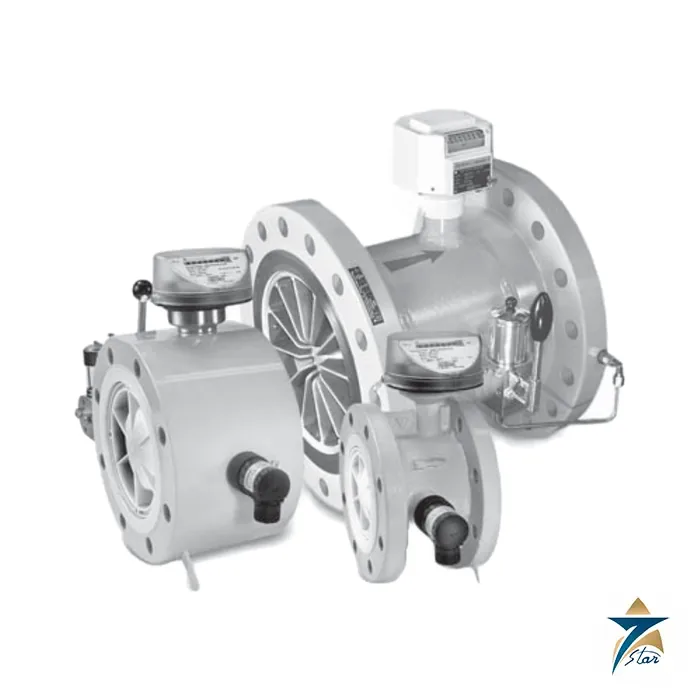
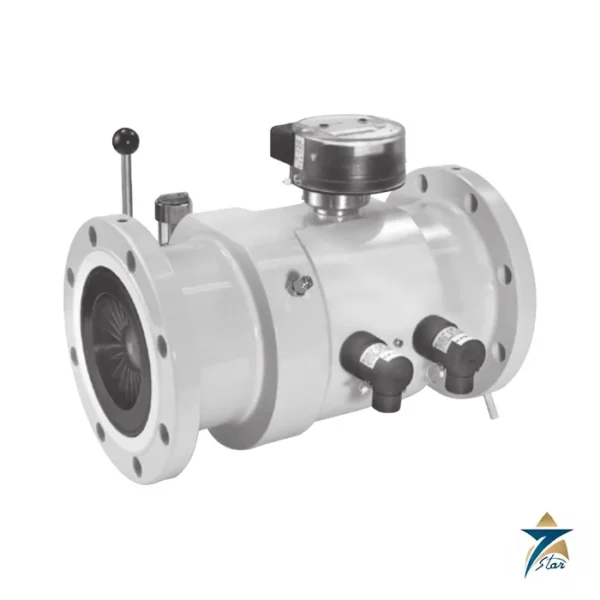
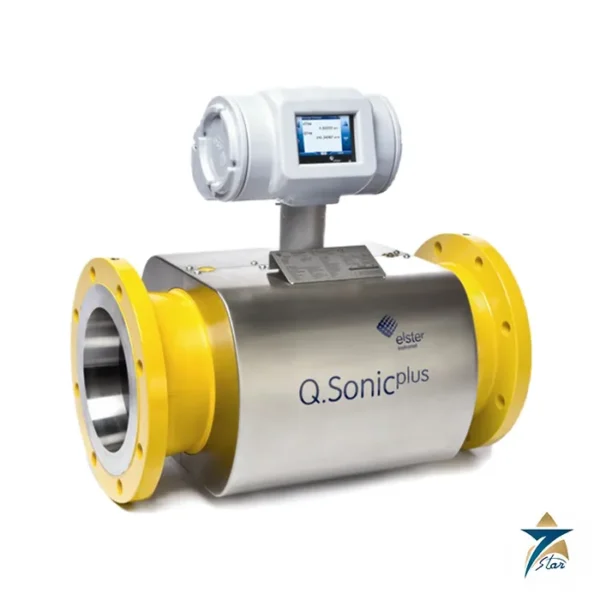
The Elster Quantometer Q/Q75 is a family of short-pattern turbine gas meters from Honeywell Elster for non-fiscal industrial metering. The Q type covers DN50 to DN150 (2 in to 6 in) and the Q75 type covers DN200 to DN600 (8 in to 24 in). Honeywell positions the range for heavier industrial duty: in-plant allocation metering, volume input for controls, and consumption monitoring for burners, boilers and furnaces in heavy industry, petrochemicals, steel, power, minerals and heating.
The gas turns a turbine wheel, the number of revolutions is proportional to the volume that has passed, and the volume is shown on an 8-digit mechanical roller counter. The principle is the same as in the fiscally approved TRZ2 and SM-RI-X meters. Where fiscal approval is needed Honeywell points to those meters or to the RABO rotary meter, and for light industrial duty it recommends the QA and QAe Quantometers instead.
Technical specifications
| Parameter |
Specification |
| Manufacturer |
Elster (Honeywell) |
| Type |
Short-pattern turbine gas meter for non-fiscal applications; Q type DN50-DN150, Q75 type DN200-DN600 |
| Nominal sizes |
DN50 (2 in) to DN600 (24 in) |
| Meter sizes |
G65 to G16000 |
| Flow range |
6 to 25000 m3/h; measuring range up to 1:20 |
| Medium |
Natural gas, air, methane, nitrogen and other non-corrosive gases |
| Body material |
Cast iron or steel |
| Gas temperature |
-10 to +60 C (others on request) |
| Flange connections |
According to EN or ASME |
| Protection |
IP67, suitable for outdoor installation |
| Index |
8-digit mechanical roller counter; S1 index on the Q type, MI-2 index on the Q75; rotatable up to 355 degrees; absolute ENCODER optional |
| LF pulse outputs |
Two reed outputs as standard (IN-S10 with 2.5 m 6-wire cable; IN-S11 and IN-S12 optional), maximum frequency 0.5 Hz at Qmax according to the datasheet text, plus an anti-tampering switch |
| HF pulser (option) |
Type A1R on the Q type, type BI-ISM-Y1 on the Q75; picks up the turbine wheel through a proximity switch |
| Error limits after factory calibration |
+/-1.5% from 0.2 Qmax to Qmax; +/-3.0% from Qmin to 0.2 Qmax |
| Pressure loss |
1.5 to 17 mbar at Qmax with natural gas at 0.8 kg/m3, depending on size (datasheet table) |
| Approvals |
DVGW, ATEX, PED as listed in the datasheet |
| Installation |
3 DN straight pipe upstream and 2 DN downstream in meter size; upstream filter; Q up to DN150 horizontal or vertical, DN200 and above horizontal only |
| Weight |
From 4 kg (DN50 cast iron) up to 1107 kg (DN600 Q75, steel, ANSI 600), depending on size and flange class |
Selected sizes and flow ranges
The datasheet lists every combination of diameter and G size with Qmin, Qmax, pressure loss and pulse values. A selection from the table, with the G sizes and pulse values left to the PDF:
| Diameter |
Type |
Qmin m3/h |
Qmax m3/h |
| DN50 |
Q |
6 |
100 |
| DN80 |
Q |
10 to 20 |
160 to 400 |
| DN100 |
Q |
20 to 32 |
400 to 650 |
| DN150 |
Q |
32 to 80 |
650 to 1600 |
| DN200 |
Q75 |
50 to 130 |
1000 to 2500 |
| DN300 |
Q75 |
130 to 320 |
2500 to 6500 |
| DN600 |
Q75 |
500 to 1300 |
10000 to 25000 |
Each diameter has two or three flow ranges, shown here as the lowest to highest Qmin and Qmax; the full list including DN250, DN400 and DN500 with pressure loss and pulse values is in the attached PDF.
Selecting and installing a Quantometer
Choose the diameter and G size from the real minimum and maximum flow at line conditions, since the Qmin values assume atmospheric pressure and improve at higher pressure. Install a filter upstream if rust or other particles are expected, keep 3 DN of straight inlet pipe and 2 DN of outlet pipe, and agree the flow direction at the order stage because it is marked on the housing. The meter is not fiscally approved, so billing and custody transfer duties belong to the TRZ2, SM-RI-X or RABO.
Commissioning a turbine gas meter on a new line
New pipework almost always contains welding beads, scale and other debris, and a turbine wheel is easily damaged if this material reaches it. Blow down or flush the line before the meter is fitted, or install a spool piece in its place during the first purge, and confirm that the upstream filter element is clean before gas flows through the meter for the first time. Pressurise the line slowly; a sudden rush of gas through an empty section can overspeed the turbine.
Once the meter is running, compare the index reading with another reference over a short period where possible, check that the reed pulse outputs reach the flow computer or PLC with the expected pulse value from the datasheet, and test the anti-tampering switch signal if it is wired into the control system. Record the starting index reading and the meter serial number on the commissioning sheet.
Operating environment in Oman and the GCC
Gas plants, power stations and industrial sites across Oman often place meters outdoors on skids exposed to direct sun. The IP67 protection listed above supports outdoor installation, but the gas temperature limits still apply, so check that the gas reaching the meter stays within the stated range when pipework is heated by the summer sun. Where possible, shade the index and pulser area to make reading easier and to reduce heat on the electrical parts.
Dust and sand around open sites can collect around the index and cable entries, while coastal sites add salt and humidity. Keep cable glands properly tightened, route signal cables away from places where water collects, and protect flange faces and bolting according to the site painting specification.
Maintenance and periodic checks
Follow the lubrication and inspection instructions in the Honeywell operating manual for the specific meter size. Check the differential pressure across the upstream filter at regular intervals and replace or clean the element before it restricts flow. Listen for unusual noise from the meter body, which can point to bearing wear or debris, and compare readings with plant balances to spot drift early. Because the Quantometer is intended for non-fiscal duty, decide with the plant’s metering engineer how often recalibration is needed for the allocation or control task it serves.
Documents and quotation
State the gas, flow range, operating pressure and temperature, nominal size, flange standard, body material, flow direction, whether LF only or LF plus HF pulses are needed, and the hazardous-area zone. The datasheet is dated February 2017.
The attached Honeywell datasheet contains the applications, index and pulse options, error limits, flow-range table and dimensions. Seven Star LLC, an independent supplier in Muscat, quotes the meter after the configuration is known. Related meters are listed under Flowmeters.






Reviews
There are no reviews yet.