Automatic ring and ball softening point testing for bitumen
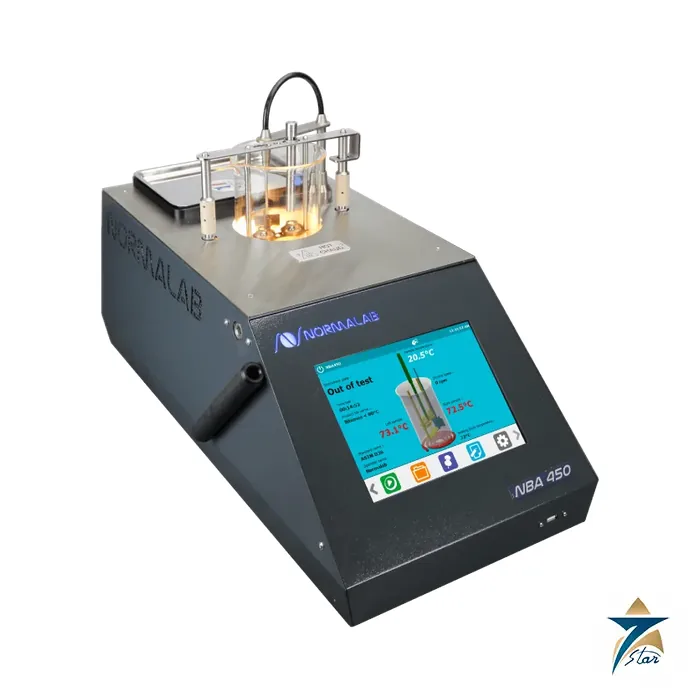
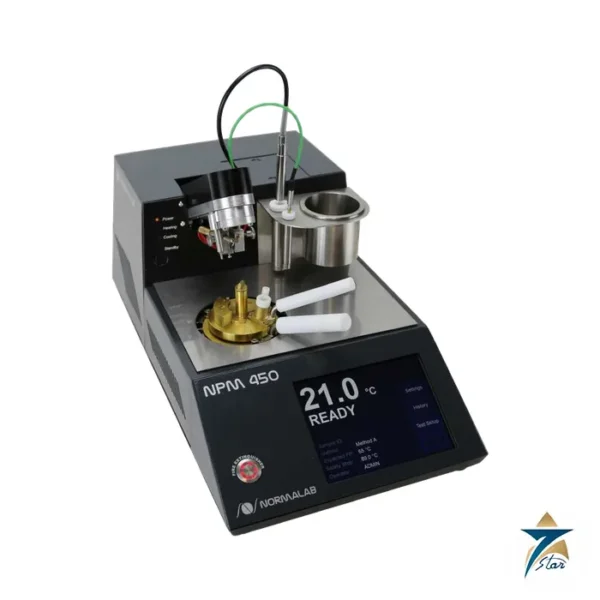
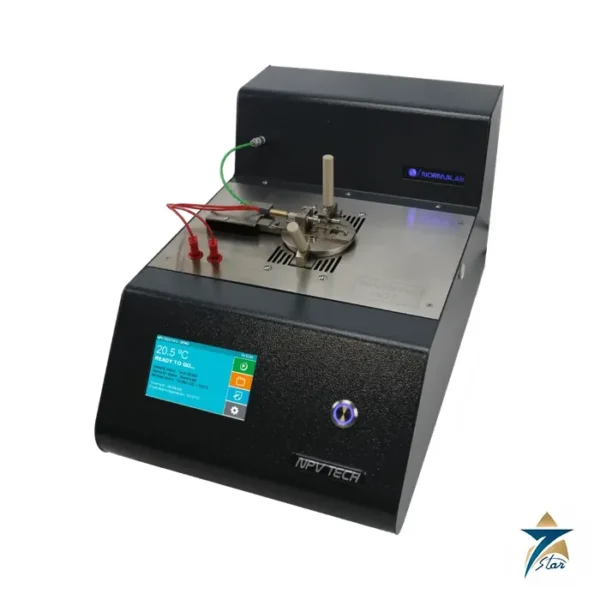
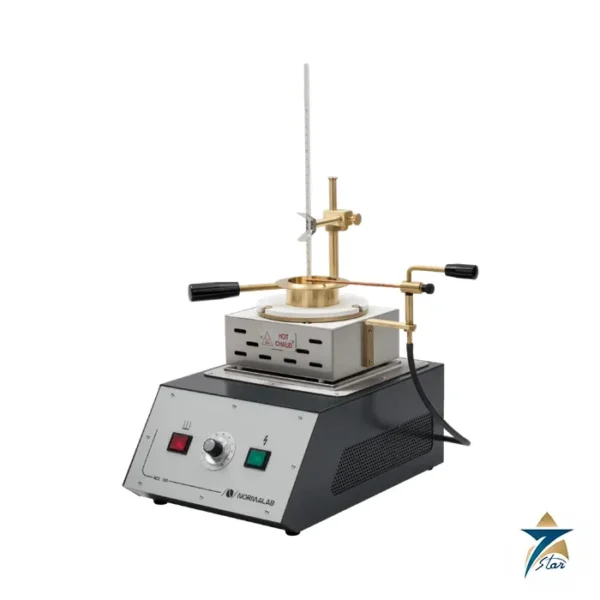
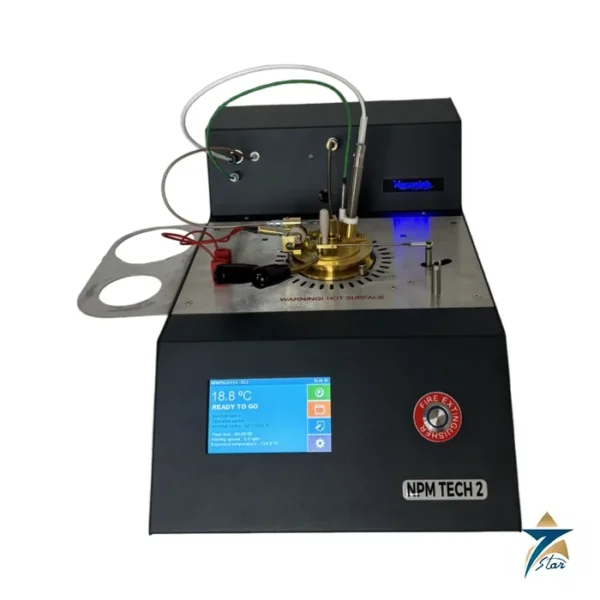
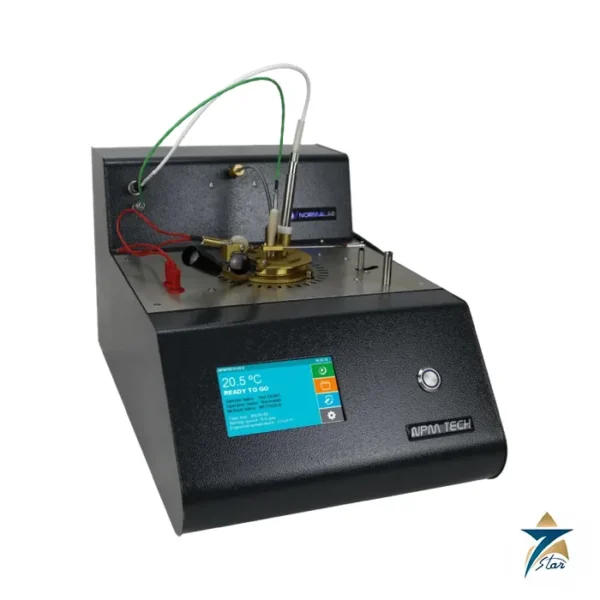
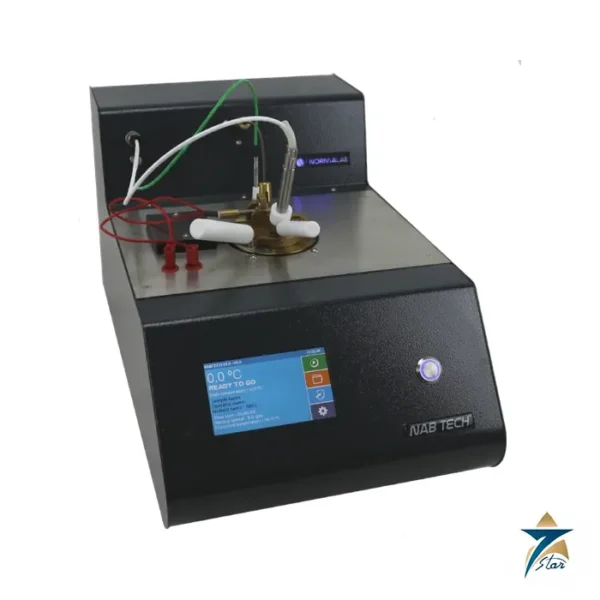
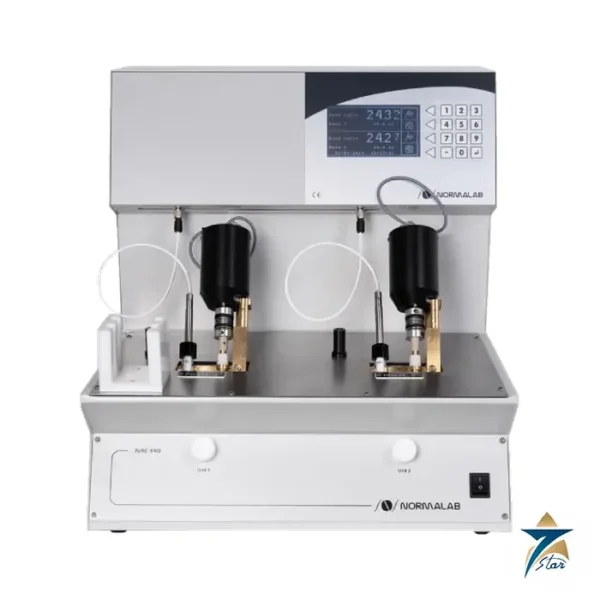
The NBA 450 is a Normalab bench-top softening point tester that runs the ring and ball method automatically. Two shouldered rings filled with sample sit in a holder inside a stirred, heated beaker; steel balls rest on the rings, and as the liquid is heated at a controlled rate the sample softens and sags until the ball carries it down to the bottom plate. Optical cells detect that moment and the NBA 450 records the temperature from a Pt 100 probe, so the result does not depend on the operator watching the beaker.
Normalab lists the instrument against ASTM D36, ASTM E28, IP 58, EN ISO 1427 (also given as NF EN 1427 and ISO 4625), DIN 52011 and AASHTO T53. ASTM D36 covers the softening point of bitumen from 30 to 157 °C with the apparatus immersed in distilled water, silicone or glycerin; ASTM E28 applies the same ring and ball principle to resins and similar materials.
Technical specifications
| Parameter |
Specification |
| Manufacturer / part number |
Normalab (France) / 60700 |
| Test |
Softening point, ring and ball method |
| Standards listed |
ASTM D36, ASTM E28, IP 58, EN ISO 1427, DIN 52011, AASHTO T53 |
| Preset methods |
4: water, glycol, glycerin, silicone oil |
| Temperature range |
Up to 200 °C (C or F display) |
| Temperature measurement |
Pt 100 probe |
| Detection |
Optical cell barrier, automatic |
| Samples per run |
2 simultaneously |
| Stirring |
Adjustable heating rate and stirring speed, up to 250 rpm |
| Cooling |
Fan, quick cool-down at end of test |
| Display |
8.4 inch capacitive colour touch screen |
| Data storage |
320 GB HDD |
| Connectivity |
3 rear USB, 1 front USB, 1 LAN, 1 RS232C |
| Operating temperature |
5 to 30 °C |
| Power supply |
200-250 V AC, 50/60 Hz, 3.3 A |
| Weight |
14.8 kg |
What is delivered and which options exist
The NBA 450 is delivered ready to use with two standardized beakers (P/N 17487), ten shouldered rings (P/N 20765), ten balls (P/N 20766), a holder (P/N 60703), a Pt 100 probe (P/N 40139), a mechanical stirrer (P/N 60702), a magnetic stirrer (P/N 60708), a removal magnetic stick (P/N 20030), a magnetic ball dropper (P/N 60705), two centering guides (P/N 60704) and a molding plate (P/N 60706).
Listed options and accessories are different ring types, ASTM D36 or EN ISO 1427 beakers, an ASTM E28 beaker with anti-condensation treatment, and a printer. A stainless steel tray holds the accessories, the magnetic dropper handles the balls, and the optimized centering system keeps the beaker positioned in the heating block.
Safety and software features include user access levels with passwords, sample overheating protection, audible and visual alarms, automatic shut-off if the probe is missing, a waterproof heater and a solvent-proof screen. Reports are fully settable and export by USB, LIMS, PDF or e-mail; a keyboard, mouse, barcode reader and printer can be connected, and backups and updates run from USB.
Selecting a softening point tester and confirming the order
Choose the NBA 450 when a bitumen or resin laboratory wants operator-independent detection and stored reports for asphalt binder, polymer-modified bitumen or oxidized bitumen testing. Decide first which liquid and which standard the laboratory works to, because the preset method and the beaker type follow from it.
Before ordering, confirm the standard (ASTM D36, E28 or EN ISO 1427), the heating liquid, spare rings and balls, any printer or E28 beaker, and local supply voltage. Normalab’s leaflet and web page list the three overall dimensions in different orders, so ask for the confirmed footprint before planning bench space. See more liquid analytical systems from Seven Star LLC.
Where ring and ball results are used
The softening point is one of the most widely quoted properties of bitumen, and it is often the first figure a road authority, contractor or refinery laboratory checks when a binder arrives. Paving grade bitumen, polymer-modified bitumen and oxidized bitumen are all classified partly by this value, so a reliable ring and ball result feeds directly into acceptance decisions, blending adjustments and dispute resolution between supplier and buyer. Resin producers working to ASTM E28 use the same principle to describe how their material behaves as temperature rises. Because the NBA 450 detects the end point automatically, the laboratory obtains a result that reflects the sample rather than the attention of the person standing at the bench.
Practical points for sample preparation and running tests
Most variation in ring and ball testing comes from what happens before the instrument starts heating. Samples should be heated only as much as needed to pour, filled into the shouldered rings without trapped air, and trimmed flush using the molding plate so the volume in each ring is consistent. The rings then rest in the holder with the balls placed by the magnetic dropper, and the centering guides keep each ball in the correct position over its sample. Choosing the correct preset method matters: the heating liquid determines the temperature window and the beaker type, and running a sample in the wrong liquid gives a result that cannot be compared with the specification.
Running two samples simultaneously is the normal practice, as the method compares the two values before a result is reported. When the pair disagrees, the usual response is to review sample preparation and ring cleanliness rather than to adjust the instrument. Keeping the rings, balls and beakers clean and dry between runs, and keeping the Pt 100 probe correctly seated, supports repeatable readings over a long series of tests.
Laboratory conditions in Oman and the GCC
Bitumen laboratories in Oman and across the GCC often sit at asphalt plants, road project site offices or refinery quality control buildings, where ambient conditions can be harder to control than in a central laboratory. The NBA 450 has a stated operating temperature range, so it should be placed in an air-conditioned room rather than an open site cabin, away from direct sun and dust. A stable bench, a clean supply of the chosen heating liquid and a consistent mains supply within the listed voltage help the instrument hold its controlled heating rate. Where results are shared with consultants or clients, the stored reports and LIMS export make it easier to keep a traceable record for each batch of binder delivered to a project.
Documents and quotation
The Normalab leaflet for the NBA 450 is attached to this page. Send the standard, liquid, number of rings and balls, optional accessories and delivery location, and Seven Star LLC will quote the instrument and any spares; availability and lead time are confirmed before ordering.






Reviews
There are no reviews yet.