Brand:

Kaeser DC 2.0-DC 11.3 Heatless Desiccant Air Dryers

Description

Compact heatless desiccant dryers for -40 °C dew point

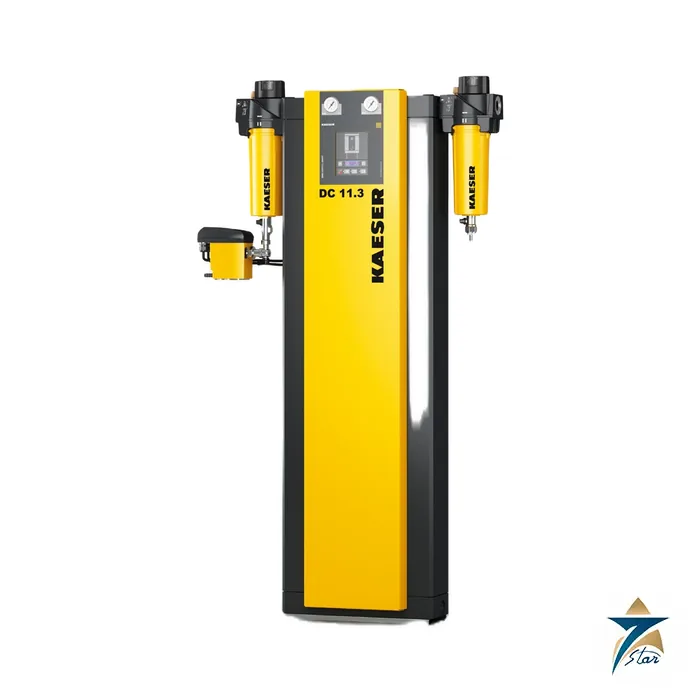
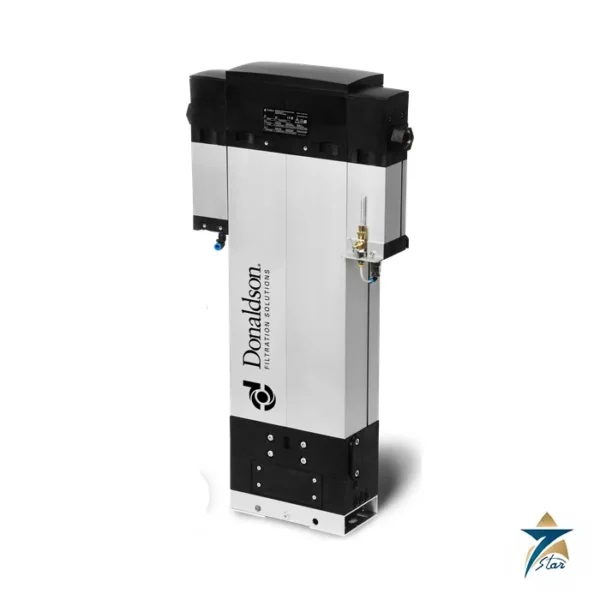
The Kaeser DC 2.0 to DC 11.3 heatless regenerative desiccant dryers treat 0.20 to 1.13 m³/min of compressed air at 4 to 15 bar and are built for small flows that need very low pressure dew points of -40 °C or -70 °C, such as instrument air, laboratory supply and sensitive tooling. Long-lasting aluminium desiccant tubes, maintenance-free shuttle valves and cartridges with pressure-stable, liquid-water-resistant desiccant make up the dryer, and two silencers keep operation quiet. KAESER FILTER units are mounted on the outside to protect the desiccant and the downstream pipework, with flexible connections to the valve block.

Technical specifications

Model Flow rate m3/min Max. weight kg (with filters) Connection W x D x H mm (with ECO-DRAIN)
DC 2.0 0.20 35 G 1/2 340 (627) x 167 x 505 (535)
DC 3.7 0.37 42 G 1/2 340 (627) x 167 x 677 (707)
DC 5.0 0.50 51 G 1/2 340 (627) x 167 x 895 (925)
DC 5.9 0.59 60 G 1/2 340 (627) x 167 x 1112 (1142)
DC 7.6 0.76 70 G 3/4 380 (673) x 187 x 1005 (1035)
DC 11.3 1.13 82 G 3/4 380 (695) x 187 x 1255 (1289)
Parameter Specification
Working pressure 2 to 15 bar (min./max.)
Pressure loss 0.2 bar or less
Ambient temperature 2 to 50 °C
Maximum compressed air inlet temperature 50 °C
Pressure dew point -40 °C or -70 °C, in fixed cycles or with dew point control
Reference conditions ISO 7183 Option A1: 1 bar(a), +20 °C, 0% RH; dew point -40 °C, 7 bar(g), inlet +35 °C, ambient +20 °C
Power supply 95 to 240 V +/-10%, 1 Ph, 50 to 60 Hz
Controller ECO CONTROL SMART with floating contacts and Modbus TCP interface as standard
Maintenance interval Valves and desiccant: 5 years

Correcting flow and saving energy

Flow in the table is for 7 bar(g) and 35 °C inlet. The brochure factor for working pressure rises from 0.40 at 4 bar to 1.67 at 15 bar, and the inlet temperature factor falls from 1.00 at 30 to 35 °C to 0.66 at 50 °C. Its example takes the 0.76 m³/min unit to 0.90 m³/min at 10 bar and 40 °C. Energy can be reduced with pressure dew point control, compressor synchronisation or intermittent operation, and the controller can join a SIGMA AIR MANAGER 4.0 network. Kaeser states that maintenance parts cost more than 20 percent less than for conventional dryers.

Key features of the DC series

  • Heatless pressure swing regeneration: one desiccant chamber dries the compressed air while the other is regenerated with a small share of already dried air, so no heater is needed and the dryer runs from a single-phase supply.
  • Two dew point classes: each model can be set up for a pressure dew point of -40 °C or -70 °C, operated in fixed cycles or with dew point control.
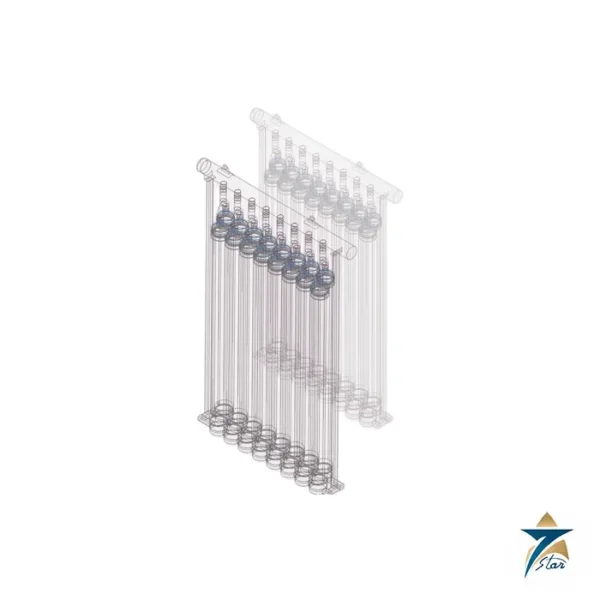
  • Aluminium desiccant tubes: the modular tube design keeps the dryer slim and light, with a footprint depth of only 167 or 187 mm depending on the size.
  • Desiccant cartridges: the desiccant is held in cartridges and is pressure-stable and resistant to liquid water, which simplifies replacement and protects the bed from damage.
  • Shuttle valves: maintenance-free shuttle valves direct the flow between the chambers.
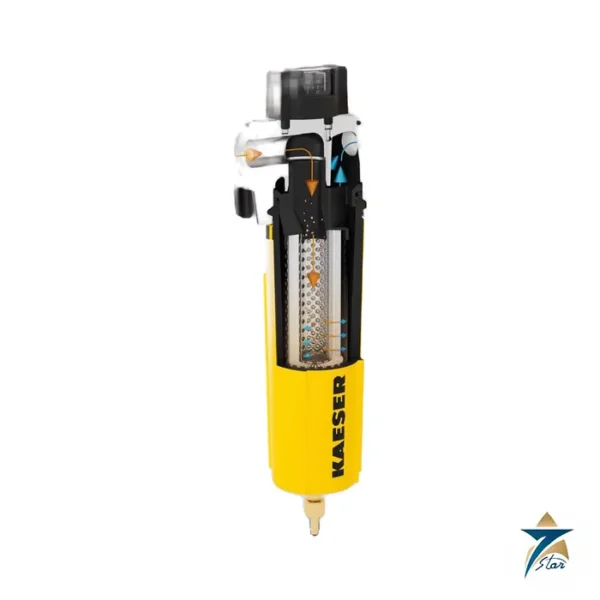
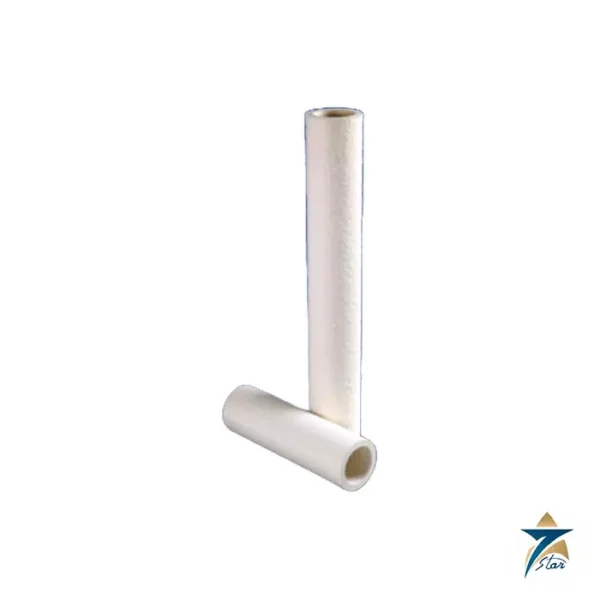
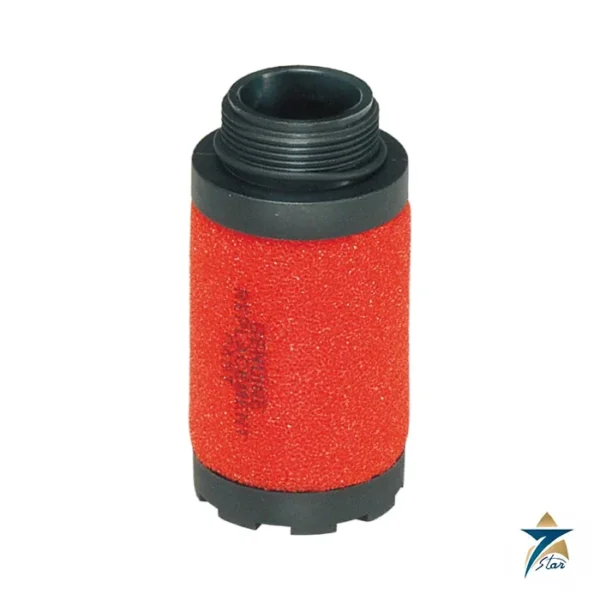
  • External KAESER FILTER units: the prefilter protects the desiccant from oil and particles, and the afterfilter stops desiccant dust from entering the downstream pipework.
  • ECO CONTROL SMART: floating contacts and a Modbus TCP interface come as standard for remote monitoring and integration with a central air management system.

How the model sizes compare

All six models share the same principle and controller; they differ in the number and length of the desiccant tubes, which determines flow capacity, height and weight. The four smaller units (DC 2.0 to DC 5.9) use G 1/2 connections and a 340 mm wide frame, rising in height from 505 mm to 1112 mm. The two larger units (DC 7.6 and DC 11.3) move to G 3/4 connections and a 380 mm frame. Because the units are wall- or frame-mountable and shallow, they are often installed directly beside the machine or analyser they serve rather than in the main compressor room.

Why the correction factors matter

A desiccant dryer is sized on the actual volume of air passing through it. At lower working pressure the same mass of air occupies more volume and carries more moisture per cubic metre, so the dryer capacity drops; at higher inlet temperature the air holds more water vapour, so capacity also drops. Always apply both brochure factors to the nominal flow before choosing a model, and leave a margin for future demand. Under-sizing a heatless dryer leads to dew point breakthrough rather than a simple loss of pressure.

Installation and maintenance practice

  • Install an aftercooler and a condensate separator upstream so that no liquid water or bulk oil reaches the prefilter.
  • Keep the inlet air temperature at or below 50 °C and the ambient between 2 and 50 °C; in plant rooms with poor ventilation, check the actual summer temperature rather than the design value.
  • Fit the dryer with bypass valves so that filter elements can be changed without stopping the consumer.
  • Route the silencer exhaust where the short regeneration blow-off will not disturb personnel or blow dust onto other equipment.
  • Replace filter elements according to the differential pressure indication and plan the valve and desiccant service at the stated five-year interval.
  • Use the dew point control mode wherever possible: when the air demand is below the rated flow, regeneration is extended and purge air consumption falls.

Applications in Oman and GCC conditions

High ambient temperatures in the Gulf region raise compressor discharge and dryer inlet temperatures, while coastal humidity increases the moisture load the dryer has to remove. For this reason the temperature correction factor is often the deciding item when sizing a DC dryer for Oman. Typical uses include instrument air for control valves and analysers in oil and gas and utility plants, dry air for laboratory instruments, purge air for electrical enclosures, and supply air for pneumatic tools or packaging machines where moisture would cause corrosion or product defects. A -70 °C dew point is normally specified only where the downstream process or piping is exposed to very low temperatures or where the application specifically demands it.

What to include in your RFQ

  • Required air flow and how it was measured, plus the minimum and maximum working pressure
  • Maximum inlet air temperature and ambient temperature at the installation point
  • Target pressure dew point (-40 °C or -70 °C) and whether dew point control is wanted
  • Compressor type (oil-lubricated or oil-free) and existing upstream treatment
  • Supply voltage available and whether Modbus TCP integration is required
  • Quantity, spare filter elements and desiccant cartridges needed for the first service

Selecting a DC dryer

These dryers suit single points of use or small instrument-air headers, not main plant air. Give the corrected flow, working pressure, inlet temperature and required dew point, and confirm the upstream filtration and the drain. Seven Star LLC, an independent supplier in Muscat, quotes the exact model. The brochure is attached; related products are in Filtration Systems.

Datasheets & Documents
  • PDF Brochure Kaeser DC 2.0 to DC 11.3 desiccant dryers brochure Download
Reviews (0)

Reviews

There are no reviews yet.

How would you rate this product?

It takes about 10 seconds — just tap a star. Your email is never published.

About brand

Kaeser Kompressoren is a German manufacturer of compressors, blowers and compressed air systems. Carl Kaeser Sr. established the company as a machine workshop in Coburg, Germany, on 27 June 1919, and the first reciprocating compressor followed in 1948. Today the family-owned company covers rotary screw and reciprocating compressors, blowers, vacuum packages, air treatment and portable compressors.

Seven Star LLC is an independent supplier in Muscat. We list Kaeser compressors, blowers and air treatment equipment for industrial buyers in Oman and the GCC.

Kaeser product series

Rotary screw compressors on this site include the ASD, BSD, CSD(X), DSD, ESD and FSD series from 18.5 kW up to 315 kW, using the SIGMA PROFILE airend and SIGMA CONTROL 2 controller, plus the CSG-2, DSG-2 and FSG-2 oil-free screw compressors. ASV, BSV and CSV rotary screw vacuum packages and CBS and HBS rotary screw blowers complete the machinery side.

Air treatment covers SECOTEC TA and TC refrigeration dryers, DC and i.DC heatless desiccant dryers, KF compressed air filters and ACT activated carbon adsorbers for oil-vapour removal.

Where Kaeser equipment is used

Factory and instrument air in manufacturing and process plants, oil-free air for food, pharmaceutical and electronics production, aeration and process air in wastewater treatment, and vacuum for packaging and conveying.

Ordering Kaeser equipment: what we need

Send the free air delivery, working pressure, ambient temperature and the required air quality class, together with the supply voltage and frequency. For replacements give the model and serial number from the nameplate, so the right Kaeser model and options can be confirmed before an offer is issued.

Frequently Asked Questions

What flow range do the DC 2.0 to DC 11.3 dryers cover?
0.20 to 1.13 m3/min at reference conditions and 4 to 15 bar.
Which dew points can they reach?
-40 deg C or -70 deg C, in fixed cycles or with pressure dew point control.
Are they heatless?
Yes. They are heatless regenerative desiccant dryers.
What interface does the controller have?
The ECO CONTROL SMART has floating contacts and a Modbus TCP interface as standard.
How long are the maintenance intervals?
The brochure states 5 years for valves and desiccant.