Cast duplex filters for lube and process oil lines that cannot stop
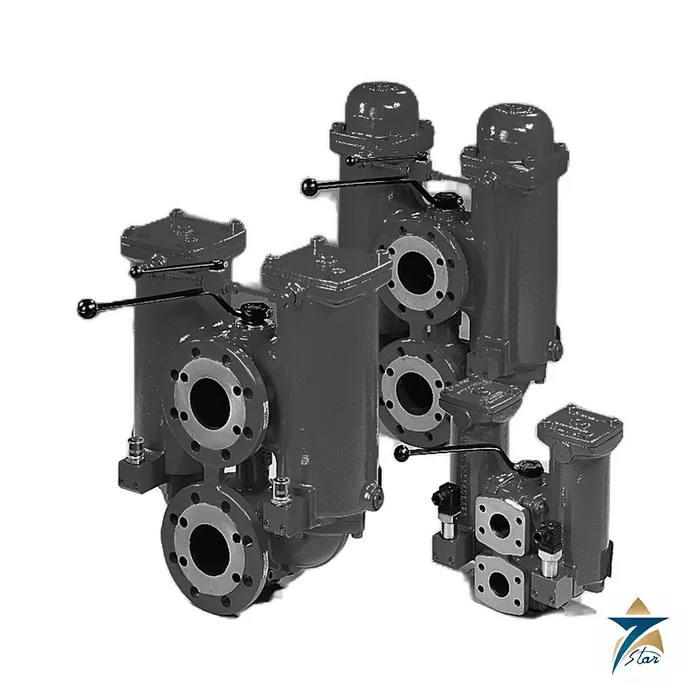
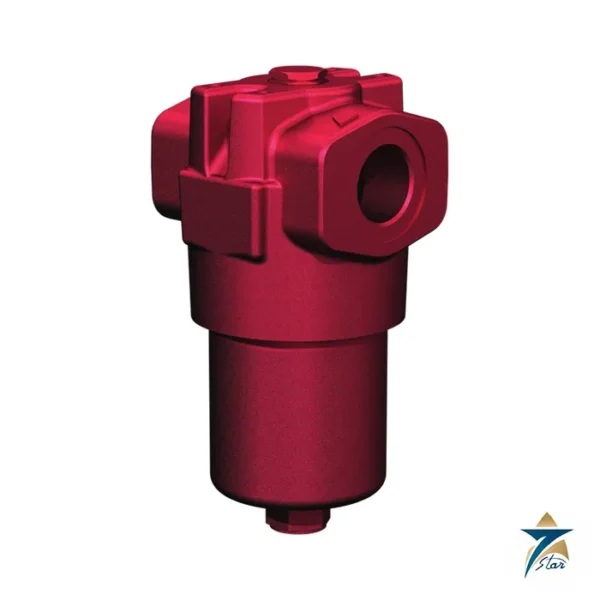
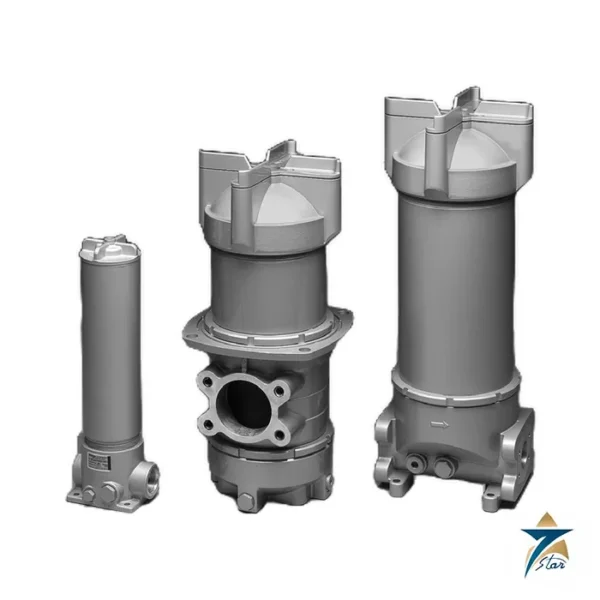
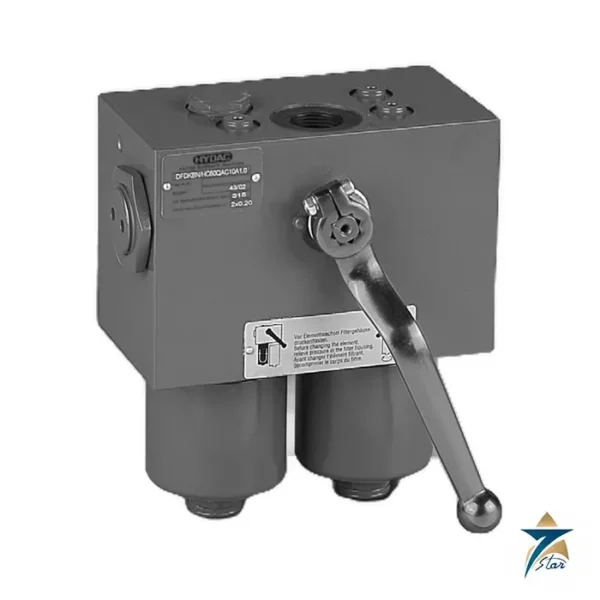
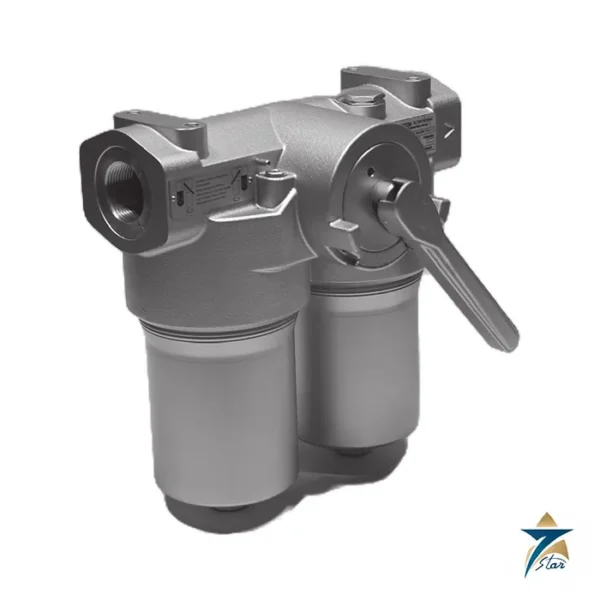
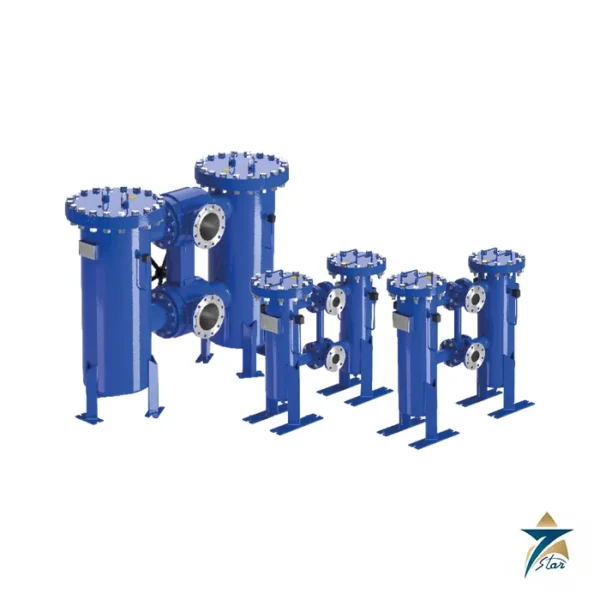
The Hydac RFLD is a duplex inline filter in a cast housing: two filter sections, each with a bolt-on cover plate, joined through a ball change-over valve. One section stays in service while the other is vented, opened and cleaned or re-elemented. That makes it a natural fit for turbine lube oil, compressor and gearbox circuits, which the datasheet names among its areas of application.
Flow goes up to 2500 l/min. The pressure rating depends on the size and housing material, from 16 bar on RFLD 2701 up to 64 bar on the cast-steel RFLD 332 to 502.
Technical specifications
| Parameter |
Specification |
| Series |
RFLD, sizes 111 to 2701 |
| Type |
Cast duplex inline filter with ball change-over valve |
| Maximum flow |
Up to 2500 l/min |
| Nominal pressure |
16 bar (RFLD 2701); 25 bar (RFLD 331 to 1321); 40 bar (RFLD 111 to 261, 662 to 1322); 64 bar (RFLD 332 to 502) |
| Temperature range |
-10 °C to +100 °C |
| Housing material |
EN-GJS-400-15 (code 1); EN-GJS-400-18LT (RFLD 2701 only); GP 240 GH+N cast steel (code 2) |
| Clogging indicator |
VM, differential pressure up to 210 bar; setting 2 bar |
| Bypass cracking pressure |
3 bar (others on request) |
| Element media |
Optimicron, Optimicron Power, wire mesh, paper, stainless steel fibre, Betamicron/Aquamicron, Aquamicron (several on request for RFLD 2701) |
| Ports |
G1, G1 1/2, SAE DN 25, DN 40, DN 50, DN 65, DN 80, DN 100 and DIN DN 50 to DN 150 by size |
| Seals |
NBR (FPM optional) |
| Standard equipment |
Venting and draining connections with pressure equalisation line and ball shut-off valve; bypass valve; indicator connection |
| Certificates |
Manufacturer’s test certificates O and M (DIN 55350 part 18), test certificates 3.1 (DIN EN 10204) and type approvals on request |
| Special programmes |
Filter to API 614 with ANSI flanges on request |
Order code and options
The example in the datasheet is RFLD ON 851 D A L 10 D 1 .X /-L24. After the type and element material come the size, the pressure letter (C = 16 bar for RFLD 2701; D = 25 bar for 331 to 1321; E = 40 bar for 111 to 261 and 662 to 1322; F = 64 bar for 332 to 502), the type of change-over (A, ball), the port letter, the micron rating, the indicator and the type code. The last digit of the size is the material code, with 1 for EN-GJS-400-15, 2 for GP 240 GH+N and 1 for the 2701 in EN-GJS-400-18LT as listed.
Accessories listed are an orifice in the pressure equalisation line, a stand, a lockable change-over valve, venting lines with sight gauges, and a nominal bore 100 version at up to 50 bar operating pressure on request. When wire mesh or paper elements are used, the datasheet asks you to follow its sizing recommendation.
Selection and handling
Ports include threaded, SAE and DIN flanged connections; other nominal bores and ANSI flanges are available on request. Compatible fluids are hydraulic oils H to HLPD, lubrication oils, compressor oils, biodegradable HETG, HEES and HEPG and fire-resistant HFA to HFD.
The housing must be earthed. Filters must be mounted flexibly and not rigidly fixed to the floor or used as a pipe support. Please give us the flow, working pressure, oil, flange standard and cleanliness target so the pressure class and element can be matched.
Key features of the RFLD design
- Uninterrupted service: the ball change-over valve switches flow from the dirty side to the clean side without stopping the pump, so bearings and gears continue to receive oil during element changes.
- Bolt-on covers: each filter section is opened by removing its cover plate, giving direct access to the element.
- Pressure equalisation line: the standard equalisation line with ball shut-off valve lets the standby side be filled and brought to system pressure before switching, which avoids pressure shocks.
- Integrated bypass: a bypass valve with 3 bar cracking pressure protects the element from collapse during cold starts or when it becomes heavily loaded.
- Wide element choice: Optimicron, Optimicron Power, Betamicron/Aquamicron, wire mesh, paper and stainless steel fibre media allow the same housing to serve lube oil, hydraulic and water-removal duties.
Housing material and pressure class
The housing material is not only a matter of pressure. Ductile iron EN-GJS-400-15 covers most lube and hydraulic circuits up to the stated nominal pressures, while the GP 240 GH+N cast-steel version is used for the 64 bar sizes RFLD 332 to 502 and is often requested by refinery and petrochemical specifications that do not accept cast iron. The low-temperature grade EN-GJS-400-18LT is listed for the large RFLD 2701. Always compare the maximum operating pressure of your circuit, including pressure peaks, with the nominal pressure of the selected size.
Sizing the element
A duplex filter is sized on the clean-element pressure drop at the operating viscosity, not just on the flow rate. Lube oil at start-up can be many times more viscous than at operating temperature, so the clean pressure drop should leave a good margin below the 2 bar indicator setting and the 3 bar bypass setting. Hydac provides a sizing procedure in the datasheet and through its filter selection tools; we can run the selection if you share flow, oil grade and temperatures.
Micron rating and cleanliness
Turbine and compressor manufacturers usually specify a target ISO 4406 cleanliness code or a nominal filtration rating. Fine glass-fibre Optimicron elements are used where tight cleanliness is required, and Aquamicron elements combine particle filtration with free-water absorption, which is useful for oil systems exposed to condensation.
Element change procedure
- Open the pressure equalisation valve to fill and pressurise the standby section, venting air through the vent connection.
- Operate the change-over valve to bring the clean side into service.
- Close the equalisation valve, then depressurise and drain the contaminated side.
- Remove the cover, replace the element and seals, refit the cover and leave the side ready as standby.
Use the vent and drain connections rather than loosening the cover under pressure, and dispose of used elements and oil according to local regulations.
Applications in Oman and the GCC
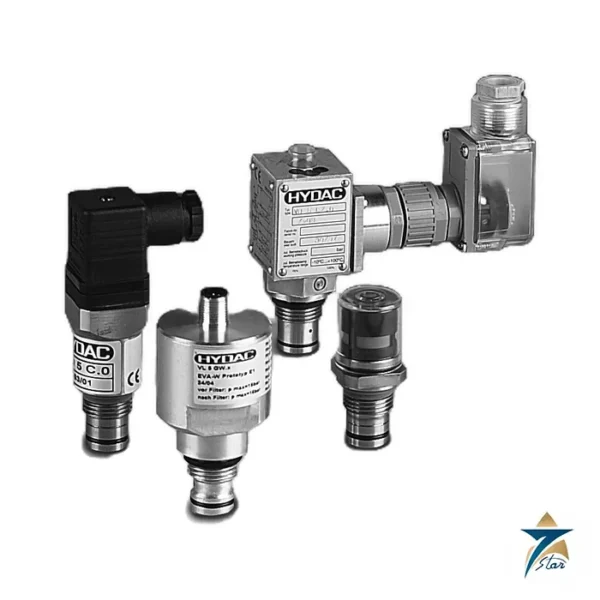
Gas turbine packages, centrifugal compressors, large gearboxes in cement and mining plants and desalination pumps all run continuously and benefit from a filter that can be serviced on the run. In hot, dusty environments, ingress through breathers and seals raises the particle load, so a visual or electrical clogging indicator connected to the control system helps operators change elements before the bypass opens.
RFQ checklist
- Flow rate, oil type and viscosity at start-up and operating temperature.
- Maximum operating pressure and required housing material.
- Port type and size (thread, SAE, DIN or ANSI flange).
- Element media and micron rating, indicator type and seal material.
- Required certificates, such as 3.1 material certificates or API 614 conformity.
- Accessories: stand, lockable change-over valve, vent lines with sight gauges, spare elements.
Documents and quotation
The datasheet (E 7.109.8/11.16) is attached. Related: filter housings and the Hydac SB330 bladder accumulator.

Reviews
There are no reviews yet.