Brand:

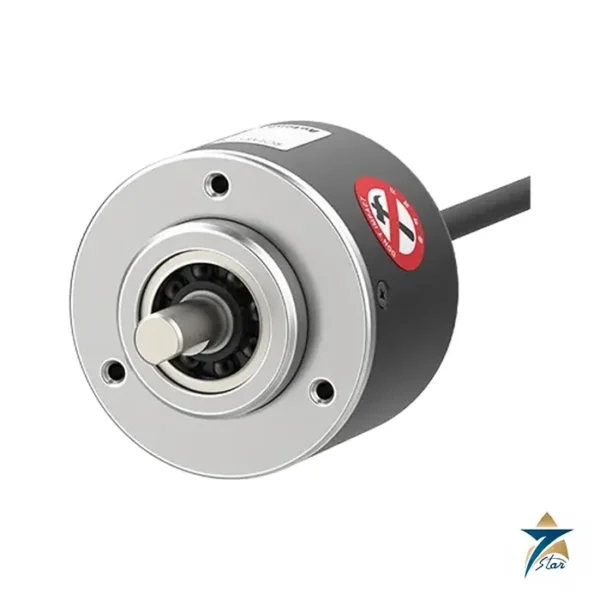
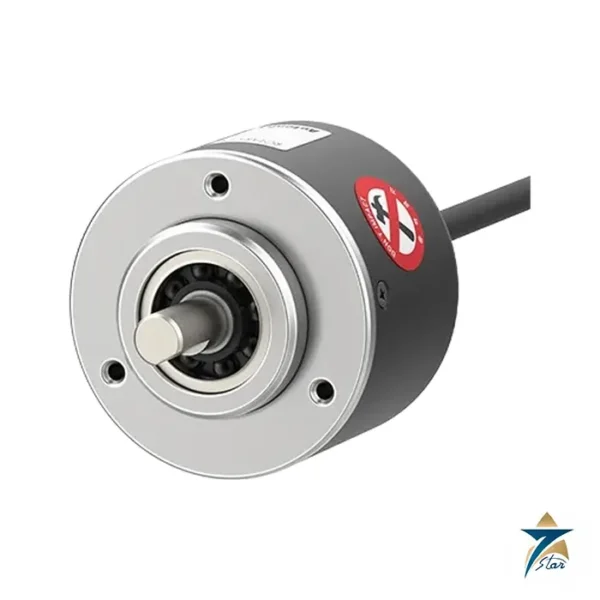
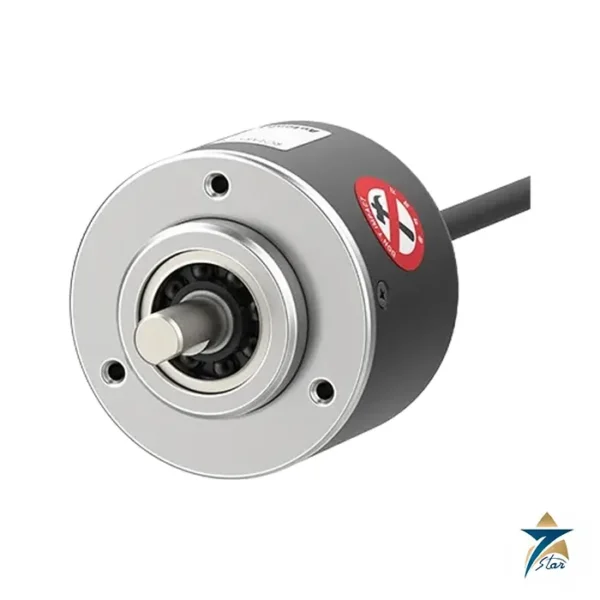
Autonics E50S8-2000-3-T-24 50 mm Incremental Rotary Encoder

Description

Overview

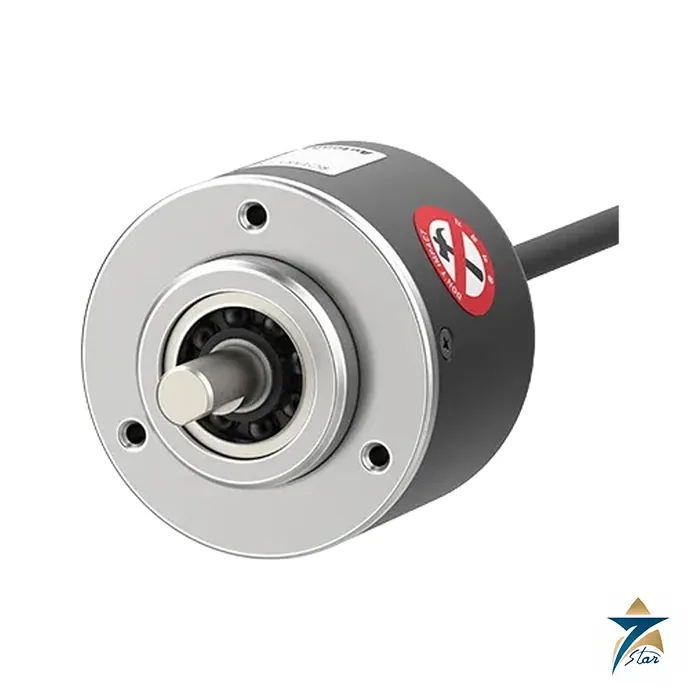
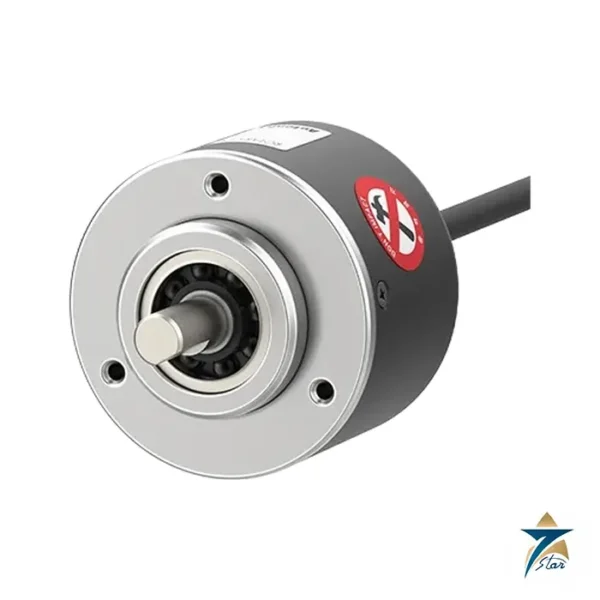
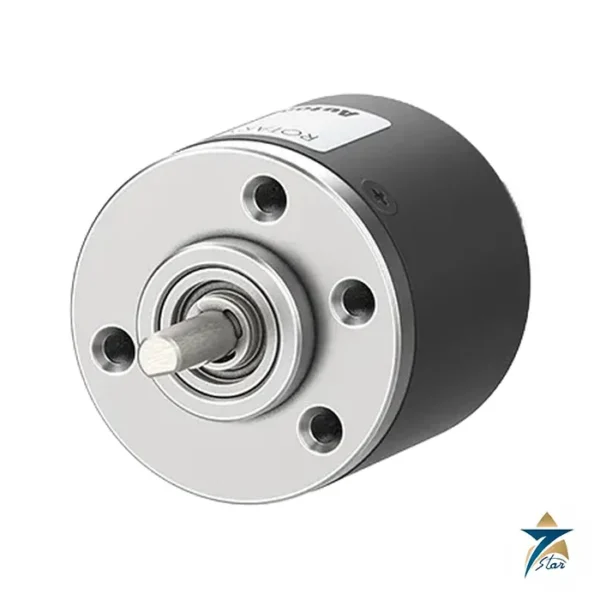
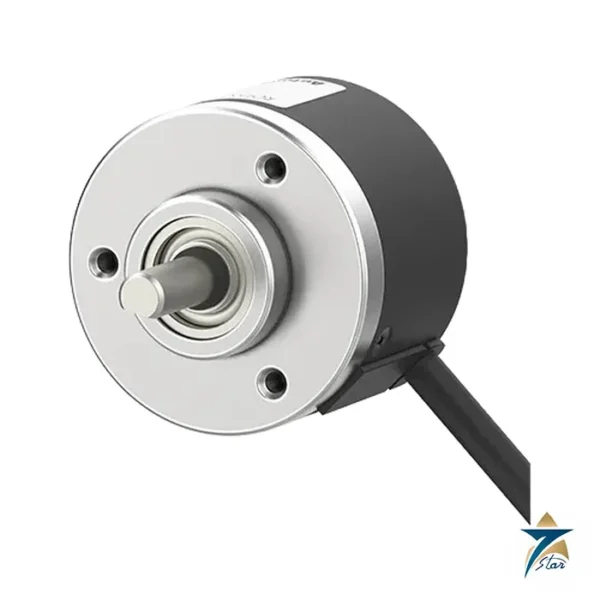
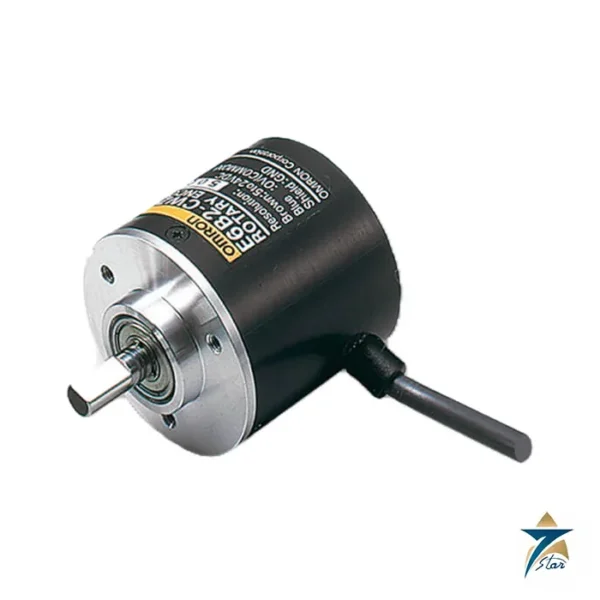
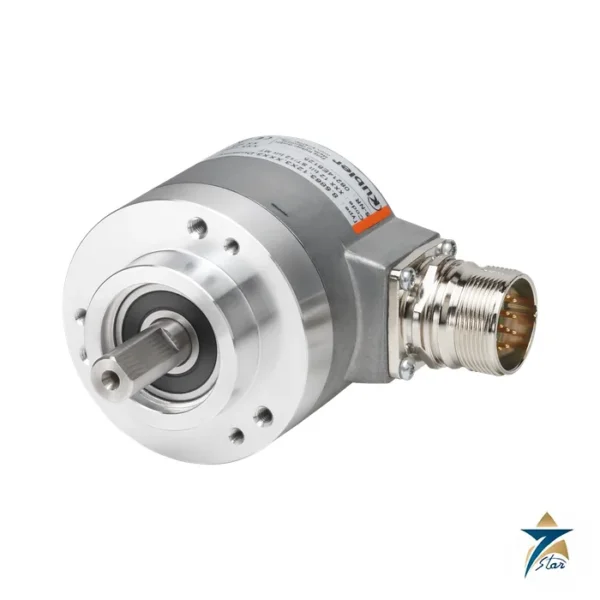
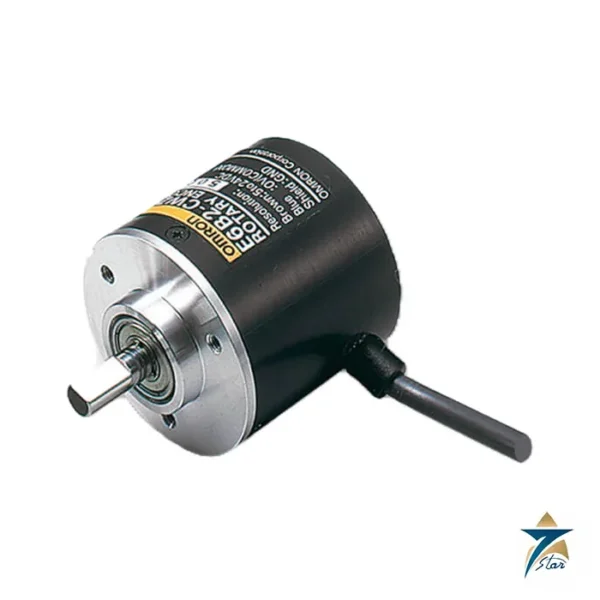
Fine position resolution on a compact shaft is the reason to pick the Autonics E50S8-2000-3-T-24. It is the 2,000 pulse per revolution member of the 50 mm E50 incremental encoder series, with an 8 mm solid shaft, A, B and Z outputs from a totem-pole stage and a 12 to 24 V DC supply. Seven Star LLC is an independent supplier serving Oman and the GCC.

Where a 500 or 1000 PPR code leaves too coarse a count, for example on a slow traverse, a metering pump drive or a rotary table, this code gives four times the pulses of the 500 PPR sibling for the same body and the same mounting.

Meaning of E50S8-2000-3-T-24

  • E50: 50 mm diameter incremental encoder series
  • S8: shaft type, 8 mm shaft diameter
  • 2000: 2,000 pulses per revolution
  • 3: phases A, B and Z
  • T: totem-pole output
  • 24: supply 12 to 24 V DC
  • no suffix: axial cable type

Technical data for Autonics E50S8-2000-3-T-24

Item Data
Resolution 2,000 PPR
Output Totem-pole, phases A, B, Z
Supply 12 to 24 V DC plus or minus 5 percent
Current draw 80 mA or less, no load
Sink / source 30 mA / 10 mA
Residual voltage 0.4 V or less
Response speed 1 microsecond or less
Max response frequency 300 kHz
Max revolution 5,000 rpm
Frequency at 5,000 rpm About 166.7 kHz on channel A
Starting torque 0.007 N m or less (axial cable type)
Moment of inertia 80 g cm2 or less
Shaft load Radial 10 kgf, thrust 2.5 kgf
Vibration 1.5 mm double amplitude, 10 to 55 Hz
Shock About 75 G
Temperature -10 to 70 C
Protection IP50

Pulse rate versus speed

At 2,000 PPR the signal frequency rises quickly with speed: 1,000 rpm gives about 33.3 kHz, 3,000 rpm gives 100 kHz and the limit of 5,000 rpm gives about 166.7 kHz. The electronics are rated to 300 kHz, which at this resolution would correspond to 9,000 rpm, so again the mechanical speed limit decides. Your counter must accept the pulse rate: many general-purpose PLC counter cards stop at 100 kHz or less, in which case limit the speed or choose a lower resolution.

Decoding on four edges gives 8,000 counts per revolution, or 0.045 degrees per count, a useful figure when positioning a small rotary table.

Where Autonics E50S8-2000-3-T-24 fits in the E50 family

The sibling E50S8-500-3-T-24 offers one quarter of the pulses, while E50S8-1000-3-T-24 and E50S8-1024-3-T-24 are mid-range options. The resolution range of the family covers 10 to 8,000 PPR in the manual, and 1, 2 or 5 PPR for special cases. Output options are NPN, voltage and line driver versions. With 2,000 PPR the line driver type is the better one if the cable is longer than a few metres.

Reading the output waveform

The Autonics E50S8-2000-3-T-24 produces two square waves, A and B, shifted by a quarter of a cycle with a tolerance of one eighth of a cycle, and a Z pulse once per turn. The controller finds the direction of rotation from which of A and B changes first and adds or subtracts counts accordingly. The Z pulse is used to capture an absolute zero: the counter is cleared or latched when Z arrives, so that after power-up the machine only needs to turn one revolution to know its angle.

A totem-pole stage means that the output is actively pulled both high and low. On a 24 V supply the high level is within 3 V of the supply, and the low level is 0.4 V or less. That is compatible with 24 V PLC inputs. If you drive a 5 V logic input from this encoder, use a level shifter or a resistor divider, because the output swings to the supply level of 12 to 24 V.

When commissioning, check the signals with an oscilloscope if available. Healthy channels show clean edges with a duty cycle of about 50 percent and a steady phase relationship. A distorted waveform, particularly at high speed, usually points to a long unshielded cable, a poor ground or a noisy supply, and not to a faulty encoder.

Shaft connection

A flexible coupling must be used. The manual allows parallel misalignment up to 0.25 mm, angular misalignment up to 5 degrees and end-play up to 0.5 mm. Do not use a hammer to push the coupling onto the shaft. The wrench torque on the coupling screws must stay below 0.15 N m. Without a coupling, shaft impact and load shorten the life of the bearing.

Electrical installation

The Autonics E50S8-2000-3-T-24 has a 2 m shielded cable of 5 mm diameter with five wires. The shield and the metal case belong to frame ground, which should be grounded separately. If the supply is a switching unit, add a noise capacitor between 0 V and frame ground. Keep wiring away from high-voltage lines and make it as short as practicable. Do not pull the cable with more than 30 N.

Where it is used

Dust and fine sand are a fact of life across Oman, so mount the encoder where the rear cable gland and the shaft side are shielded from direct blowing sand, and wipe the housing during scheduled maintenance rounds. Keep a spare on the shelf for critical drives, because encoder faults often show up as speed or position errors that look like drive problems.

Gulf customers use this resolution on metering and dosing equipment, label and filling machines, lifting gear with slow hoisting speeds, and test benches that measure shaft angle. The encoder is not for explosive atmospheres, and with IP50 it needs a cover in washdown areas.

Service and replacement

If you replace an old encoder with the E50S8-2000-3-T-24, check the supply voltage, the output type of the old unit, the resolution and the shaft diameter. A resolution mismatch changes machine scaling, so any scaling factor in the controller must be edited. After fitting, turn the shaft slowly and confirm the counter increments in the correct direction: clockwise viewed from the shaft end gives A leading B. Swap A and B in the controller if the direction is reversed.

Related items you may also need: Autonics E40S6-2500-6-L-5 Rotary Encoder Incremental | Autonics PR18-8DN M18 Inductive Proximity Sensor 8 mm | Pepperl+Fuchs AVS58N-011YYRYGN-0014 SSI Absolute Encoder | All Autonics products.

Documents and quotation

The E50 manual is attached as a datasheet. Send an RFQ for Autonics E50S8-2000-3-T-24 with quantity and destination to Seven Star LLC and we will confirm availability and lead time for Oman and the GCC.

Other Models in the E50 Range

Seven Star LLC supplies models from the E50 range in Oman and the GCC. Compare the related models below and request a quote for the one that matches your application.

ModelCategory
Autonics E50S8-360-3-N-24 50 mm Incremental Rotary EncoderEncodersView details
Autonics E50S8-1024-3-T-24 50 mm Incremental Rotary EncoderEncodersView details
Autonics E50S8-500-3-T-24 50 mm Incremental Rotary EncoderEncodersView details
Autonics E50S8-2000-3-T-24 50 mm Incremental Rotary EncoderEncodersYou are viewing this model
Datasheets & Documents
  • PDF Datasheet Autonics E50S8-2000-3-T-24 50 mm Incremental Rotary Encoder Datasheet Download
Reviews (0)

Reviews

There are no reviews yet.

How would you rate this product?

It takes about 10 seconds — just tap a star. Your email is never published.

About brand

Autonics is a South Korean maker of sensors and controllers, founded in 1977 as a small engineering business making controllers for looms. It took the Autonics name in 1988 and opened a new corporate headquarters in Busan in 2014. Autonics makes proximity and photoelectric sensors, rotary encoders, temperature controllers, counters, timers and stepper motor systems, with factories in Busan and Yangsan.

Seven Star LLC lists the Autonics E40S6-2500-6-L-5 incremental rotary encoder and supplies Autonics sensors and control devices in Oman and the GCC.

Autonics company profile

Founded 1977, South Korea
Current name Autonics, since 1988
Headquarters Busan, South Korea
Factories Busan and Yangsan
Product families E40 and E50 rotary encoders, PR proximity sensors, BJ photoelectric sensors, TK temperature controllers

Milestones

  • 1977: The company is founded.
  • 1988: Renamed Autonics Corporation.
  • 2014: Opens its Busan headquarters.

Reading the Autonics E40S encoder code

E40S is the 40 mm diameter shaft-type incremental encoder, and the 6 that follows is the 6 mm shaft. 2500 is the resolution in pulses per revolution. The next 6 means six output signals: A, B and Z with their inverted signals. L is a line driver output and the final 5 is a 5 V DC supply. The same 40 mm body is made in hollow shaft form as the E40H and E40HB series.

Where Autonics encoders are used

Servo and spindle feedback, conveyor length measurement, packaging and printing machines.

Ordering Autonics encoders: what we need

Send the complete model string from the label. If it is worn off, give the body and shaft diameter, pulses per revolution, output type, supply voltage and cable or connector style.

Facts checked against Autonics corporate profiles, October 2026.

FAQ

Questions about the Autonics E50S8-2000-3-T-24 50 mm Incremental Rotary

Answers from our engineering team on installation, compatibility and integration.

01How many pulses does Autonics E50S8-2000-3-T-24 give per turn?
It gives 2,000 pulses per revolution on A and B, which is 8,000 counts per revolution with four-edge decoding, and one Z mark per turn.
02What is the highest speed of E50S8-2000-3-T-24?
The allowable maximum is 5,000 rpm, where channel A runs at about 166.7 kHz, within the 300 kHz response rating.
03Which direction gives A leading B on E50S8-2000-3-T-24?
Clockwise rotation as seen facing the shaft, with a phase difference of a quarter cycle plus or minus one eighth of a cycle between A and B.
04What supply does E50S8-2000-3-T-24 need?
The 24 suffix means 12 to 24 V DC plus or minus 5 percent with ripple of 5 percent or less, and current draw of 80 mA or less.
05How should the E50S8-2000-3-T-24 be coupled?
Use a flexible coupling with misalignment within 0.25 mm parallel, 5 degrees angular and 0.5 mm end-play, and no hammering on the shaft.