- Automation & ControlView all 3,029 products
- Automation Accessories
- AC Drives
- PLC & I/O Cards
- Industrial Communications
- Vibration Monitoring
- Isolator & Barrier
- Controllers & Data Acquisition
- Safety Switches & Guard Locking
- Motor Soft Starters
- CCTV & Security
- Encoders
- Pneumatic Cylinders
- HMI Displays
- Servo Drives
- Industrial Computers
- Machine Vision
- Automation Software
- Robotics
Brand: Meinberg
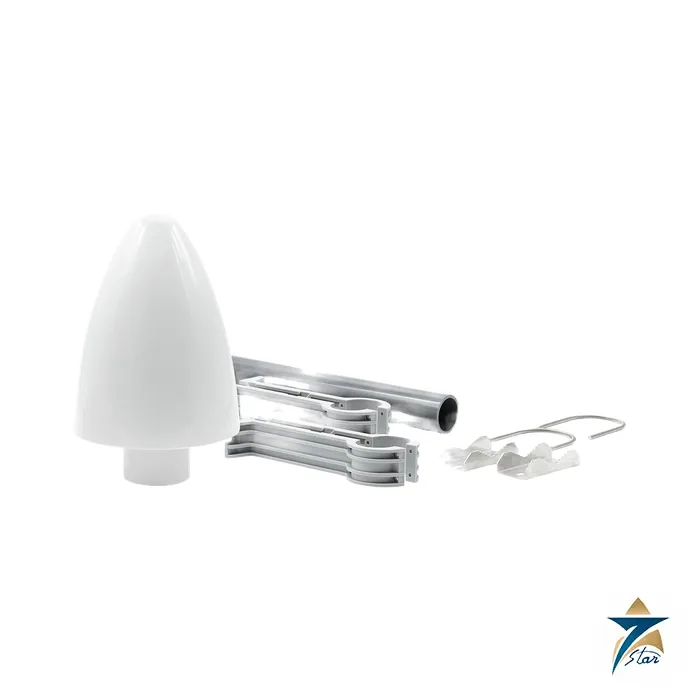
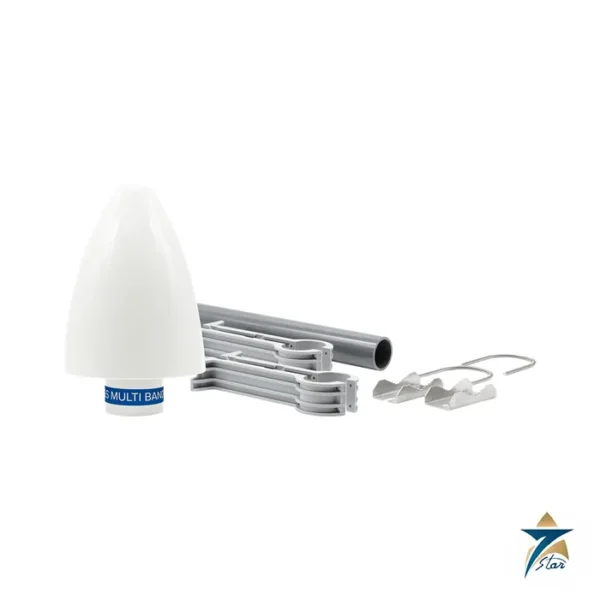
Meinberg GPSANTv2 GPS and Galileo Antenna with Converter
Description
Overview
Getting a GPS signal from a rooftop to a clock rack in the basement often means a long, lossy cable. The Meinberg GPSANTv2 avoids the problem by converting the received signal inside the antenna to a lower frequency that travels far better. It receives the GPS L1 C/A and Galileo E1 B/C signals at 1575.42 MHz, converts them to 35 MHz and sends them to the Meinberg receiver over up to 300 m of low-cost RG58 cable or up to 700 m of low-loss RG213 cable. Seven Star LLC is an independent supplier serving Oman and the GCC.
How the Meinberg GPSANTv2 works
The antenna houses a pre-selection filter centred on 1575.42 MHz plus or minus 20 MHz, a low noise amplifier and a downconverter. It mixes the signal with a 10 MHz reference supplied from the receiver and produces an intermediate frequency of 35.4 MHz. The conversion gain is 59 dB plus or minus 3 dB, the conversion delay is typically 170 ns plus or minus 5 ns, and the typical noise figure is 1.8 dB, with a maximum of 3 dB at 25 degrees C. The improved radiation pattern and multipath rejection help the receiver reach a signal to noise ratio of about 50 dB, even in built-up areas.
Data for Meinberg GPSANTv2
| Parameter | Datasheet value |
|---|---|
| Compatible receivers | Meinberg GPS or GPS-UC type reference clocks |
| Frequency | 1575.42 MHz, GPS L1 and Galileo E1 |
| Connector | Type-N |
| Bandwidth | 9 MHz, 3 dB loss at the limits |
| Cable | RG58 C/U up to 300 m; RG213 up to 700 m |
| Supply | 15 V nominal from the receiver, plus or minus 3 V |
| Current draw | 100 mA nominal at 15 V; 115 mA maximum |
| Surge immunity | Level 4 per IEC 61000-4-5, 4000 V test voltage |
| ESD immunity | Level 4 per IEC 61000-4-2, 8 kV contact, 15 kV air |
| Antenna gain | 5.0 dBiC at zenith, typical |
| Polarisation | Right-handed circular |
| Axial ratio | Maximum 3 dB at zenith |
| Out-of-band rejection | At least 70 dB at 1555 MHz and 55 dB at 1595 MHz |
| VSWR | Maximum 1.5 to 1 |
| Weight | 1.4 kg including mounting kit |
| Temperature | minus 60 to plus 80 degrees C |
How the Meinberg GPSANTv2 differs from the GNMANTv2
The GNMANTv2 is a two-band antenna for four constellations that needs only 3.6 to 5.5 V and does not convert frequency. The GPSANTv2 is a single-band unit for GPS L1 and Galileo E1, and it depends on the 10 MHz mixing reference and 15 V supply that come from a GPS or GPS-UC receiver. Its benefit is distance: 300 m on RG58 and 700 m on RG213. The datasheet also asks users to contact the maker about compatibility with GPS receivers designed before the year 2000.
Applications in Oman and the GCC
Large industrial sites, refineries, power stations and airports often place time servers far from any rooftop with sky view. The downconverting antenna lets the clock stay in the control building while the antenna sits on a pole or building edge hundreds of metres away. The ABS case and wide temperature range suit rooftops with strong sun, dust and humidity.
Selection and compatibility notes
Confirm that the clock is a GPS or GPS-UC type, because other receiver types expect a different antenna signal. Calculate the cable length in advance and choose RG58 or RG213 accordingly. Use proper Type-N connectors with weatherproof tape or boots. For long runs, an additional surge protector at the building entry is wise, even though the antenna itself meets surge level 4.
Installation and commissioning
Mount the antenna on the supplied kit with a clear sky view, route the cable to the receiver, and power the receiver. The antenna takes its supply and mixing signal from the cable, so a short circuit in the cable will prevent operation. After power up, check satellite count and signal level on the clock display or web interface.
Maintenance
Look for damaged cable jackets, water in connectors and loose mounting hardware. A falling signal level without any change of the sky view usually points to the cable or the connectors.
Cable choices and loss in practice
Since the antenna converts the signal to 35 MHz, cable loss is much lower than at 1575 MHz, which is why such long runs are possible. Still, thin cable and many joints add loss, so use continuous runs where possible and avoid sharp bends. If the run approaches the limit, prefer RG213 from the start rather than replacing cable later. Label both ends of the cable and record its length in the site documentation.
Surge and lightning considerations
Roof antennas attract lightning and induced surges, and the cable carries them straight into the clock. The GPSANTv2 itself meets surge level 4 and ESD level 4, but the energy that arrives via a long cable can still exceed these limits during a nearby strike. Fit a coaxial surge arrester at the point where the cable enters the building, bond it to the main earth bar, and keep the antenna cable away from power cables on its way to the clock. In summer storms and coastal sites this precaution protects the receiver, which is far costlier to replace than the arrester.

Choosing between converter and direct antennas
A downconverting antenna is the right answer when the cable run is long, when the receiver is an older GPS-UC type, or when the installation already has RG58 or RG213 in place. A direct multi-band antenna is better when the receiver is a modern multi-GNSS clock and the cable is short. Mixing the two types is not possible, since each receiver expects a particular signal and supply. Write the clock model and the cable distance on the enquiry, and the right antenna can be quoted without delay.
Ordering notes for Meinberg GPSANTv2
The antenna comes with its mounting kit. Cable, connectors and surge protectors are separate items.
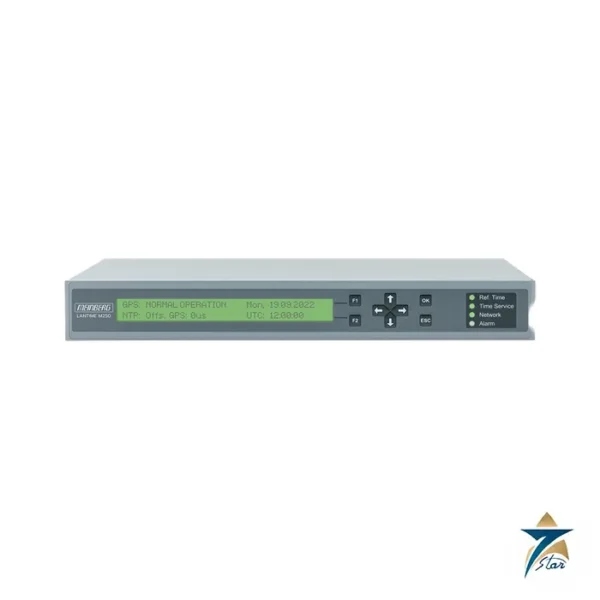
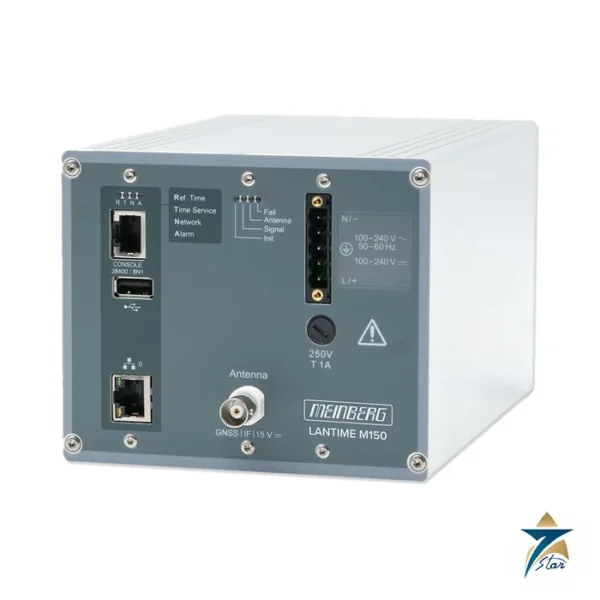
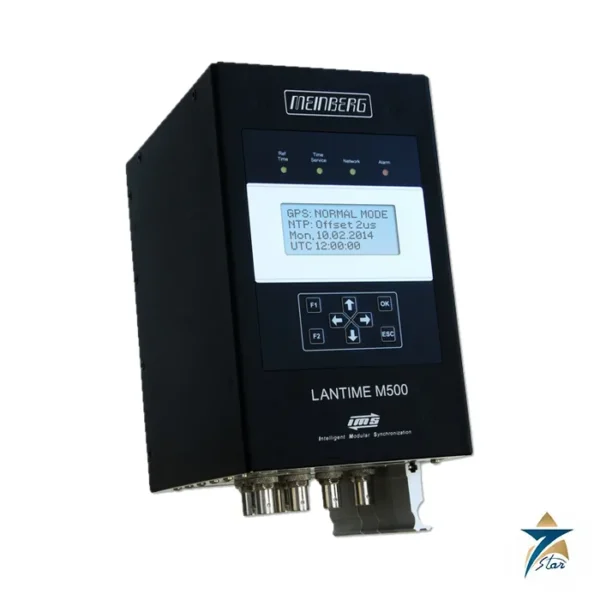
Related items you may also need: Meinberg LANTIME M150 DIN-Rail NTP Time Server | Meinberg LANTIME M500 Modular DIN-Rail Time Server | Meinberg LANTIME M250 Compact NTP Time Server | All Meinberg products.
Documents and quotation
The manufacturer datasheet for the Meinberg GPSANTv2 is attached to this page. Send your RFQ with the part number, quantity and delivery location in Oman or the GCC.
Other Models in the Meinberg Antennas Range
Seven Star LLC supplies models from the Meinberg Antennas range in Oman and the GCC. Compare the related models below and request a quote for the one that matches your application.
| Model | Category | |
|---|---|---|
| Meinberg GNMANTv2 Dual-Band Multi-GNSS Antenna, IP65 | Industrial Communications | View details |
| Meinberg GPSANTv2 GPS and Galileo Antenna with Converter | Industrial Communications | You are viewing this model |
Datasheets & Documents
- Datasheet Meinberg GPSANTv2 GPS and Galileo Antenna with Converter Datasheet Download
Reviews (0)
How would you rate this product? Cancel reply
About brand
Meinberg is a German maker of time and frequency synchronisation products, founded in 1979 by the brothers Werner and Günter Meinberg in Bad Pyrmont. It began with DCF77 longwave radio clock receivers and now makes GPS and GNSS-referenced NTP and PTP time servers. Meinberg is family-owned and designs and manufactures its products in Bad Pyrmont.
Seven Star LLC sources and supplies Meinberg LANTIME time servers for utilities and networks in Oman, including the M1000 and M320 listed here.
Meinberg company profile
| Founded | 1979, Bad Pyrmont, Germany |
|---|---|
| Founders | Werner and Günter Meinberg |
| Ownership | Family-owned |
| Manufacturing | Bad Pyrmont, Germany |
| Product families | LANTIME M150, M250, M320, M500 and M1000 NTP/PTP time servers, IMS modular systems, GNSS and DCF77 receivers, PTP grandmaster clocks |
Meinberg LANTIME models listed here
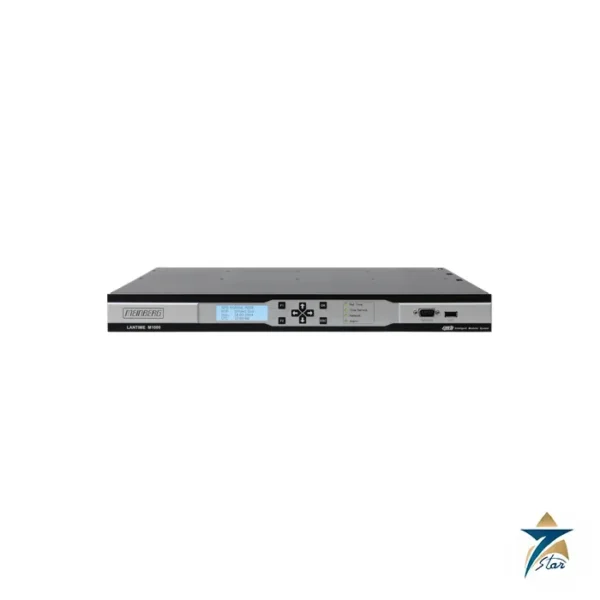
The LANTIME M320 is a 1U rackmount NTP time server. It works as a stratum 1 source with its own reference receiver, and Meinberg offers it with GPS, combined GNSS, DCF77 (PZF), MSF and IRIG time code references. The LANTIME M1000 is a 1U platform on the modular IMS system, with slots for up to two reference clocks, two power supplies and hot-pluggable I/O modules, plus PTP (IEEE 1588) and IEC 61850 time synchronization.
Meinberg products we list
Ordering a Meinberg time server: what we need
A Meinberg order code describes the build. In M320/GPS/AD10, GPS is the receiver and AD10 is the wide-range AC/DC power supply. Send the full code or serial number, the reference source, oscillator option, supply voltage, the outputs you need (PPS, 10 MHz, IRIG, extra LAN ports) and the antenna cable length. GCC utility projects often require redundant supplies.
Facts checked against Meinberg's own company history (meinbergglobal.com), October 2026.
Browse Meinberg products by category: Industrial Communications.
FAQ
Questions about the Meinberg GPSANTv2 GPS and Galileo Antenna with
Answers from our engineering team on installation, compatibility and integration.
01How far can the Meinberg GPSANTv2 be from the receiver?
Up to 300 m using RG58 C/U cable or up to 700 m using low-loss RG213 cable, because the antenna converts the signal to 35 MHz.
02Which signals does the Meinberg GPSANTv2 receive?
It receives the GPS L1 C/A and Galileo E1 B/C signals at 1575.42 MHz.
03What supply does the Meinberg GPSANTv2 need?
It takes 15 V nominal, plus or minus 3 V, from the receiver, drawing 100 mA nominal and 115 mA maximum.
04Which receivers work with the Meinberg GPSANTv2?
It is compatible with Meinberg reference clocks of the GPS or GPS-UC type, and older designs from before 2000 should be checked with the maker.
05What immunity levels does the Meinberg GPSANTv2 list?
The datasheet states surge immunity level 4 per IEC 61000-4-5 at 4000 V and ESD immunity level 4 per IEC 61000-4-2 with 8 kV contact and 15 kV air.


Reviews
There are no reviews yet.