Rotork ROM and ROMpak small part-turn electric actuators
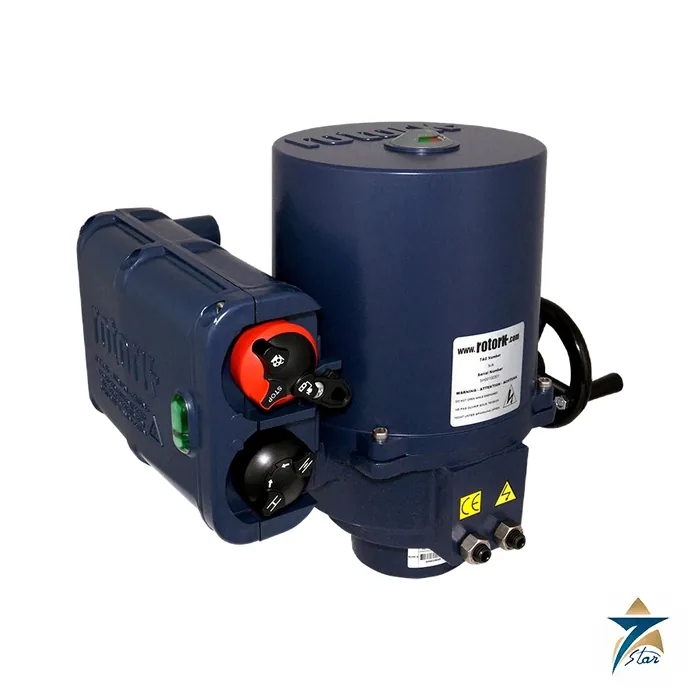
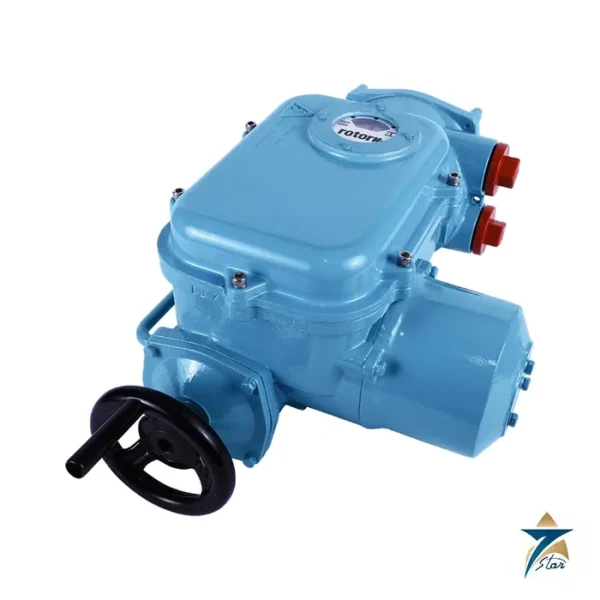
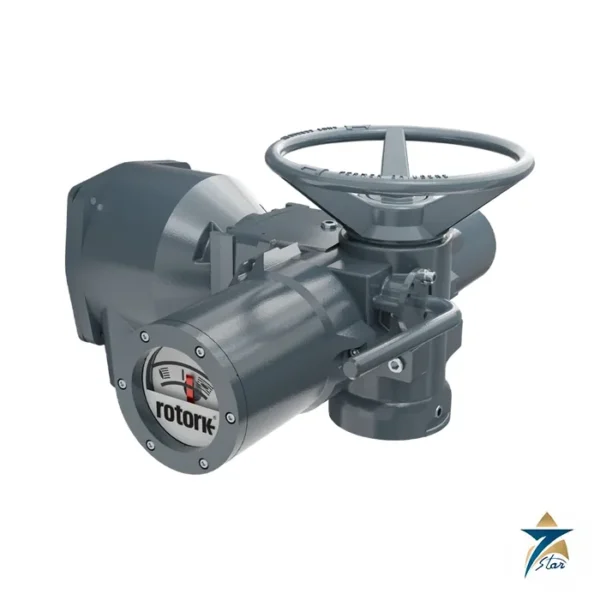
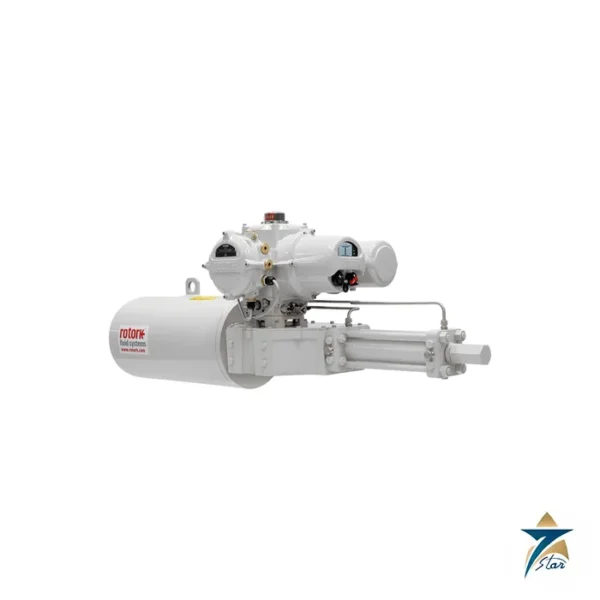
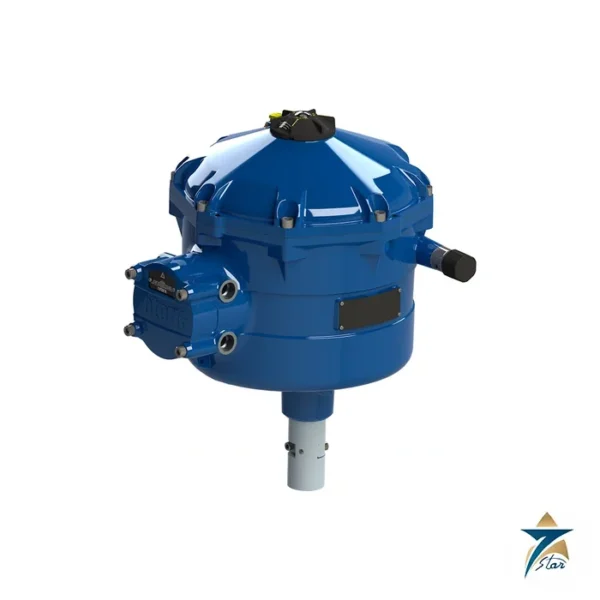
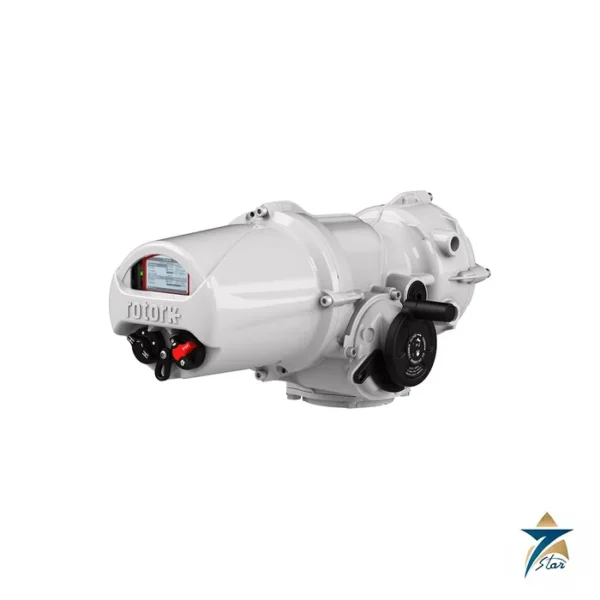
The Rotork ROM range is a family of compact quarter-turn electric actuators for small ball and butterfly valves, dampers and louvres. ROM is the basic actuator; ROMpak adds a self-contained control package with local controls, status relays, isolated control circuits and support for Rotork Folomatic, Pakscan and other bus options. A high-speed ROMH line operates in 4.5 and 5.5 seconds. Seven Star LLC supplies ROM and ROMpak actuators in Oman and the GCC as an independent supplier in Muscat.
ROM specifications by model
| Parameter |
Specification |
| Manufacturer / part number |
Rotork / ROM and ROMpak (ROM-1, ROM-A, ROM-2 to ROM-7; ROMH-1 to ROMH-3) |
| Torque ratings |
ROM-1 35 Nm; ROM-A 50; ROM-2 90; ROM-3 150; ROM-4 400; ROM-5 500; ROM-6 650; ROM-7 800 Nm |
| High-speed ROMH torque |
ROMH-1 8 Nm; ROMH-2 10 Nm; ROMH-3 13 Nm |
| Operating times |
ROM-1 20 s; ROM-A 30 s; ROM-2 17 s (see brochure for other sizes); ROMH 4.5 and 5.5 s |
| Weights (ROM / ROMpak) |
ROM-1 2 / 4 kg; ROM-A 3 / 5 kg; ROM-2 and ROM-3 11 / 13 kg; ROM-4 to ROM-6 22 / 24 kg; ROM-7 26 / 28 kg |
| Manual override |
Hexagonal drive on ROM-1 and ROM-A; handwheel on ROM-2 and larger |
| Mounting flange ISO 5211 |
F03/F05 (ROM-1), F05/F07 (ROM-A), F07 (ROM-2, 3), F10 (ROM-4 to 6), F12 (ROM-7) |
| Enclosure |
IP68, 10 m for 100 hours |
| Ambient temperature |
-30 to +70 °C |
| Motor |
Standard-duty induction motor, S3, class F insulation |
| Material and finish |
Aluminium alloy, dry powder coated |
| Supply tolerance |
Voltage +/- 10 percent |
| Certificates for ROM-1 and ROM-A |
ISO 9001, CE, CSA, BV |
How ROM and ROMpak work
Every model has continuous mechanical position indication. ROM-1 and ROM-A use an efficient spur gear train that can back-drive in some applications, so the valve torque profile should be checked. The larger models have externally adjustable mechanical stops and torque switches. When the motor is running the manual override does not rotate, apart from ROMH-1 to ROMH-3. Gear trains are lubricated at the factory for a wide temperature range, and the design life data in the brochure lists on-off and running-torque cycle counts of 25,000 to 50,000 for the sizes stated.
ROMpak is a ROM actuator with an integral local control unit: a local/remote selector and open/close control, status relays, and isolated circuits. It supports Folomatic analogue control and Pakscan, Profibus and other bus options, making a small valve a networked device without extra panels.
Choosing between ROM, ROMpak and ROMH
| Version |
Description |
Use |
Note |
| ROM |
Basic actuator with external controls |
Small valves with existing starters or low-voltage control |
12 and 24 V DC/AC versions on the smallest models |
| ROMpak |
ROM plus local controls and bus options |
Remote valves needing local selector and feedback relays |
3-phase and 1-phase variants documented |
| ROMH / ROMpakH |
High-speed 4.5 and 5.5 s models |
Fast-acting small valves and dampers |
8 to 13 Nm |
Ordering checklist for ROM and ROMpak
- Valve torque at break-out and running, with safety factor.
- Required operating time for 90 degrees.
- Supply: 12 or 24 V DC/AC, single-phase or three-phase, with frequency.
- ROM or ROMpak, and any bus or analogue option.
- Valve flange standard, drive size and square or bore dimensions.
- Ambient temperature, location and quantity.
Installation and maintenance
Mount the actuator on the valve with the valve and actuator both in the same end position, set the external stops where supplied, and connect power and control. Check that the valve does not back-drive the small spur-geared units under flow. Because of IP68 sealing the enclosure is not intended to be opened regularly; inspect cable entries, remove standing water from the surroundings and keep the label legible. Spares to consider are control boards for ROMpak and spare handwheels or hex keys.
ROM applications in Oman and the GCC
Common uses in the region are small valves on dosing skids, cooling-water branches, air-conditioning and ventilation dampers, filter systems and utilities in desalination, power and water plants. The IP68 enclosure suits dust and condensation, and the 70 °C ambient limit should be compared with direct-sun conditions. Note that the brochure lists ISO 9001, CE, CSA and BV only for ROM-1 and ROM-A; do not assume hazardous-area certification for any model.
Sizing a ROM actuator against the valve
Small quarter-turn valves are usually specified by the torque the valve maker publishes at the maximum differential pressure. Add the margin your project standard requires for ageing, dry running and debris, then choose the smallest ROM whose rated torque exceeds that value. Rated torque is the output at the limit of the torque setting, so avoid choosing an actuator that sits exactly at the valve figure. Because the ROM ladder has steps of 35, 50, 90, 150, 400, 500, 650 and 800 Nm, there is a model between most common valve sizes, and selecting one step higher costs little in weight on the compact frames but gives a useful reserve. For dampers and louvres the torque is usually low and speed or control signal is the deciding factor.
Check also the output drive. ROM-1 and ROM-A have 14, 11 or 9 mm and 17 or 14 mm drives respectively, ROM-2 and ROM-3 have 22 or 17 mm, ROM-4 to ROM-6 have 36 or 35 mm and ROM-7 has 36 or 35 mm on an F12 flange. Verify that the valve stem or adaptor can be matched through the listed sizes, and ask Rotork for the right insert if a nonstandard stem is used.
Handling, storage and spares for ROM units
The aluminium alloy housings are powder coated, so protect them from impact during transport and store them dry with the cable entries plugged. Keep a handful of common spares for each installed base: a spare ROMpak control module, a spare hexagonal key for the small models, and a spare actuator of the most common size to cut downtime on a critical valve. Record the serial numbers when the actuators are installed, because the supply voltage and torque data will be needed for any later enquiry.
Information to send with a ROM RFQ
- Valve type, size and torque.
- Voltage, phase and frequency, and ROM or ROMpak choice.
- Bus protocol or 4-20 mA requirement.
- Flange, drive dimensions, ambient range and quantity.
Documents and quotation
The Rotork ROM and ROMpak brochure is attached on this page with performance, dimensional and wiring data.
Send the valve and supply information and Seven Star LLC will confirm the right ROM model and quote delivery to Oman and the GCC.



















Reviews
There are no reviews yet.