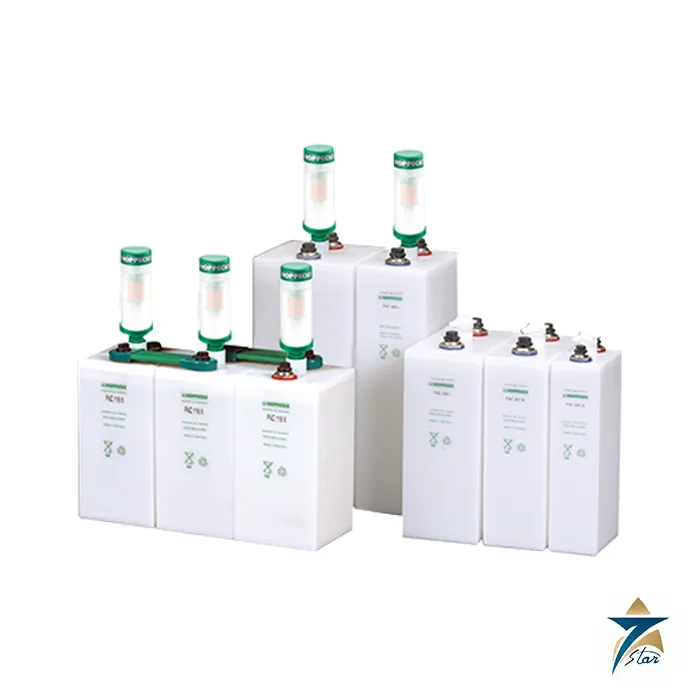
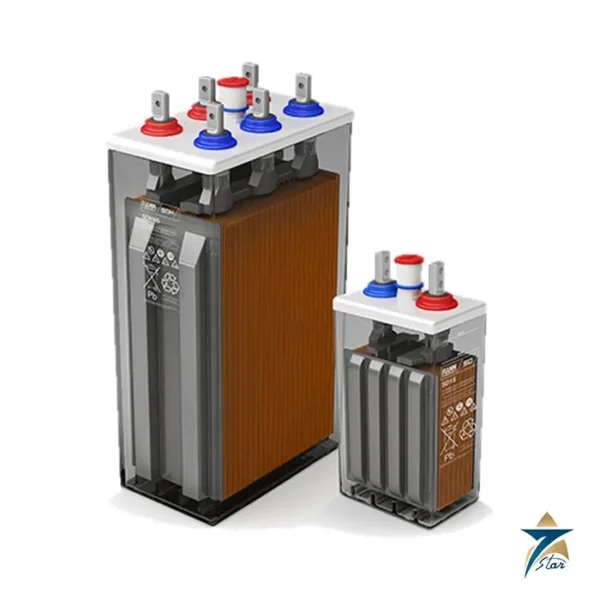
grid | power FNC 154 L is a 1.2 V fibre-structure nickel-cadmium cell of the HOPPECKE grid | power FNC range, L-type. The brochure lists 154 Ah at the 5-hour rate, a case of 92 x 122 mm with 309 mm height and 5.40 kg with electrolyte (3.80 kg without).
A fibre-structure NiCd cell built for mixed and varying standby loads
HOPPECKE introduced the fibre structure technology (FNC) in 1983: a porous three-dimensional nickel-plated polypropylene fibre electrode filled with active material to about 90 percent of its volume, without graphite or iron additives. Without carbonate forming in the electrolyte the electrodes do not age and electrolyte replacement over the life is not necessary.
The range has four types. X cells have ultra-thin electrodes for very high short-term output, H cells suit discharges of 30 minutes and longer, M cells mixed loads of 30 minutes to 2 hours, and L cells general discharge curves and mixed high and low current loads. The 154 L is one of 31 L sizes from 35 Ah to 1100 Ah.
Characteristics stated in the brochure
- High to very high charge and discharge currents; short-circuit current between 10 times (L types) and 40 times (X types) the rated capacity in amperes.
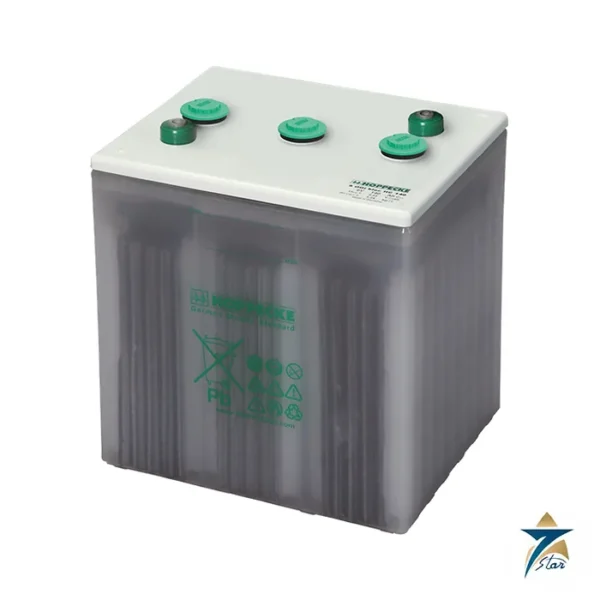
- Translucent polypropylene container and lid, welded shut, so the electrolyte level can be seen from outside.
- Nickel-plated steel terminals, microporous separators, potassium hydroxide electrolyte of 1.19 kg per litre at 20 °C.
- Designed and tested to IEC EN 60623; high resistance to shock and vibration.
Technical specification
Specification of FNC 154 L (brochure type table, L types)
| Parameter |
Specification |
| Type |
grid | power FNC 154 L (L-type) |
| Nominal cell voltage |
1.2 V |
| Nominal capacity C5 (to 1.0 V per cell at 20 °C) |
154 Ah |
| Length x width x height |
92 x 122 x 309 mm |
| Weight of cell with electrolyte |
5.40 kg |
| Weight of cell without electrolyte |
3.80 kg |
| Filling capacity |
1.34 litres |
| Float charge voltage |
1.40 to 1.45 V per cell |
| Boost charge voltage |
1.50 to 1.60 V per cell |
| Typical recharge current |
0.1 to 0.4 x C5; 90 percent of capacity in under 5 hours at normal boost charge |
| Operating temperature (brochure) |
-25 °C to +60 °C; special electrolyte allows -50 °C |
| Operating temperature (manual) |
standard electrolyte -25 °C to +45 °C; special electrolyte down to -45 °C |
Derived values (calculated here)
| Parameter |
Specification |
| Energy at C5 |
about 0.18 kWh per cell (1.2 V x 154 Ah) |
| Float voltage of a 20-cell string |
28.0 to 29.0 V (20 x 1.40 to 1.45 V) |
Choosing the cell type and size
The L list in the brochure goes 35 L, 50 L, 70 L (250 mm high), 45 L to 198 L (309 mm), 222 L to 370 L (194 mm wide) and larger cells up to 1100 L at 238 x 209 x 405 mm. The 154 L sits in the 122 x 309 mm group, between 132 L (132 Ah) and 176 L (176 Ah, 115 mm long).
The brochure and manual disagree on the upper temperature figure, so confirm the limit with HOPPECKE for hot rooms. Delivery condition can be filled and charged, filled and uncharged, or unfilled and uncharged, and a valve-regulated VR plug is available.
Storage, ventilation and commissioning from the manual
Filled and charged cells should not wait more than three months; for longer storage they are discharged at I5 to 1.0 V per cell and sealed, then keep up to three years. Ventilation airflow is Q = 0.05 x n x I in cubic metres per hour, and natural vent openings need A = 28 x Q square centimetres.
Initial commissioning charges at constant current I5 for 7.5 hours, with cell voltages up to 1.9 V. Float charge is 1.40 to 1.45 V per cell. Maintenance includes visual checks, electrolyte level, insulation test and reconditioning every five years; VR plugs need no water in a 20 year service life on float at 20 °C.
Switchgear, generator starting and emergency power
The brochure lists power plants and transformer plants, plus emergency power supplies, switchboards and energy storage for L types. General engineering note: NiCd cells are chosen in hot, hard-service sites such as Gulf substations and platforms for their temperature tolerance and long life.
Related HOPPECKE items
For lead-acid alternatives see the grid | power V L, V M and V H cells; the grid | AquaGen pro plug is described separately for vented FNC cells.
Frequently asked questions
What does the L in 154 L mean?
It is the cell type for general discharge curves and mixed loads; X, H and M are the other FNC types.
What capacity is 154 L?
154 Ah at C5, meaning the 5-hour rate to 1.0 volt per cell at 20 °C.
What float voltage is used?
1.40 to 1.45 volts per cell, with boost at 1.50 to 1.60 volts per cell.
Does the electrolyte need replacing?
The brochure says no carbonate forms, so electrolyte replacement over the life is not necessary; checking levels and topping up with distilled water remains part of maintenance, except with VR plugs.
Is Seven Star LLC a HOPPECKE distributor?
No. Seven Star LLC is not a HOPPECKE distributor; it is an independent Muscat-based supplier that quotes HOPPECKE products on request.
Documents and quotation
This page carries the official HOPPECKE datasheet and manual for grid power FNC 154 L. Seven Star LLC is an independent supplier in Muscat and sources HOPPECKE products on request; tell us the quantity and delivery point to receive a quotation. Always confirm the order code and technical values in the documents first. See more in the product category.





Reviews
There are no reviews yet.