- Automation & ControlView all 2,907 products
- Automation Accessories
- AC Drives
- PLC & I/O Cards
- Industrial Communications
- Vibration Monitoring
- Controllers & Data Acquisition
- Isolator & Barrier
- Safety Switches & Guard Locking
- Motor Soft Starters
- CCTV & Security
- Encoders
- Pneumatic Cylinders
- HMI Displays
- Servo Drives
- Industrial Computers
- Machine Vision
- Automation Software
- Robotics
Brand: MTL (Eaton)
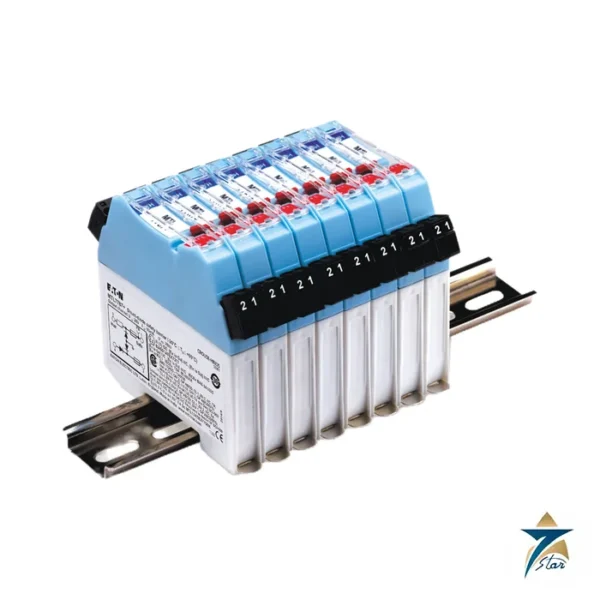
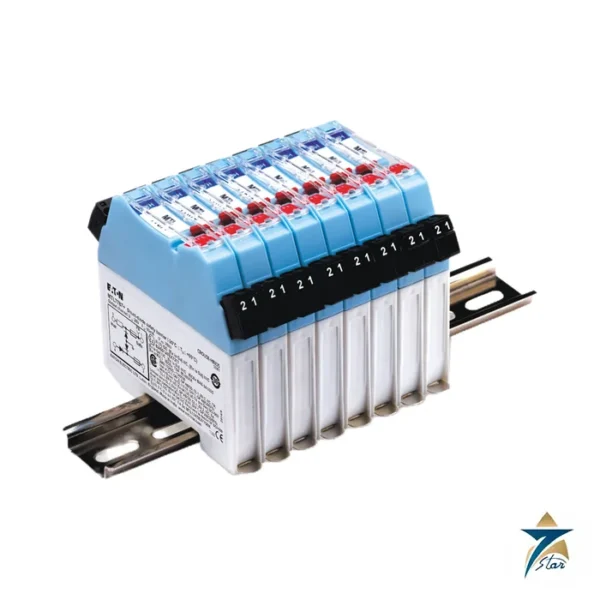
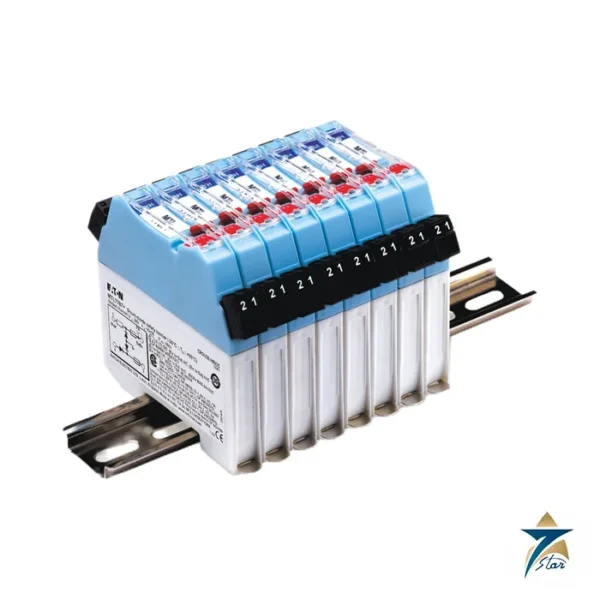
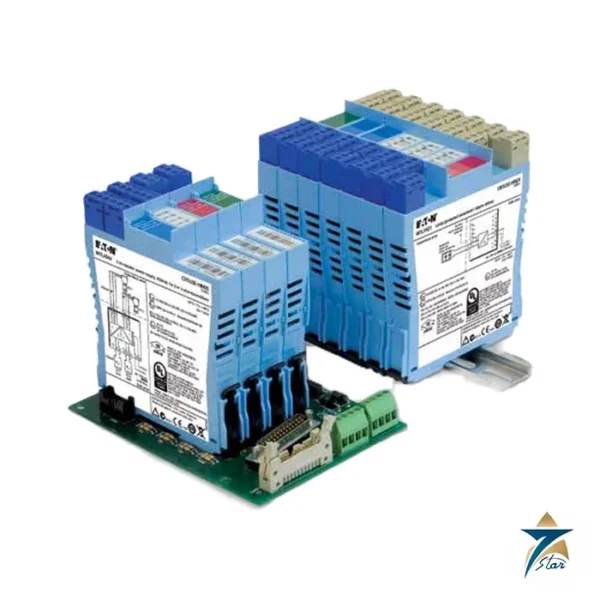
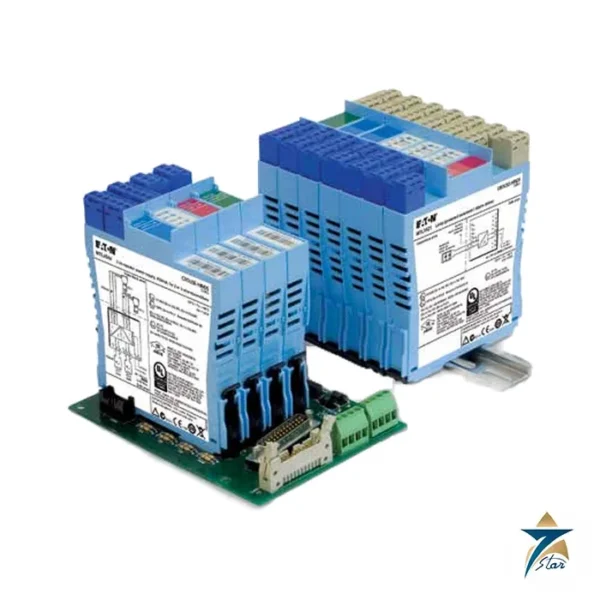
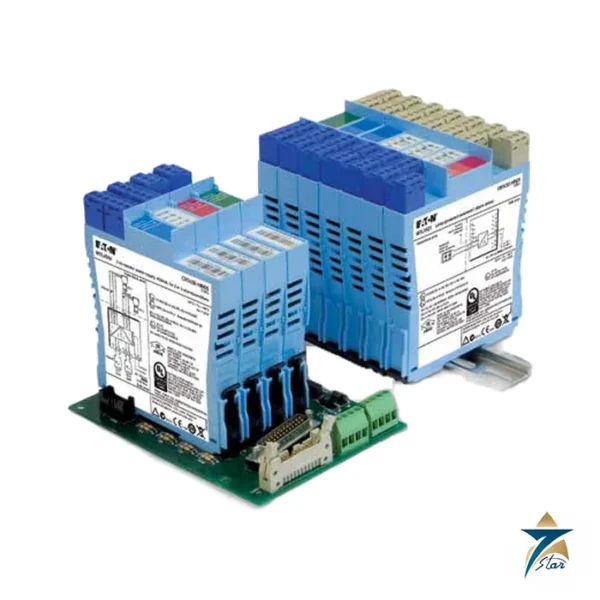
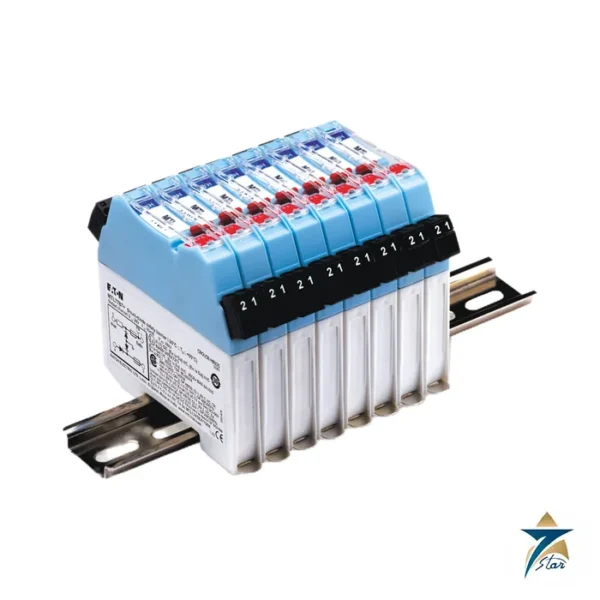
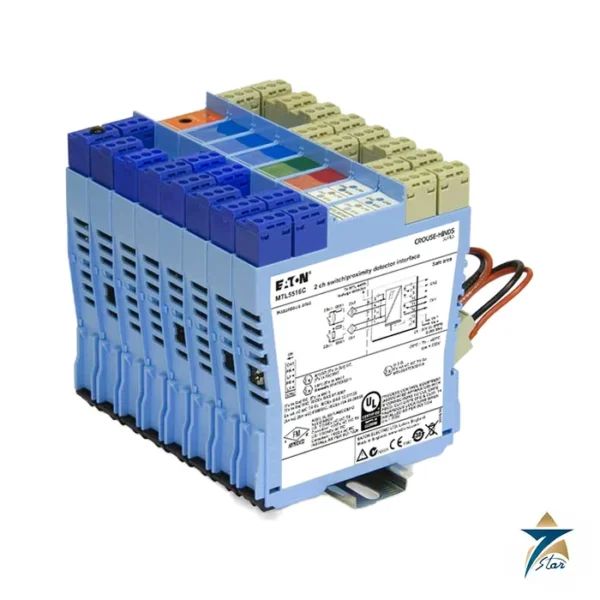
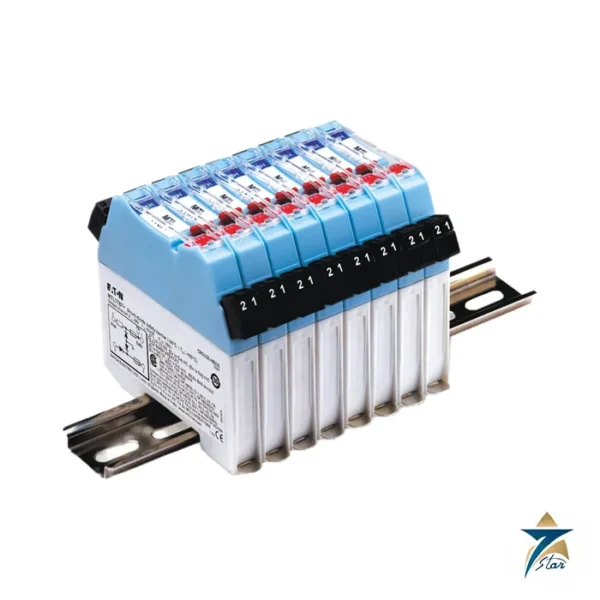
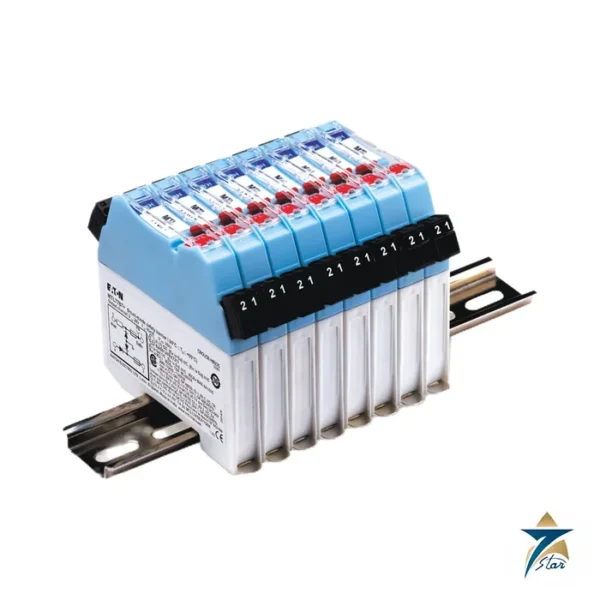
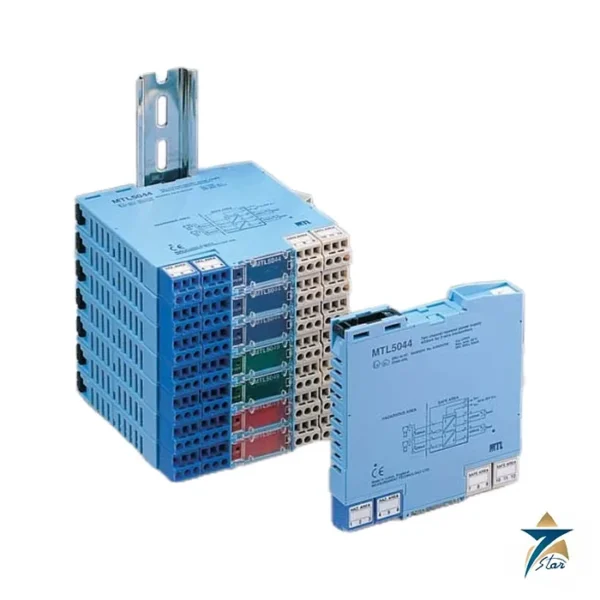
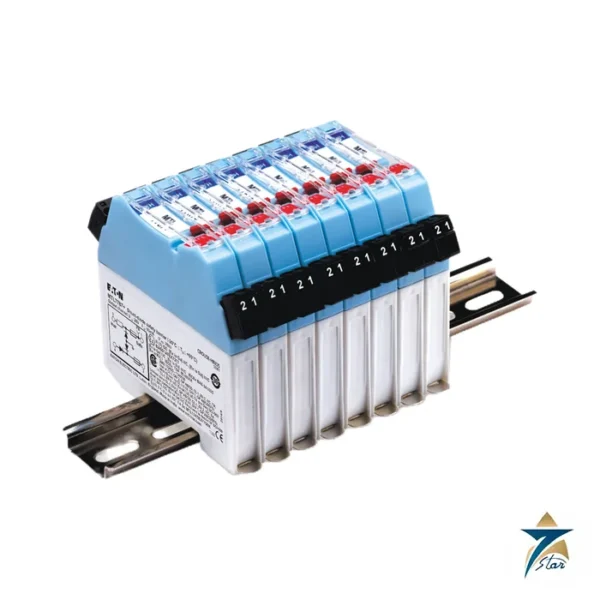
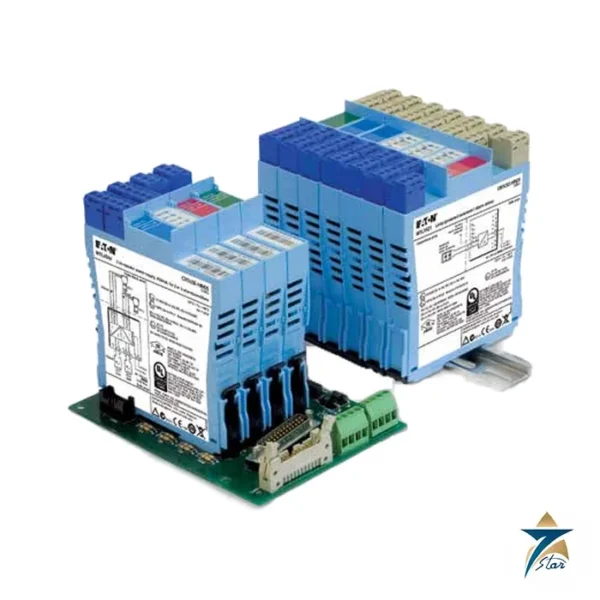
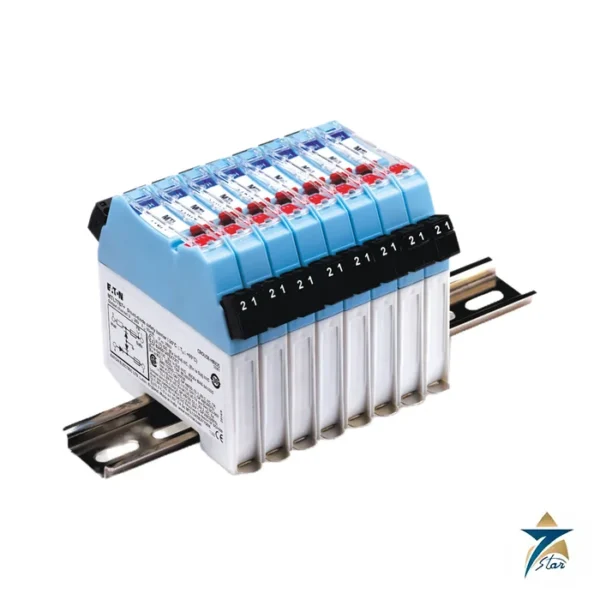
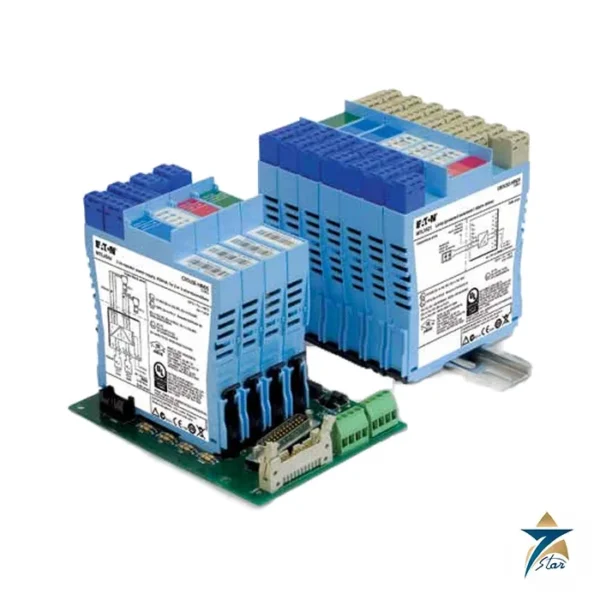
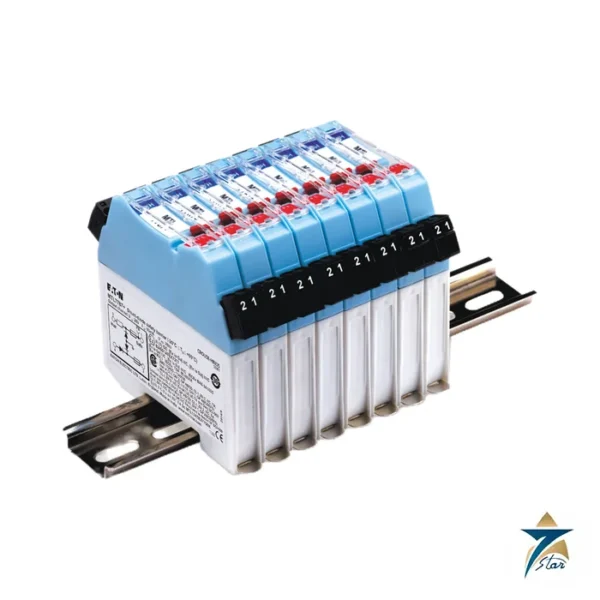
MTL MTL5576-RTD Two-Channel RTD Converter
Description
Two RTD inputs on one MTL5576-RTD
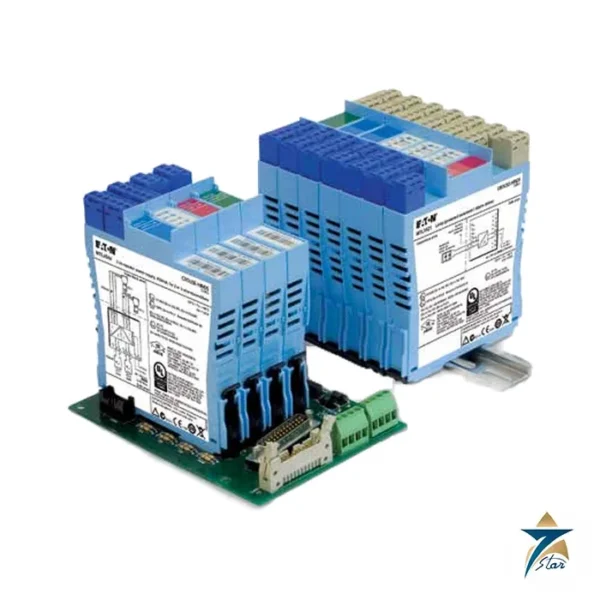
Resistance temperature detectors are the standard sensor for accurate process temperature, and plants often fit them in pairs. The MTL MTL5576-RTD is a two-channel converter that excites each RTD with 200 microamps, measures the resistance, and produces a 4-20 mA output for each. It also supports a potentiometer-type resistance input. Setup is by PC using the PCS45 software, so no trimpots are involved.
Datasheet figures for MTL5576-RTD
| Part | MTL5576-RTD |
|---|---|
| Input types | Pt100/500/1000 (BS 60751), Cu-50, Cu-53, Ni100/500/1000 (DIN 43760) |
| Wiring | 2-wire and 3-wire |
| Input range | 0 to 400 ohm (0 to 4000 ohm Pt and Ni) |
| Input span | 10 to 400 ohm (10 to 1000 ohm Pt and Ni) |
| RTD excitation | 200 microamps nominal |
| Calibration accuracy | input 80 milliohm; output 16 microamps |
| Drift | 7 milliohm per degree C; 0.6 microamp per degree C |
| Common mode rejection | 120 dB for 240 V at 50 or 60 Hz |
| Series mode rejection | 40 dB |
| Output | 4 to 20 mA into 300 ohm |
| Response time | 500 ms default, configurable |
| Safety drive | upscale, downscale or off |
| Power | 60 mA at 24 V; 1.4 W dissipation |
| Isolation | functional, channel to channel and safe to hazardous |
Working through the accuracy example for MTL5576-RTD
The manufacturer demonstrates the arithmetic with a 250 ohm span: the accuracy is plus or minus (0.08 over 250 plus 16 over 16000) times 100 percent, which equals 0.13 percent of span, and the temperature drift is plus or minus (0.007 over 250 times 16000 plus 0.6) microamps per degree C, about 1.0 microamp per degree C. These numbers allow an engineer to estimate loop error before ordering and to compare with the single-channel MTL5573.
Remember that the converter error adds to the sensor and wiring error, so a well-matched three-wire connection is still recommended for long runs.
MTL5576-RTD compared with similar parts
The MTL5576-THC is the thermocouple twin. The MTL5573 handles either THC or RTD, but only one channel. The MTL5582B is not a converter: it repeats the resistance to a system that wants resistance rather than 4-20 mA. Using the MTL5576-RTD makes sense when a PLC analogue card expects current and two RTDs are near each other.
Two-channel density also lowers the cost per point, which matters on projects with many temperature points.
Applications for MTL5576-RTD in Gulf industry
- Bearing and winding temperatures on pumps and motors in power and water plants
- Reactor, tank and pipeline temperatures in oil, gas and petrochemical sites
- Heat exchanger inlet and outlet pairs, using the two channels on one module
- Duplicate temperature sensing in a heater control and trip scheme
- Cold-storage and process temperature in food manufacturing with solvent areas
Installing and configuring the MTL5576-RTD
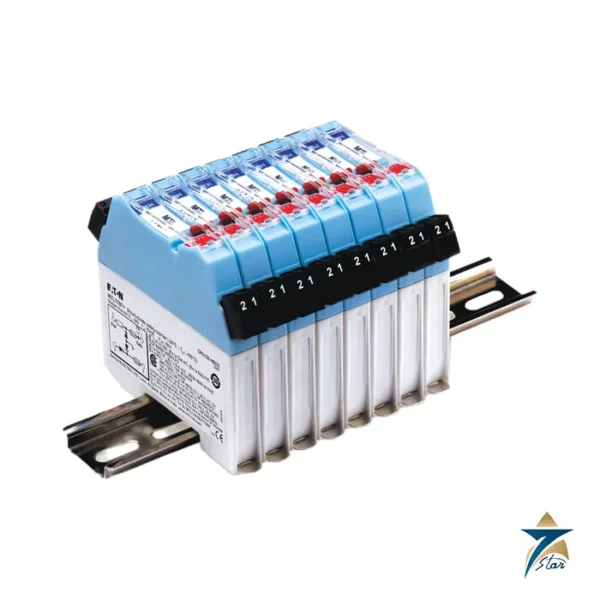
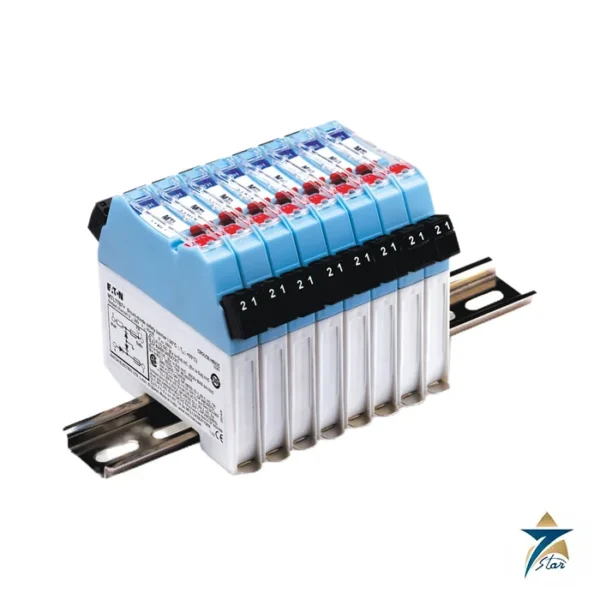
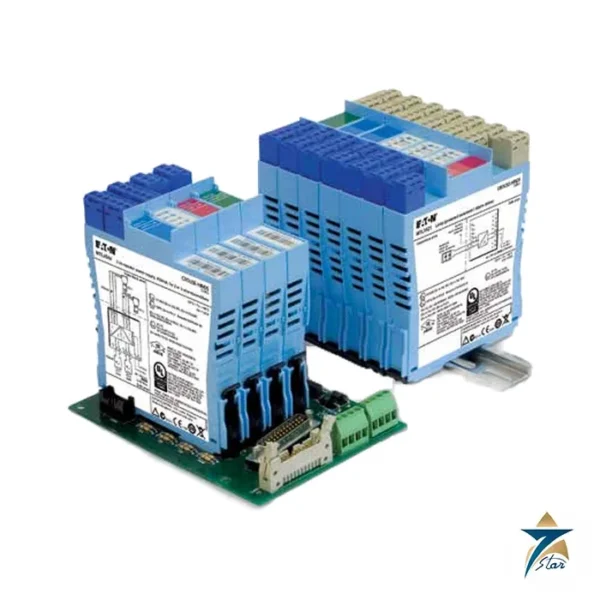
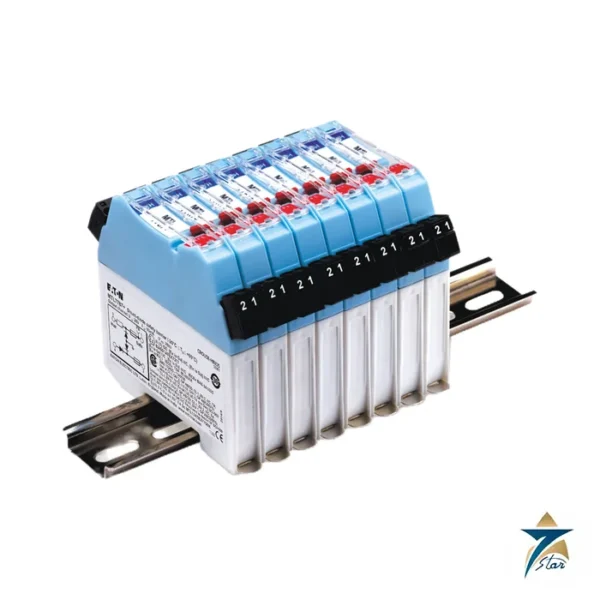
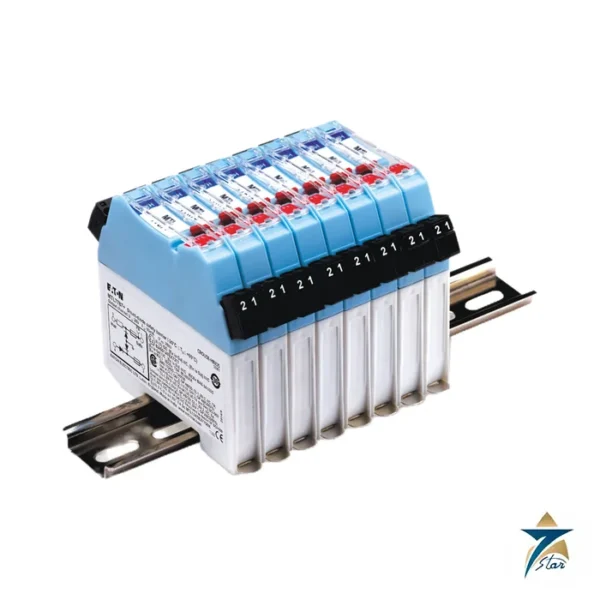
Clip the module on 35 mm rail and wire the RTD to the hazardous-area plug. Connect the 20 to 35 V dc supply, then plug in the PCL45USB link to run PCS45. Select the sensor type, ranging and failure action, then save the file. For a long cable, choose three-wire connection so the converter can correct for lead resistance.
Check the sensor by simulating resistance values from a decade box and confirm 4 mA, 12 mA and 20 mA at the corresponding temperatures.
Care and spares for MTL5576-RTD
Keep the saved configuration with each loop record. After replacement, load the file and re-verify. Seven Star LLC is an independent supplier serving Oman and the GCC and is not affiliated with the manufacturer.
Estimating loop error for MTL5576-RTD
Apply the datasheet formula to a Pt100 measured over 0 to 150 degrees C. The resistance span is about 57 ohm (100 to 157 ohm). The input accuracy of 80 milliohm is then 0.14 percent of the span and the output term adds 16 microamps over the 16 mA output span, 0.1 percent, so the combined figure is in the region of 0.2 percent of span, or about 0.3 degrees C. Choosing a narrower range improves resolution but magnifies the effect of the 80 milliohm term, so keep the span above 50 ohm unless the process truly needs a narrow window.
Drift is 7 milliohm per degree C at the input, so a 20 degree C change in cabinet temperature moves the reading by 140 milliohm, roughly 0.35 degrees C on a Pt100. Placing the module away from heaters and in a ventilated cabinet reduces this.
Sensor selection also changes the picture. A Pt1000 can use the 10 to 1000 ohm span and gives ten times the resistance change per degree, which reduces the relative effect of the 80 milliohm accuracy term and the lead resistance. When existing plant uses Cu-50, Cu-53 or Ni sensors, the module covers these too, avoiding a different converter for each sensor family.
There is a practical benefit to the dual-load option mentioned in the datasheet. If one RTD must feed both a control system and a separate recorder or a safety logic solver, configuring the MTL5576-RTD to drive two safe-area loads from one input avoids placing a second sensor and a second set of cable cores in the hazardous area. The cost is that both outputs follow the same range and the same failure action, so plan the alarm philosophy accordingly.
For bulk projects the numbers help with procurement: each module takes 60 mA at 24 V with a 20 mA signal and dissipates 1.4 W, so a 24 V, 5 A supply can in principle feed about 80 modules if no other load is present, although derating and redundancy rules normally reduce that figure. Keep spare modules matched to the part number exactly, because the THC and RTD versions look identical on the rail.
Documents and quotation
Ask for the 4500/5500 dataset along with your quotation. Send an RFQ stating MTL5576-RTD and the number of units and your delivery location in Oman or the GCC.
What to Include in Your MTL MTL5576-RTD Enquiry
An accurate quotation for the MTL MTL5576-RTD depends on a few details. Please share the complete part number, any suffix codes for options or approvals, the operating conditions at the installation point, and whether certificates of conformity or test reports must ship with the goods. It also helps to know whether the unit is for planned maintenance, a shutdown or an urgent breakdown, because that decides how it is sourced and shipped. With this information our team can check compatibility with your existing isolator & barrier and reply with availability and a realistic delivery estimate.
Other Models in the MTL5500 Temperature Range
Seven Star LLC supplies models from the MTL5500 Temperature range in Oman and the GCC. Compare the related models below and request a quote for the one that matches your application.
| Model | Category | |
|---|---|---|
| MTL MTL5582B RTD Resistance Isolator | Isolator & Barrier | View details |
| MTL MTL5576-RTD Two-Channel RTD Converter | Isolator & Barrier | You are viewing this model |
Datasheets & Documents
- Datasheet MTL MTL5576-RTD Two-Channel RTD Converter Datasheet Download
Reviews (0)
How would you rate this product? Cancel reply
About brand
MTL is a British maker of intrinsic safety interfaces, surge protection and hazardous-area equipment, founded in 1971 in Luton as Measurement Technology Ltd, a spin-off from Kent Instrumentation. In 2008 Cooper Industries bought MTL Instruments for £144 million and placed it in its Crouse-Hinds division; Eaton acquired Cooper in 2012. MTL is now part of Eaton's Crouse-Hinds business, alongside the MEDC signalling range.
Seven Star LLC lists MTL isolators, a fieldbus barrier and the configuration tools for them, and supplies MTL (Eaton) barriers and spare modules to sites in Oman as an independent supplier.
MTL (Eaton) company profile
| Founded | 1971, Luton, England, as Measurement Technology Ltd |
|---|---|
| Origin | Spin-off from Kent Instrumentation |
| Headquarters | Luton, England |
| Ownership | Eaton (Crouse-Hinds), via Cooper Industries from 2008 |
| Product families | MTL5500 and MTL4500 isolators, MTL7700 zener barriers, 9300 fieldbus barriers, surge protection devices, process junction boxes, PCS45 configuration software; MEDC beacons, sounders and call points |
Milestones
- 1971: Measurement Technology Ltd is founded in Luton.
- 2007: MTL acquires ELPRO Technologies, RTK Instruments and Ocean Technical Systems.
- 2008: Cooper Industries acquires MTL Instruments for £144 million.
- 2012: Eaton acquires Cooper Industries.
MTL product families listed here
Most of the listed items are DIN-rail galvanic isolators. The MTL5541 repeater power supply and the MTL5576-THC temperature converter belong to the MTL5500 range, and the MTL 5043 repeater power supply comes from the earlier MTL5000 range that many plants still run. The MTL 9370-FB2 is a fieldbus barrier for intrinsically safe FOUNDATION fieldbus spurs. PCS45 software with the PCL45USB link is the configurator for MTL converter modules. For the listed part CPM08-BN, please send a label photo so the number can be matched to the manufacturer's records. Newer labels show Eaton MTL, older ones Measurement Technology Ltd, and the module numbers are the same. The MTL 9608 is a fieldbus junction box with eight spur outlets plus a trunk-in connection, listed under the Crouse-Hinds series part number FCS-9608.
Where MTL barriers and isolators are used
These interfaces sit in marshalling cabinets wherever instruments are located in Zone 0, 1 or 2 areas: gas plants, refineries, offshore platforms, tank farms and chemical units across the GCC. They power 2-wire transmitters, pass HART, convert thermocouple signals and drive solenoids or alarms while limiting energy to the field circuit.
MTL (Eaton) products we list
Ordering MTL modules: what we need
Send the full module number including every suffix, for example MTL5576-THC and not just MTL5576, and the quantity. Tell us if the module mounts on DIN rail or on a backplane, because MTL5500 and MTL4500 parts are not interchangeable. For a fieldbus barrier give the number of spurs and the enclosure reference. A photo of the side label, which shows the certificate numbers, helps when the certificate for your project file must match.
Facts checked against the Eaton MTL company history and Drives & Controls coverage of the 2008 Cooper offer, October 2026.
Browse MTL (Eaton) products by category: Isolator & Barrier, Automation Software.
FAQ
Questions about the MTL MTL5576-RTD Two-Channel RTD Converter
Answers from our engineering team on installation, compatibility and integration.
01Which RTD sensors does the MTL5576-RTD accept?
Pt100, Pt500 and Pt1000 to BS 60751, Cu-50 and Cu-53, and Ni100, Ni500 and Ni1000 to DIN 43760, in 2-wire or 3-wire connection.
02What is the stated accuracy of the MTL5576-RTD?
Input calibration accuracy is 80 milliohm and output accuracy 16 microamps at 20 degrees C. The datasheet example for a 250 ohm span gives 0.13 percent of span.
03Can one RTD feed two loads?
Yes. The MTL5576-RTD can be configured to drive two safe-area loads from a single input, in addition to its normal two-channel mode.
04What excitation current is used?
The RTD excitation is 200 microamps nominal, low enough to avoid self-heating in the sensor.
05What input range and span are supported?
The input range is 0 to 400 ohm, or 0 to 4000 ohm for Pt and Ni sensors, with a span of 10 to 400 ohm, or 10 to 1000 ohm for Pt and Ni sensors.


Reviews
There are no reviews yet.