Thermal monitoring for Zone 2 and Division 2 plant areas
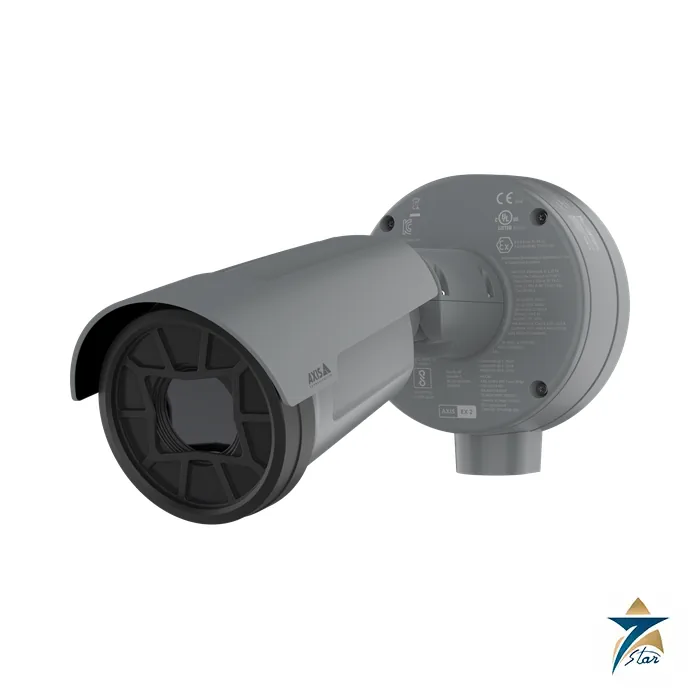
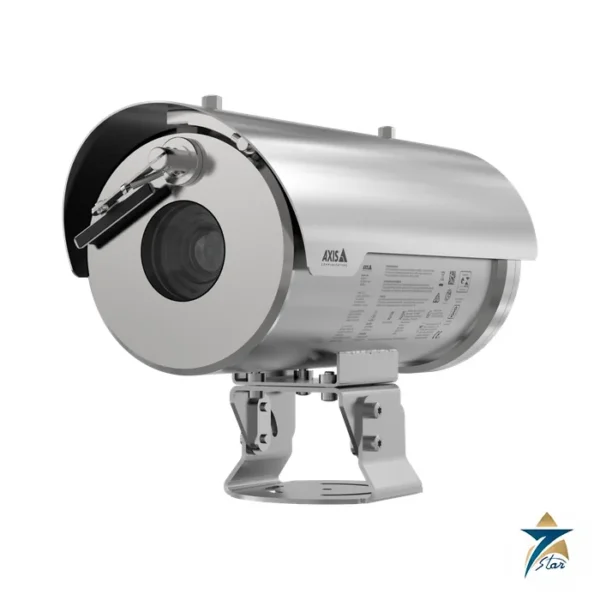
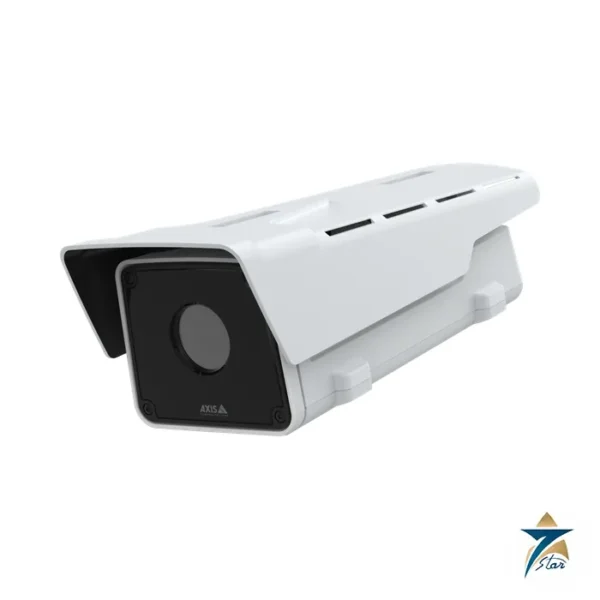
The Axis Q1961-XTE is a compact thermometric camera certified by Axis for hazardous areas rated Class I Division 2 and Zone 2. It combines a 384 x 288 uncooled microbolometer, a 7 mm athermalized lens with a 55 degree horizontal field of view, and temperature measurement from -40 to 350 degC. At 1.5 kg it is light enough for pole and wall mounting in process areas, and it is offered in an 8.3 fps and a 30 fps variant.
The camera sends a notification when temperature goes above or below a set threshold, or rises or falls too quickly, using up to 10 polygonal detection areas and a spot temperature reading. Early fire detection is listed as an event condition. Axis Edge Vault, TPM 2.0 and signed video support secure operation on shared plant networks.
Technical specifications
| Parameter |
Specification |
| Manufacturer / model |
Axis Communications, AXIS Q1961-XTE Explosion-Protected Thermal Camera; variants 7 mm 8.3 fps and 7 mm 30 fps |
| Sensor |
Uncooled microbolometer 384 x 288, 17 micrometre pixels; spectral range 8 to 14 micrometres; NETD 40 mK at 25 degC, F1.0 |
| Lens |
Athermalized 7 mm; horizontal field of view 55 degrees, vertical 40.7 degrees; F1.18; minimum focus distance 1.3 m |
| Thermometry |
Object temperature -40 to 350 degC; accuracy plus or minus 5 degC below 120 degC, plus or minus 15% above; object at least 10 x 10 pixels |
| Detection areas |
Spot temperature meter and up to 10 polygonal temperature detection areas |
| Resolution / frame rate |
384 x 288, scalable to 768 x 576; up to 8.3 fps or 30 fps |
| System on chip / memory |
ARTPEC-8 with DLPU; 2048 MB RAM, 8192 MB flash |
| Video compression |
H.264, H.265, Motion JPEG; Axis Zipstream; up to 20 configurable streams |
| ATEX |
II 3 G Ex ec IIC T4 Gc; II 2 D Ex tb IIIC T135 degC Db; certificates UL 22 ATEX 2732X and UL 22 ATEX 2888X |
| IECEx |
Ex ec IIC T4 Gc; Ex tb IIIC T135 degC Db; certificate ULD 22.0011X |
| cULus |
Class I Div 2 Groups A, B, C, D T4; Class II Div 2 Groups F, G T135 degC T4; Class III Div 2; Class I Zone 2 AEx ec IIC T4 Gc; Zone 21 AEx IIIC T135 degC Db; certificate E525121 |
| Other certificates |
INMETRO, IA, OSHA Taiwan, PESO (P603185/2), Korea and JPEx certificates are printed in the datasheet |
| Standards |
IEC/EN 60079-0, -7, -31; UL 60079-0, -7, -31; CSA C22.2 No. 60079-0, -7, -31 and 213-17; UL 121201 |
| Casing |
Polycarbonate blend and aluminium, germanium window, gray NCS S 5502-B; IP66/IP67, NEMA 4X, IK10 (excluding front window) |
| Power |
PoE IEEE 802.3af/802.3at Type 1 Class 3, typical 4.3 W, max 12.95 W; or 10 to 28 V DC, typical 4.1 W, max 12.95 W |
| Connectors |
Shielded RJ45 10/100/1000BASE-T PoE; terminal block for 1 supervised alarm input and 1 output; 3.5 mm mic/line in; DC input |
| Operating temperature |
-30 to 60 degC; humidity 10 to 100% RH (condensing) |
| Weight |
1.5 kg; EPA 0.022 m2 |
| Integration |
Open API including VAPIX and AXIS Camera Application Platform; MQTT |
| Manufacturer Warranty |
5 years |
Matching the certificate and cable entry to the area
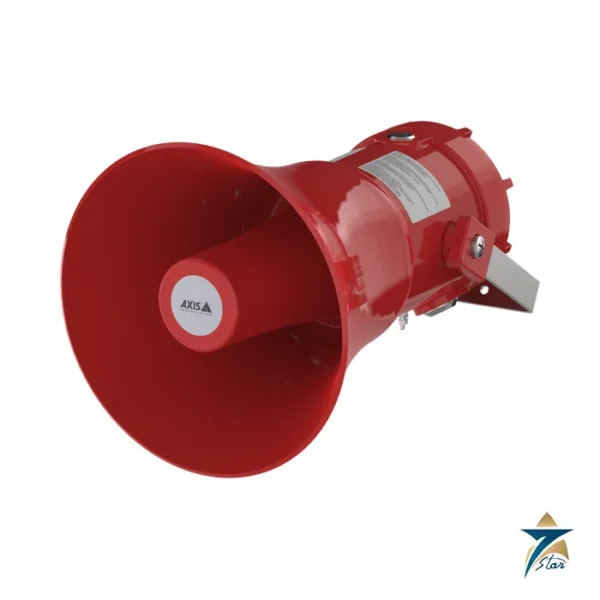
Axis certifies this model for the lower-risk classified areas: Zone 2 and Division 2 for gas (T4) and Zone 21 for dust (T135 degC). If a location is Zone 1 or Division 1, a model certified for Division 1 or Zone 1 is needed instead, such as the XC1311 horn speaker for audio or the explosion-protected cameras that Axis lists for Zone 1, so check the classification before ordering. Compare the gas group, the dust group and the temperature class printed in the datasheet with the area drawing, and confirm which certificate scheme the site authority accepts.
The camera uses terminal block connections for I/O and power and a shielded RJ45 for PoE, so cable glanding and the junction arrangement must follow the certificate conditions marked X in the datasheet. Maximum power is only 12.95 W, which any 802.3af switch port can supply.
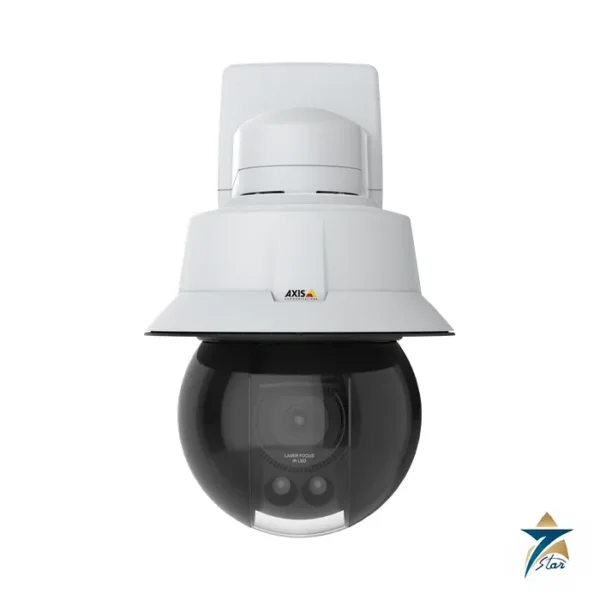
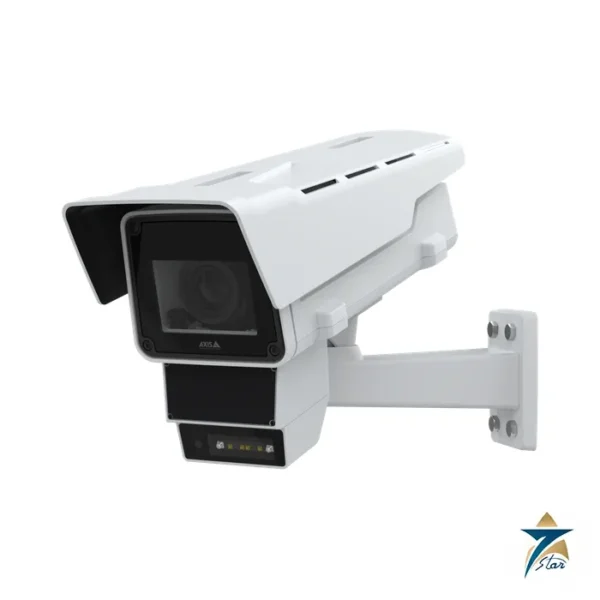
A thermal image is not a replacement for a visible camera when identification is required; pair it with a visible-light unit such as the Axis P1465-LE or a hazardous-area visible camera. State the frame-rate variant, power source and the video system with your enquiry.
Installation planning for hazardous-area thermal monitoring
Plan the camera position from the thermal task backwards. Decide which equipment must be watched, such as pumps, compressor skids, conveyors or storage areas, and check that the target will be large enough in the image for reliable measurement at the chosen distance, bearing in mind the minimum object size stated in the thermometry row. Avoid views where hot sky, reflective metal cladding or flare radiation dominate the scene, as these can confuse temperature readings and threshold alarms.
All installation work in a classified area must follow the site permit system and the certificate conditions. Use cable and entry methods that match the certificate marking, keep the documentation of each installation with the area records, and make sure the installer is competent in the relevant hazardous-area standards.
Commissioning thresholds and detection areas
Once the camera is connected, draw the polygonal detection areas around the specific equipment rather than the whole scene, and set threshold and rate-of-change alarms based on observed normal operating temperatures over several days. Record the settings and export the configuration so that it can be restored after a replacement. Test the alarm path all the way to the control room or video management system, including the alarm output if it is used.
Operating in Oman and GCC desert and coastal conditions
Process sites in Oman experience very high surface temperatures in summer, sand and dust carried by wind, and humid, salt-laden air along the coast. Strong solar heating of surrounding structures changes the thermal background through the day, so thresholds that work at night may trigger false alarms at midday. Review alarm logs after the first summer weeks and adjust detection areas and limits where needed. Check that the operating temperature range in the specification table covers the expected conditions at the mounting point, including heat radiated from nearby equipment.
Cleaning and periodic inspection
Dust on the germanium window reduces image quality and measurement accuracy, so include window cleaning in the routine inspection plan, using methods that do not scratch the window and that are permitted in the hazardous area. During inspections, also check mounting stability, cable condition and the certificate marking, and confirm that the camera still reports correct time and streams to the recording system.
Documents and quotation
The attached Axis datasheet lists every certificate number, the variant list and the dimension drawing. Send the zone or division, gas or dust group, quantity and mounting hardware with your request for quotation. Related products: CCTV and security products.




Reviews
There are no reviews yet.