Brand:

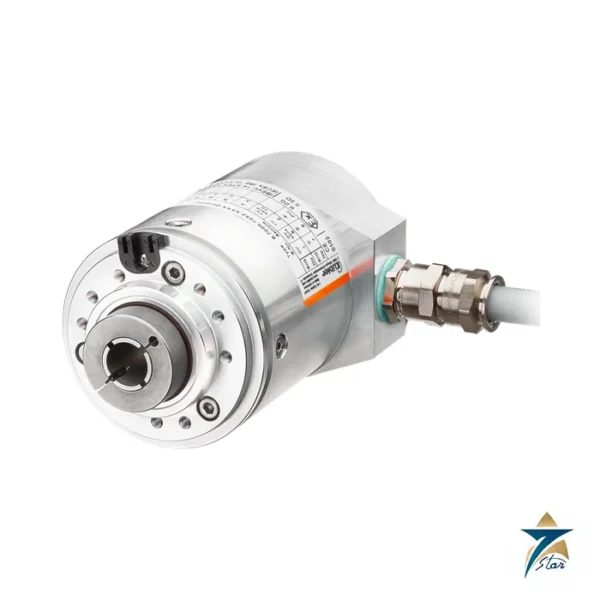
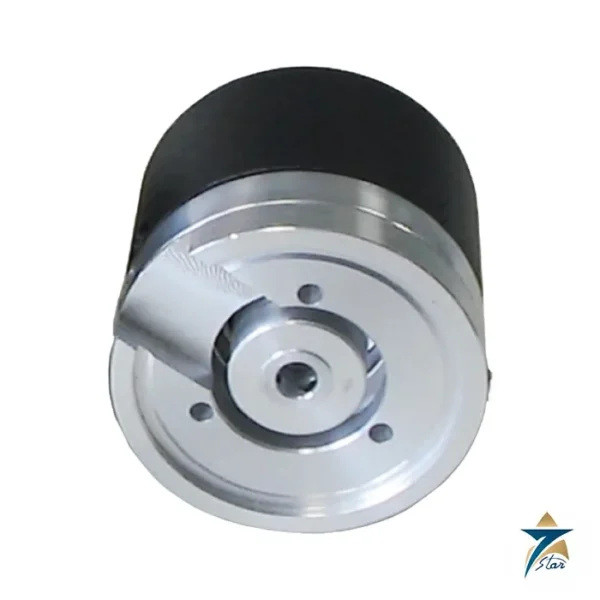
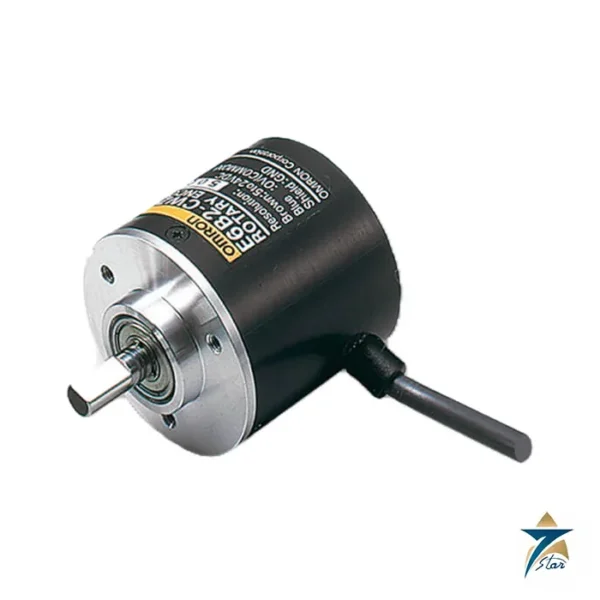
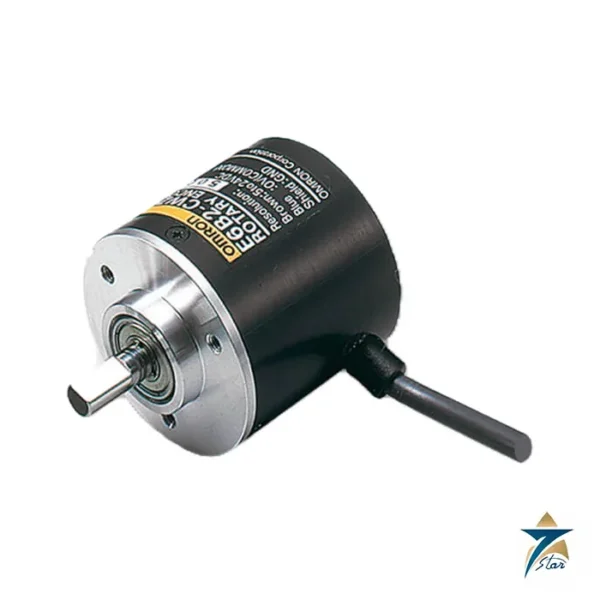
Autonics E50S8-360-3-N-24 50 mm Incremental Rotary Encoder

Description

Overview

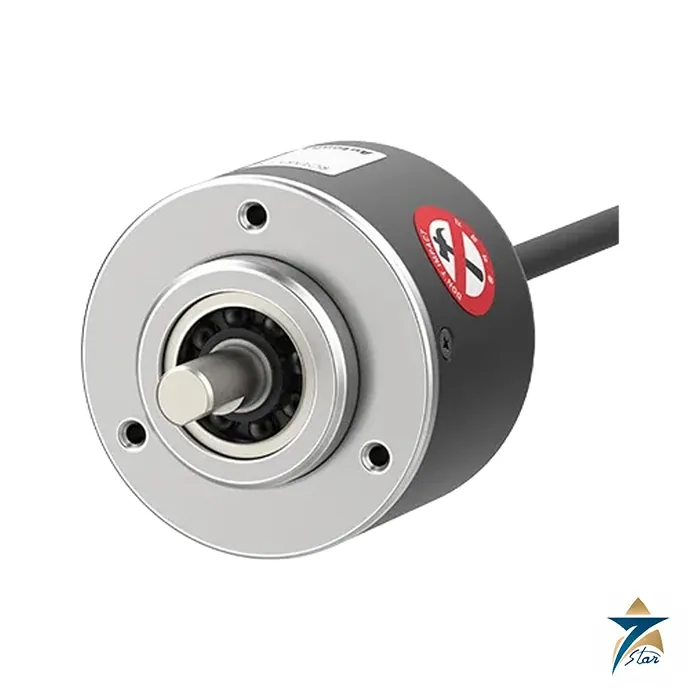
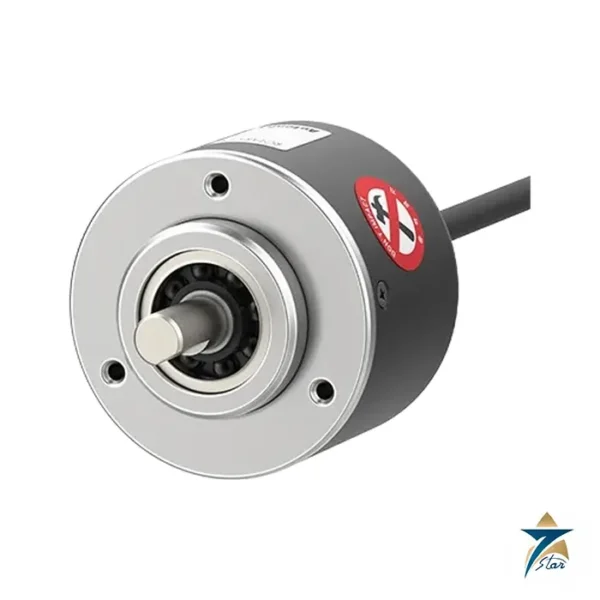
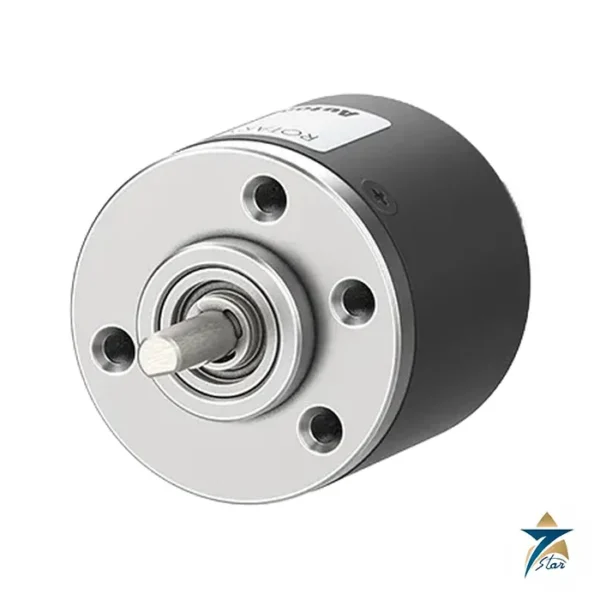
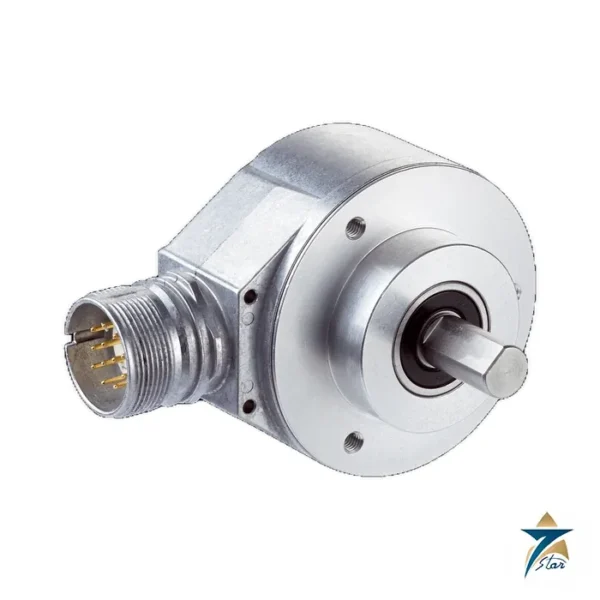
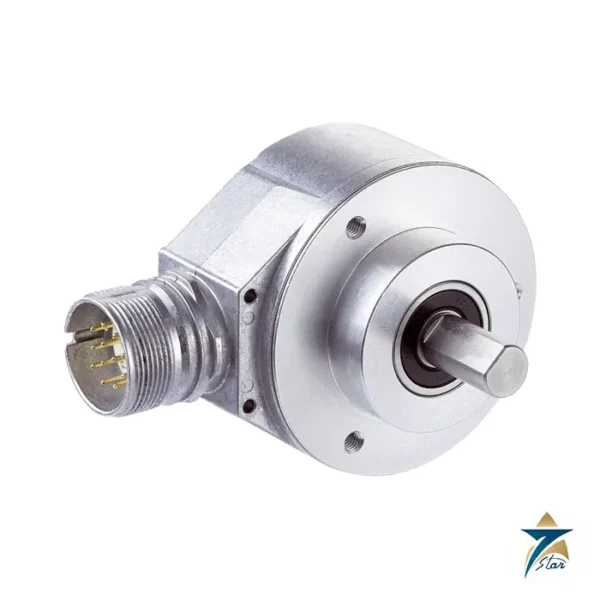
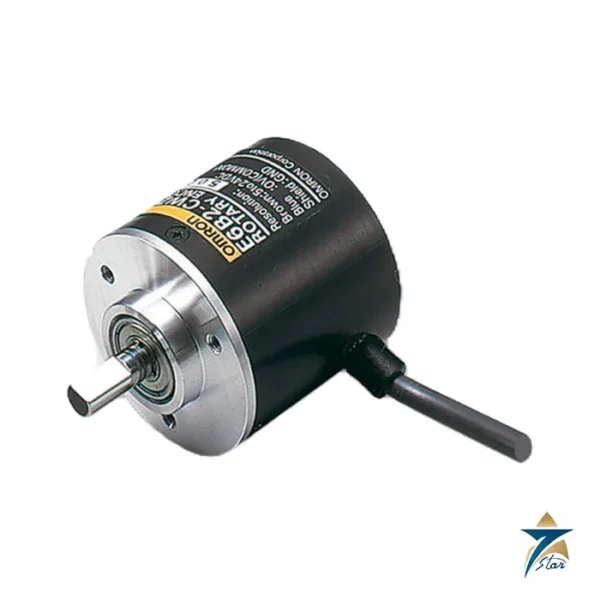
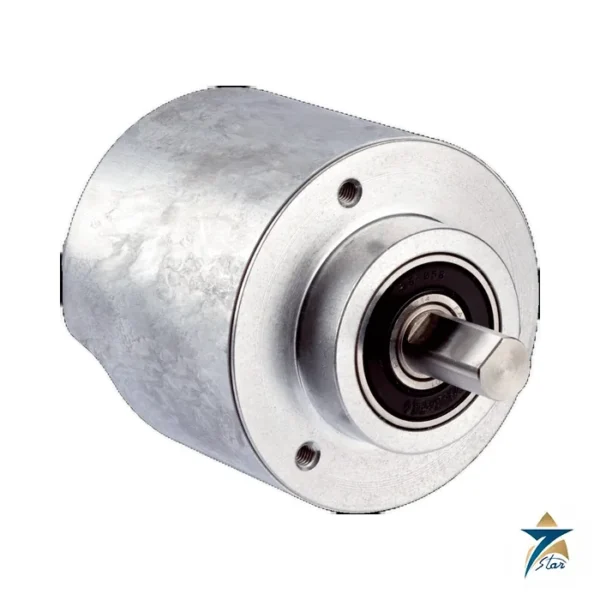
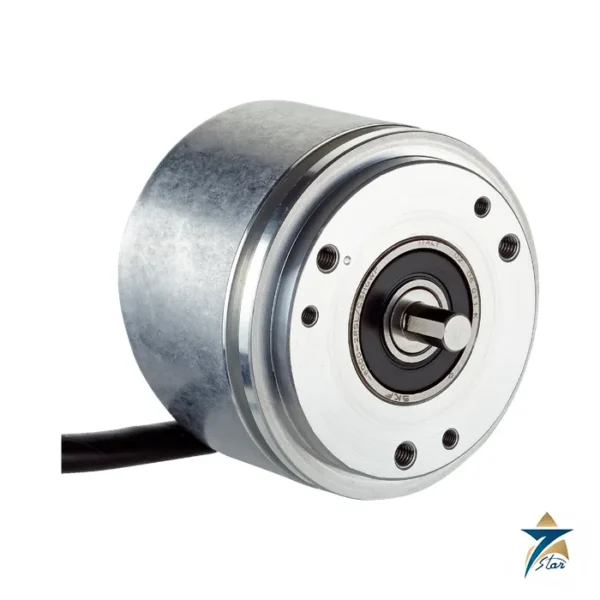
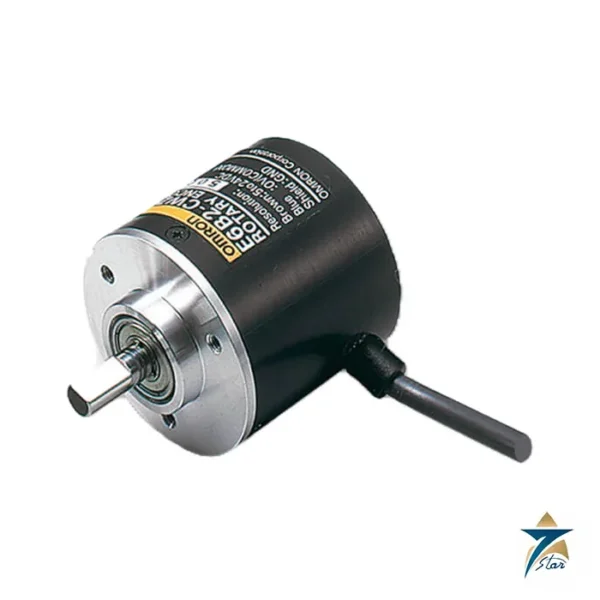
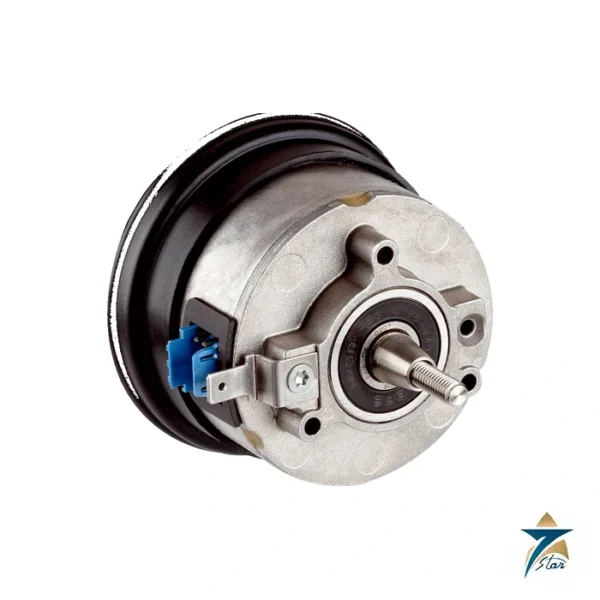
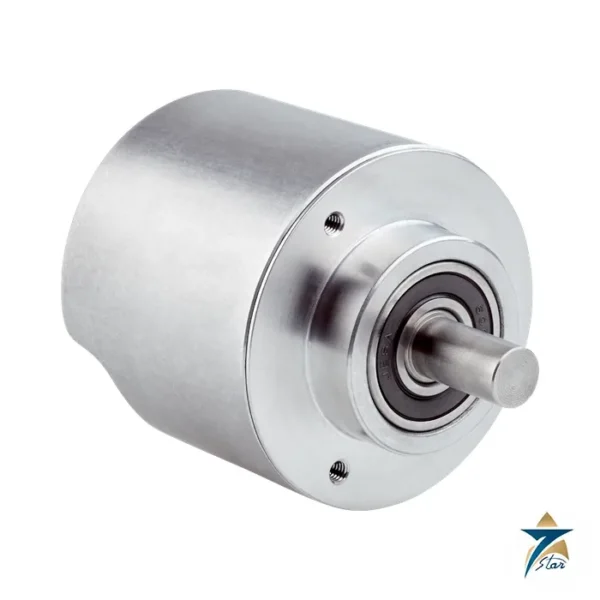
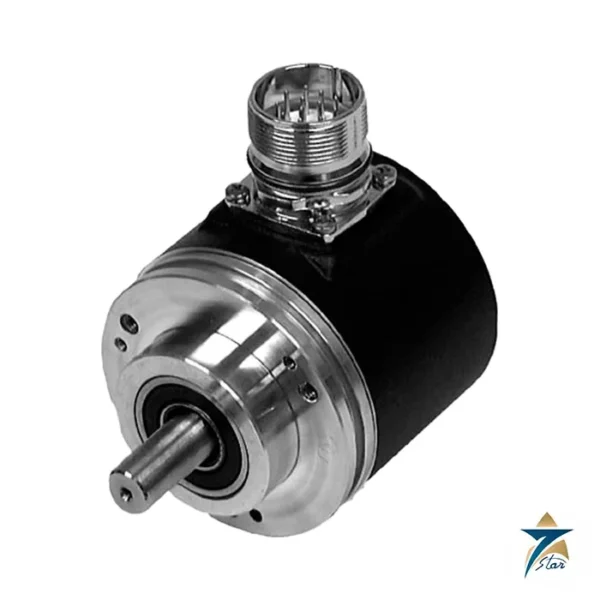
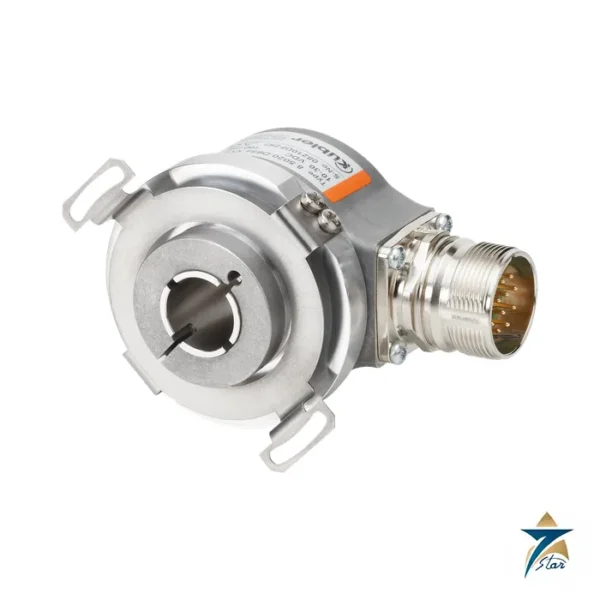
A 360 pulse count has a special advantage: one pulse equals exactly one degree of shaft rotation, which makes angle reading and cut-length calculation a simple matter. The Autonics E50S8-360-3-N-24 is a 50 mm incremental rotary encoder with an 8 mm solid shaft, a resolution of 360 pulses per revolution, three output phases A, B and Z, an NPN open collector output and a 12 to 24 V DC supply. It is a general-purpose encoder for machines that need a robust, economical feedback device. Seven Star LLC is an independent supplier serving Oman and the GCC.

How to read Autonics E50S8-360-3-N-24

E50 is the 50 mm body series and S marks the solid shaft type. The 8 is the shaft diameter in millimetres. The number 360 is the resolution, the next digit 3 is the output phase set A, B and Z, N is the NPN open collector output and 24 is the supply code for 12 to 24 V DC plus or minus 5 percent. Without a suffix, the connection is an axial cable; letters C, CR and CS would add connector types.

Specification table for Autonics E50S8-360-3-N-24

Item Data
Body and shaft 50 mm body, 8 mm solid shaft
Resolution 360 pulses per revolution
Output phases A, B, Z, with A to B phase difference of a quarter cycle plus or minus one eighth
Output NPN open collector, sink current 30 mA or less, residual voltage 0.4 V DC or less
Supply 12 to 24 V DC plus or minus 5 percent, ripple 5 percent or less
Current consumption 80 mA or less, no load
Response 1 microsecond or less, maximum frequency 300 kHz
Maximum revolution 5,000 rpm
Starting torque 0.007 N m or less (cable type)
Inertia moment 80 g cm2 or less
Shaft load radial 10 kgf, thrust 2.5 kgf
Insulation and dielectric 100 megohm; 750 V AC for 1 minute
Vibration and shock 1.5 mm, 10 to 55 Hz, 2 hours; about 75 G
Ambient minus 10 to plus 70 degrees C
Protection IP50 (IP64 available as an option)
Cable 5 mm, 5-wire, shielded, 2 m, AWG 24
Weight about 275 g, about 363 g packaged

How the Autonics E50S8-360-3-N-24 differs from other E50 variants

The E50S8 family offers resolutions of 1, 2 and 5 pulses per revolution and from 10 up to 8,000, and four output types: totem-pole (T), NPN open collector (N), voltage (V) and line driver (L). Compared with the T version, the N output only sinks current, with a 30 mA limit, and cannot source it; the T version also sources 10 mA and swings to the supply voltage. The line driver version outputs A, A-bar, B, B-bar, Z and Z-bar and has a faster response of 0.5 microsecond, but sinks and sources 20 mA. A 360 PPR resolution is a special value, aimed at degrees, in contrast with the popular 1,000 and 1,024 counts.

Using one pulse per degree

With four-edge counting of the A and B phases, the counter sees 1,440 counts per turn, or one count every quarter degree, while counting A alone gives one per degree. A rotary table, a turret, a rotary cutter or a valve actuator can therefore be positioned in angular units with no scaling constant. The Z phase gives one pulse per turn, a convenient home or reference mark. Check the maximum frequency: 360 pulses at 5,000 rpm is 30 kHz, comfortably below the 300 kHz limit, so the speed limit is mechanical, not electrical.

Choosing the counting method for the Autonics E50S8-360-3-N-24

A quadrature encoder can be read in three ways. Counting only the rising edge of phase A gives 360 counts per revolution, counting every edge of A gives 720, and counting every edge of both A and B gives 1,440, or one count per quarter degree. The higher the multiplication, the finer the position and the higher the pulse rate that the receiving counter must handle, so check the input frequency specification of the PLC card. Direction is decoded from the phase relation of A and B, which the manual shows as a quarter cycle apart with a tolerance of one eighth of a cycle, for clockwise rotation seen from the shaft end. If the count runs the wrong way, swap the A and B wires, not the shaft direction.

The Z phase appears once per turn and can be used to clear the counter at a home position or to check for lost pulses: if the count between two Z pulses is not 1,440 in four-edge mode, noise or slippage has occurred. This check is simple to implement in a PLC and is a good habit on machines that run unattended through long shifts in hot workshops.

Applications in Oman and the GCC

This encoder serves packaging and printing machines, cutting-to-length, conveyors, winders, indexing tables, valve and gate positioners and test rigs. Oil and gas workshops and fabrication yards use it on rotary tables and rolling machines. The NPN open collector output suits PLC and counter inputs of the sinking type, such as the Autonics CT and LA series counters or timers with no-voltage inputs, with a pull-up if required by the receiving device.

Mechanical installation

Connect the shaft through a flexible coupling, since a rigid connection transmits misalignment to the bearings and shortens life; the manual warns that without a coupling impact or load may be applied directly to the shaft. Respect the radial limit of 10 kgf and thrust limit of 2.5 kgf. Fit the body through the flange and fix with the screws provided. Do not strike the shaft with a hammer, and do not rotate the encoder above 5,000 rpm.

Wiring

For the cable type, the black wire carries output A, white is output B, orange is output Z, brown is plus supply and blue is 0 V, with the shield to frame ground. Insulate unused wires. Ground the metal case and the shield, route the cable apart from power lines, and keep it short, because line resistance and cable capacitance raise the residual voltage and limit the usable frequency. An NPN output needs a pull-up resistor or the input circuit of the receiver to read a clean level.

Maintenance

Check the coupling set screws, the cable at the exit point, and the bearing noise at each shutdown. Do not open the encoder. For wet or dusty locations, the IP50 rating of the cable type is limited, so ask for the IP64 option or shield the unit. Replace the unit if signals drop out or the shaft becomes rough.

Related items you may also need: Autonics E40S6-2500-6-L-5 Rotary Encoder Incremental | SICK DBS50E-S5AK02000 DBS36/50 Encoder | SICK AFS60A-S4AM065536 SSI Singleturn Encoder, 16 Bit | All Autonics products.

Documents and quotation

The E50 series product manual covering the Autonics E50S8-360-3-N-24 is attached with ordering information, waveforms, wiring and dimensions. Send an RFQ with the part number Autonics E50S8-360-3-N-24, quantity and delivery location in Oman or the GCC.

Datasheets & Documents
  • PDF Datasheet Autonics E50S8-360-3-N-24 50 mm Incremental Rotary Encoder Datasheet Download
Reviews (0)

Reviews

There are no reviews yet.

How would you rate this product?

It takes about 10 seconds — just tap a star. Your email is never published.

About brand

Autonics is a South Korean maker of sensors and controllers, founded in 1977 as a small engineering business making controllers for looms. It took the Autonics name in 1988 and opened a new corporate headquarters in Busan in 2014. Autonics makes proximity and photoelectric sensors, rotary encoders, temperature controllers, counters, timers and stepper motor systems, with factories in Busan and Yangsan.

Seven Star LLC lists the Autonics E40S6-2500-6-L-5 incremental rotary encoder and supplies Autonics sensors and control devices in Oman and the GCC.

Autonics company profile

Founded 1977, South Korea
Current name Autonics, since 1988
Headquarters Busan, South Korea
Factories Busan and Yangsan
Product families E40 and E50 rotary encoders, PR proximity sensors, BJ photoelectric sensors, TK temperature controllers

Milestones

  • 1977: The company is founded.
  • 1988: Renamed Autonics Corporation.
  • 2014: Opens its Busan headquarters.

Reading the Autonics E40S encoder code

E40S is the 40 mm diameter shaft-type incremental encoder, and the 6 that follows is the 6 mm shaft. 2500 is the resolution in pulses per revolution. The next 6 means six output signals: A, B and Z with their inverted signals. L is a line driver output and the final 5 is a 5 V DC supply. The same 40 mm body is made in hollow shaft form as the E40H and E40HB series.

Where Autonics encoders are used

Servo and spindle feedback, conveyor length measurement, packaging and printing machines.

Ordering Autonics encoders: what we need

Send the complete model string from the label. If it is worn off, give the body and shaft diameter, pulses per revolution, output type, supply voltage and cable or connector style.

Facts checked against Autonics corporate profiles, October 2026.

FAQ

Questions about the Autonics E50S8-360-3-N-24 50 mm Incremental Rotary

Answers from our engineering team on installation, compatibility and integration.

01What is the resolution of the Autonics E50S8-360-3-N-24?
It gives 360 pulses per revolution on phases A and B, with a Z index pulse once per turn, so each pulse equals one degree.
02What output does the Autonics E50S8-360-3-N-24 have?
It has an NPN open collector output with a sink current of 30 mA or less and residual voltage of 0.4 V DC or less.
03What supply does the Autonics E50S8-360-3-N-24 need?
The code 24 means 12 to 24 V DC plus or minus 5 percent, with ripple up to 5 percent and a current of 80 mA or less without load.
04What shaft does the Autonics E50S8-360-3-N-24 have?
An 8 mm solid shaft on a 50 mm body, with an allowable radial load of 10 kgf and thrust load of 2.5 kgf.
05What is the maximum speed of the Autonics E50S8-360-3-N-24?
The maximum allowable revolution is 5,000 rpm, and the response frequency limit is 300 kHz.