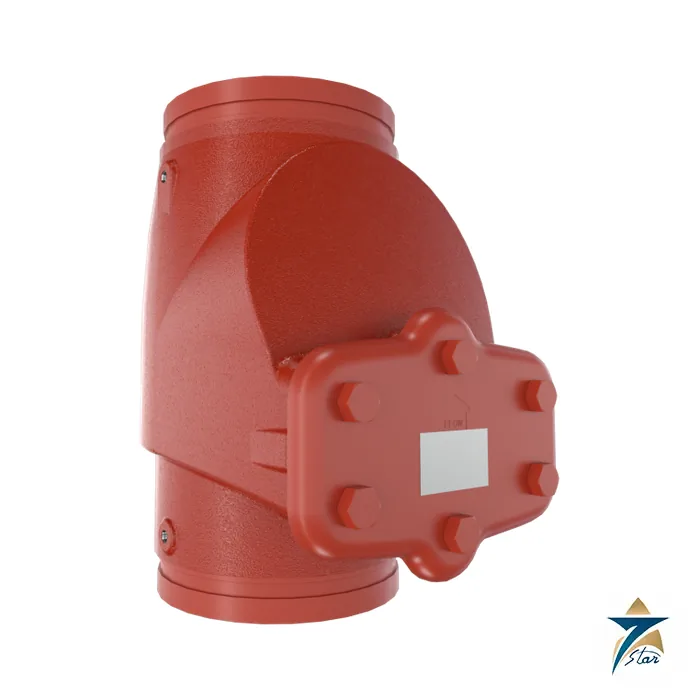
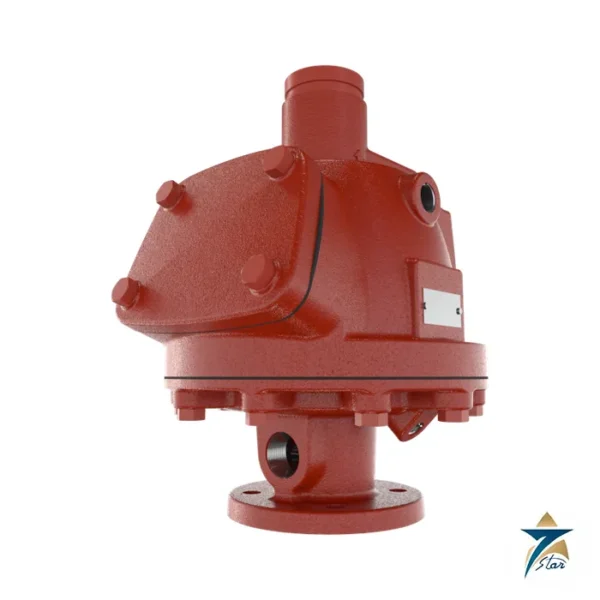
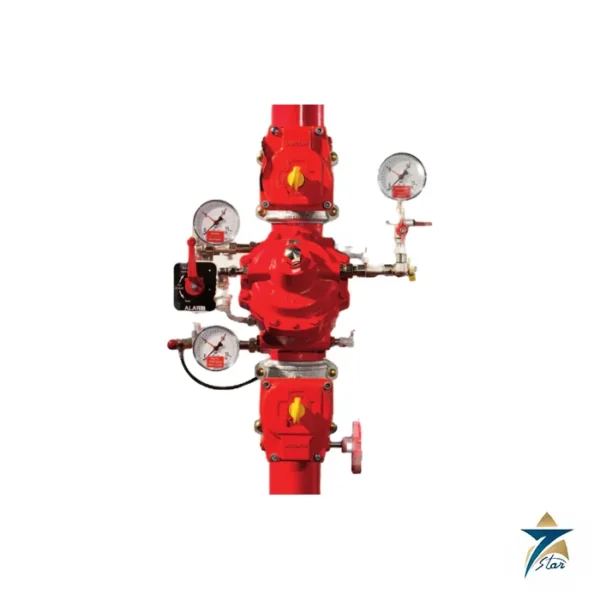
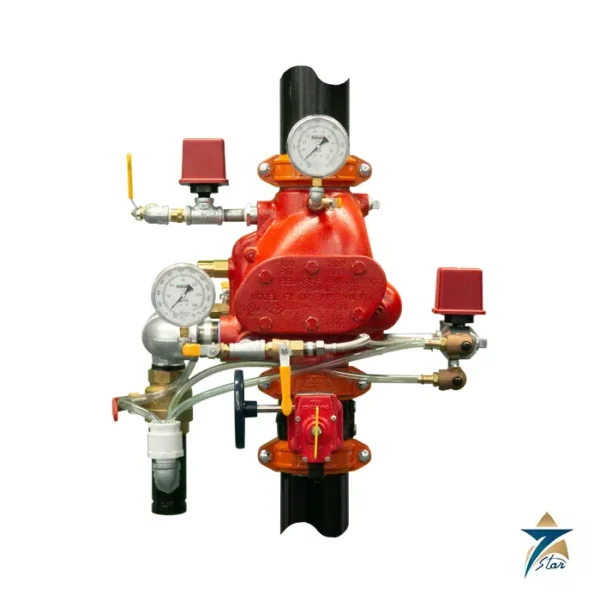
A wet system alarm check valve with serviceable internals
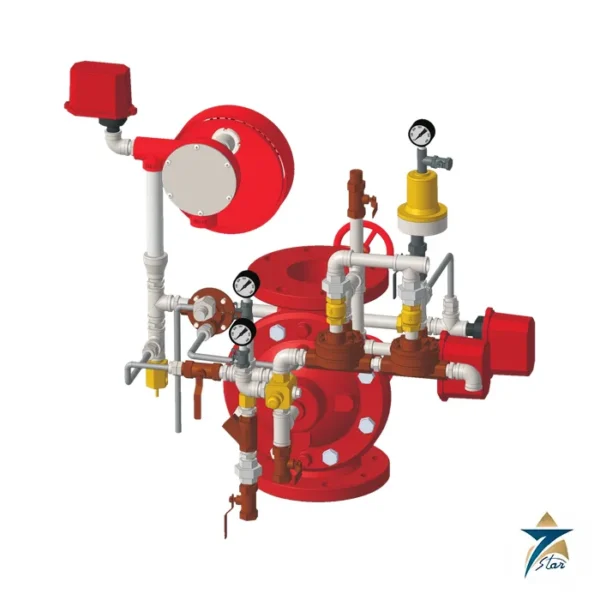
The Viking Model J-1 alarm check valve acts as a check valve, trapping pressurised water above the clapper and blocking reverse flow from the sprinkler piping. During a sustained flow, such as the flow through an open sprinkler, it starts an alarm by operating an optional water motor alarm or an alarm pressure switch. Adding the optional retard chamber to the standard trim makes it suitable for variable pressure water supplies, where it limits false alarms.
Viking highlights a ductile iron body, a rubber-faced clapper hinged to the access cover, and the fact that all moving parts can be serviced without taking the valve out of the line. With the cover and clapper removed, replacing the clapper rubber needs only one screw to be taken out. The valve can be installed vertically or horizontally with the access cover facing up.
Technical specifications
| Parameter |
Specification |
| Manufacturer / model |
Viking, Model J-1 alarm check valve |
| Water working pressure |
300 psi (20.7 bar); factory test 600 psi (41.4 bar) |
| Sizes |
3 in, 4 in, 6 in, 8 in (ANSI) and DN80 to DN200 (PN10, PN16) |
| Connections |
Flange by flange, flange by groove, or groove by groove |
| Part numbers, ANSI flange by flange |
3 in 08235; 4 in 08238; 6 in 08241; 8 in 08244 |
| Part numbers, groove by groove |
3 in 08237; 4 in 08240; 6 in 08243; 8 in 08246 |
| Friction loss (C = 120) |
10 ft, 13 ft, 20 ft, 23 ft equivalent Schedule 40 pipe |
| Shipping weight, flange by flange |
35 lb, 47 lb, 75 lb, 135 lb (16, 21, 34, 61 kg) |
| Listings printed by Viking |
cULus Listed EX659; FM Approved Class 1041; ABS certificate 19-HS1862975-PDA; LPCB EN 12259-2 certificate 096b; VdS DN80 to DN200 G 4960086 to G 4960089; CE CPR DOP_S0037; UKCA DOC_S5031 |
| Pressure note |
300 psi for groove by groove; 232 psi (16 bar) for flange by flange and flange by groove under LPCB, VdS, CE and UKCA |
The valve may be hydrostatically tested at 350 psi or 50 psi above normal working pressure for up to two hours for acceptance. If air testing is required, do not exceed 40 psi (2.8 bar).
Trim and alarm devices
Viking 300 psi trim is required to maintain the cULus Listings and FM Approvals, and no substitutions or omissions are allowed. Vertical and horizontal trim packages are available; trim includes the external by-pass that reduces clapper movement and false alarms, an alarm test valve to test alarms without lowering system pressure, and tappings for inlet and outlet gauges, alarm devices and the system main drain. A non-interruptible pressure switch can be added to drive an electric alarm panel.
Additional accessories may be needed for operation or supervision, so check the system description for the complete trim requirement.
Viking asks the installer to remove all plastic thread protectors, apply a small amount of pipe-joint compound or tape to external threads without letting any enter the valve, and trim the valve to the current Viking trim chart. When filling, the system test valve and auxiliary vents are opened so air can escape, the alarm shut-off valve may be closed to stop local alarms sounding during filling, and the water supply main control valve is opened slowly. Once the air is out, the alarm shut-off valve must be reopened. The valve and trim must be heated and protected from freezing and physical damage.
Related valves on the site
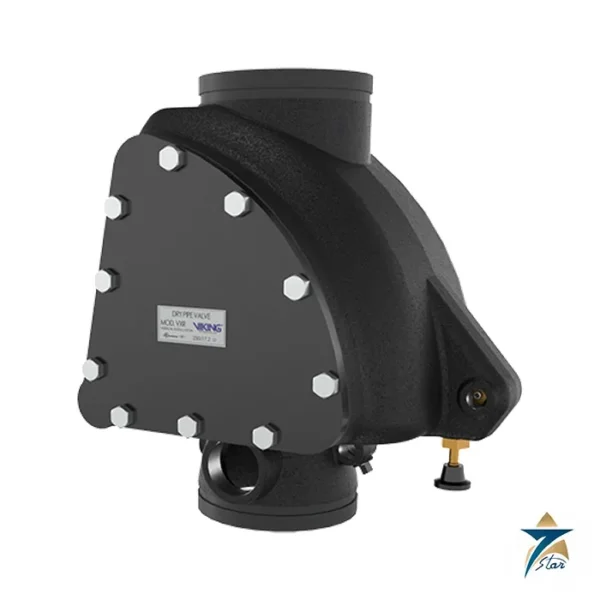
A comparable wet alarm valve from another maker is the Weflo Fig. F1511 UL Listed alarm check valve, and the dry-pipe equivalents from Viking are the F-1 and VXR. Browse the full Fire Fighting equipment range.
Selection checks for a J-1 riser
Begin with the water supply. A town main or a tank-and-pump system whose pressure rises and falls during the day is a variable pressure supply, and that is where the retard chamber is worth specifying to avoid nuisance alarms. A steady supply from a jockey pump may not need it, but the decision belongs to the fire protection designer and should be shown on the riser drawing. Select the valve size from the hydraulic calculation rather than matching the pipe size by habit, and include the friction loss figure from the table in that calculation. Confirm whether the riser will be vertical or horizontal so the right trim package is ordered, and check the space around the valve for the access cover to be opened later.
Installation and acceptance testing
Position the valve where it can be reached for inspection and where the main drain can discharge safely to a drain or outside the building. Support the riser piping independently so the valve body does not carry pipe loads. Fit the trim strictly to the current Viking trim chart, then fill the system slowly as described above, venting air at the highest points. For acceptance, carry out the hydrostatic test within the limits in the technical data, then test the alarm devices with the alarm test valve and confirm that the signal reaches the fire alarm panel or the water motor alarm as designed. Record the gauge readings above and below the clapper once the system has settled; these become the reference values for later inspections.
Inspection and maintenance routine
Alarm check valves are inspected and tested on a schedule set by the local fire code and the authority having jurisdiction, commonly following NFPA 25 or the equivalent standard adopted for the project. Typical routine items include reading both gauges, checking that the control valve is open and supervised, operating the alarm test, and carrying out a main drain test to confirm the water supply has not deteriorated. During internal inspection, the clapper rubber and seat are checked for debris, wear or scale, which Viking makes easier because the internals can be serviced through the access cover without removing the valve from the line. Keep a logbook beside the riser so each visit can be compared with the commissioning readings.
Wet systems in Oman and GCC buildings
Freezing is rarely a concern in most of Oman, but heat, dust and water quality are. Valve rooms in warehouses and plant buildings can become very hot in summer, which raises water temperature and pressure in a closed wet system; regular gauge checks help detect pressure build-up early. Dust and sand entering through louvres settle on trim valves and gauges, so keep the valve room door closed and clean the trim during inspections. Where the supply is hard or brackish water, scale and corrosion deposits can collect on the clapper and seat, making internal inspections and main drain tests particularly important. Protect the valve and trim from physical damage by vehicles and forklifts in industrial sites.
Confirm before ordering
Confirm size, end connection, flange standard, supply pressure type (constant or variable) and whether the retard chamber, trim, water motor alarm or pressure switch is needed. Check which approval marks the project requires, because the pressure rating differs between approval bodies for flanged valves. The attached Viking technical data contains all part numbers and installation steps. Send the part number and quantity for a quotation.


Reviews
There are no reviews yet.