Flow Computer Comparison: FloBoss S600+, OMNI 6000/7000, ABB Flow-X, KROHNE Summit 8800 and Elster enCore for Custody Transfer
On a fiscal metering skid, the flow meter measures, but the flow computer decides what the invoice says. It converts raw pulses and analog signals into standard volume, mass and energy, applies the calculation standards written into the sales contract, controls the prover and keeps the audit trail that an auditor or the other party will inspect. A small error in a constant or a missed configuration change can move large sums of money between buyer and seller. This flow computer comparison covers the main fiscal platforms found on metering systems in Oman and the GCC, the functions that separate them, and the points to check when replacing an existing unit.
What a Fiscal Flow Computer Actually Does
A flow computer is a dedicated, metrologically controlled calculator. Typical functions include:
- Acquiring meter signals: dual pulse trains from turbine, positive displacement or ultrasonic meters (with pulse fidelity checking), 4–20 mA/HART differential pressure, pressure and temperature, densitometer frequency inputs, and serial data from ultrasonic meters or gas chromatographs.
- Gas calculations: AGA 3 or ISO 5167 for orifice and venturi meters, AGA 7 for turbine meters, AGA 9 for ultrasonic meters, AGA 8 (Detail, Gross or GERG-2008 methods) or ISO 12213 for compressibility, and ISO 6976 or GPA 2172 for calorific value and density from composition.
- Liquid calculations: API MPMS Chapter 11.1 temperature and pressure volume correction factors (CTL, CPL), meter factor application and net standard volume, plus density correction from line densitometers.
- Prover control: sequencing ball (bidirectional) or compact provers, pulse interpolation where required, repeatability checks and meter factor calculation per API MPMS Chapter 4 and Chapter 12.
- Batching and station totals, quantity transaction records and reports.
- Audit trail, alarm and event logs and protected configuration, aligned with API MPMS Chapter 21 for electronic flow measurement.
- Communications, normally Modbus RTU/TCP to SCADA or DCS, plus links to supervisory metering computers and chromatographs.
Architecture Options
Fiscal flow computers fall into three physical styles:
- Panel-mount units with a front display and keypad, installed in a metering control room or analyzer house. This is the classic architecture for multi-stream liquid and gas stations.
- Modular or rack-based systems, where processing modules handle one or more streams and are combined into a station, sometimes without a local display per module.
- Field-mount units in flameproof enclosures, installed on the skid, used mainly for single-stream gas metering, wellhead allocation and remote sites.
Redundancy is usually implemented as a duty/standby pair of flow computers per stream or per station, with totals and configuration kept aligned so that a failover does not lose quantity. Some platforms support this natively; on others it relies on the supervisory system. Check how totals, alarms and prover data are synchronized during a failover, not just whether the brochure mentions redundancy.
Comparison of the Main Fiscal Platforms
The table below is a qualitative comparison. Stream counts, I/O capacity and approved calculation libraries change between hardware revisions and firmware versions, so confirm current figures on each datasheet.
| Platform | Architecture | Typical strengths | Points to check |
|---|---|---|---|
| Emerson FloBoss S600+ | Panel-mount, front display and keypad, configured with Config600 | Widely used in fiscal liquid and gas metering, multi-stream and station/prover applications | Firmware and application version used by the original metering design; I/O board options |
| OMNI 3000/6000 and 4000/7000 | Panel-mount with operator display; modular I/O combo boards | Long-established in liquid and gas custody transfer with a large installed base; familiar to many metering technicians | Firmware revision (liquid vs gas application), I/O module mix, generation of the existing unit |
| ABB SpiritIT Flow-X | Modular: Flow-X/M modules combined into panel or enclosure versions | Modular multi-stream scaling, single-stream to station level | Module count, enclosure type, how the station/supervisory functions are split |
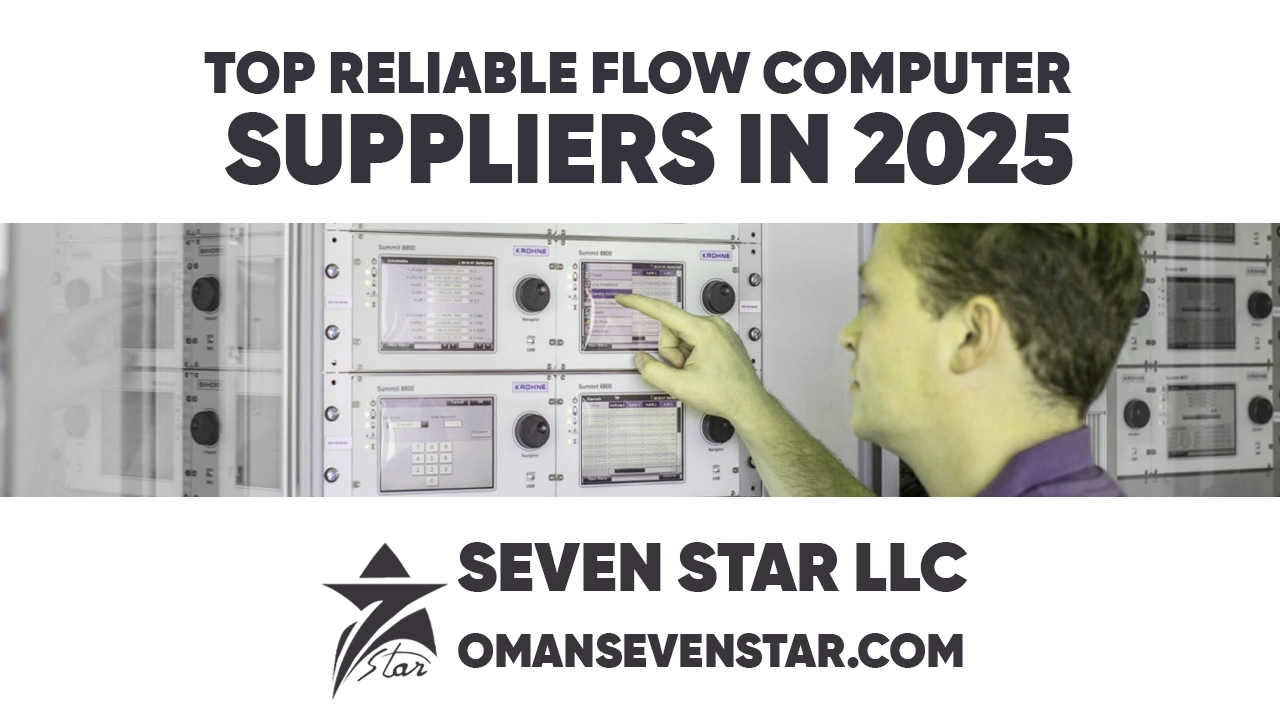
| KROHNE SUMMIT 8800 | Panel-mount, high-end multi-stream | Large multi-stream liquid and gas stations, prover control, detailed reporting | Stream and I/O capacity per unit; integration with ultrasonic meter diagnostics |
| Elster enCore FC1 / ZM1 / gas-net F1 | Panel and modular gas metering computers | Gas metering, strong European and DSfG heritage, energy calculation | Required gas standards and local approval; interface with existing Elster systems |
Emerson FloBoss S600+
The FloBoss S600+ is a panel-mount flow computer that appears on many export, pipeline and allocation skids. It handles multiple streams and station functions, including prover control, in one unit, and is configured through Config600. When replacing or adding an S600+, match the application firmware and configuration used in the original metering design, because the calculation selections and report formats sit in that configuration.
OMNI 3000/6000 and 4000/7000
OMNI computers have a long history on liquid and gas custody transfer systems, and many technicians know their menus and reports. The OMNI 6000 flow computer and the newer OMNI 7000 flow computer provide operator displays and modular combination I/O. The OMNI 3000/6000 series and 4000/7000 series pages summarize the generations. OMNI firmware is application-specific (for example liquid or gas), so the firmware revision must be recorded along with the hardware model.
ABB SpiritIT Flow-X
The ABB SpiritIT Flow-X series is built around processing modules, the Flow-X/M modules, which are combined in panel or enclosure versions. A station can start with one stream and grow by adding modules. Flow-X is often paired with ABB’s supervisory metering software; confirm how responsibilities are split between flow computer and supervisory layer in the existing design.
KROHNE SUMMIT 8800
The KROHNE SUMMIT 8800 targets large multi-stream liquid and gas metering stations. It is commonly considered where ultrasonic meters are used and detailed diagnostics and prover integration are needed in one platform.
Elster enCore and gas-net
Elster’s gas metering computers, including the enCore FC1, enCore ZM1 and gas-net F1, come from European gas transmission practice. They are strong where energy measurement, gas quality data and local metrology approval are the main requirements. For context on Elster gas metering in Oman, see the Honeywell Elster gas metering article.
Field Totalizers and Volume Correctors: When They Are Enough
Not every measurement point needs a fiscal flow computer. For allocation, internal accounting, utility gas and water injection, a field-mount device is often adequate:
- The Cameron NuFlo MC-III EXP is a flameproof flow analyzer and totalizer for turbine meters, battery powered and suited to remote wellsites.
- The Fluidwell F126 is a field-mount flow rate indicator and totalizer with output options.
- Galvanic GasMicro volume correctors convert gas volume at line conditions to base conditions.
| Application | Typical device | Why |
|---|---|---|
| Crude export or product sales, multi-stream with prover | Panel-mount fiscal flow computer, duty/standby | Contractual measurement, prover control, full audit trail |
| Gas sales or transmission with GC | Fiscal gas flow computer with ISO 6976/AGA 8 | Energy-based invoicing using live composition |
| Wellhead or well test allocation | Field-mount flow computer or flow analyzer | Remote, low power, single stream |
| Utility gas, internal fuel gas | Volume corrector or field totalizer | Non-fiscal, PT correction is sufficient |
| Water injection, produced water | Field totalizer or DCS calculation | Operational measurement, no custody transfer |
Legal Metrology and Approvals
Custody transfer is governed by the contract and by the authority or operator that approves the metering system. Some projects require type approval to OIML recommendations (for example OIML R117 for dynamic liquid measuring systems) or EU MID certificates; others rely on the operator’s metering specification and witness testing. Do not assume an approval carries over: check which approval the operator or authority requires for the specific application, and confirm the flow computer model and firmware hold it.
Oman and GCC Site Considerations
Metering skids for export terminals, gas plants and pipeline stations in Oman are often remote and in direct sun. Panel-mount flow computers belong in air-conditioned metering rooms or analyzer houses; a failed HVAC unit in summer can push cabinet temperatures past electronics ratings. Field-mount units need shading and confirmation of the certified ambient temperature range. Coastal terminals at Sohar, Duqm or Salalah add salt-laden humidity, so check enclosure sealing and cable gland condition. Spares lead times for specific I/O boards and legacy models can be long, so stations commonly hold a spare flow computer or critical boards for the most common configuration.
Migrating From a Legacy Flow Computer
Replacing an obsolete flow computer is a metrology project, not just a hardware swap:
- Extract and document the existing configuration, calculation selections, constants, meter factors and report formats.
- Map every I/O point and decide whether field wiring and marshalling can be reused.
- Configure the new unit and run a parallel or simulated calculation comparison against the old one using recorded or injected values.
- Agree the witness test and re-certification plan with the operator, the other party and, where required, the authority.
- Update the SCADA/DCS Modbus map, alarm handling and reports.
- Archive the old audit trail and totals before decommissioning.
Selection Checklist
- Liquid, gas or both, and number of streams per unit and per station.
- Calculation standards required by the contract (AGA 3/7/8/9, ISO 5167, ISO 6976, API MPMS Chapter 11).
- Meter types and inputs: dual pulse, HART, densitometers, ultrasonic serial data, gas chromatograph link.
- Prover type and whether the flow computer controls it.
- Redundancy scheme and how totals synchronize.
- Required legal metrology approval and witness testing.
- Audit trail, user access control and cybersecurity requirements.
- Panel, modular or field-mount, and the environment it will live in.
- Configuration software, licensing and who in the team is trained on it.
- Communications to SCADA/DCS and supervisory metering systems.
Sourcing Flow Computers Through Seven Star LLC
Seven Star LLC supplies fiscal flow computers, modules and field totalizers for metering systems across Oman and the GCC, including current platforms and legacy units for like-for-like replacement. Browse the flow computers category and the OMNI brand page, and send the model, firmware revision and I/O configuration of the unit being replaced. For meter selection upstream of the flow computer, see the flow meter selection guide.
Send your flow computer model, firmware and I/O list to Seven Star LLC for a matched replacement or new metering computer.
Need a Quotation for Your Project?
- Genuine OEM products
- Supply across Oman & the GCC
- Formal quotation from our sales team
Free, no-obligation quotation · takes about 1 minute
Other enquiries: [email protected] · WhatsApp
More Blog