RU130U-M30E-2UP8X2T-H1151 in brief
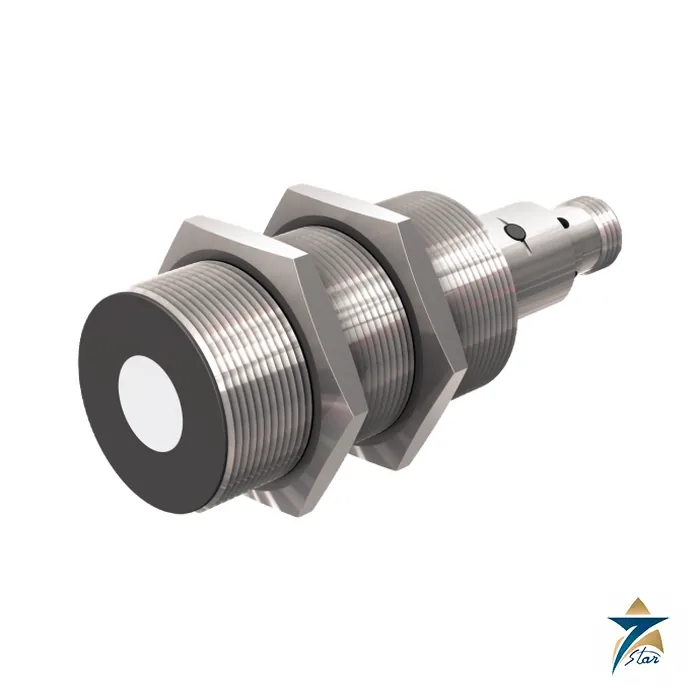
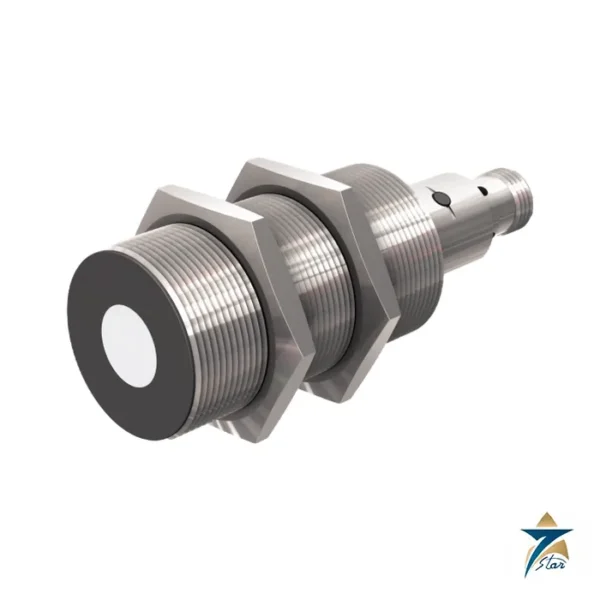
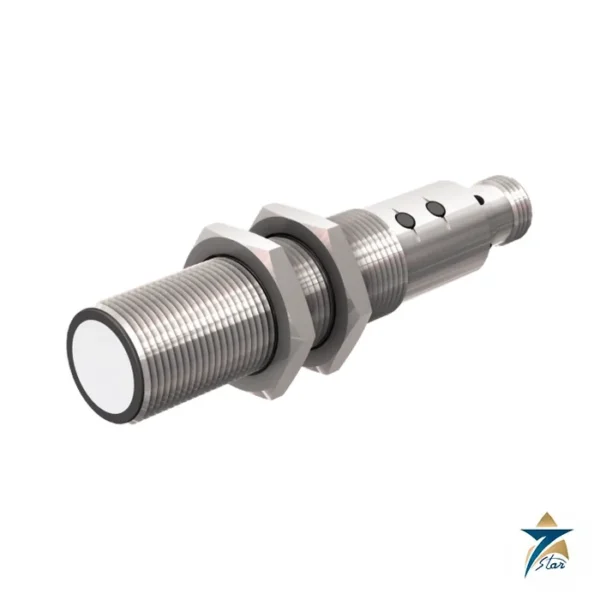
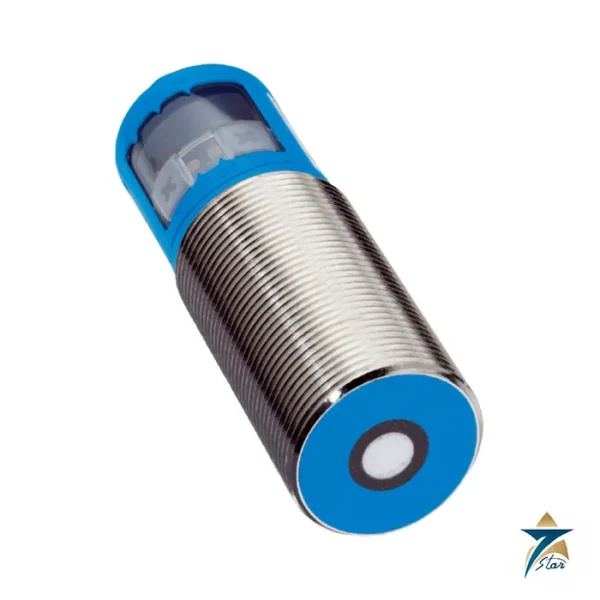
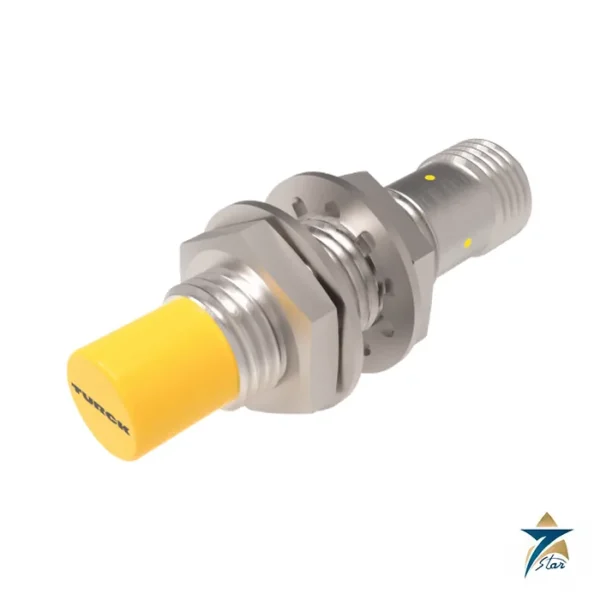
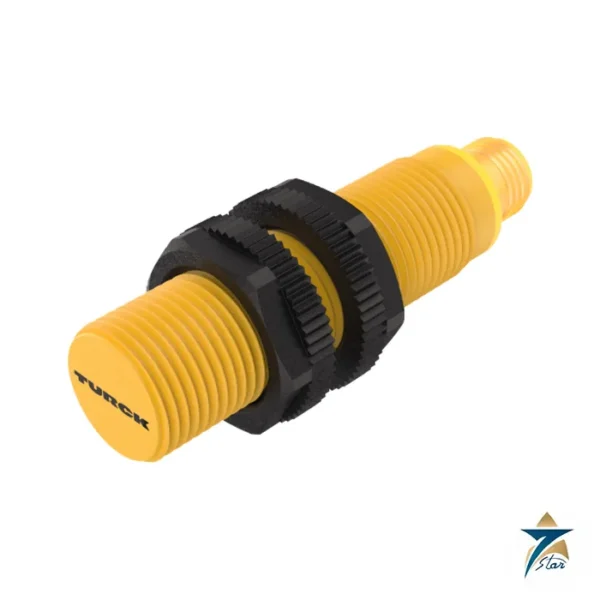
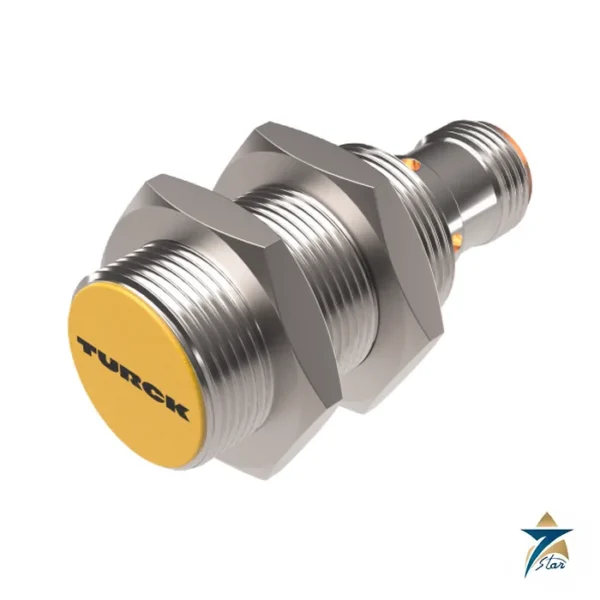
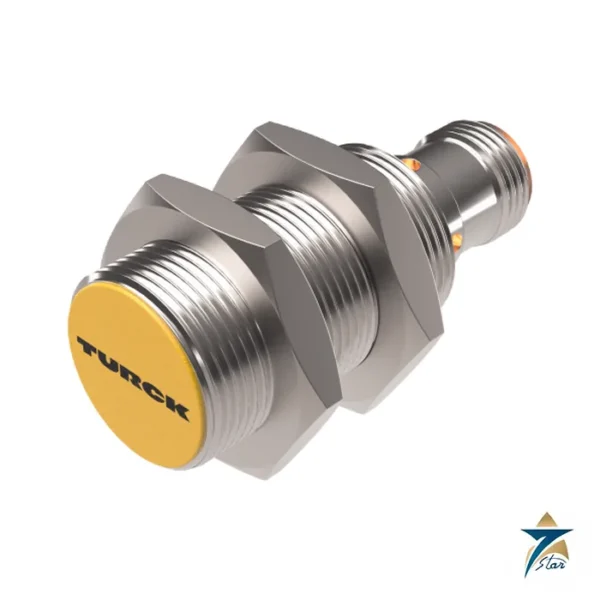
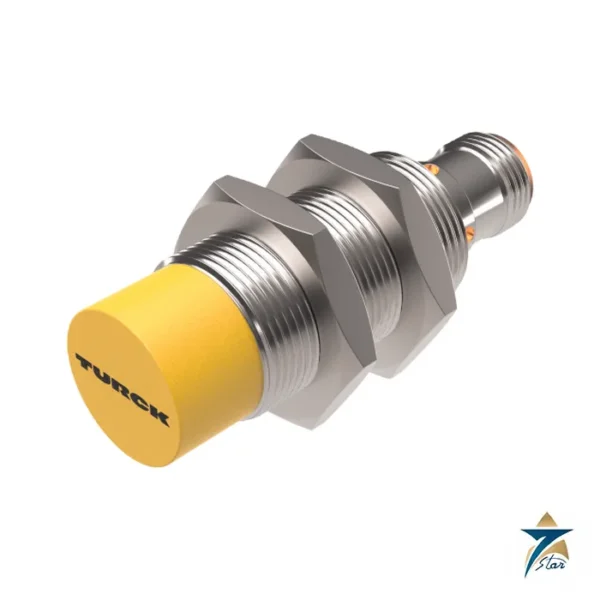
RU130U-M30E-2UP8X2T-H1151 is an M30 ultrasonic diffuse-mode sensor with a 150 to 1300 mm sensing range and two independently set PNP switching outputs, supplied through a 5-wire M12 x 1 connector with remote-teach input.
The datasheet summarises the design with these points: Connection via M12 x 1 male; Smooth sonic transducer face; Cylindrical housing M30, potted; Blind zone: 15 cm; Range: 130 cm; NO/NC programmable; Temperature compensation; Measuring range adjustable via teach; Aperture angle of sonic cone: ±16 °.
Technical specifications
| Parameter |
Specification |
| Type |
RU130U-M30E-2UP8X2T-H1151 |
| Ident number |
1610038 |
| Function |
Proximity |
| Range |
150…1300 mm |
| Resolution |
1 mm |
| Minimum switching range |
10 mm |
| Ultrasound frequency |
200 kHz |
| Repeat accuracy |
≤ 0.15 % of full scale |
| Temperature drift |
± 1.5 % of full scale |
| Linearity error |
≤ ± 0.5 % |
| Edge lengths of the nominal actuator |
100 mm |
| Approach speed |
≤ 10 m/s |
| Pass speed |
≤ 2 m/s |
| Operating voltage UB |
15…30 VDC |
| Residual ripple |
10 % Uss |
| DC rated operating current Ie |
≤ 150 mA |
| No-load current |
≤ 50 mA |
| Load resistance |
≤ 1000 Ω |
| Residual current |
≤ 0.1 mA |
| Response time typical |
< 90 ms |
| Readiness delay |
≤ 300 ms |
| Output function |
NO/NC, PNP |
| Output 1 |
Switching output |
| Output 2 |
Switching output |
| Switching frequency |
≤ 6.9 Hz |
| Hysteresis |
≤ 10 mm |
| Voltage drop at Ie |
≤ 2.5 V |
| Short-circuit protection |
yes/Cyclic |
| Reverse polarity protection |
yes |
| Wire breakage protection |
yes |
| Setting option |
Remote Teach |
| Design |
Threaded barrel, M30 |
| Radiation direction |
straight |
| Housing material |
Metal, CuZn, Nickel Plated |
| Max. tightening torque of housing nut |
75 Nm |
| Transducer material |
Plastic, Epoxyd resin and PU foam |
Application notes
Two switching points in one housing let a single sensor mark a high and a low limit, for example a warning and a trip threshold on a bin or a sump, without the need for an analog card. Each output is NO or NC programmable, and the datasheet lists remote teach as the setting option, so limits can be taught from the control side. The potted M30 housing is rated for 0.5 to 5 bar pressure resistance and IP67.
Installation hint: aim the sensing face squarely at the target, keep the blind zone clear of obstructions, and avoid mounting next to strong air currents, steam or dust clouds that attenuate sound. Soft or sloping surfaces reflect less energy, so test with the actual material before finalising the position.
Type code, ident number and checks
The type code starts with RU and the nominal range figure used in the datasheet features, followed by the housing size and the output elements; the letter that follows the range differs between proximity, retroreflective and diffuse variants of the same family, so always order by the full code. Ident number 1610038 identifies this exact version, which the datasheet lists with function Proximity and output NO/NC, PNP.
Before ordering, confirm the connector and cable, the output type (analog, the supply voltage, the process or ambient temperature, the required sensing range and blind zone against your target and tank geometry, and switching or IO-Link). Values on this page are copied or summarised from the manufacturer datasheet; where the datasheet and a later revision differ, the manufacturer document governs.
Selection considerations for ultrasonic level and presence sensing
Ultrasonic sensors measure the time of flight of a sound pulse, so they detect a target regardless of its colour, transparency or surface gloss. That makes them a strong choice for liquids, granules, clear bottles and dark materials that can confuse optical sensors. The trade-offs come from the physics of sound: the sonic cone widens with distance, soft or foamy surfaces absorb energy, and anything inside the blind zone cannot be detected reliably. When considering this sensor, check that the target will always lie between the blind zone and the upper end of the range, that the cone will not strike tank walls, ladders or internal fittings, and that the response time and switching frequency suit how fast the level or object changes.
Installation and teach-in practice
Mount the M30 barrel with its housing nuts, respecting the maximum tightening torque stated above, and point the transducer face perpendicular to the target surface. In tanks and bins, keep the sensor away from the filling stream so falling material does not trigger false echoes, and allow for the full cone angle when choosing the distance from walls. Wire the two PNP outputs to separate controller inputs and use the remote-teach input to set the switching points with the real target in position, then decide whether each output should act NO or NC. A fail-safe design normally arranges the trip output so that a lost signal or broken wire results in the safe state.
Integration into typical plant systems
Because the sensor provides two independent switching points, it can replace a pair of point-level switches on a sump, a hopper or a dosing tank, giving a warning level and a trip level from one mounting hole. On conveyors and packaging lines the same device can detect presence or height of products without contact. Connect the outputs to the PLC as discrete inputs and document the taught distances in the loop records, so a replacement sensor can be set to the same points quickly.
Heat, dust and humidity in the GCC
Sound travels differently as air temperature changes, which is why the sensor includes temperature compensation; strong temperature gradients between the sensor and the target, such as above a warm liquid in a sun-heated tank, can still cause small shifts, so test in real conditions. Airborne dust, steam and condensation in Gulf plants attenuate the signal, so allow margin in the range and keep the transducer face clean during routine inspections. Shading outdoor sensors reduces thermal effects from direct sun.
What to include in an RFQ
Give the full type code and ident number, the quantity, the target material, the distance range to be covered, and the connector or cable arrangement used on site. A short note on the tank or machine geometry helps confirm that the sensing range and cone suit the application.
Documents and quotation
Datasheet: PDF. It is the manufacturer’s own document for RU130U-M30E-2UP8X2T-H1151, kept unaltered. To request pricing and delivery, give us the full code RU130U-M30E-2UP8X2T-H1151, the quantity and your project reference. Seven Star LLC supplies as an independent supplier in Muscat. Related items sit in Sensors & Transmitters.




Reviews
There are no reviews yet.