What the RU100L-M18M-UP8X2-H1151 does
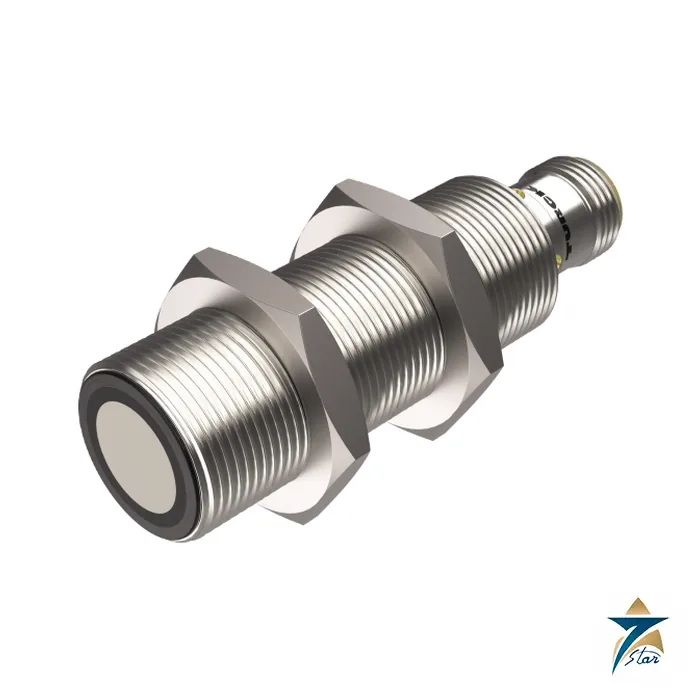
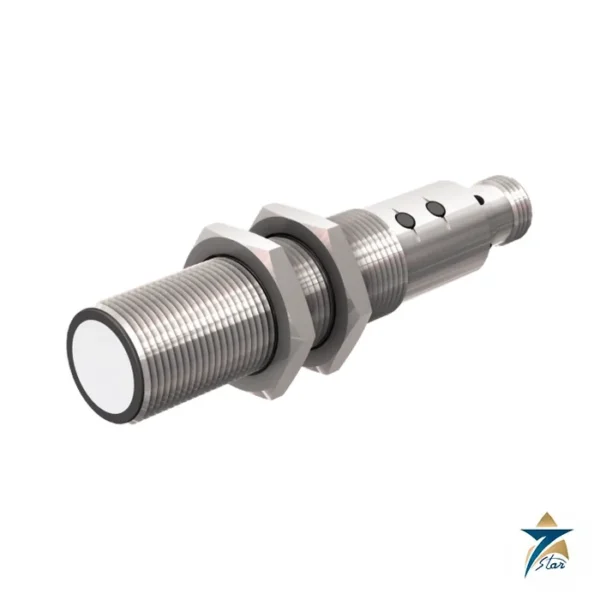
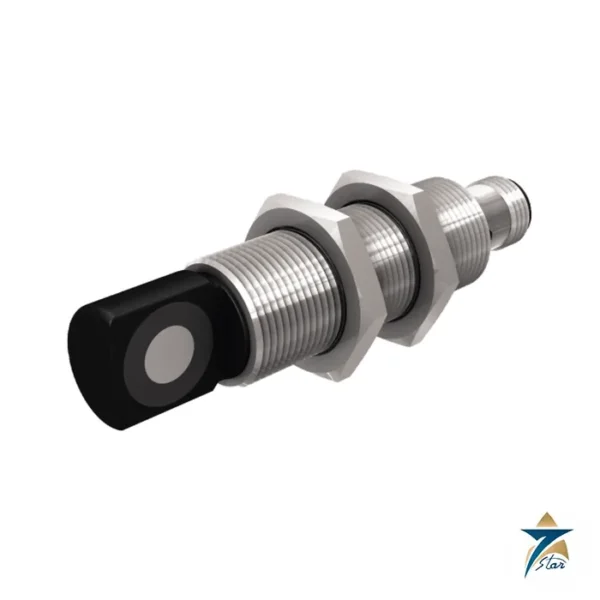
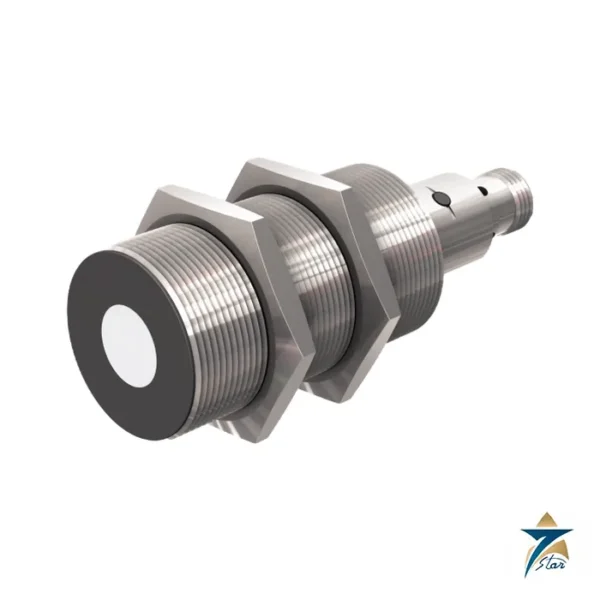
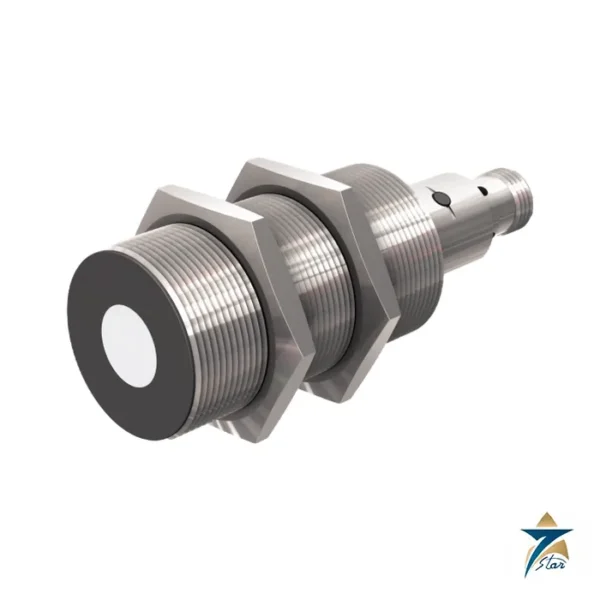
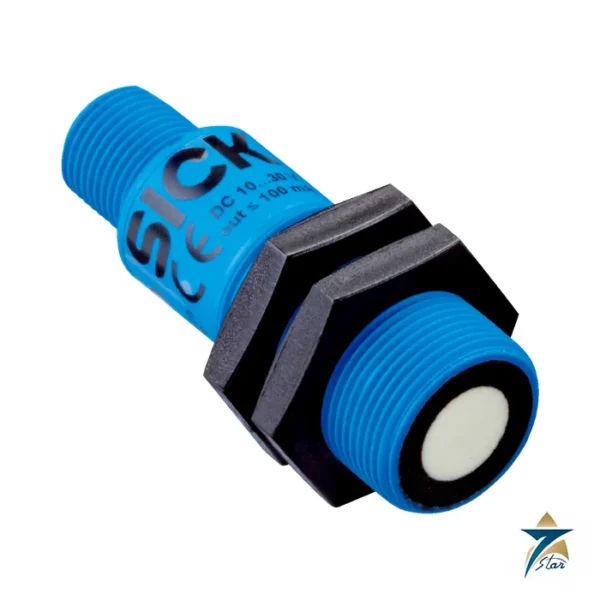
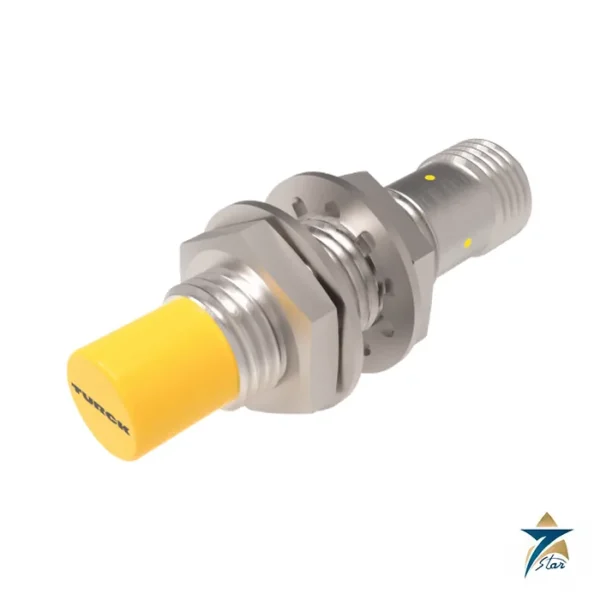
RU100L-M18M-UP8X2-H1151 is an M18 ultrasonic retroreflective sensor with a 150 to 1000 mm range and one PNP switching output, taught to a fixed reflector or wall rather than to the object itself.
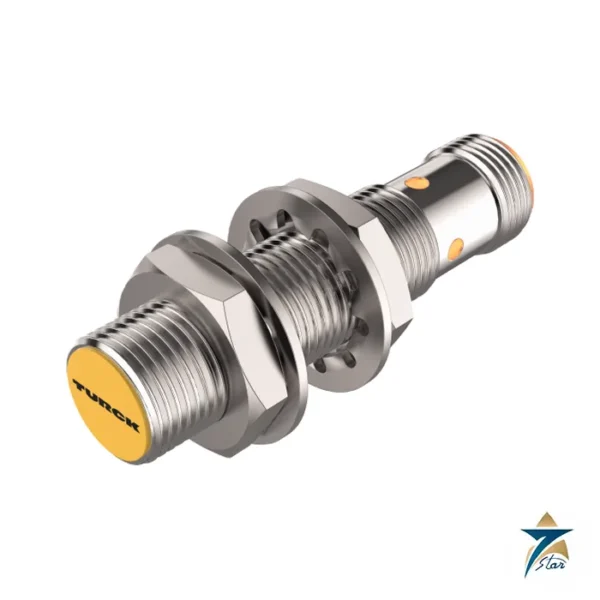
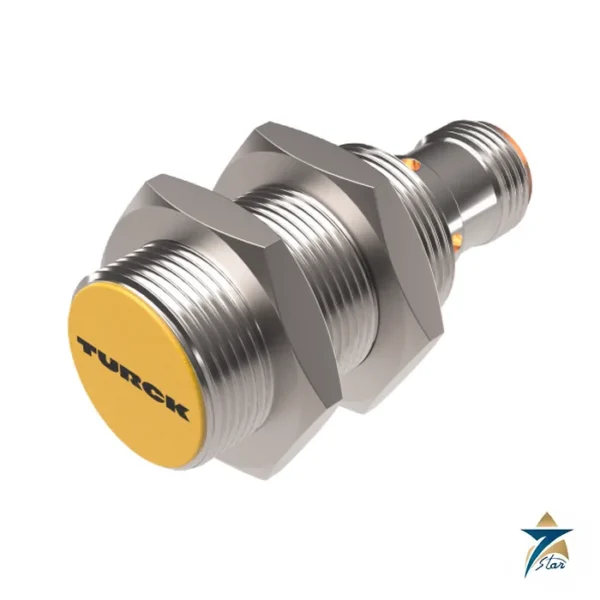
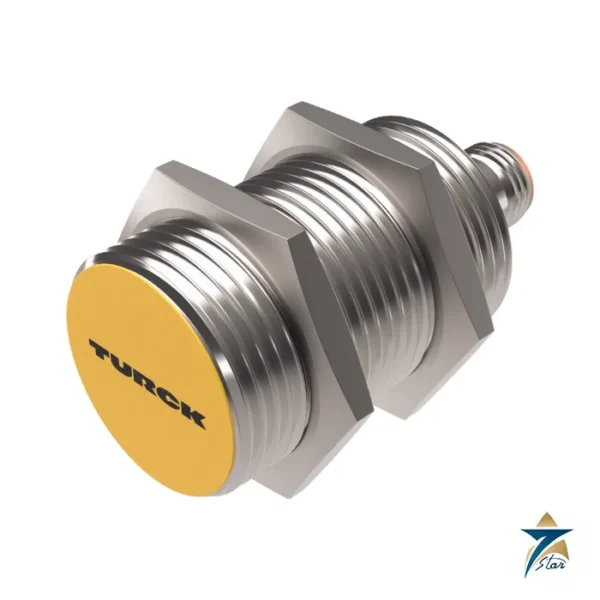
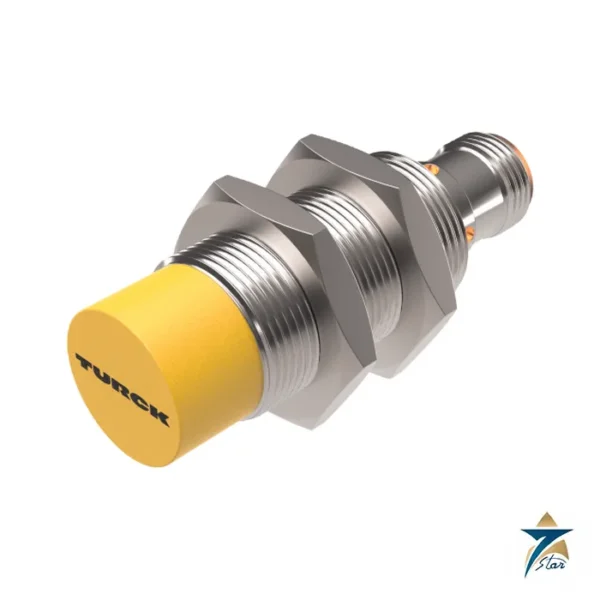
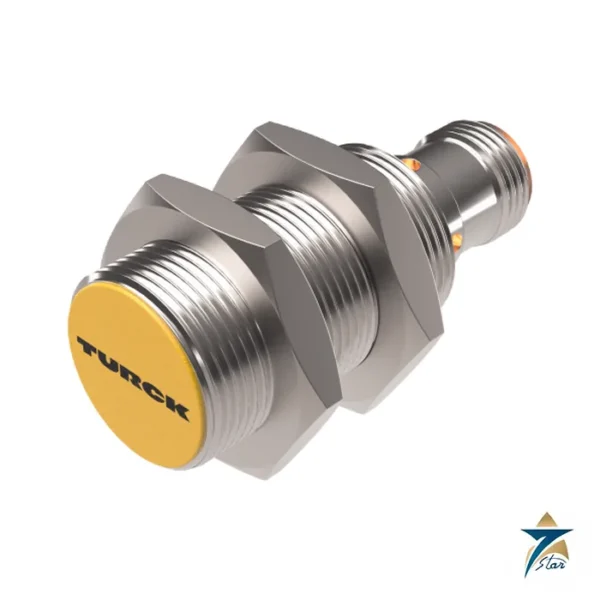
The datasheet summarises the design with these points: Temperature compensation; Parameterizable NO/NC; Configurable via Teach-In; Smooth sonic transducer face; Resolution: 1 mm; Aperture angle of sonic cone: ±16 °; 1 x switching output, PNP; Connection via M12 x 1 male; Cylindrical housing M18, potted.
Technical specifications
| Parameter |
Specification |
| Type |
RU100L-M18M-UP8X2-H1151 |
| Ident number |
1610077 |
| Function |
Retroreflective |
| Range |
150…1000 mm |
| Minimum switching range |
10 mm |
| Ultrasound frequency |
200 kHz |
| Repeat accuracy |
≤ 0.15 % of full scale |
| Temperature drift |
± 1.5 % of full scale |
| Linearity error |
≤ ± 0.5 % |
| Edge lengths of the nominal actuator |
100 mm |
| Approach speed |
≤ 8 m/s |
| Pass speed |
≤ 2 m/s |
| Operating voltage UB |
15…30 VDC |
| Residual ripple |
10 % Uss |
| DC rated operating current Ie |
≤ 150 mA |
| No-load current |
≤ 50 mA |
| Load resistance |
≤ 1000 Ω |
| Residual current |
≤ 0.1 mA |
| Response time typical |
< 90 ms |
| Readiness delay |
≤ 300 ms |
| Output function |
NO/NC, PNP |
| Output 1 |
Switching output |
| Switching frequency |
≤ 6.9 Hz |
| Hysteresis |
≤ 10 mm |
| Voltage drop at Ie |
≤ 2.5 V |
| Short-circuit protection |
yes/Cyclic |
| Reverse polarity protection |
yes |
| Wire breakage protection |
yes |
| Setting option |
Remote Teach |
| Design |
Threaded barrel, M18 |
| Radiation direction |
straight |
| Housing material |
Metal, CuZn, Nickel Plated |
| Max. tightening torque of housing nut |
20 Nm |
| Transducer material |
Plastic, Epoxyd resin and PU foam |
| Electrical connection |
Connector, M12 × 1, 5-wire |
| Ambient temperature |
-25…+70 °C |
Where it fits and how it behaves
In retroreflective mode the sensor is taught to the background; anything that interrupts the echo path switches the output. That makes the part suitable for detecting transparent or low-contrast items such as clear bottles, film and glass sheets that vary in colour or surface, because only the interruption matters. The teach-in range quoted in the datasheet is 15 to 98 cm, with a 10 mm minimum switching range and a response time typically under 90 ms.
At commissioning, teach the near and far limits with the target in place, check the output over the full travel, and recheck if the ambient temperature changes widely. Foam, heavy turbulence and angled targets are the usual reasons for unstable readings, and a short mounting sleeve can reduce side echoes.
Selection check before ordering
The type code starts with RU and the nominal range figure used in the datasheet features, followed by the housing size and the output elements; the letter that follows the range differs between proximity, retroreflective and diffuse variants of the same family, so always order by the full code. Ident number 1610077 identifies this exact version, which the datasheet lists with function Retroreflective and output NO/NC, PNP.
Points to confirm with us before ordering: the output type (analog, switching or IO-Link), the required sensing range and blind zone against your target and tank geometry, the process or ambient temperature, the supply voltage, and the connector and cable. Everything in the table comes from the datasheet as published, so the maker document is the final reference.
Is retroreflective ultrasonic the right choice?
Retroreflective ultrasonic sensing works best where a stable reference surface is available behind the objects to be detected, such as a machine frame, a fixed plate or a wall. The sensor learns the echo from that reference and switches whenever the echo path is interrupted, so the colour, transparency and gloss of the objects matter far less than with optical sensors. When choosing it, think first about the reference surface: it should be fixed, reasonably flat and positioned within the sensor’s range, and nothing else should regularly enter the sound cone between the sensor and the reference except the objects to be detected.
- Confirm the distance to the reference surface is inside the stated range.
- Check that the sound cone, given its aperture angle, will not touch nearby guards or machine parts.
- Compare the object speed with the approach and pass speeds in the table.
- Check that the switching frequency and response time are adequate for the number of objects per second.
Mounting and teach-in procedure
Mount the M18 housing firmly, aligned so the sound beam meets the reference surface squarely, and do not exceed the maximum tightening torque of the housing nut. Wire the M12 connector to a supply within the operating voltage range and connect the PNP output to the control input. After power-up, allow for the readiness delay before checking the output. Teach the sensor to the reference surface with no object present, following the remote teach procedure in the datasheet, and choose NO or NC behaviour to suit the control logic. Then pass real objects through the beam at production speed and confirm that every one is detected and that the output returns reliably when the path is clear.
Avoiding false switching
Moving parts of the machine, operators’ hands or hanging cables in the sound cone can be detected just like a product. Review the area around the beam during commissioning and retest after any mechanical change near the sensor or the reference surface.
Operating in GCC plants
In Oman and the Gulf, sensors on bottling, packaging and material handling lines can face high temperatures, airborne dust and humidity. The temperature compensation helps keep switching stable as conditions change through the day, but large temperature swings are still a reason to recheck the teach point, as noted above. Dust or residue settling on the transducer face can weaken the echo, so include gentle cleaning of the face in routine maintenance, and avoid aggressive cleaning agents or tools that could damage it. Keep the connector and cable protected from mechanical damage and direct sun where possible, and check that the reference surface itself stays clean and fixed in position.
What to send with an RFQ
- The full type code and ident number 1610077, with quantity.
- The distance to the reference surface and the type of objects to be detected.
- The supply voltage and the input the PNP output will connect to.
Documents and quotation
The official Turck datasheet for RU100L-M18M-UP8X2-H1151 is hosted here as a PDF so you can check every value before you send an RFQ. Seven Star LLC is an independent supplier in Muscat; we do not set the manufacturer’s specifications, and this page restates what the datasheet prints. For availability and a quotation, send the exact code RU100L-M18M-UP8X2-H1151 and your quantity through the Sensors & Transmitters category or the RFQ form.




Reviews
There are no reviews yet.