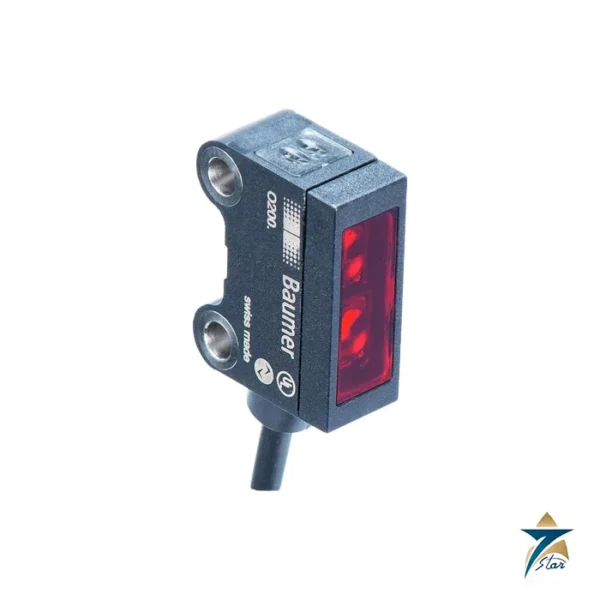
G6 miniature reflex sensor with polarisation filter and 5 m range
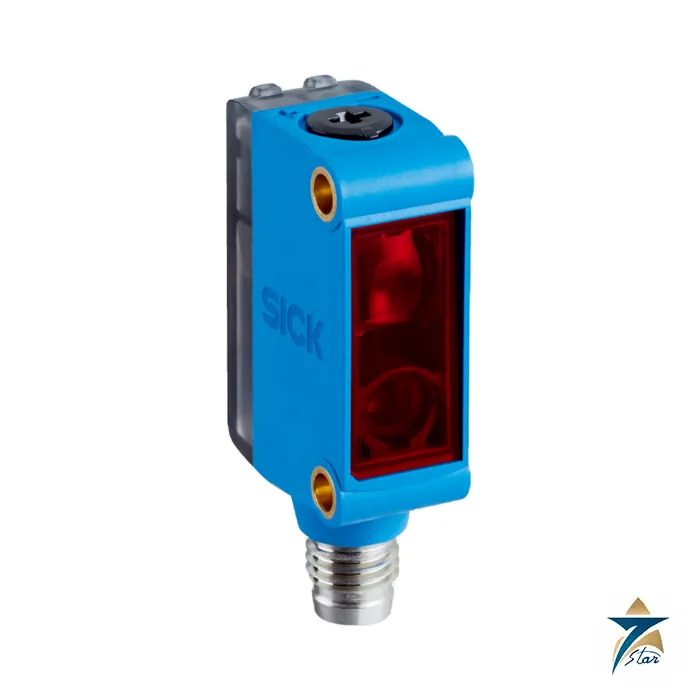
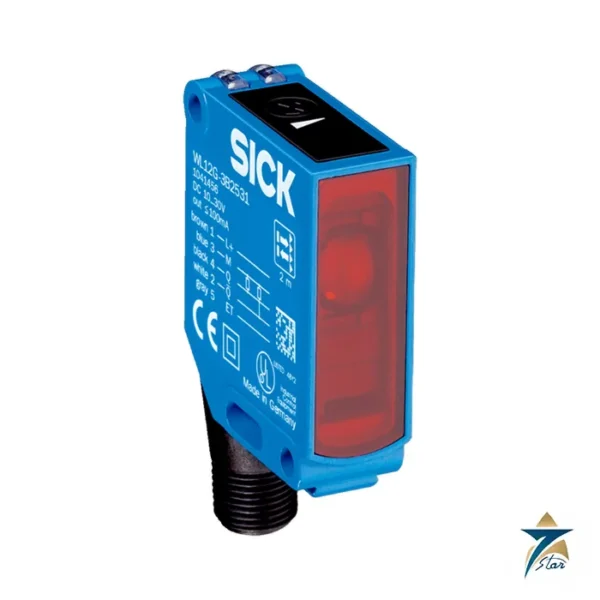
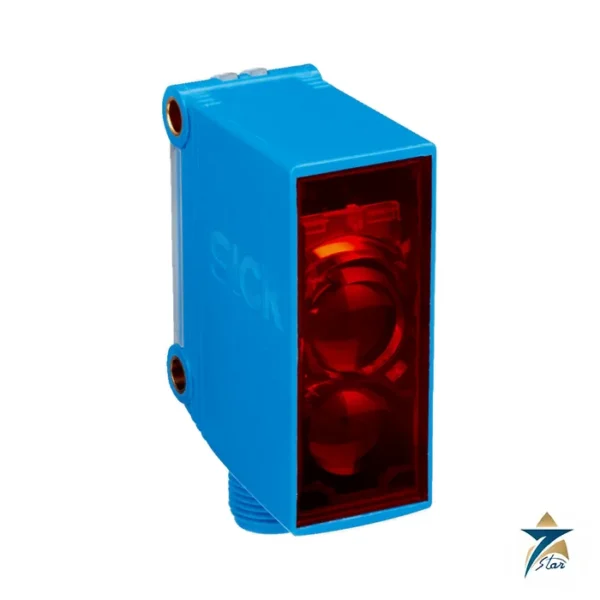
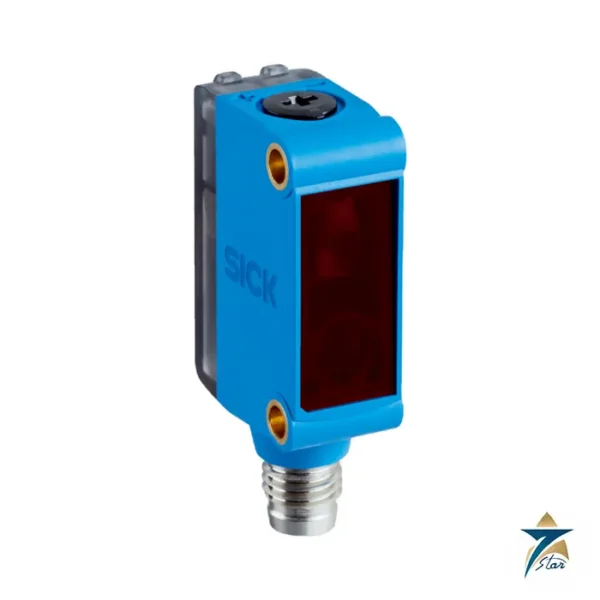
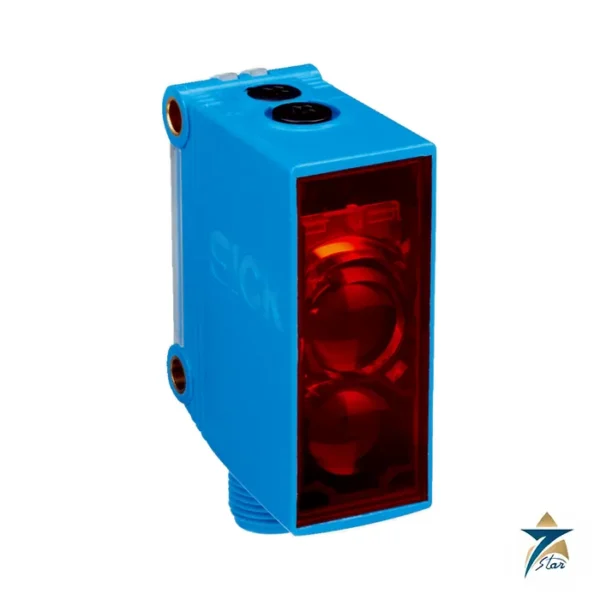
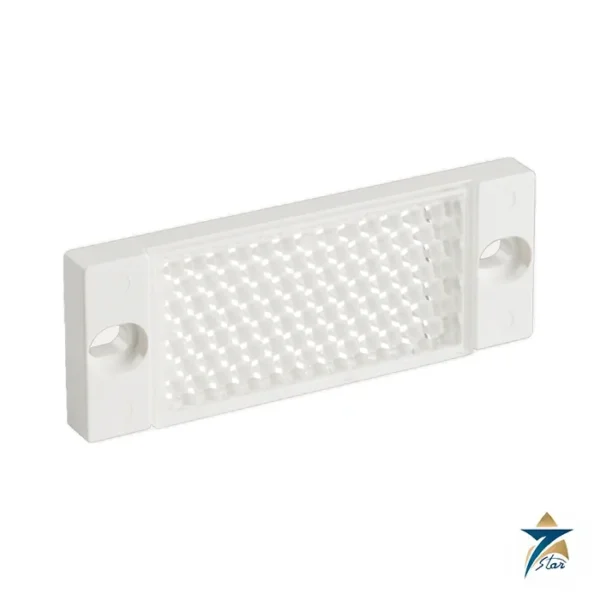
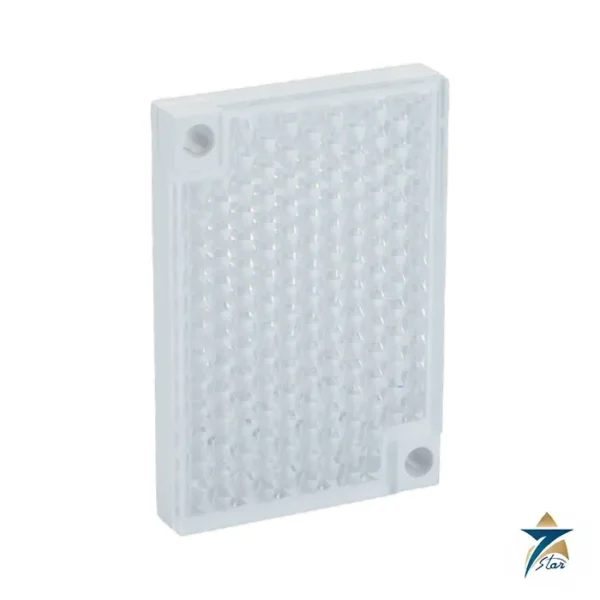
The SICK GL6-P4212 (part no. 1062110) is a G6 miniature retro-reflective sensor with a dual-lens system and a polarisation filter. It reads a reflector from 0.07 m to 5 m (maximum 0.03 m to 6 m) with a PinPoint LED spot of 8 mm at 350 mm. The delivery includes a P250 reflector and a stainless steel BEF-W100-A bracket, so the beam can be set up straight away.
The housing is the compact 12 mm by 31.5 mm by 21 mm plastic body with an M8 4-pin connector, rated IP67 and weighing 20 g.
Technical specifications
| Parameter |
Specification |
| Manufacturer |
SICK |
| Type / family |
GL6-P4212 / G6 |
| Part no. |
1062110 |
| Functional principle |
Photoelectric retro-reflective sensor, dual-lens system with minimum distance to reflector |
| Sensing range max. / typical |
0.03 m … 6 m / 0.07 m … 5 m |
| Polarisation filter |
Yes |
| Light source / type |
PinPoint LED, visible red light, 650 nm |
| Light spot size |
8 mm diameter at 350 mm |
| Adjustment |
Potentiometer, 270 degrees |
| Items supplied |
Reflector P250; bracket BEF-W100-A (stainless steel 1.4301/304) |
| Supply voltage UB |
10 V DC … 30 V DC |
| Ripple |
10 % |
| Current consumption |
30 mA |
| Output |
PNP, light/dark switching (selector) |
| Output current Imax. |
100 mA (50 mA above 24 V) |
| Response time / switching frequency |
625 microseconds max. / 1,000 Hz |
| Protection class |
III |
| Dimensions (W x H x D) |
12 mm x 31.5 mm x 21 mm |
| Housing / front screen |
Plastic ABS/PC / plastic PMMA |
| Connection |
Male connector M8, 4-pin |
| Weight |
20 g |
| Enclosure rating |
IP67 |
| Ambient temperature |
-25 °C … +55 °C operation; -40 °C … +70 °C storage |
| MTTFD |
1,705 years (DCavg 0 %) |
| UL file no. |
NRKH.E348498 and NRKH7.E348498 |
Where a small reflex sensor makes sense
A polarising reflex sensor ignores shiny objects that would otherwise reflect light directly, because only light turned by the reflector prisms passes the receiver filter. That is why the GL6 works on metallised foil, cans and glossy packaging. The data sheet quotes its range figures against a PL80A reference reflector, while the P250 is the part supplied in the box, so check the range you need with the reflector you will fit.
The dual-lens system means there is a minimum distance of 0.03 m to 0.07 m to the reflector, so do not mount the reflector directly against the sensor. Set the potentiometer to the point where the sensor reliably sees the reflector, then check that a target object reliably interrupts the beam.
Ordering information
Use GL6-P4212, part no. 1062110. The G6 family also includes background-suppression types in this order list, such as the GTB6-P4211 and GTB6-P4231, which use the same housing but need no reflector. Confirm that the supplied P250 reflector matches the distance you plan to use.
Key features of the GL6-P4212
- Polarisation filter that lets the sensor detect shiny, reflective objects reliably by rejecting light that has not been rotated by a prism reflector.
- Bright, visible red PinPoint LED spot that makes alignment with the reflector quick, even at longer distances.
- Fast response of 625 µs and switching frequency up to 1,000 Hz for high-speed packaging and conveying lines.
- Light/dark switching selector, so the same sensor can output a signal when the beam is made or when it is broken.
- Sensitivity potentiometer for adapting the switching threshold to the reflector distance and the target.
- Compact plastic housing with IP67 sealing and a standard M8 connector for quick replacement.
- Delivered with a reflector and a stainless steel mounting bracket.
Installation and alignment
Mount the sensor and reflector on rigid brackets so that machine vibration does not move the beam off the reflector. Aim the red spot at the centre of the reflector, then adjust the potentiometer: increase sensitivity until the output switches reliably with a clear beam, then confirm that the smallest target to be detected breaks the beam with margin. Angle the sensor slightly relative to very glossy targets where possible, which further reduces the risk of a shiny object returning light to the receiver.
Wiring
The PNP output suits most European and Asian PLC input cards that expect a sourcing signal. Use a pre-assembled M8 4-pin cable of suitable length and jacket material, and route it away from motor power cables. Observe the reduced output current above 24 V supply when the sensor directly drives a relay or indicator.
Typical applications
- Detecting bottles, cans and cartons on conveyors in food and beverage plants.
- Presence detection on packaging machines, including film-wrapped products.
- Monitoring gates, doors and pallet positions in warehouses and logistics.
- Counting and spacing control on assembly and sorting lines.
Transparent objects such as clear PET bottles or glass can be difficult for standard reflex sensors because the beam is only slightly attenuated; SICK offers dedicated sensors for clear object detection where that is the main task.
Operating in Oman and GCC environments
Bottling plants, dairy and juice factories, and distribution centres in the region often run wash-down cleaning and work with condensation on cold products, where the IP67 housing is useful. Dust settling on the lens and reflector reduces the received signal over time, so include cleaning of both in the line maintenance routine and leave enough sensitivity margin when setting the potentiometer. The operating range of -25 to +55 °C covers indoor plant conditions; avoid mounting the sensor where direct sun or hot surfaces raise its temperature beyond this.
RFQ checklist
- Type GL6-P4212, part no. 1062110, and quantity.
- Connecting cables: length, straight or angled M8 connector, and jacket material.
- Additional reflectors or brackets if replacement spares are wanted.
- Description of the target objects and required distance, if an alternative sensor should be proposed.
- Delivery location and timing.
Documents and quotation
This page links the original SICK data sheet for GL6-P4212 (part no. 1062110). Values in the specification table were copied from that document. Seven Star LLC supplies SICK products as an independent supplier in Muscat; send your request with the exact type and part number, the quantity and the delivery point, and mention any need for a mounting bracket or matching M12 cordset. Please verify the details with us before placing an order, since the manufacturer may change data without notice. See also sensors and transmitters and the SICK WTB4-3 miniature photoelectric sensor.






Reviews
There are no reviews yet.