80 GHz non-contact radar level meter for small nozzles and tall tanks
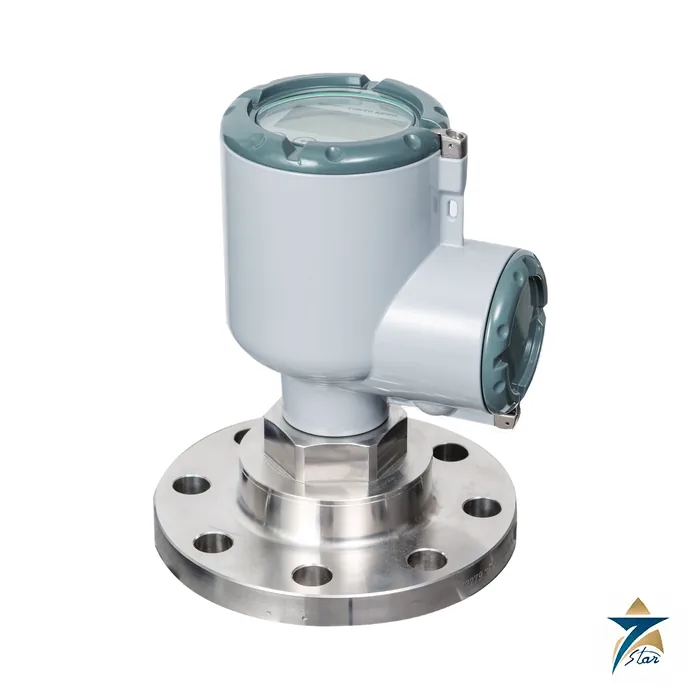
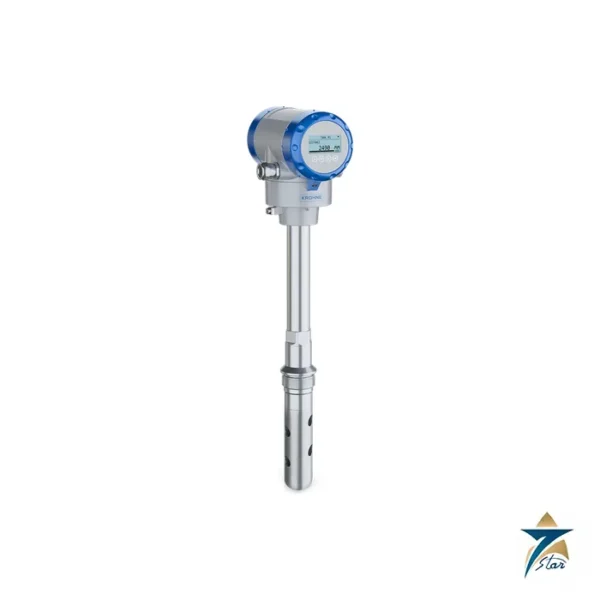
The Tokyo Keiso TLR7500 is a 2-wire, loop-powered, non-contact continuous level meter that uses 80 GHz frequency-modulated continuous-wave (FMCW) microwaves. It measures the time the microwaves take to travel to the product surface and back, so the reading is largely independent of temperature, pressure, viscosity, density and temperature changes of the measured object. It handles liquids, pastes and slurries and can output level, distance, volume and mass.
A newly developed lens antenna gives high directivity, which allows the meter to be fitted to small-diameter nozzles (the smallest antenna is DN20, 3/4 in) and to very small tanks. There are no moving parts, installation on a tank top avoids leakage risk, and the reflected signal can be viewed on the display to help diagnose problems.
Technical specifications
Data from Tokyo Keiso technical guidance TG-L2186-E03 (4th edition, May 2025).
| Parameter |
Specification |
| Manufacturer / model |
Tokyo Keiso TLR7500 (2-wire system level radar) |
| Method / frequency |
FMCW, 80 GHz (W band) |
| Measured media |
Liquids, pastes and slurries |
| Measuring range |
Maximum 50 m depending on dielectric constant and antenna; minimum output range 0.2 m |
| Accuracy |
3 mm (range under 10 m); 0.03% of reading (10 m or more); resolution 1 mm; repeatability 1 mm |
| Dielectric constant |
1.4 or more in direct mode; 1.1 or more in TBF mode |
| Operating pressure |
0 kPa (abs) to 4.0 MPa; 0 to 1.6 MPa for PTFE lens antenna |
| Process-connection temperature |
-50 to +150 °C; -50 to +200 °C with distance piece (depends on seal material) |
| Lens antennas |
DN20 (3/4 in) 5 m, 15 degree beam; DN25 (1 in) 10 m, 10 degree; DN40 (1-1/2 in) 25 m, 8 degree; DN70 (2-3/4 in) 50 m, 4 degree |
| Process connections |
Threads G3/4 to G3 and 3/4 NPT to 3 NPT; flanges JIS 10K 50 to 200A, ASME 2 to 8 in, 150/300 lbs (by antenna) |
| Output |
4-20 mA DC with HART; error signal 21.5 mA or 3.5 mA selectable; resolution 5 microamps |
| Power supply |
24 V DC rated; 12 to 30 V DC (standard, intrinsically safe); 16 to 36 V DC (flameproof) |
| Housing / protection |
Aluminium with polyester coating; IP66/IP68; NEMA 6, 6P; ambient -40 to +80 °C |
| Wetted / antenna materials |
Process connection SS316L; antenna PEEK, PTFE, SS316L; seals FKM/FPM, Kalrez 6375, EPDM |
| Display |
Backlit LCD 128 x 64, English or Japanese; 4 key buttons |
| Explosion protection |
JPN CML 19JPN2030X and IECEx KIWA 19.0009X: Ex ia IIC T6 to T3 Ga/Gb, Ex db ia IIC T6 to T3 Ga/Gb, dust types |
| Weight |
Housing 2.1 kg (3.0 kg with distance piece); antenna example DN40 1-1/2 in thread 2.6 kg; DN70 3 in thread 4.3 kg |
Selecting the antenna and mounting
Choose the lens antenna by tank height and nozzle: the DN20 and DN25 antennas suit short ranges on small nozzles, DN40 covers up to 25 m, and DN70 up to 50 m with the narrowest 4 degree beam, which helps to avoid internal structures. The minimum dead zone is the antenna length plus any antenna extension plus 0.1 m, and the accuracy figure excludes 100 mm from the antenna on DN20, DN25 and DN70 antennas (200 mm for DN40). Add 112 mm to the listed height dimensions if process temperature exceeds 150 °C, and a stainless weather protection hood is available as an accessory.
The seal material fixes the temperature limit: FKM/FPM to -40 °C, Kalrez 6375 from -20 °C and EPDM from -50 °C. Wiring uses M20 x 1.5 cable entries and a stranded 0.5 to 2.5 mm2 signal cable; the catalogue recommends shielded cable and a separate power supply from other power instruments.
What to confirm before ordering
- Tank height, nozzle size and flange or thread, to select the antenna.
- Product dielectric constant: 1.4 or more in direct mode, 1.1 or more in TBF mode.
- Hazardous-area class and temperature class, which limit the allowed ambient and process temperatures.
- Process temperature and seal material, including whether a distance piece is needed above 150 °C.
Key features of the TLR7500
- 80 GHz FMCW radar with a lens antenna, giving beam angles from 15° down to 4° depending on antenna size.
- Ranges up to 50 m with 3 mm accuracy below 10 m, covering everything from small day tanks to tall storage tanks.
- Process conditions up to 4.0 MPa and up to +200 °C with a distance piece.
- 4–20 mA with HART, and a selectable 3.5 mA or 21.5 mA error signal for NAMUR-style fault detection in the control system.
- Intrinsically safe and flameproof Ex versions under IECEx for hazardous areas.
- Echo curve shown on the local display for troubleshooting without a laptop.
Direct mode and TBF mode
In direct mode the meter measures the echo from the liquid surface, which needs a dielectric constant of 1.4 or more. For products with very low dielectric constants, such as some light hydrocarbons and liquefied gases, the surface echo can be weak. TBF (tank bottom following) mode instead evaluates the shift of the echo from the tank bottom caused by the slower travel of microwaves through the product, allowing measurement down to a dielectric constant of 1.1. When specifying, state the product so the appropriate mode can be confirmed.
Applications in Oman and the GCC
Oil and gas production, refineries, petrochemical plants and terminals in Oman store crude oil, condensate, diesel, chemicals and produced water in tanks of widely different heights. The DN70 antenna with its 4° beam suits tall storage tanks where the beam must pass internal structures, while the DN20 and DN25 antennas fit small chemical injection and additive tanks with small nozzles. The Ex ia and Ex db ia certifications cover Zone 0/1 installations typical of hydrocarbon service.
For outdoor tanks, the aluminium housing is rated to an ambient of +80 °C, but direct sun on a tank roof in summer can heat the electronics considerably; the stainless weather protection hood helps to reduce this. Use correctly rated M20 cable glands to maintain IP66/IP68 against dust and rain, and consider the hazardous-area temperature tables, since a higher process temperature can reduce the permitted ambient temperature.
Installation and maintenance
- Keep the antenna away from the fill stream, agitators and heating coils, and avoid mounting in the exact centre of a domed roof where multiple echoes can form.
- Ensure the antenna protrudes beyond the nozzle or follow the manufacturer’s nozzle length guidance.
- Record the empty-tank echo during commissioning; it helps later diagnosis.
- Inspect the lens for deposits on sticky or crystallising products and clean it during shutdowns.
What to include in your RFQ
Provide the tank height and type, nozzle size and connection standard, product name and dielectric constant if known, process pressure and temperature, required seal material, hazardous-area classification, output and communication needs, and quantity.
Documents and quotation
The Tokyo Keiso TLR7500 catalogue is attached to this page as a PDF, including antenna specifications, dimensions and the explosion-proof temperature tables. Send us the tank data, product and approvals required and we will prepare a quotation. Seven Star LLC is an independent supplier in Muscat; price and lead time are confirmed per RFQ. Related range: level instrumentation, including the Micropilot FMR60 80 GHz radar level transmitter.










Reviews
There are no reviews yet.