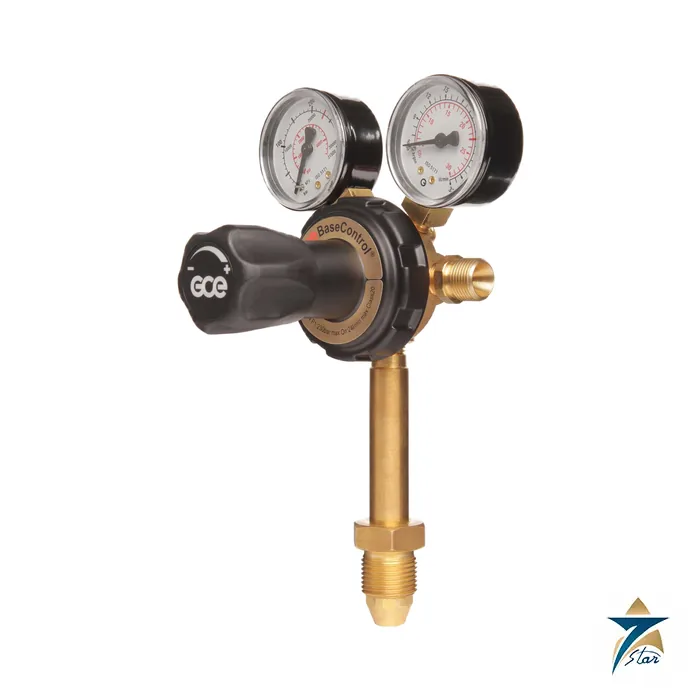
A compact ISO 2503 cylinder regulator with three-scale gauges
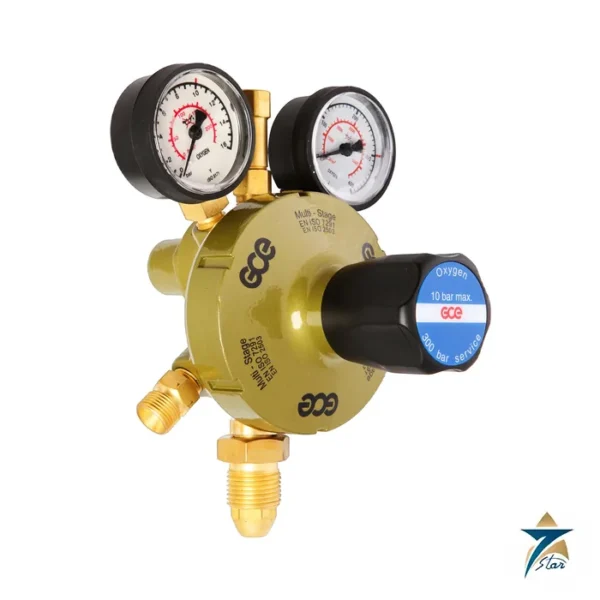
The GCE BASECONTROL SE and BE are single-stage cylinder regulators for oxygen, acetylene, propane, argon and argon mixtures, and carbon dioxide. They serve shielding-gas arc welding, flame welding, oxy-fuel cutting, brazing, general heating and flame spraying. The SE version has a side inlet and the BE version has a bottom inlet; both follow ISO 2503 and are designed for cylinder filling pressures up to 230 bar.
The body is forged from pressure-resistant brass and machined on CNC equipment, and the bonnet is a die-cast zinc-aluminium alloy. GCE states that the regulating valve is protected against particles above 50 micrometres by an inlet filter, and that oxygen versions are designed for adiabatic shock safety. A pressure relief valve protects the low-pressure chamber against over-pressurising.
Technical specifications
| Parameter |
Specification |
| Manufacturer / model |
GCE / BASECONTROL SE (side entry), BE (bottom entry) |
| Standard |
ISO 2503 |
| Delivery variants |
Oxygen 230/10 bar; acetylene 25/1.5 bar; propane 25/4 bar; Ar and Ar/CO2 mixtures 230 bar inlet, 24 l/min; CO2 200 bar inlet, 24 l/min |
| Maximum inlet pressure |
230 bar (oxygen, argon, mixtures), 200 bar (CO2), 25 bar (acetylene, propane) |
| Body |
Forged brass |
| Bonnet |
Zn/Al alloy, forged |
| Stems, nuts and fittings |
Brass |
| Diaphragm |
EPDM or NBR |
| Seat sealing |
PA or CR |
| Gauges |
50 mm, to ISO 5171, scales in bar, kPa and psi; flow gauge in l/min for shielding-gas versions |
| Inlet filter |
Sintered high-pressure filter in the inlet stem |
| Gauge connection |
G1/4 in |
| ISO 2503 class |
Class 3 (oxygen), 20 (Ar and Ar/CO2), 20 (CO2), 2 (acetylene), 1 (propane) |
| Temperature range |
-20 C to +60 C |
| Weight |
Approximately 1.18 kg, depending on gas version |
Design details that matter in service
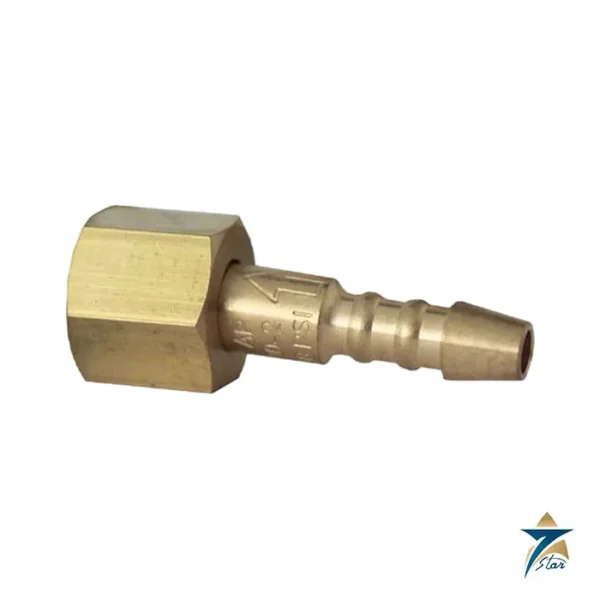
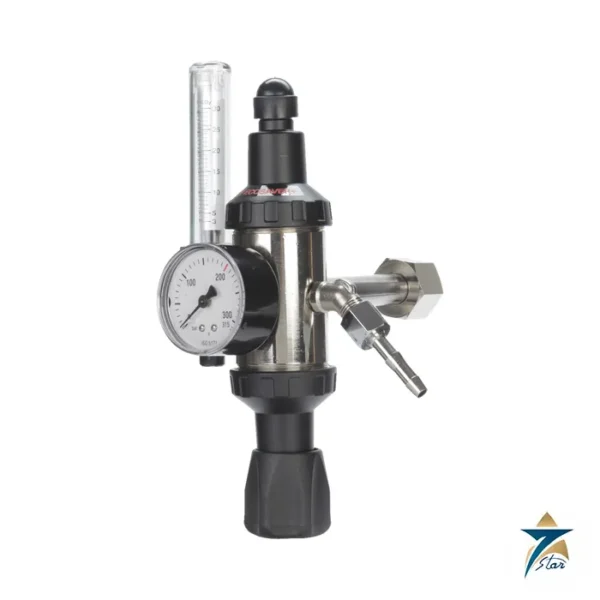
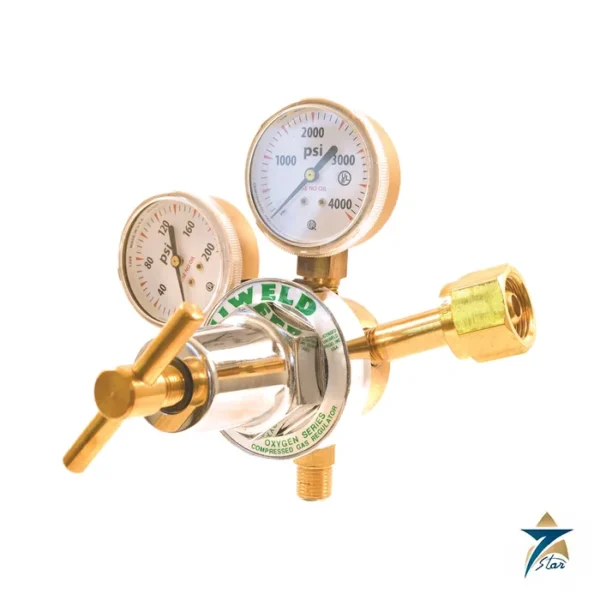
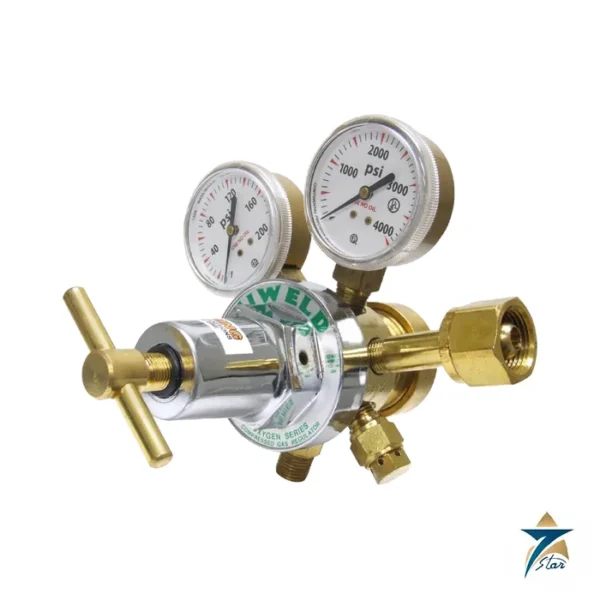
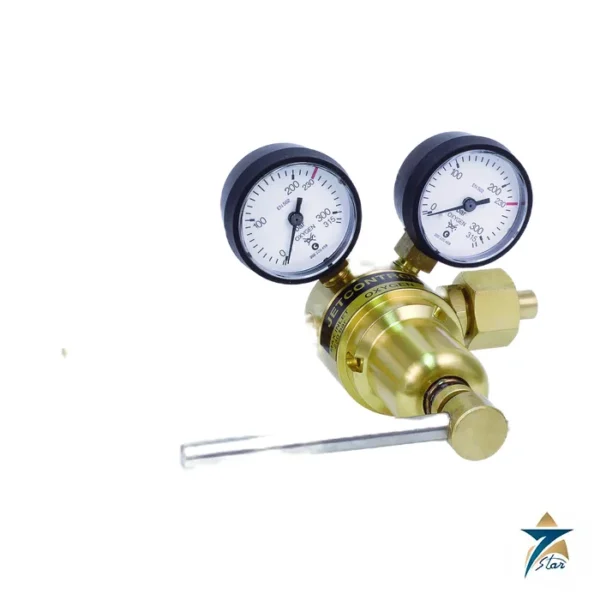
Both the high-pressure and the low-pressure gauge show bar, kPa and psi on a single dial. The ergonomic plastic handwheel sets the outlet pressure or, on shielding-gas versions, the flow in litres per minute. The outlet is prepared for a gas-tight connection to an outlet flashback arrestor or a hose nipple, and the inlet is a gas-specific cylinder connection with a brass nut and quality sealing faces.
GCE publishes flow charts for oxygen, acetylene and propane in the brochure, along with a dimension drawing. Use the charts to check that the regulator can supply the largest torch or heating nozzle on the line at the required delivery pressure, rather than relying on the maximum figures alone.
Choosing the right version
Select the gas first, then the entry type (side or bottom) that fits your cylinder trolley and hose routing. For MIG, MAG and TIG welding choose the argon, mixture or CO2 version with the l/min scale. For oxy-fuel work choose the oxygen version at 10 bar and an acetylene or propane regulator, and fit a flashback arrestor such as the GCE SAFE-GUARD-5 flashback arrestor at each regulator outlet. Never use oil or grease on oxygen fittings.
How the GCE BASECONTROL works
The regulator reduces the high pressure of the cylinder to a lower, steady working pressure. Gas enters through the inlet filter and a seat. A diaphragm senses the outlet pressure and works against a spring, which is set by the handwheel. If the outlet pressure falls, the diaphragm opens the seat more, and if it rises, the seat closes. A relief valve protects the low-pressure chamber, and two gauges show the cylinder pressure and the outlet pressure or flow.
Where the BASECONTROL is used
- Shielding-gas arc welding with argon, mixtures or CO2
- Flame welding and brazing
- Oxy-fuel cutting
- General heating and flame spraying
- Workshops and sites that use oxygen, acetylene or propane
Selection checklist for the BASECONTROL
- Gas: oxygen, acetylene, propane, argon, mixture or CO2
- Inlet position: side entry SE or bottom entry BE
- Cylinder pressure up to 230 bar, or 25 bar for fuel gases
- Outlet pressure or flow of 24 l/min
- Gauge scales in bar, kPa and psi
- Connection for a flashback arrestor or hose nipple
- Cylinder valve connection for the gas
- Diaphragm material: EPDM or NBR
Installation, commissioning and maintenance notes
Use a regulator made for the gas in use, and never swap regulators between gases. Check that the connection and its seal are clean and undamaged before fitting. Open the cylinder valve slowly with the handwheel released, then set the outlet pressure or flow. Check all joints with a leak test fluid. Close the cylinder after use and relieve the pressure. Do not use oil or grease on oxygen parts.
Requesting a quotation for the GCE BASECONTROL
Please send the gas, the entry type, the outlet range and the fittings needed. Seven Star LLC serves industrial customers in Oman and the GCC and replies with a quotation based on the information provided.
BASECONTROL build
The body is forged brass and the bonnet is a zinc-aluminium alloy. The gauge connection is G1/4 inch.
BASECONTROL gauges
The 50 mm gauges follow ISO 5171, with scales in bar, kPa and psi. Shielding-gas versions also have a flow gauge in l/min.
BASECONTROL inlet filter
A sintered filter in the inlet stem protects the regulating valve against particles above 50 micrometres.
BASECONTROL temperature and weight
The working range is -20 to +60 degrees C, and the weight is about 1.18 kg depending on the gas version.
Regulator records for BASECONTROL
Keep the gas type, the purchase date and the leak test dates with the workshop equipment list.
Choosing the right BASECONTROL regulator
Match the regulator to the gas, because each gas has its own cylinder connection and pressure rating. Oxygen is listed at 230/10 bar, acetylene at 25/1.5 bar, propane at 25/4 bar, and argon mixtures at 230 bar inlet with 24 l/min. Choose the side entry or bottom entry type to suit the cylinder trolley or the wall rack.
BASECONTROL ISO 2503 classes
The classes are 3 for oxygen, 20 for argon mixtures and CO2, 2 for acetylene and 1 for propane. Oxygen versions are designed for adiabatic shock safety.
Documents and quotation
The GCE BASECONTROL brochure (Art.Nr. GCEBASEUN2016, edition 1/2016) with flow charts and dimensions is attached under Datasheets & Documents. See related equipment in our Oxy-Fuel Cutting Equipment category.
Please confirm the gas, the cylinder valve standard in your market, the entry type and the delivery pressure or flow before ordering. For a quotation, send those details with the quantity.


Reviews
There are no reviews yet.