A shielding-gas regulator that stops gas surges at arc start
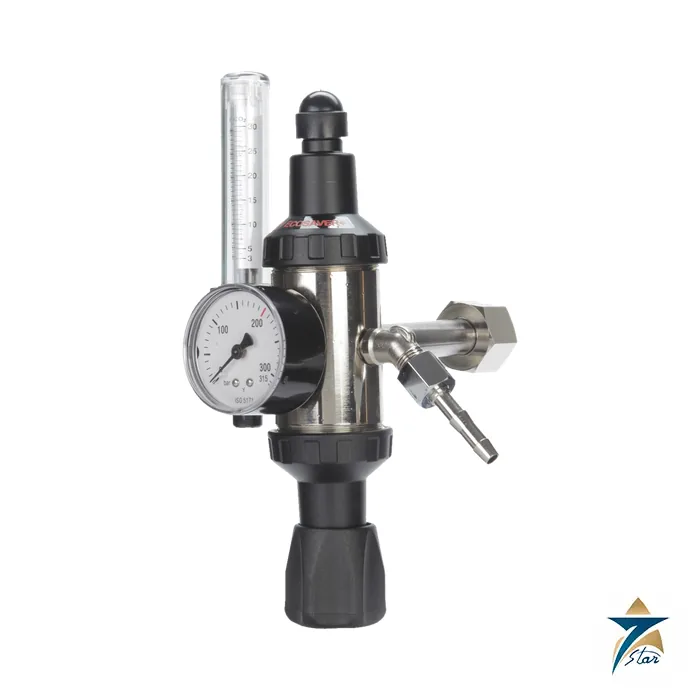
The GCE ECOSAVER+ is a special cylinder regulator for MIG, MAG and TIG welding. It holds the pressure and flow in the downstream hose steady during the welding process, so there is no pressure or flow surge when the arc starts again after a pause. GCE explains that surges waste shielding gas and can give a poor weld, and that weld quality and gas consumption are best when the ECOSAVER+ is part of the control system.
GCE states a saving of about 40 percent of shielding gas, validated by an independent test of 600 welded joints of 3 mm length with argon, MIG welding at 17 l/min against a Dincontrol regulator. In two further GCE tests, spot welding saved 50 percent and a mix of 75 percent spot and 25 percent seam welding saved 31 percent. GCE states that the real saving depends on the process and that the unit pays for itself in about four months depending on operating conditions.
Technical specifications
| Parameter |
Specification |
| Manufacturer / model |
GCE / ECOSAVER+ (leaflet 73500001393) |
| Gases |
Ar, Ar/CO2, forming gas; CO2 version |
| Maximum inlet pressure |
200 or 300 bar (200 bar for CO2) |
| Outlet flow range |
0-30 l/min; double-flow version 2 x 0-30 l/min |
| Standards |
EN ISO 2503, ISO 5171 |
| Body |
Brass |
| Bonnet |
Zn/Al alloy, die cast |
| Stems, nuts and fittings |
Brass |
| Diaphragm |
EPDM |
| Seat sealing |
PA/CR |
| Inlet / outlet connection |
Gas-specific connection |
| Pressure relief valve |
Fitted in all variants |
| Temperature range |
-20 C to +60 C |
| Weight |
Approximately 2.2 kg, depending on gas variant |
How the gas saving works
With a standard regulator, closing the gas flow during a pause lets the pressure in the connecting hose rise above the optimal level. When welding restarts, that extra gas surges through the system and out of the nozzle. The ECOSAVER+ limits the gas accumulated in the hose, so the preset flow reaches the torch during preflow, welding and postflow. The regulator uses an encapsulated valve for stable outlet pressure, a precise gauge and flowmeter scale for simple setting, and an ergonomic handwheel.
The saving is largest on short welds, tack welding and spot welding, where the arc stops and starts often, and smaller on long continuous seams. The gauge and the flowmeter scale are laid out so that the set value can be read at a glance by the welder. Variants are available for all common shielding gases, including 300 bar cylinders and a double-flow version.
Choosing and setting up
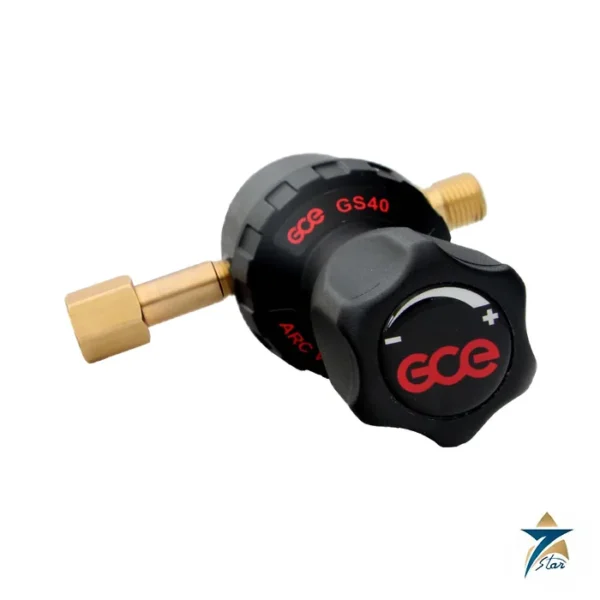
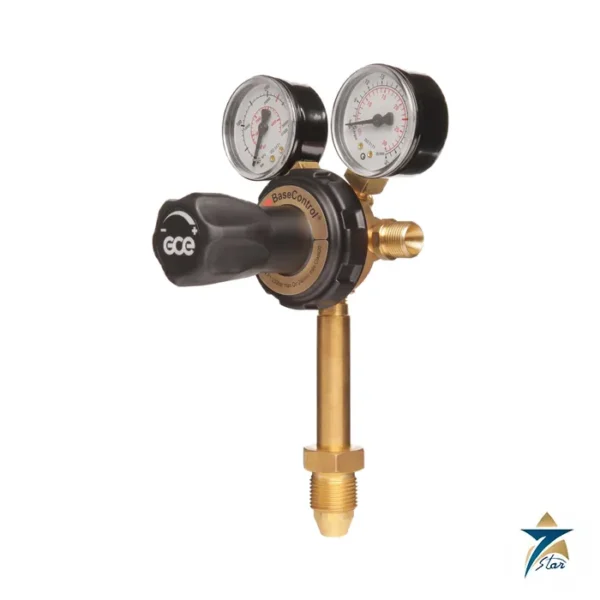
Match the gas and cylinder connection to your supply, set the flow on the flowmeter for the wire and joint, and check the hose and torch for leaks, because a leak defeats any saving. If you already use a standard cylinder regulator, the GCE UNICONTROL regulator and GCE BASECONTROL regulator are alternatives for general work; for an economiser that fits downstream of an existing regulator see the GCE GS40 gas economiser.
How the GCE ECOSAVER+ works
A standard regulator lets the pressure in the hose rise while the arc is off. When welding starts again, that extra gas rushes out of the nozzle in a burst. The ECOSAVER+ limits the amount of gas that collects in the hose during a pause. When the torch is triggered again, the flow set on the regulator reaches the torch from the start of preflow, through welding, to postflow. An encapsulated valve holds the outlet pressure stable, and a pressure relief valve is fitted in every variant.
Where the ECOSAVER+ is used
- MIG and MAG welding with frequent arc stops
- TIG welding shops
- Tack welding and spot welding
- Robotic and manual welding cells
- Workshops that want to cut shielding gas use
Selection checklist for the ECOSAVER+
- Gas: argon, argon and CO2 mixes, forming gas or CO2
- Inlet pressure of 200 or 300 bar
- Outlet flow of 0 to 30 l/min
- Single or double flow version
- Cylinder connection for the gas used
- Standards: EN ISO 2503 and ISO 5171
- Temperature range of -20 to +60 degrees C
- Weight of about 2.2 kg
Installation, commissioning and maintenance notes
Check that the regulator is made for the gas in the cylinder, and that the cylinder valve and the connection are clean and free of oil. Fit the regulator by hand and then with the right spanner, never with force. Open the cylinder valve slowly. Set the flow on the flowmeter scale while gas is flowing. Check the connections for leaks with a suitable leak spray, and do not use oil or grease on any gas fittings.
Requesting a quotation for the GCE ECOSAVER+
Please send the gas type, the cylinder pressure, the flow needed and the connection standard. Seven Star LLC serves industrial customers in Oman and the GCC and replies with a quotation based on the information provided.
ECOSAVER+ construction
The body is brass, the bonnet is die-cast zinc and aluminium alloy, the diaphragm is EPDM and the seat sealing is PA or CR.
ECOSAVER+ gas saving
The saving depends on the welding process. It is greatest where the arc stops and starts often, as in tack and spot welding, and smaller on long continuous seams.
ECOSAVER+ setting
A precise gauge and a flowmeter scale make the setting simple, and an ergonomic handwheel gives a comfortable adjustment.
ECOSAVER+ gas variants
The range covers argon, argon and CO2 mixes and forming gas at up to 300 bar, and a CO2 version at up to 200 bar.
Welding gas records for ECOSAVER+
Keep the gas type, the set flow and the leak test date with the welding shop file.
Documents and quotation
The GCE ECOSAVER+ leaflet, hosted by the manufacturer group, is attached under Datasheets & Documents. See related equipment in our Oxy-Fuel Cutting Equipment category.
For a quotation, send the gas, inlet pressure rating (200 or 300 bar), cylinder connection, single or double flow and quantity.

Reviews
There are no reviews yet.