Low-current solid wire for thin plate and positional welding
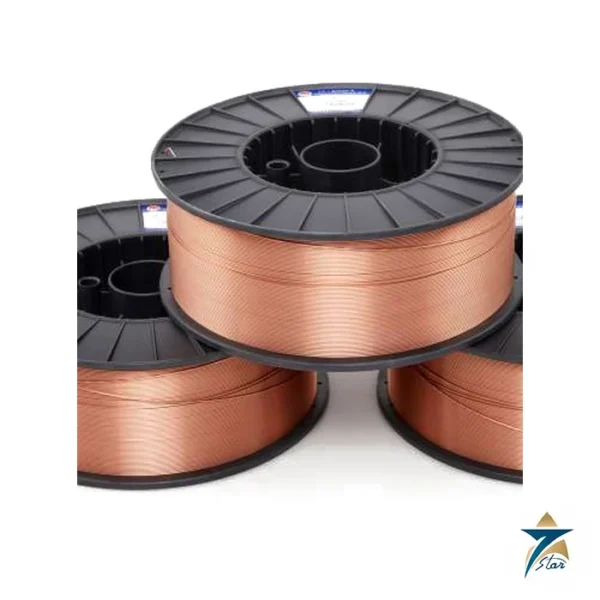
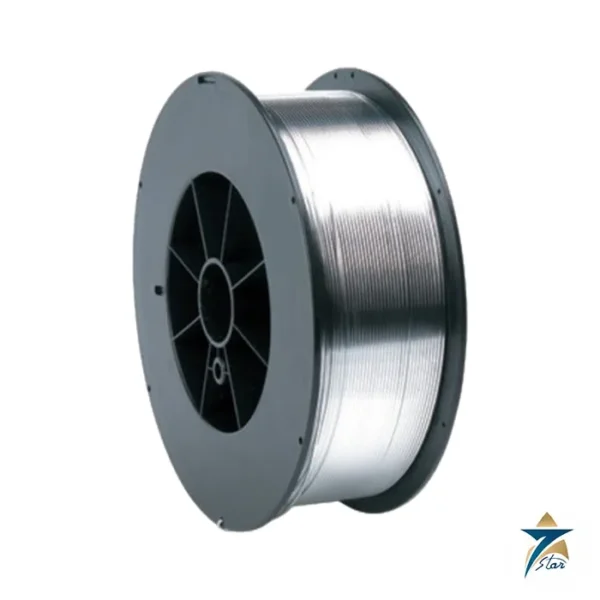
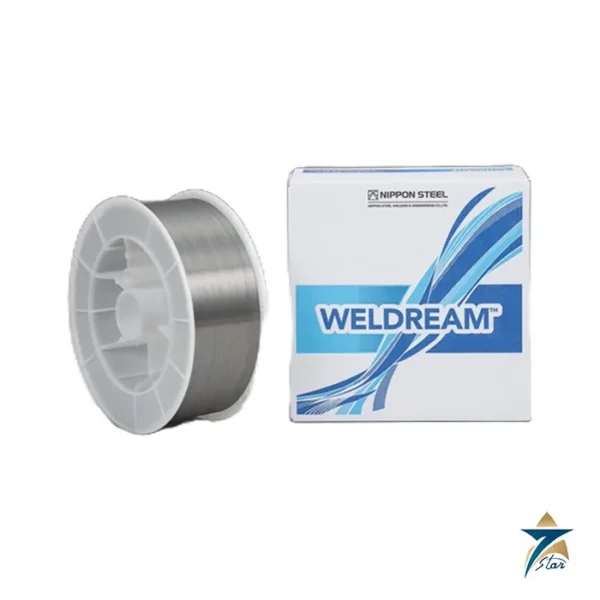
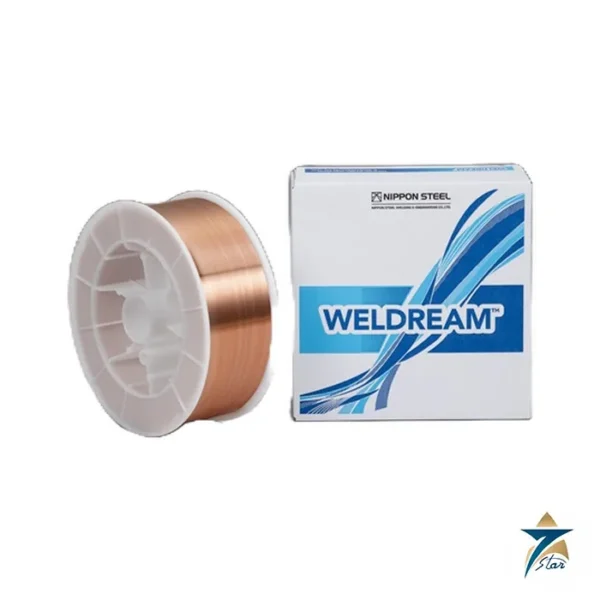
The Nippon Steel YM-28 is a GMAW solid wire classified JIS Z 3312 YGW12 and AWS A5.18 ER70S-6. Designed for CO2 shielding, it gives a stable arc and few spatters with excellent weldability under 200 A, which makes thin plate welding in all positions, and vertical-down welding in particular, straightforward. The manufacturer also notes better performance than other wire types in high-speed welding of thin plate below 300 A, and a stable, low-spatter arc with Ar + CO2 mixtures over a wide current range.
Applications include automobiles, rolling stock, electric appliances, machinery, air conditioners, light gauge steel, pipes, steel frames, bridges and ships, in mild steel and 490 MPa high tensile steel.
Technical specifications
| Parameter |
Specification |
| Manufacturer / product |
Nippon Steel Welding & Engineering / YM-28 |
| Process |
GMAW, solid wire |
| AWS classification |
A5.18 ER70S-6 |
| JIS classification |
Z 3312 YGW12 |
| Shielding gas |
CO2 or Ar + 20% CO2 |
| Polarity |
DC (+) |
| Typical weld metal, % (CO2) |
C 0.08, Si 0.60, Mn 1.10, P 0.014, S 0.010 |
| Typical weld metal, % (Ar + 20% CO2) |
C 0.08, Si 0.70, Mn 1.25, P 0.015, S 0.011 |
| Mechanical properties (CO2) |
YS 450 MPa, TS 550 MPa, El. 27%, Charpy 120 J at 0 °C |
| Mechanical properties (Ar + 20% CO2) |
YS 480 MPa, TS 590 MPa, El. 27%, Charpy 130 J at 0 °C |
| Current, flat and horizontal fillet |
0.9 mm 70–200 A; 1.0 mm 70–250 A; 1.2 mm 80–350 A; 1.4 mm 250–550 A |
| Current, vertical-down |
0.9 mm 70–200 A; 1.0 mm 70–220 A; 1.2 mm 80–240 A |
| Current, vertical-up / horizontal |
0.9 mm 70–140 A; 1.0 mm 70–160 A; 1.2 mm 80–180 A |
| Current, overhead |
0.9 mm 70–100 A; 1.0 mm 70–120 A; 1.2 mm 80–150 A |
Getting stable short-circuit transfer
At low currents YM-28 is normally run in short-circuit (dip) transfer. The handbook advises selecting the arc voltage to match the current: if the voltage is too high or too low, the dip transfer frequency drops and the arc becomes less stable. In vertical-down welding, hold the wire at an angle slightly above horizontal so the arc stays ahead of the molten pool.
CO2 or mixed gas
With Ar + 20% CO2 the deposit retains more silicon and manganese, and the published strength and impact values are slightly higher than with pure CO2. Mixed gas also gives a smoother bead on visible work. CO2 is cheaper and gives deeper penetration. For heavy flat fillets at high current, the YGW11 sister wire YM-26 is designed for that range.
The wide current table helps with set-up. On sheet and light gauge parts, start near the low end of each range, for example 70–100 A on 0.9 mm in overhead, and adjust voltage for a steady crackle. On heavier fillets in the flat position, the 1.2 mm size runs up to 350 A and the 1.4 mm size from 250 to 550 A, giving a single wire family for a mix of thin and thick work.
Documents and quotation
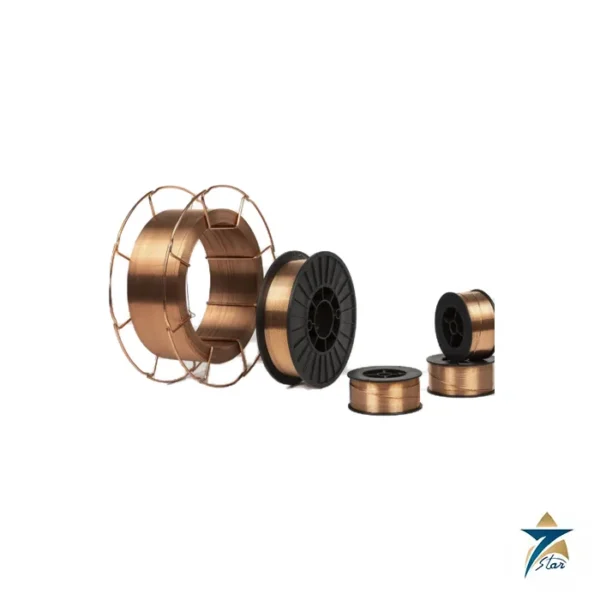
The official product page link is given below. Browse our Solid Welding Wire category for related consumables.
For a quotation, send the diameter, spool or pail size, quantity and certificate requirements.
Nippon Steel YM-28 classification and typical properties
| Item |
Manufacturer data |
| JIS |
Z 3312 YGW12 |
| AWS |
A5.18 ER70S-6 |
| Shielding gas |
CO2 or Ar + CO2 |
| Positions |
All positions, including vertical-down |
| Weld metal with CO2 |
C 0.08, Si 0.60, Mn 1.10; YS 450 MPa, TS 550 MPa, El 27%, CVN 120 J at 0 °C |
| Weld metal with Ar + 20% CO2 |
Si 0.70, Mn 1.25; YS 480 MPa, TS 590 MPa, CVN 130 J at 0 °C |
Current ranges
| Diameter (mm) |
Flat (A) |
| 0.9 |
70–200 |
| 1.0 |
70–250 |
| 1.2 |
80–350 |
| 1.4 |
250–550 |
For vertical-down welding with 1.2 mm wire, the manufacturer lists 80–240 A.
How YM-28 works
YM-28 is a solid wire designed to run smoothly at low and medium current. Its silicon and manganese levels deoxidise the weld pool and give good wetting, so the bead flows out well at the toes even at high travel speed. This makes it suitable for short-circuit (dip) transfer on thin plate and for positional welding, where a small, controllable pool is needed. With an argon-rich mixture the arc becomes softer, spatter falls and the weld metal recovers more silicon and manganese, which is reflected in the higher strength values above.
Selection and procedure guide for YM-28
- Choose YM-28 for mild steel and 490 MPa class steel where all-position welding or thin sheet at under 200 A is involved.
- Use CO2 for low cost and deeper penetration, or Ar + CO2 for lower spatter and a better bead appearance.
- For vertical-down welding, hold the wire slightly above horizontal and match the voltage to the current to keep the dip transfer stable, as advised by Nippon Steel.
- For heavy plate at very high current in the flat position, YM-26 may give higher productivity.
Storage and maintenance
- Store spools dry and covered to prevent rust and dust on the wire.
- Use the correct drive rolls and liner for the wire diameter, especially with 0.9 and 1.0 mm wire.
- Replace worn contact tips to keep the arc stable at low current.
- Clean oil, rust and galvanising from the joint area before welding.
Typical YM-28 applications in Oman and the GCC
Fabrication shops, HVAC duct and enclosure makers, vehicle body and trailer builders, and maintenance teams in Oman and the GCC need a versatile wire for thin sheet and positional welding. YM-28 covers light gauge sheet, frames, brackets, piping supports and general steelwork, and its all-position capability makes it practical for site repair work.
Practical tips for thin sheet welding
On thin sheet, use the smallest practical diameter and a short stickout, and travel quickly to limit distortion and burn-through. Tack joints at short intervals and weld in a balanced sequence. When gaps vary, a slight weave or a stitch technique can bridge them without overheating the edges.
Why source from Seven Star LLC
Seven Star LLC supplies MIG and MAG welding wire to workshops and contractors across Oman and the GCC. Tell us the diameter, spool type and quantity to request a quote; our team can help confirm the correct ordering code.

Reviews
There are no reviews yet.