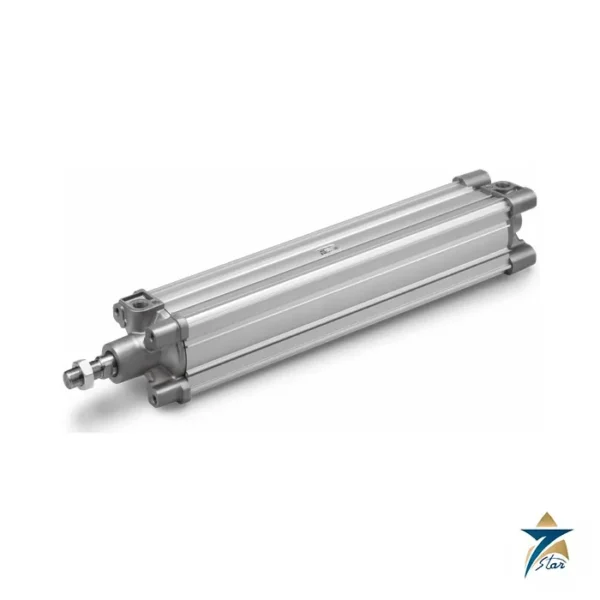
DSBC-50-100-PPVA-N3: 50 mm bore, 100 mm stroke double-acting ISO cylinder
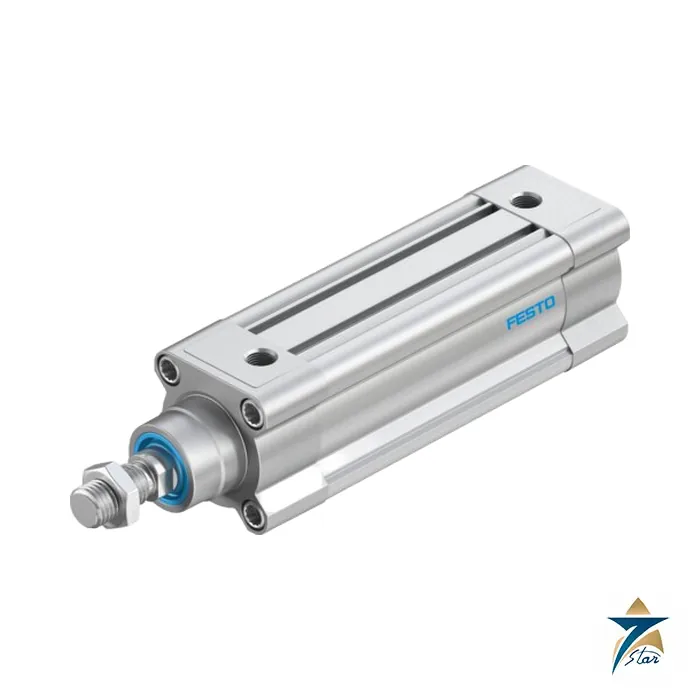
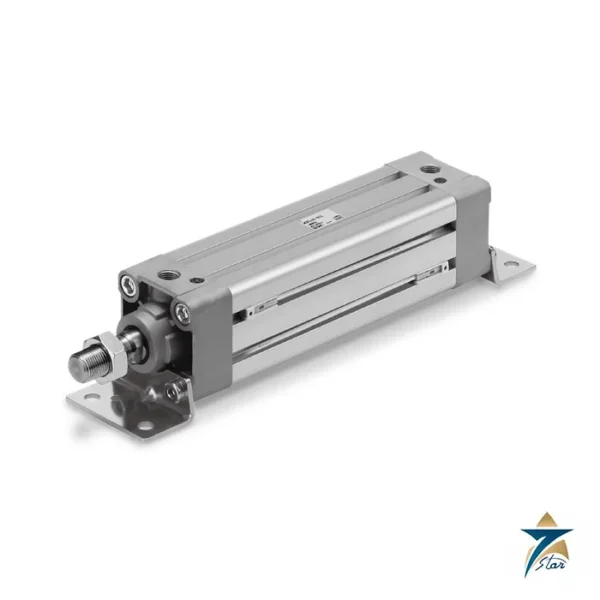
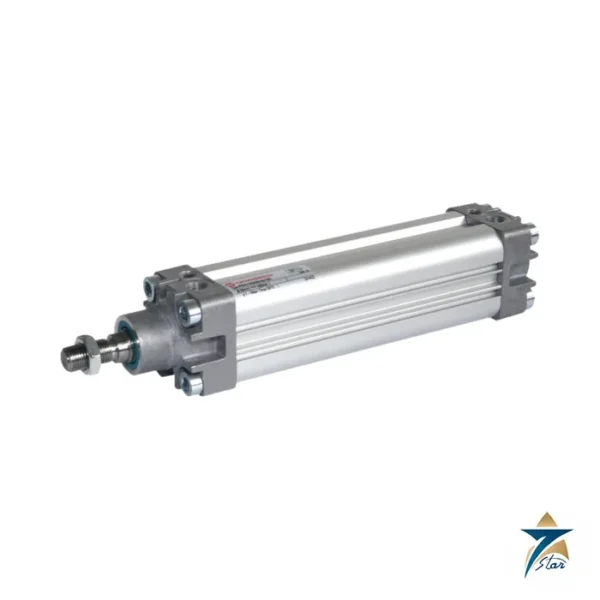
The Festo DSBC-50-100-PPVA-N3 (article 1366952) is a double-acting ISO cylinder with a 50 mm piston and 100 mm stroke, built to ISO 15552 (profile barrel). Seven Star LLC supplies DSBC-50-100-PPVA-N3 in Oman and the GCC as an independent supplier in Muscat, not affiliated with the manufacturer. The paragraphs below explain the data on the manufacturer sheet, how to select the right size and what to send for a quotation.
Reading the part number against the datasheet:
- DSBC is the series: the ISO cylinder series in the Festo catalogue.
- 50 in the code corresponds to the 50 mm piston diameter and 100 to the 100 mm stroke stated on the datasheet.
- Cushioning: Pneumatic cushioning, adjustable at both ends.
- Rod end: external thread, thread M16x1.5.
- Port size: G1/4.
DSBC-50-100-PPVA-N3 technical specifications
Values below are taken from the manufacturer data sheet for article 1366952.
| Parameter |
Specification |
| Manufacturer / part number |
Festo / DSBC-50-100-PPVA-N3 |
| Article number |
1366952 |
| Piston diameter |
50 mm |
| Stroke |
100 mm |
| Piston rod thread |
M16x1.5 |
| Cushioning |
Pneumatic cushioning, adjustable at both ends |
| Conforms to standard |
ISO 15552 |
| Piston rod end |
External thread |
| Mode of operation |
Double-acting |
| Operating pressure |
0.4 to 12 bar |
| Operating medium |
Compressed air as per ISO 8573-1:2010 [7:4:4]; oil lubrication possible |
| Ambient temperature |
-20 °C to 80 °C |
| Pneumatic connection |
G1/4 |
| Theoretical force at 6 bar, advancing |
1178 N |
| Theoretical force at 6 bar, retracting |
990 N |
| Impact energy in the end positions |
1J |
| Cushioning length |
22 mm |
| Moving mass |
615 g |
| Product weight |
1750 g |
| Basic weight at 0 mm stroke |
1190 g |
| Additional weight per 10 mm stroke |
56 g |
| Position sensing |
Via proximity switch |
| Corrosion resistance class (CRC) |
2 – Moderate corrosion stress |
| Barrel material |
Wrought aluminum alloy, smooth-anodized |
| Piston rod material |
High-alloy steel |
| Cover material |
Die-cast aluminum, coated |
| Cleanroom suitability |
Class 5 according to ISO 14644-1 |
How the DSBC-50-100-PPVA-N3 works and what the force figures mean
Compressed air admitted behind the piston pushes the rod out; air admitted on the rod side pulls it back, which is what double-acting means. The advancing force of 1178 N at 6 bar is the theoretical value (pressure times piston area). The retracting force is lower, 990 N, because the rod takes up part of the piston area on that side; the loss is about 16 percent.
Force scales with pressure. As a theoretical guide, the same cylinder gives about 785 N at 4 bar and about 1571 N at 8 bar when advancing, before friction and load acceleration are deducted. Real systems deliver less, so size with margin.
End-position damping is by adjustable pneumatic cushioning at both ends, set with screws at commissioning. The datasheet states an impact energy of 1J in the end positions, which is the energy the cushioning can handle; if moving mass times speed squared is above it, add external damping or reduce speed with flow control.
Weight scales with stroke: the basic weight at zero stroke is 1190 g and each additional 10 mm adds 56 g, which for a 100 mm stroke gives 1750 g, in line with the stated product weight of 1750 g. This matters when the cylinder hangs from a bracket or rides on a moving carriage.
Where DSBC-50-100-PPVA-N3 fits: compatible and related parts
A cylinder of this type is normally part of a small chain: a directional valve, flow controls, fittings and tubing, and a position sensor on the barrel. The datasheet lists proximity switch sensing and mounting options (With internal thread), so mounting kits such as foot, flange or clevis mounts are ordered separately as accessories. Fittings must match the G1/4 port.
Siblings in the same family that we handle include DSBC-40-70-PPVA-N3, DSBC-100-500-PPVA-N3, DSBC-32-150-PPSA-N3, DSBC-100-200-PPSA-N3, DSBC-125-50-PPVA-N3, DSBC-50-100-D3-PPVA-N3. Each differs in bore, stroke or cushioning, so they are not interchangeable without checking force, travel and mounting.
Selection and ordering checklist for DSBC-50-100-PPVA-N3
- Required force at the real working pressure, with margin; DSBC-50-100-PPVA-N3 gives 1178 N advancing at 6 bar.
- Stroke: 100 mm is fixed by the part number, so confirm the full travel including any dead length.
- Cushioning type: adjustable pneumatic cushioning at both ends, set with screws at commissioning.
- Rod end: external thread with M16x1.5; confirm that attachments match.
- Operating pressure window 0.4 to 12 bar; check that the plant air stays inside it.
- Position sensing: Via proximity switch.
- Confirm that the load is below roughly 70 percent of the theoretical advancing force, which leaves margin for friction and acceleration.
Installation, commissioning and maintenance of DSBC-50-100-PPVA-N3
Mount the cylinder on a flat rigid surface and align the load with the rod axis so that no side force acts on the rod bearing. Use flow control valves to tune speed; the G1/4 port takes standard Festo-type or generic fittings of that thread. Mounting position is any.
For commissioning, supply clean dried air, start at low pressure, cycle the cylinder without load and then raise to working pressure. Adjust the cushioning screws until the piston arrives softly without bouncing. Check rod and wiper for wear and listen for air leaks at the end caps during routine rounds. Keep a spare seal kit or a replacement cylinder on the shelf for lines that cannot stop.
Typical applications of DSBC-50-100-PPVA-N3 in Oman and the GCC
Oman and the wider GCC put pneumatic equipment under demanding conditions: ambient heat in summer, fine desert dust, high humidity in coastal plants and compressed-air systems that are not always perfectly dried. A 50 mm bore with 100 mm stroke is the everyday size for pushing, lifting and clamping on skid-mounted packages, filling and packing lines and valve-actuation rigs. It sits between the light 32 and 40 mm cylinders and the heavy 100 mm class, so it is often the first size engineers try when a load is around 1 kN.
Where air is dry and filtered, a cylinder such as the DSBC-50-100-PPVA-N3 typically runs for years between seal replacements. In dusty outdoor or semi-outdoor locations, a bellows or rod protection and a regular wipe of the rod extend life.
DSBC-50-100-PPVA-N3 and sibling variants compared
The table compares DSBC-50-100-PPVA-N3 with other cylinders of this family from the manufacturer data sheets.
| Part number |
Piston diameter |
Stroke |
Force at 6 bar, advancing |
Cushioning |
| DSBC-50-100-PPVA-N3 |
50 mm |
100 mm |
1178 N |
Pneumatic cushioning |
| DSBC-40-70-PPVA-N3 |
40 mm |
70 mm |
754 N |
Pneumatic cushioning |
| DSBC-100-500-PPVA-N3 |
100 mm |
500 mm |
4712 N |
Pneumatic cushioning |
| DSBC-32-150-PPSA-N3 |
32 mm |
150 mm |
483 N |
Self-adjusting pneumatic end-position cushioning |
| DSBC-100-200-PPSA-N3 |
100 mm |
200 mm |
4712 N |
Self-adjusting pneumatic end-position cushioning |
| DSBC-125-50-PPVA-N3 |
125 mm |
50 mm |
7363 N |
Pneumatic cushioning |
| DSBC-50-100-D3-PPVA-N3 |
50 mm |
100 mm |
1178 N |
Pneumatic cushioning |
Information to send with your DSBC-50-100-PPVA-N3 RFQ
- Full part number DSBC-50-100-PPVA-N3 and the quantity required.
- Working pressure, load mass and cycle time, so we can check force and cushioning.
- Mounting accessories needed: foot, flange, clevis, rod eye or sensors.
- Fitting thread and tube size on your side.
- Environment: ambient temperature, dust, washdown or outdoor exposure.
- Delivery location in Oman or the GCC and required lead time.
Documents and quotation
The manufacturer data sheet for DSBC-50-100-PPVA-N3 is attached on this page for download.
Send the part number DSBC-50-100-PPVA-N3 with quantity and delivery location and we will confirm availability and a quotation. Seven Star LLC is an independent supplier and is not affiliated with the manufacturer.






















Reviews
There are no reviews yet.