ISO 15552 profile cylinder for general machine service
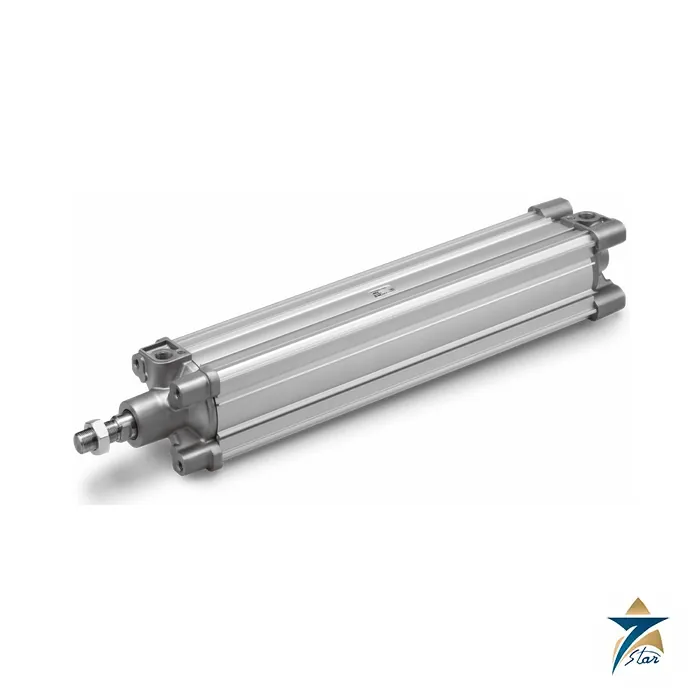
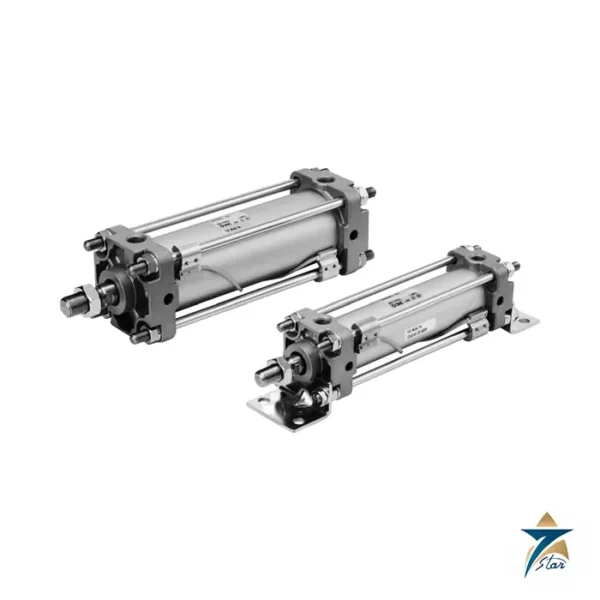
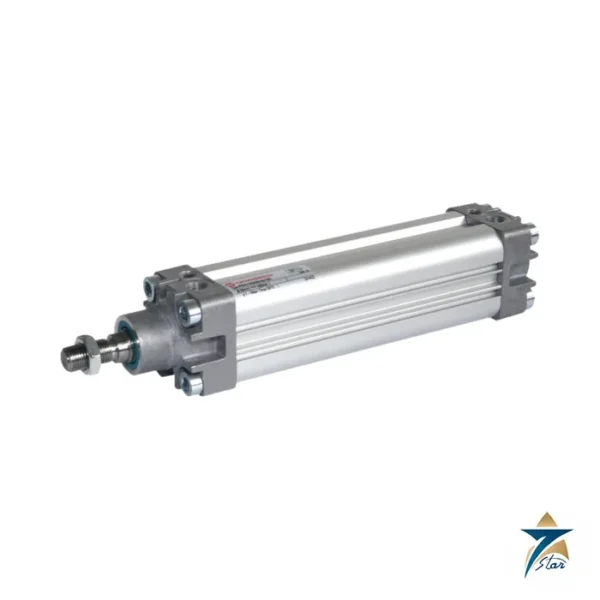
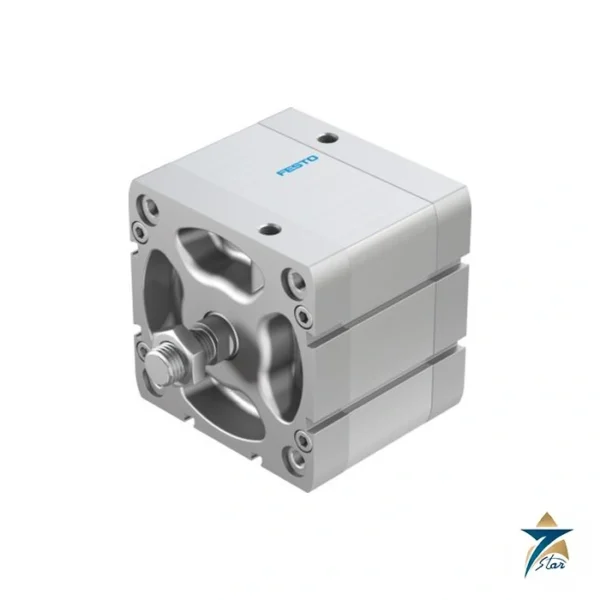
CP96SDB63-100C is a standard-type, double-acting ISO 15552 tie-rod-free profile cylinder from the SMC CP96 series. ISO 15552 fixes the bore, rod and mounting dimensions of this cylinder class, so a 63 mm unit from one maker can be exchanged for another on the same brackets; that is why this format is the default for conveyors, diverters, packaging and process-plant dampers. The profile body carries the piston magnet and has slots for direct fitting of auto switches.
Reading the code from the catalogue how-to-order page: CP96S is the series and standard type, D marks the built-in magnet for auto switches, B is the basic mounting (foot, flange and clevis variants use L, F, G, C, D and V), 63 is the bore, 100 is the stroke in mm and C means air cushion on both ends plus a bumper cushion. With no further letters the cylinder has a single rod, no rod boot and no auto switch fitted.
Technical specifications
| Parameter |
Specification |
| Series / standard |
CP96 series, ISO 15552 air cylinder, standard type, double acting |
| Bore / rod diameter |
63 mm / 20 mm |
| Stroke |
100 mm (standard strokes 25 to 800 mm at this bore; maximum stroke 2000 mm) |
| Fluid |
Air |
| Operating pressure |
0.05 MPa minimum, 1.0 MPa maximum; proof pressure 1.5 MPa |
| Ambient and fluid temperature |
-20 to 70 deg C without auto switch; -10 to 60 deg C with auto switch (no freezing) |
| Piston speed |
50 to 1000 mm/s for bores 32 to 100 with air cushion plus bumper cushion |
| Port size |
G 3/8 at 63 mm bore |
| Cushion (code C) |
Air cushion on both ends plus bumper cushion |
| Lubrication |
Not required (non-lube) |
| Piston area |
3117 mm2 OUT, 2803 mm2 IN; theoretical 1559 N OUT and 1402 N IN at 0.5 MPa |
| Basic weight |
1.48 kg basic mounting plus 0.32 kg per 50 mm stroke (about 2.12 kg for 100 mm, derived from the catalogue method) |
| Stroke tolerance |
0 to +2 mm up to 500 mm stroke |
Mounting styles and accessories
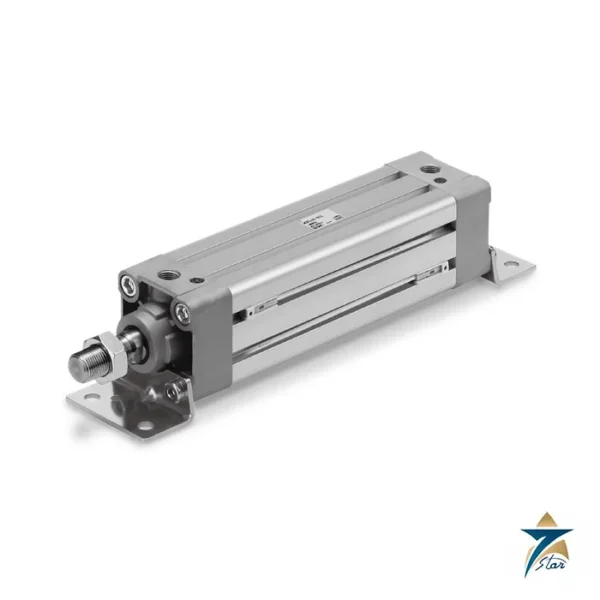
The same body is offered with basic, axial-foot, rod-flange, head-flange, single-clevis, double-clevis and adjustable-position-trunnion mounting, and the catalogue lists centre trunnion as well. Mounting brackets are shipped with the cylinder but not assembled. Rod-end nuts are standard on every mounting; clevis pins come standard with the double clevis, while rod-end and rod-clevis accessories and rod boots (nylon or heat-resistant tarpaulin) are options. The catalogue warns not to combine a rod end or floating joint with a single clevis that has a ball joint.
Choose the mounting by the direction of the load: a basic or flange cylinder suits a straight push-pull along its axis, while clevis or trunnion mounting is for a mechanism where the cylinder swings through an arc.
Selection notes for plant use
On a long, heavy stroke do not rely on the bumper alone; follow the manufacturer manual for cushion setting and check end-of-stroke behaviour during commissioning. The allowable kinetic energy chart in the catalogue relates load mass to maximum speed for each bore and should be checked for heavy loads. For wash-down areas, dust or weld spatter the made-to-order suffixes (for example -XC4 heavy-duty scraper, -XC22 fluororubber seals, -XB6 heat resistant to 150 deg C) are separate part numbers and are not part of CP96SDB63-100C.
Typical use around Oman and the Gulf is on conveyors, gates and valve-actuation linkages; the main practical cautions are clean dry air and protection of the exposed rod from sand and dust.
Sizing the 63 mm bore for a real load
The theoretical output figures in the catalogue (1559 N extending and 1402 N retracting at 0.5 MPa) are static values. In practice an engineer applies a load factor so that the cylinder still moves at the required speed when friction, line losses and pressure drop at the valve are taken into account. A common rule is to use about 70% of the theoretical force for a dynamic horizontal push and around 50% where speed matters or the load is lifted vertically. The retract force is lower because the 20 mm rod reduces the effective piston area from 3117 mm² to 2803 mm², so a pull stroke that does the work needs to be checked on its own.
Force scales directly with supply pressure. If the plant network runs at 0.6 or 0.7 MPa the output rises in proportion, but the cylinder should be sized on the lowest pressure the machine will actually see at the end of a long header, not on the compressor set point.
Air consumption and valve sizing
With a 100 mm stroke the swept volume per double stroke is roughly the sum of both chamber volumes (piston area times stroke on each side). Multiply by the absolute supply pressure and the cycle rate to estimate free-air demand. The G 3/8 ports at this bore suggest a valve and tubing large enough not to throttle the cylinder; undersized fittings are the most common reason a 63 mm cylinder fails to reach its expected speed.
Installation and maintenance checklist
- Align the rod with the load; side load on the rod shortens seal and bushing life. Use a floating joint where exact alignment cannot be guaranteed (but not with a ball-joint single clevis, as SMC notes).
- Fit speed controllers in meter-out configuration for smooth, controllable motion.
- Set the air cushion needles during commissioning, starting from a nearly closed position and opening until the piston arrives without bounce or impact.
- Keep the auto-switch slots clean and secure the switches at the stroke-end positions confirmed with the machine running.
- Supply filtered, dried air. The cylinder is non-lube, and once oil is introduced it should be continued, because it washes out the original grease.
- Inspect the rod surface and scraper at regular intervals; scoring on the rod is an early sign of contamination entering the seal.
Working in Gulf plant conditions
The standard temperature limit of 70 °C without switches (60 °C with switches) covers most indoor machinery in Oman, but cylinders mounted outdoors in direct sun on metal structures can approach those limits in summer. Shading the actuator or choosing the heat-resistant made-to-order version should be considered for such locations. Fine desert dust is abrasive; a rod boot, the heavy-duty scraper option or simply orienting the rod downward and away from airborne dust all help. In humid coastal sites near Muscat, Sohar or Duqm, effective air drying prevents condensation inside the barrel and protects the seals.
What to include in an RFQ
- Full part number (CP96SDB63-100C) or the required changes to mounting letter, stroke or cushion.
- Number of auto switches and preferred switch type and lead length.
- Mounting brackets, rod-end accessories and rod boot if required.
- Any made-to-order requirement such as heat-resistant or fluororubber seals.
- Quantity and delivery location in Oman or the GCC.
Documents and quotation
The linked SMC catalogue PDF contains the full how-to-order, dimensions, weights and auto-switch tables for the CP96 range. Please confirm the mounting letter, stroke, rod type, boot and any switches before ordering. More cylinders are listed under Pneumatic Cylinders. Seven Star LLC is an independent supplier and quotes this code on request.









Reviews
There are no reviews yet.