About the RU300U-M30E-LIU2PN8X2T-H1151
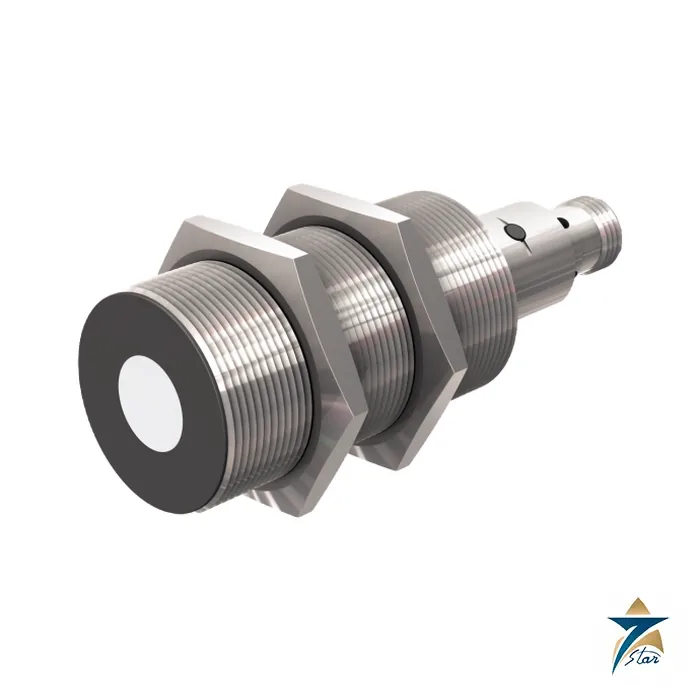
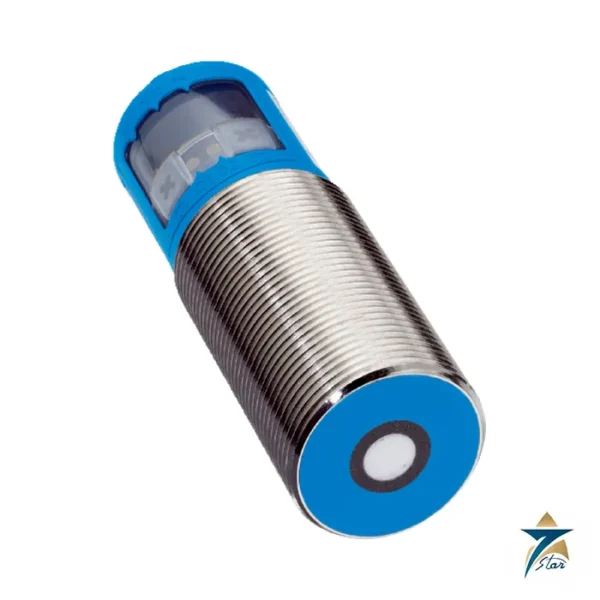
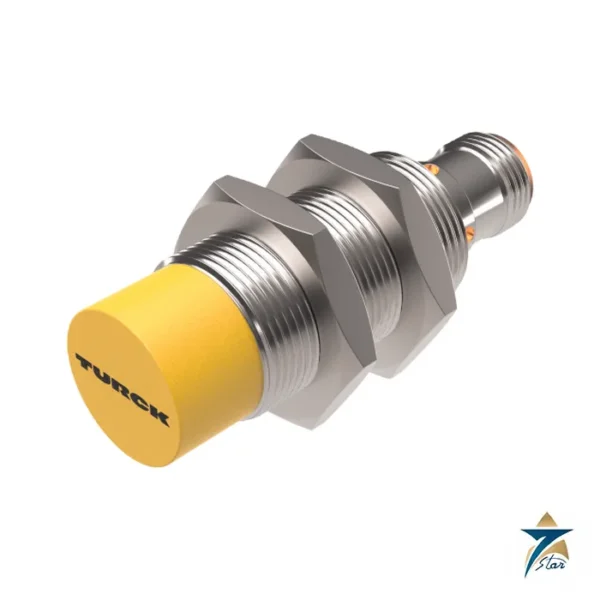
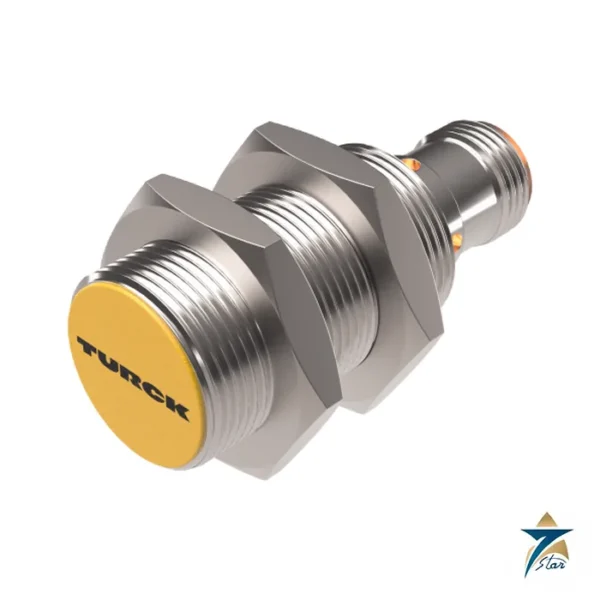
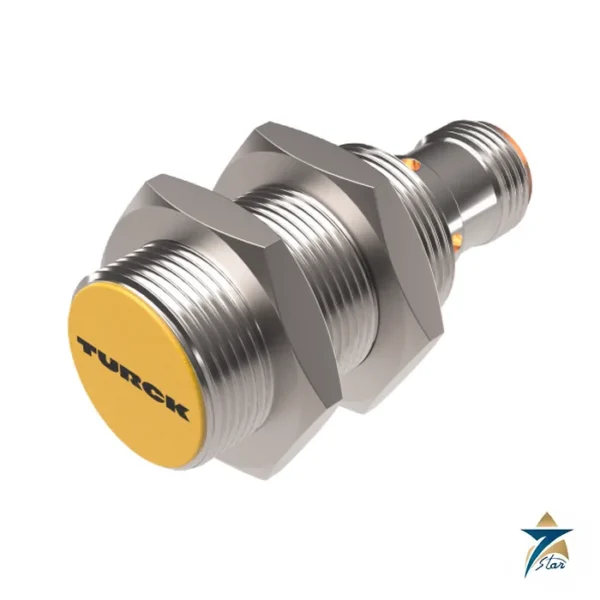
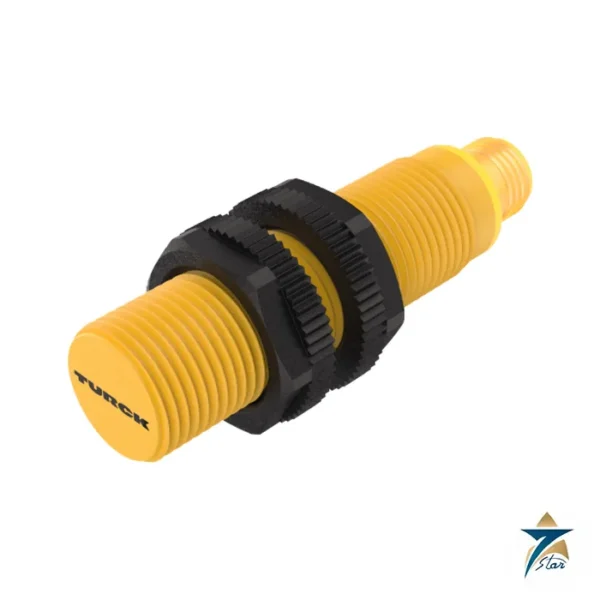
RU300U-M30E-LIU2PN8X2T-H1151 is an M30 ultrasonic diffuse-mode sensor for long-range measurement, with a 300 to 3000 mm sensing range, 30 cm blind zone, analog output (4 to 20 mA or 0 to 10 V) and a switching output or IO-Link on an M12 x 1 connector.
Feature list printed by the manufacturer: Temperature compensation; Range: 300 cm; Resolution: 1 mm; 1 × switching output, PNP/NPN; NO/NC programmable; Blind zone: 30 cm; Cylindrical housing M30, potted; 1 × analog output, 4…20 mA / 0…10 V /; Connection via M12 x 1 male.
Technical specifications
| Parameter |
Specification |
| Type |
RU300U-M30E-LIU2PN8X2T-H1151 |
| Ident number |
1610048 |
| Function |
Proximity |
| Range |
300…3000 mm |
| Resolution |
1 mm |
| Minimum measuring range |
250 mm |
| Minimum switching range |
25 mm |
| Ultrasound frequency |
120 kHz |
| Repeat accuracy |
≤ 0.15 % of full scale |
| Temperature drift |
± 1.5 % of full scale |
| Linearity error |
≤ ± 0.5 % |
| Edge lengths of the nominal actuator |
100 mm |
| Approach speed |
≤ 11 m/s |
| Pass speed |
≤ 4.2 m/s |
| Operating voltage UB |
15…30 VDC |
| Residual ripple |
10 % Uss |
| DC rated operating current Ie |
≤ 150 mA |
| No-load current |
≤ 50 mA |
| Load resistance |
≤ 1000 Ω |
| Residual current |
≤ 0.1 mA |
| Response time typical |
< 190 ms |
| Readiness delay |
≤ 300 ms |
| Communication protocol |
IO-Link |
| Output function |
NO/NC, PNP/NPN, analog output |
| Output 1 |
Switching output or IO-Link mode |
| Output 2 |
Analog output |
| Current output |
4…20 mA |
| Load resistance current output |
≤ 0.5 kΩ |
| Voltage output |
0…10 V |
| Load resistance voltage output |
≥ 1 kΩ |
| Switching frequency |
≤ 3.3 Hz |
| Hysteresis |
≤ 25 mm |
| Voltage drop at Ie |
≤ 2.5 V |
| Short-circuit protection |
yes/Cyclic |
| Reverse polarity protection |
yes |
| Wire breakage protection |
yes |
Typical use and installation notes
The M30 transducer runs at 120 kHz, lower than the 200 kHz of the shorter-range M18 types, and that is why it reaches 3 m. It fits level monitoring in larger tanks and sumps, container fill height, and presence detection over wide gaps. Resolution is 1 mm while the response time is typically under 190 ms, so it is meant for process measurement rather than fast part counting. The measuring range is adjustable via the teach button or Easy-Teach.
At commissioning, teach the near and far limits with the target in place, check the output over the full travel, and recheck if the ambient temperature changes widely. Foam, heavy turbulence and angled targets are the usual reasons for unstable readings, and a short mounting sleeve can reduce side echoes.
Reading the type code before you order
The type code starts with RU and the nominal range figure used in the datasheet features, followed by the housing size and the output elements; the letter that follows the range differs between proximity, retroreflective and diffuse variants of the same family, so always order by the full code. Ident number 1610048 identifies this exact version, which the datasheet lists with function Proximity and output NO/NC, PNP/NPN, analog output.
A short checklist before you order: the output type (analog, the process or ambient temperature, the connector and cable, switching or IO-Link), the supply voltage, and the required sensing range and blind zone against your target and tank geometry. Specifications here are restated from the official datasheet and should be matched against the current maker revision.
Mounting the M30 ultrasonic sensor
Good results with the RU300U start with the mounting position. The sensor face should point squarely at the target surface, because ultrasonic echoes from an inclined surface can be reflected away from the transducer. In a tank or sump, place the sensor where it has a clear view of the liquid surface over the whole level range, away from inlet streams, ladders, agitators and side walls that can return false echoes. Remember the 30 cm blind zone: at the highest expected level, the surface must still be farther from the sensor face than that distance.
Fix the threaded M30 housing firmly with suitable mounting hardware so that it cannot shift during vibration or cleaning, and do not overtighten it in thin brackets. Route the M12 cable with a drip loop and strain relief, away from power cables and variable-speed drive wiring, so that the analog signal stays clean.
Selecting the output mode
Decide early whether the control system will read the analog output, the switching output or IO-Link data. Analog 4 to 20 mA is often preferred for longer cable runs to a PLC or DCS, while 0 to 10 V suits shorter connections to local controllers. Check that the load resistance of the input card stays within the limits listed in the specification table for the chosen output.
Commissioning steps
Before teaching, power the sensor and allow the readiness delay to pass. With the real target in place, teach the near and far limits as described in the Turck documentation, then move the target or change the level slowly through the whole range while watching the output in the control system. Confirm that the switching point, hysteresis and output direction behave as the application expects. Where IO-Link is used, save the final parameter set in the master or controller so that a replacement sensor can be configured quickly.
Document the taught limits, the mounting height and the reference point used for level, since these details are easily lost after commissioning.
Ambient conditions in Oman and the GCC
Ultrasonic measurement depends on the speed of sound in air, which changes with temperature. The sensor includes temperature compensation, yet strong local heating, such as direct sun on an outdoor tank roof in an Omani summer, can still create temperature layers between the sensor and the target. Shading the sensor and avoiding locations above hot surfaces helps keep readings stable.
Dust, condensation and deposits on the transducer face also affect performance. In water, wastewater and bulk handling sites with fine sand or high humidity, check the face for build-up during routine rounds and clean it gently according to the manufacturer’s guidance, without using sharp tools.
Routine checks and troubleshooting
Compare the sensor reading against a manual level dip or a known target distance at regular intervals. If readings start to jump or drop out, check for new obstructions in the beam path, foam, condensation on the face, loose mounting or cable damage at the connector before changing settings. Keep the full type code and ident number with the loop records to make replacement straightforward.
Documents and quotation
Download the Turck datasheet for RU300U-M30E-LIU2PN8X2T-H1151 and compare it with your drawing or loop data. Pricing and lead time are not shown on the page; Seven Star LLC, an independent supplier based in Muscat, quotes them on request. Quote the full type code RU300U-M30E-LIU2PN8X2T-H1151 so the correct variant is offered. More related items are listed under Sensors & Transmitters.







Reviews
There are no reviews yet.