About the BI2-M12-VP6X
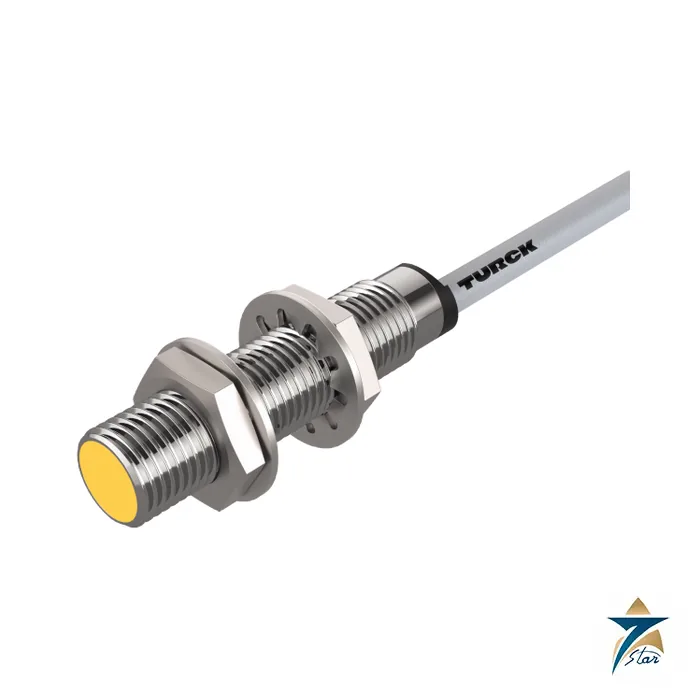
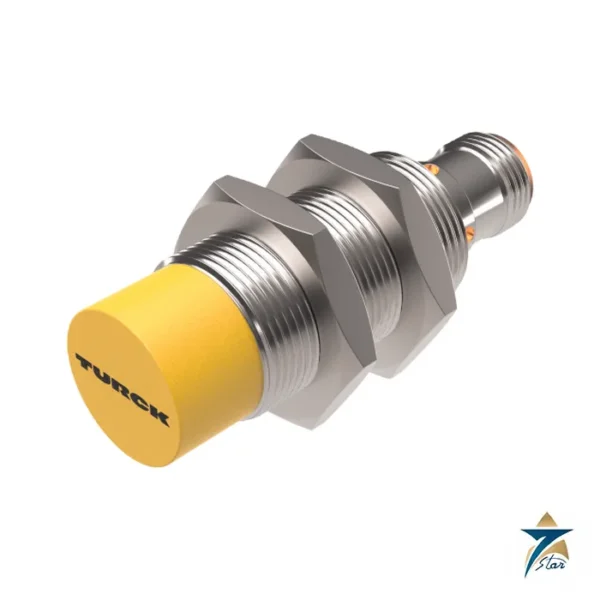
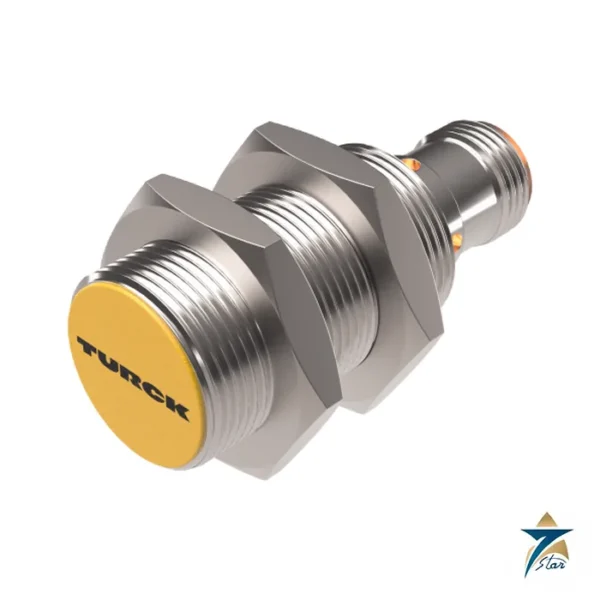
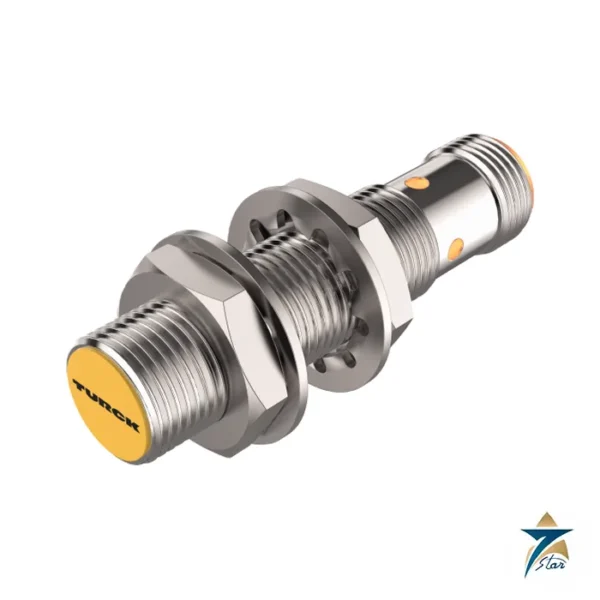
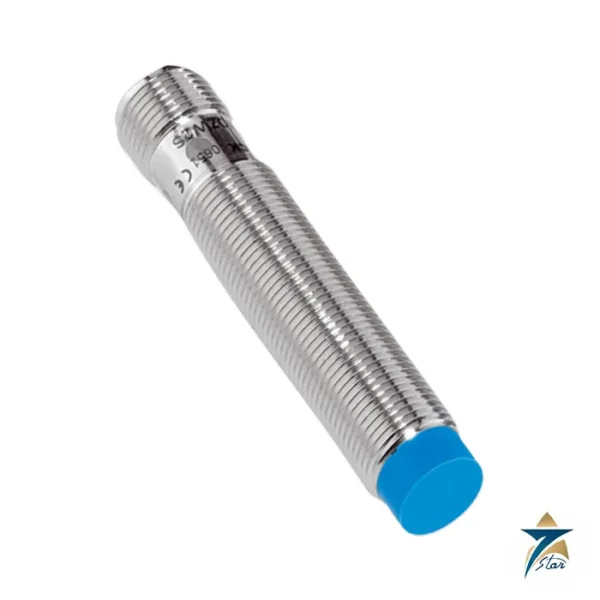
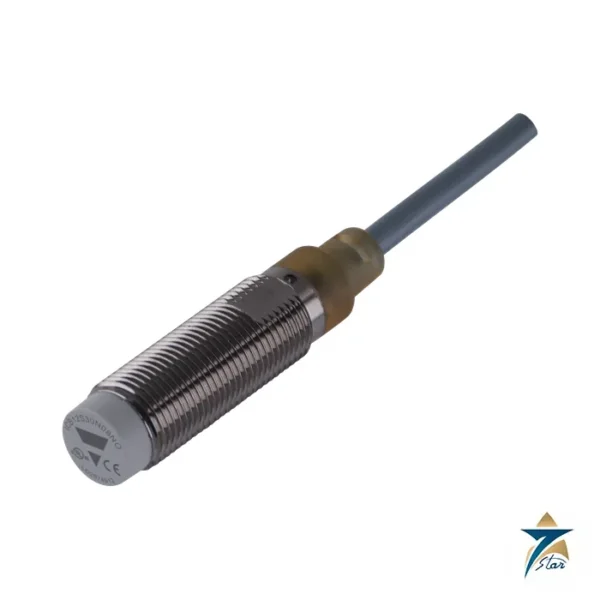
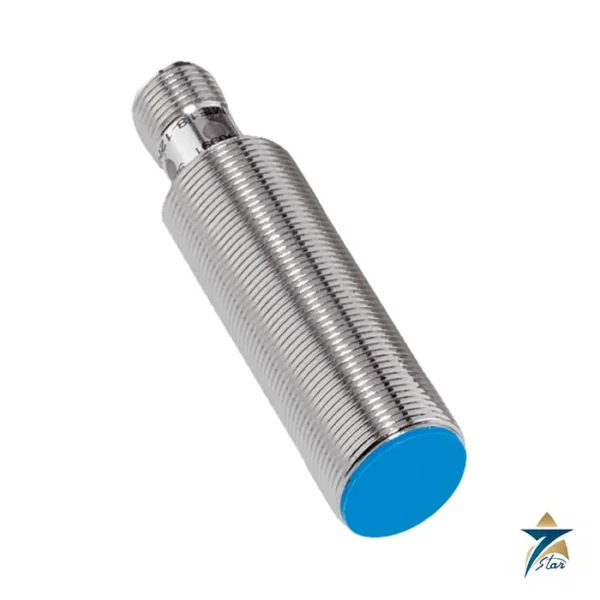
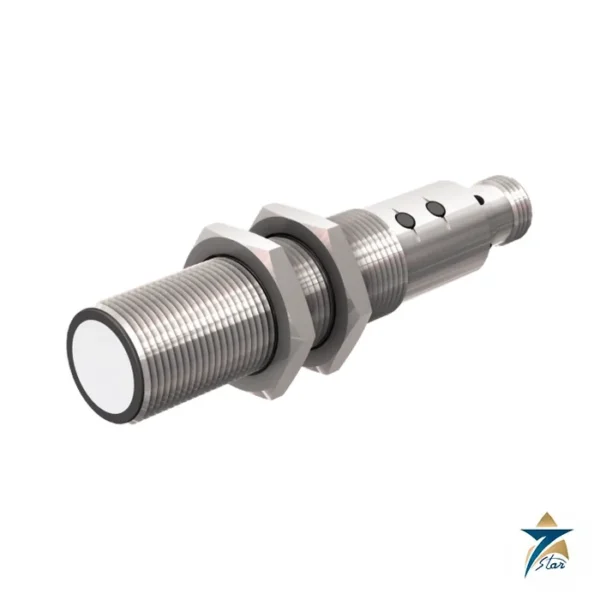
BI2-M12-VP6X is a flush-mountable M12 x 1 inductive sensor with a 2 mm rated switching distance, a PNP complementary (changeover) output on 4 wires, a fixed cable connection and a short 54 mm chrome-plated brass housing.
Turck lists these features for it in the datasheet: M12 × 1 threaded barrel; Cable connection; Chrome-plated brass; Changeover contact, PNP output; DC 4-wire, 10…30 VDC.
Technical specifications
| Parameter |
Specification |
| Type |
BI2-M12-VP6X |
| Ident number |
16302 |
| Rated switching distance |
2 mm |
| Mounting conditions |
Flush |
| Secured operating distance |
≤ (0.81 × Sn) mm |
| Repeat accuracy |
≤ 2 % of full scale |
| Temperature drift |
≤ ±10 % |
| Hysteresis |
3…15 % |
| Operating voltage UB |
10…30 VDC |
| Ripple Uss |
≤ 10 % UBmax |
| DC rated operating current Ie |
≤ 200 mA |
| No-load current |
≤ 15 mA |
| Residual current |
≤ 0.1 mA |
| Isolation test voltage |
0.5 kV |
| Short-circuit protection |
yes/Cyclic |
| Voltage drop at Ie |
≤ 1.8 V |
| Wire break/reverse polarity protection |
yes/Complete |
| Output function |
4-wire, Complementary contact, PNP |
| Switching frequency |
2 kHz |
| Design |
Threaded barrel, M12 x 1 |
| Housing material |
Metal, CuZn, Chrome-plated |
| Active area material |
Plastic, PA12-GF30 |
| End cap |
Plastic, EPTR |
| Max. tightening torque of housing nut |
10 Nm |
| Electrical connection |
Cable |
| Cable quality |
Ø 5.2 mm, Gray, LifYY, PVC, 2 m |
| Core cross-section |
4 x 0.34 mm |
| Ambient temperature |
-25…+70 °C |
| Vibration resistance |
55 Hz (1 mm) |
| Shock resistance |
30 g (11 ms) |
| Protection class |
IP67 |
| MTTF |
2283 years acc. to SN 29500 (Ed. 99) 40 |
| Switching state |
LED, Yellow |
| Mounting distance D |
24 mm |
| Mounting distance W |
3 x Sn |
| Mounting distance T |
3 x B |
| Mounting distance S |
1.5 x B |
| Mounting distance G |
6 x Sn |
Typical use and installation notes
This is the entry-level small-barrel sensor: a basic 2 mm reach, but fully flush so it can be buried in a bracket flange or a machined pocket. Use it for close-range jobs such as gearwheel pickups, small pneumatic actuator end-stops and compact machine parts where the target travels within a couple of millimetres. For longer reach, move to the extended-range M12 variants in the same family.
Installation hint: tighten the housing nut only to the torque shown in the table, keep the active face clear of surrounding metal to the extent the mounting distances require, and route the cable away from welding and heavy motor feeders where practical. A sensor set too close to adjacent metal can switch earlier than the rated distance suggests.
Ordering code and what to confirm
Reading the code against the datasheet rows (a derived summary, not Turck’s own key): the leading BI corresponds to the mounting condition shown as Flush, the digits to the rated switching distance of 2 mm, the housing token to the design Threaded barrel, M12 x 1, the output suffix to 4-wire, Complementary contact, PNP. Ident number 16302 identifies this exact variant in the Turck catalogue.
Points to confirm with us before ordering: NO or changeover) of your PLC input, the connector type and cable length, the mounting condition (flush or non-flush) against the free zone around the sensor, the supply voltage and output type (PNP or NPN, and the target material and gap. Everything in the table comes from the datasheet as published, so the maker document is the final reference.
Setting the switching gap on the machine
With a 2 mm rated switching distance and a secured operating distance of 0.81 times that value, the gap between the active face and the target should be set comfortably inside the rated figure rather than at its edge. Use a feeler gauge to set the gap with the target in its switching position, then move the target away and back while watching the yellow LED to confirm a clean change of state. Lock the housing nuts without exceeding the stated tightening torque, as overtightening can damage the thread or distort the barrel. Respect the mounting distances in the table when two sensors are placed side by side or face to face, because closely spaced sensors can influence each other.
Wiring the complementary PNP output
The sensor has four cores: two for the 10 to 30 VDC supply and two outputs that always take opposite states. Many applications use only one output, but the second can be wired to another PLC input as a simple plausibility check, since in normal operation both outputs should never be on together. Insulate and secure any core that is not used. As the outputs are PNP, connect them to sinking PLC inputs. The cable is a fixed 2 m PVC lead, so plan a junction box or terminal point near the sensor if the run to the cabinet is longer.
Durability in Omani plants and workshops
Inductive sensing is not affected by dust or ambient light, which makes this sensor a sound choice for the dusty conditions found in many Omani cement, steel and packaging plants. The chrome-plated brass barrel and IP67 rating cope with routine cleaning, but metal chips and swarf collecting on the active face can cause false switching, so orient the face so that chips fall away rather than settle on it. On outdoor equipment, shield the PVC cable from direct sunlight and hot surfaces and run it in conduit or cable tray where it could be crushed. Check that the air around the sensor stays within the -25 to +70 °C range above, which needs attention close to furnaces and on machinery exposed to the summer sun.
Maintenance checks
During planned stops, clean the active face, check that vibration has not changed the gap, confirm the LED response with the target and look for cable damage where the lead flexes near the sensor. A sensor with a cracked end cap or damaged active face should be replaced rather than repaired, and the replacement set to the same gap.
Choosing it for a retrofit
When this sensor replaces an existing device, compare the output type, wire count and supply voltage of the old unit before fitting it, and check that the target still passes within the short sensing range once the bracket is reused. Note the ident number on the maintenance record so the same part can be reordered later.
Documents and quotation
Datasheet: PDF. It is the manufacturer’s own document for BI2-M12-VP6X, kept unaltered. To request pricing and delivery, give us the full code BI2-M12-VP6X, the quantity and your project reference. Seven Star LLC supplies as an independent supplier in Muscat. Related items sit in Inductive Proximity Sensors.






Reviews
There are no reviews yet.