GR18 M18 reflex sensor with potentiometer and status LEDs
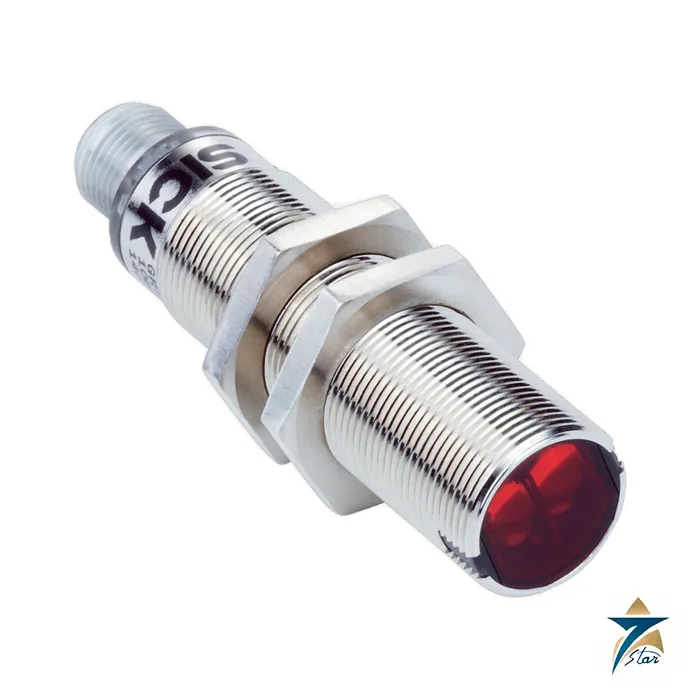
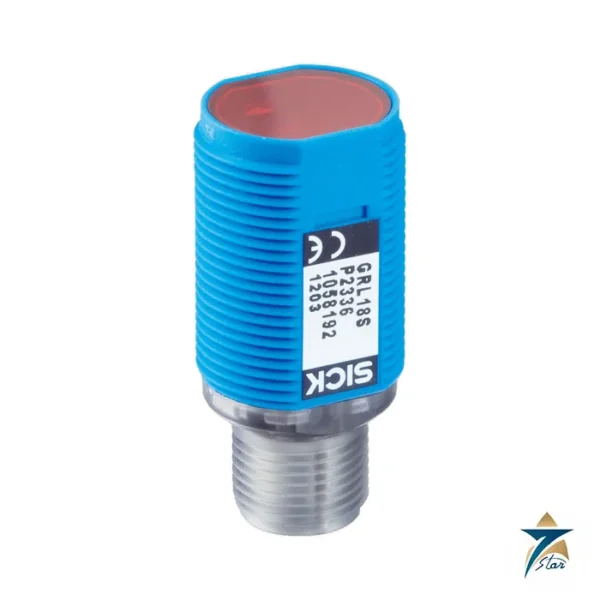
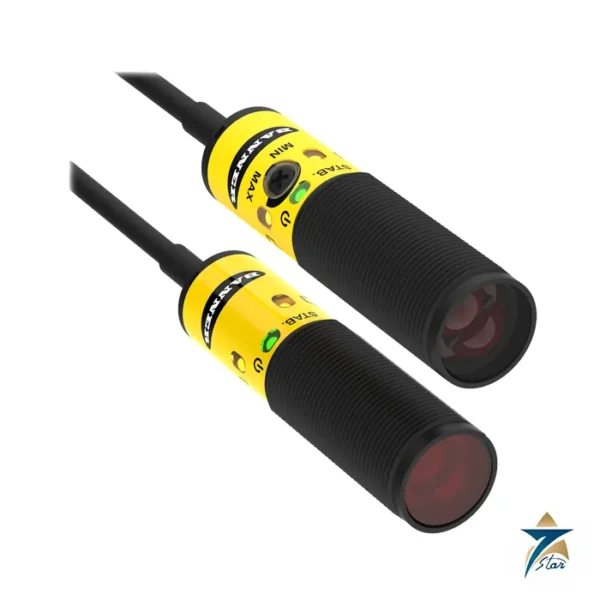
The SICK GRL18-P2432 (part no. 1066557) is a GR18 cylindrical retro-reflective sensor in an M18 x 1 nickel-plated brass housing with ABS parts. It uses a dual-lens system, a PinPoint LED at 650 nm and a polarisation filter to read a PL80A reflector from 0.06 m to 6 m (maximum 0.03 m to 7.2 m). A potentiometer sets sensitivity, a green LED shows operation and a yellow LED shows the received beam status.
The housing is 73.5 mm long and the output is PNP with complementary light/dark switching via M12 4-pin plug.
Technical specifications
| Parameter |
Specification |
| Manufacturer |
SICK |
| Type / family |
GRL18-P2432 / GR18 |
| Part no. |
1066557 |
| Functional principle |
Photoelectric retro-reflective sensor, dual-lens system |
| Sensing range max. / typical |
0.03 m … 7.2 m / 0.06 m … 6 m (reflector PL80A) |
| Polarisation filter |
Yes |
| Light source / type |
PinPoint LED, visible red light, 650 nm |
| Light spot size |
175 mm diameter at 7 m |
| Adjustment |
Potentiometer |
| Indicators |
Green LED: power on; yellow LED: beam status (on = object not present) |
| Items supplied |
2 x fastening nuts |
| Supply voltage UB |
10 V DC … 30 V DC |
| Ripple |
below 5 Vpp |
| Current consumption |
30 mA |
| Output |
PNP, complementary, light/dark switching |
| Output current Imax. |
100 mA |
| Response time / switching frequency |
below 500 microseconds / 1,000 Hz |
| Protection class |
III |
| Dimensions |
M18 x 1 thread; 18 mm x 18 mm x 73.5 mm |
| Housing / optics |
Metal, nickel-plated brass and ABS / plastic PMMA |
| Connection |
Male connector M12, 4-pin |
| Enclosure rating |
IP67 |
| EMC |
EN 60947-5-2 |
| Ambient temperature |
-25 °C … +55 °C operation; -40 °C … +70 °C storage |
| MTTFD |
1,672 years (DCavg 0 %) |
| UL file no. |
E348498 |
M18 reflex sensors in practice
An M18 barrel is the classic format for through-hole mounting: drill a hole, insert the sensor and lock it with the two supplied nuts. The metal body survives knocks and forklift contact better than plastic housings, and the two LEDs make commissioning and fault finding quick. Use the potentiometer to adjust sensitivity until the yellow LED switches cleanly with the reflector free and with the target in the beam.
This type is the adjustable sibling of the GRL18S-F2336 in this order list, which has a short housing, no potentiometer, a 3-pin plug and dark-switching only. Use the GRL18-P2432 where the light/dark choice or sensitivity setting must be available on site.
Ordering reference
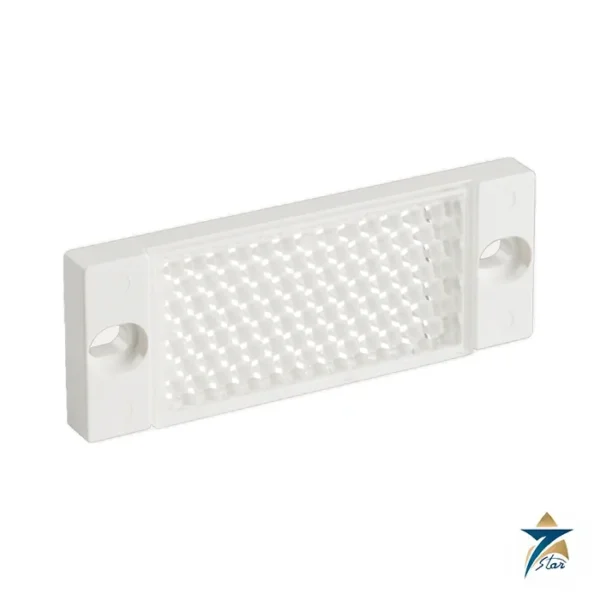
Quote GRL18-P2432 and part no. 1066557 on the enquiry. A reflector is not supplied, so add a PL80A. Other GR18 versions with different outputs or connectors are separate part numbers on sick.com.
Key features of the GRL18-P2432
- Polarised retro-reflective principle – the polarisation filter lets the sensor tell its own reflector apart from many shiny objects, which reduces false switching on glossy cartons, metal parts and wrapped goods.
- Visible red PinPoint LED – the bright, well-defined spot makes alignment with the reflector quick, even over several metres.
- Complementary PNP outputs – both light-switching and dark-switching signals are available on the same connector, so the controller can use whichever logic suits the program, or both for plausibility checking.
- Sensitivity potentiometer – allows the switching threshold to be adapted to dusty optics, partly transparent objects or a shorter distance.
- Metal M18 housing with M12 plug – a robust, standard format that is easy to replace without rewiring.
How a polarised reflex sensor works
The sender and receiver sit side by side in the same housing. The emitted light passes through a polarising filter, strikes a prismatic reflector and returns with its polarisation plane rotated. The receiver only accepts light with the rotated polarisation, so light bouncing directly off a shiny object is largely ignored. When an object interrupts the beam, the received signal drops and the output switches. Because only one device needs wiring, a reflex sensor is simpler to install than a through-beam pair while still offering a long sensing range.
Limits to keep in mind
Very clear films and glass bottles may not attenuate the beam enough for reliable detection; dedicated clear-object sensors are designed for those tasks. Prismatic reflectors are required for the polarisation principle to work – reflective tape or a mirror is not a substitute. Objects smaller than the light spot at the mounting distance may not interrupt enough of the beam.
Typical applications
- Presence detection of cartons, pallets and totes on conveyor lines.
- Door, gate and barrier monitoring in logistics and warehouse areas.
- Queue and jam detection at conveyor merges and transfer points.
- Vehicle or trolley detection at loading bays.
Installation and alignment tips
- Mount the sensor and reflector rigidly so vibration does not move the beam off the reflector.
- Align with the beam on the centre of the reflector and confirm the yellow LED status with and without an object.
- Reduce sensitivity with the potentiometer if small reflections from the object cause unreliable switching, then re-check the switching margin.
- Avoid pointing the sensor directly at strong light sources or at other sensors facing it.
- Use a shielded M12 cable routed away from motor and drive cables.
Use in Oman and GCC facilities
Warehouses, ports, airports and food and beverage plants in the region often run conveyors in hot, dusty halls. Dust settling on the lens and reflector is the most common cause of a reflex sensor losing switching reserve, so include optics cleaning in routine maintenance and check the yellow indicator during inspections. In outdoor or semi-open loading areas, shade the sensor from direct sunlight where possible and confirm that housing temperatures remain inside the operating range listed in the specifications. The IP67 rating helps in wash-down areas, provided the M12 connector is fully tightened.
What to include in your RFQ
List the type code GRL18-P2432 and SICK part number 1066557, the quantity, and any accessories required: PL80A or other reflectors, M12 connecting cables of the required length and mounting brackets. If you are replacing a sensor from another series, describe the existing output type, connector and sensing distance so we can confirm the match.
Documents and quotation
This page links the original SICK data sheet for GRL18-P2432 (part no. 1066557). Values in the specification table were copied from that document. Seven Star LLC supplies SICK products as an independent supplier in Muscat; send your request with the exact type and part number, the quantity and the delivery point, and mention any need for clamps, reflector or a cable with connector. Please verify the details with us before placing an order, since the manufacturer may change data without notice. See also sensors and transmitters and the SICK WTB4-3 miniature photoelectric sensor.






Reviews
There are no reviews yet.