Large-damper spring-return actuator with trigger input
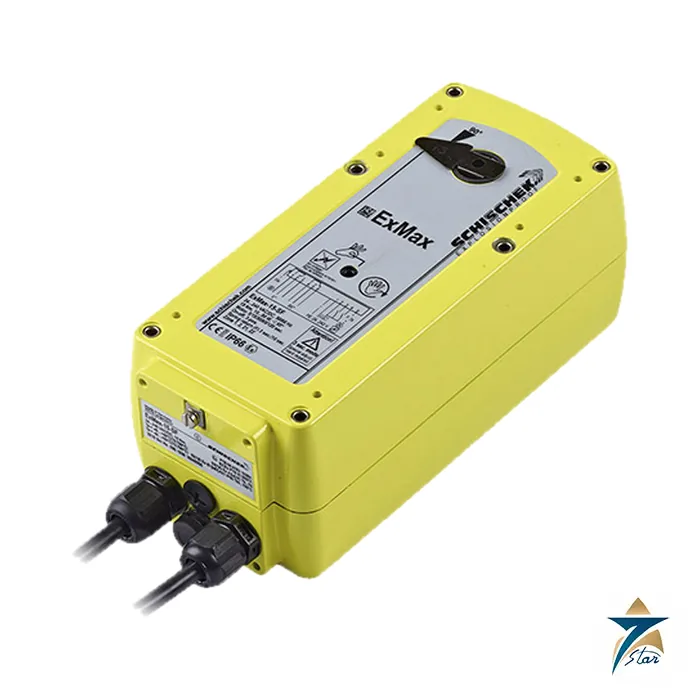
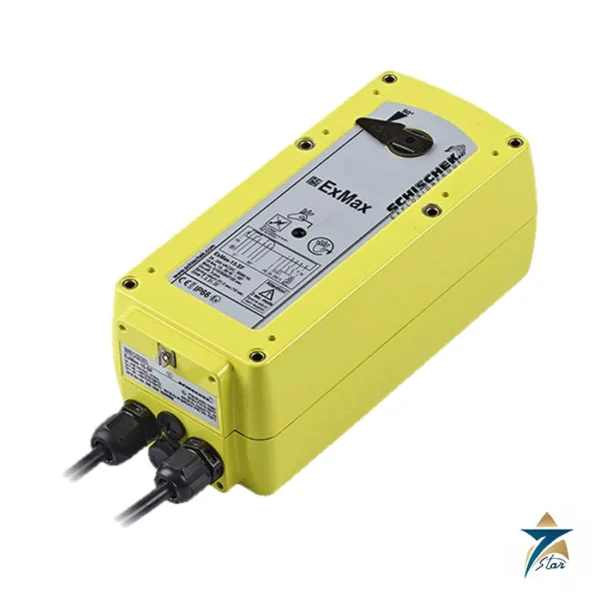
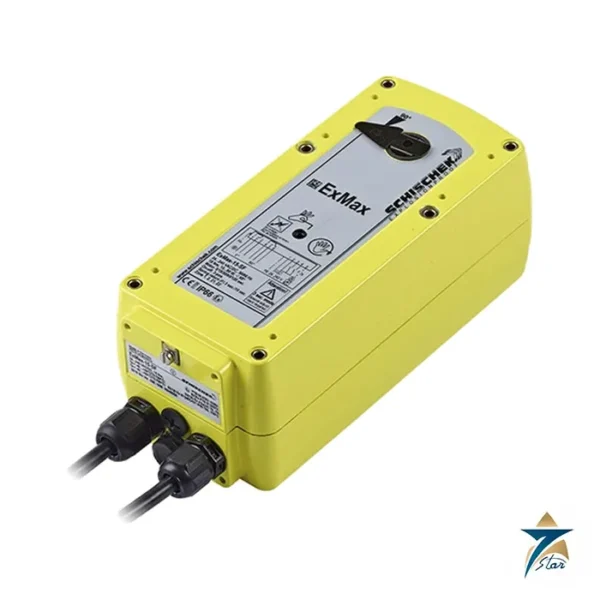
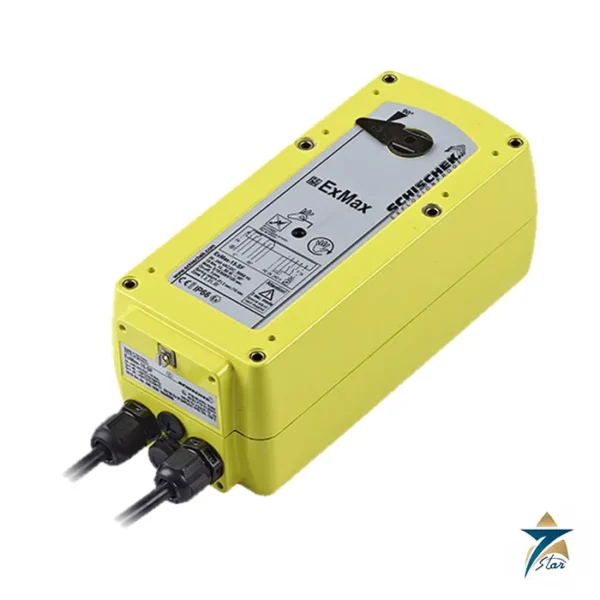
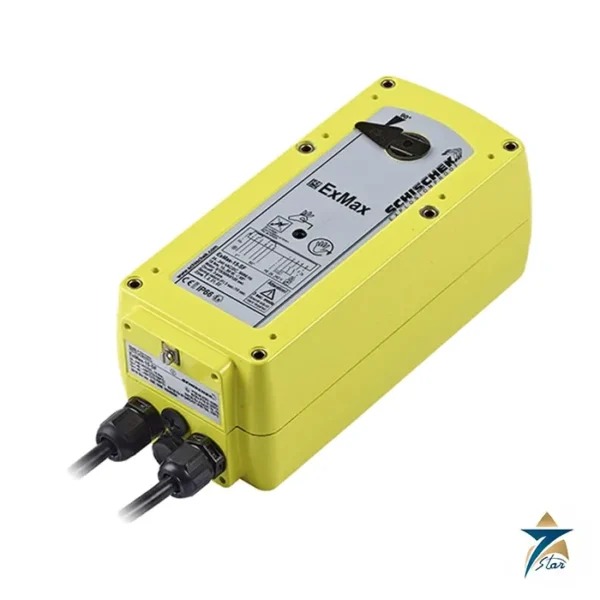
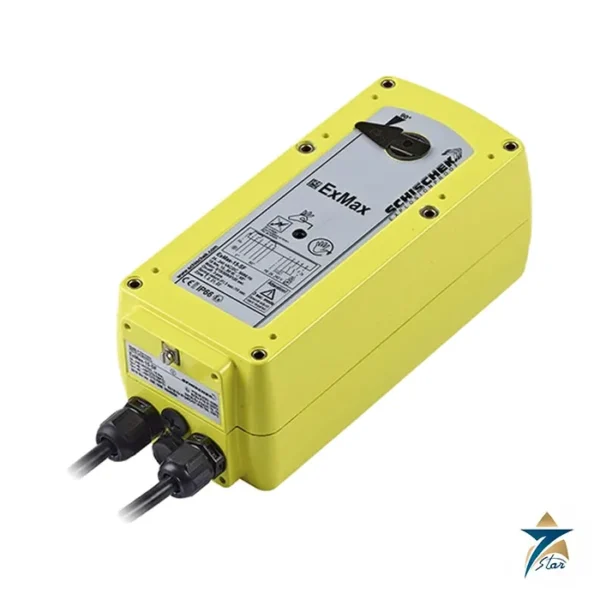
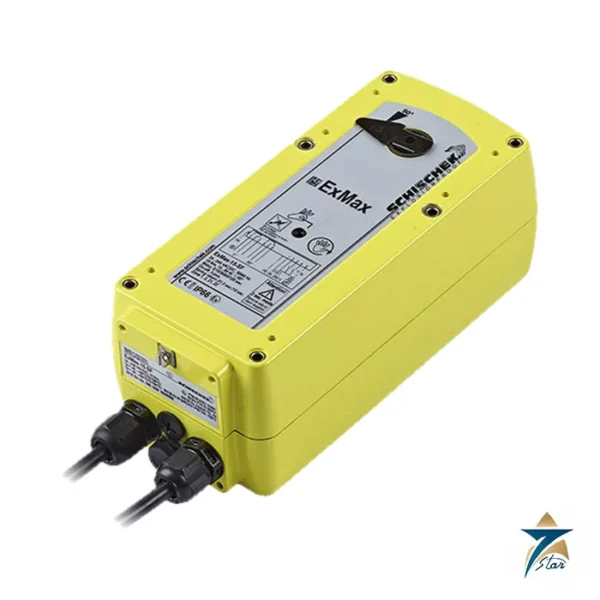
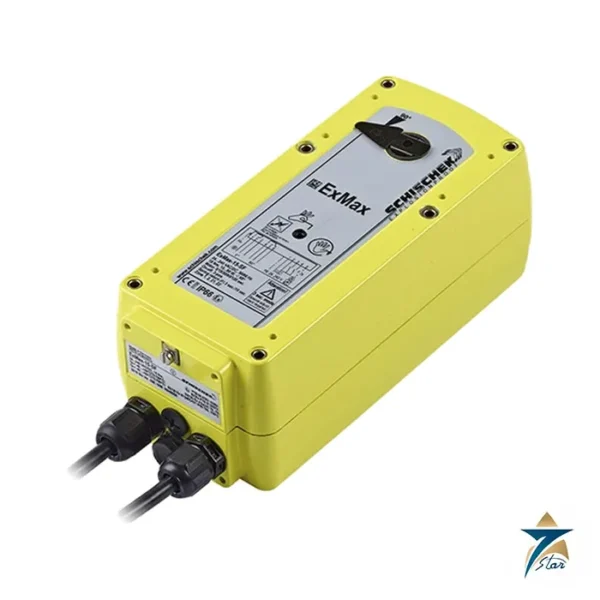
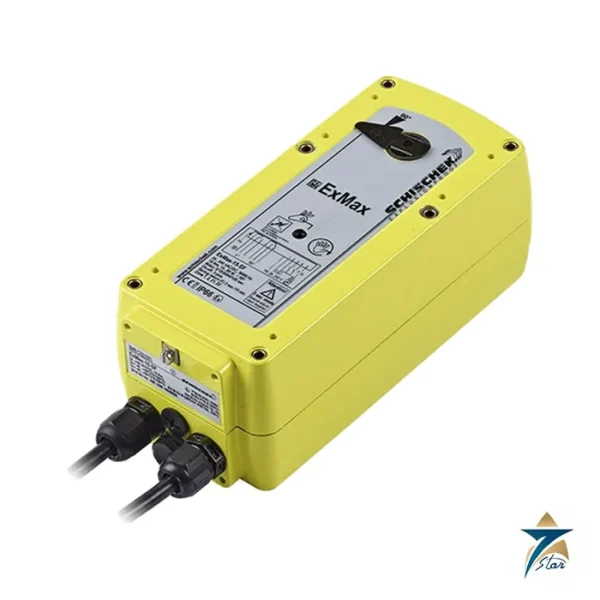
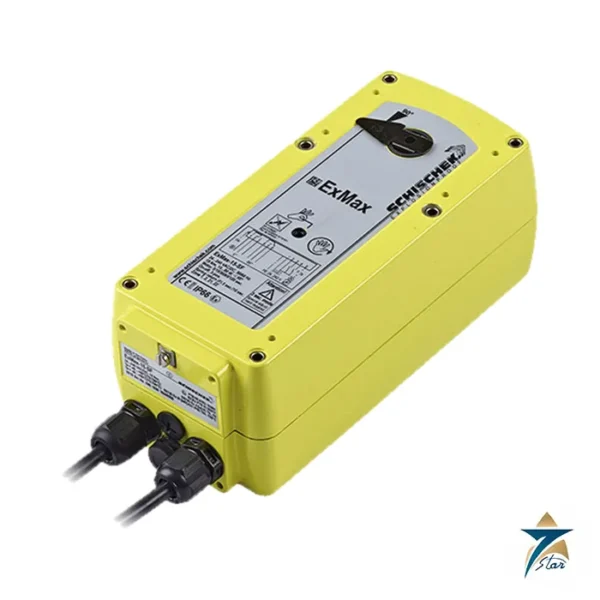
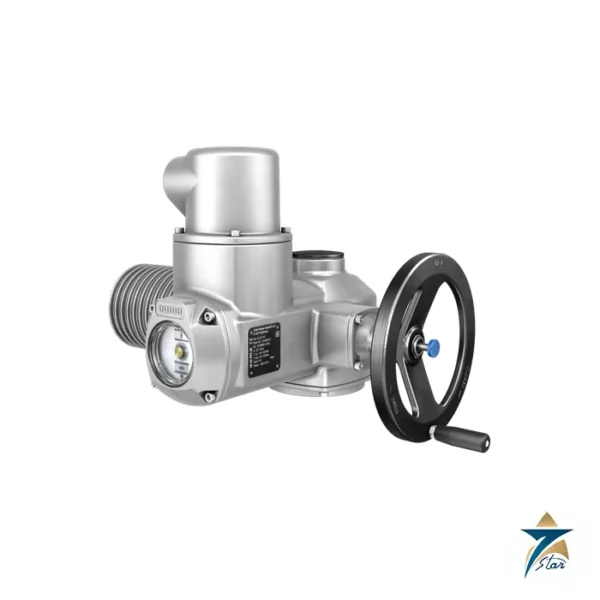
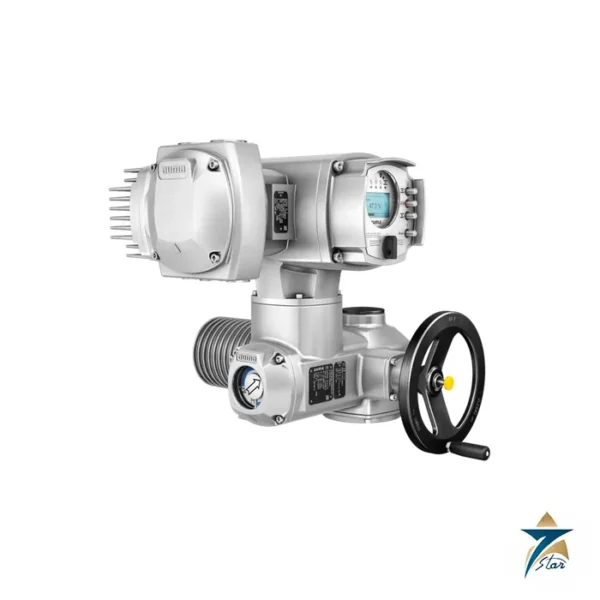
The Schischek ExMax-M-BF brings the Ex-i tripping circuit to the larger size M housing. It is a spring-return actuator with 30, 50 or 60 Nm and two integrated auxiliary switches, built to drive large fire dampers and shut-off dampers. The intrinsically safe input accepts an ExPro-TT safety temperature trigger through an M12 quick connection.
Technical specifications
| Parameter |
Specification |
| Types |
ExMax-30-BF (30 Nm), ExMax-50-BF (50 Nm), ExMax-60-BF (60 Nm); spring torque min. 30 / 50 / 60 Nm |
| Spring return time |
About 20 s per 90 degrees; min. 10,000 safety operations |
| Motor running time |
40 / 60 / 90 / 120 / 150 s per 90 degrees (60 Nm: up to 120 s) |
| Feedback |
2 aux switches at 5 and 85 degrees plus Ex-i tripping circuit; wiring SB 7.2 / 7.3 |
| Supply |
24 to 240 VAC/DC; about 4 to 11 W holding |
| Cable |
About 1 m, diameter about 9.6 mm, M16 x 1.5 gland |
| Output shaft |
Double square 16 x 16 mm |
| Dimensions / weight |
About 288 x 149 x 116 mm; about 9.5 kg; stainless about 15 kg |
| Duty |
80 percent ED permitted |
| Delivery parameter |
30 / 50 / 60 Nm at 90 s per 90 degrees |
| Ambient |
Working -40 to +40 degrees C at T6, +50 degrees C at T5 |
| Certification as printed |
EPS 17 ATEX 1 132 X, IECEx EPS 17.0065X; Ex db [ib Gb] IIC T6, T5 Gb and Ex tb [ib Db] IIIC T80/T95 degrees C Db; CE0158; IP66/IP67 |
Fire damper use
The datasheet qualifies the BF series for integration into fire damper systems in line with EN 15650, EN 1366-2 and EN 13501-3. The size M version fits larger dampers than the size S ExMax-S-BF, and its spring return is slower at about 20 s per 90 degrees. The motor runs the damper open and the spring closes it when supply or the trigger circuit is interrupted.
What to confirm before ordering
Specify torque (30, 50 or 60 Nm), trigger model and release temperature, supply voltage, zone and temperature class, and damper shaft size. Fire damper approval is for the complete damper assembly. An Ex-e terminal box is required for field wiring.
Key features of the ExMax-M-BF
- Three torque classes in one housing: 30, 50 and 60 Nm versions share the size M enclosure, the double square 16 x 16 mm output and the same wiring concept, so a site can standardise on one actuator family across several damper sizes.
- Intrinsically safe trigger circuit: the Ex-i input lets a thermal trigger such as the ExPro-TT be connected through an M12 plug without a separate barrier, which keeps the field wiring simple.
- Two built-in auxiliary switches: fixed at 5° and 85°, they give open and closed indication to a fire alarm panel, BMS or PLC without external limit switches.
- Universal supply: 24 to 240 VAC/DC on one model reduces the number of spare part variants held on site.
- Selectable motor running time: 40 to 150 s per 90° (up to 120 s on the 60 Nm type) lets the opening speed be matched to the damper and the ductwork.
- Dust and gas approval: marked for both gas groups up to IIC and dust group IIIC, with IP66/IP67 enclosure protection.
How the spring-return function works
In normal operation the motor drives the damper to the open position and tensions the return spring at the same time. The actuator then holds this position with a low holding power. When the supply voltage is lost, or when the intrinsically safe trip circuit is opened by the thermal trigger, the motor releases and the spring drives the damper closed in about 20 s per 90°. Because the closing energy is stored mechanically, the safety position is reached without any external power. The datasheet gives a minimum of 10,000 safety operations for the spring, which should be considered when planning periodic function tests.
Choosing between 30, 50 and 60 Nm
The required torque is set by the damper manufacturer and depends on blade area, seal type, air velocity and the friction of the bearings and linkage. As a general engineering practice, the actuator torque should be at least the damper manufacturer’s stated torque with a reasonable margin for ageing of seals and bearings. If the damper torque is close to the limit of the 30 Nm type, the 50 Nm version is usually the safer choice. The 60 Nm type has a slightly reduced range of motor running times, so check that the required opening speed is available.
Installation and wiring notes
- Mount the actuator directly on the damper shaft using the 16 x 16 mm double square; adapters are needed for round or smaller shafts.
- The actuator is supplied with about 1 m of fixed cable. Terminate it in a certified Ex-e terminal box located in the same zone, as stated on this page.
- Connect the thermal trigger via the M12 quick connection to the Ex-i circuit and keep the intrinsically safe wiring segregated from non-IS cables.
- Follow the wiring diagrams SB 7.2 / 7.3 from the datasheet for supply, auxiliary switches and trigger.
- Observe the temperature class: T6 applies up to +40°C ambient and T5 up to +50°C.
- Leave space for manual operation and inspection, and make sure the damper can move freely through its full 90° travel before energising.
Maintenance and functional testing
Fire and smoke dampers in hazardous areas are normally included in a periodic test programme. A simple test is to interrupt the supply or open the trigger circuit and confirm that the damper closes fully and that the 5° switch signals the closed position. After re-energising, confirm that the damper reopens within the set running time and that the 85° switch changes over. Inspect the cable gland, the terminal box and the M12 connector for damage and corrosion, and record each test. The 80 percent duty cycle permitted by the datasheet is more than enough for normal damper service.
Applications in Oman and the GCC
In the region the ExMax-M-BF is suited to HVAC systems in classified areas such as oil and gas processing plants, refineries, gas compressor stations, chemical stores, battery rooms and offshore modules. Two local conditions deserve attention:
- Heat: many plant rooms and outdoor locations in Oman exceed +40°C in summer. Where ambient can rise above +40°C, the T5 rating up to +50°C must be accepted by the area classification, and direct sun on the housing should be avoided with a sunshade.
- Dust and humidity: the IP66/IP67 enclosure and the Ex tb dust marking help in sandy and coastal environments, but cable glands and the terminal box must be rated and fitted to the same standard.
For marine and coastal installations with salt-laden air, the stainless steel housing version (about 15 kg) can be considered.
What to include in your RFQ
| Item |
Why it matters |
| Torque class (30, 50 or 60 Nm) |
Defines the exact type code |
| Housing material (standard or stainless) |
Affects weight and corrosion resistance |
| Supply voltage at site |
Confirms use within 24 to 240 VAC/DC |
| Required running time |
Delivery setting is 90 s per 90° |
| Trigger model and release temperature |
Defines the ExPro-TT accessory |
| Hazardous area zone, gas/dust group and temperature class |
Checks the certification fits the area |
| Damper make, size and shaft |
Confirms torque and mounting |
| Quantity and required documents |
Certificates and datasheets for the project file |
Documents and quotation
The manufacturer’s datasheet PUB113-458 for the ExMax-M-BF is attached to this page as a download. We supply from Muscat as an independent company. For a quotation, give us the nameplate type code, voltage and number of units; price and availability follow on request. Other actuators are listed in Valve Actuators.










Reviews
There are no reviews yet.