Quick fail-safe action for large dampers
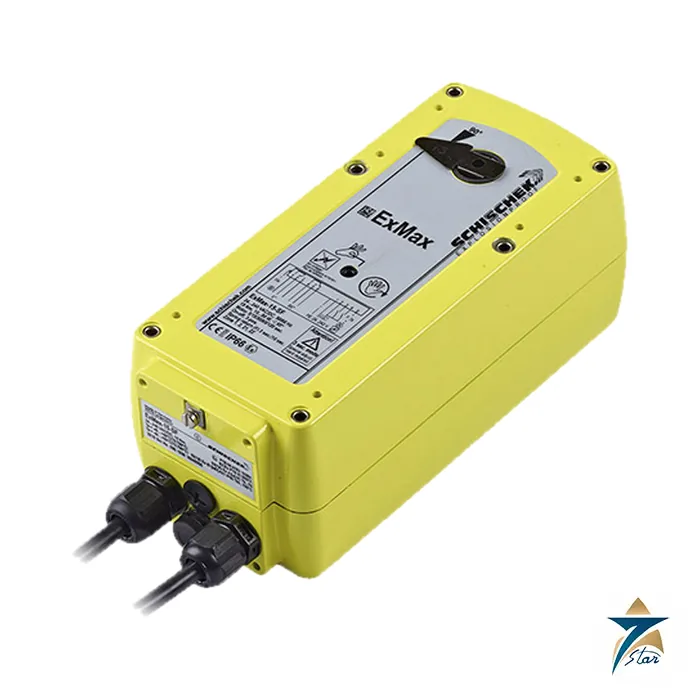
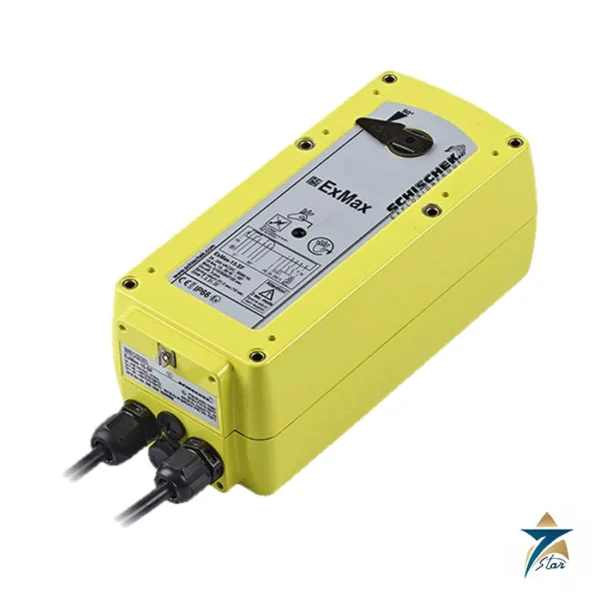
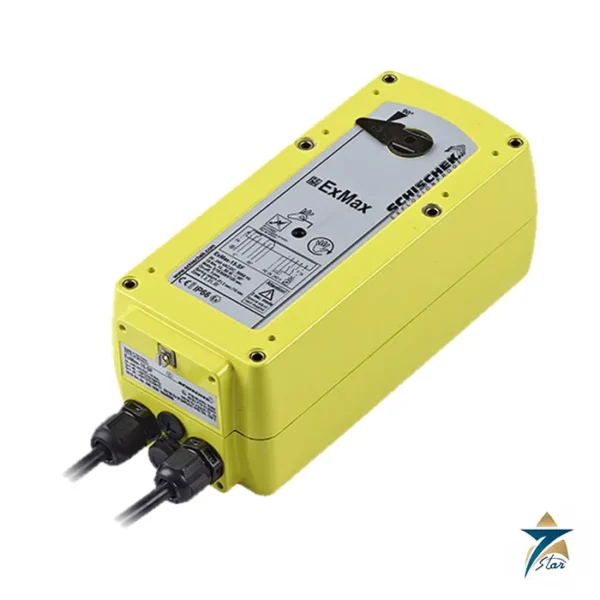
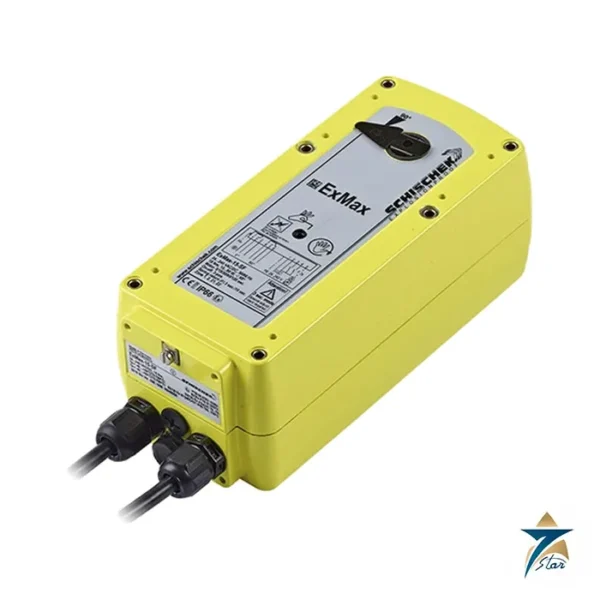
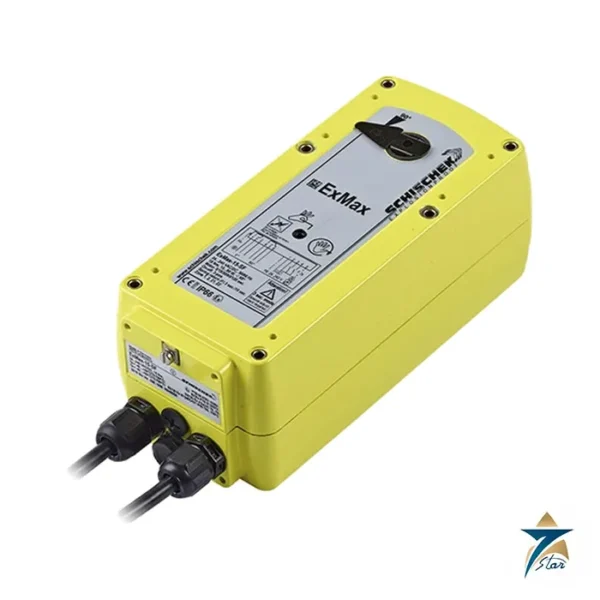
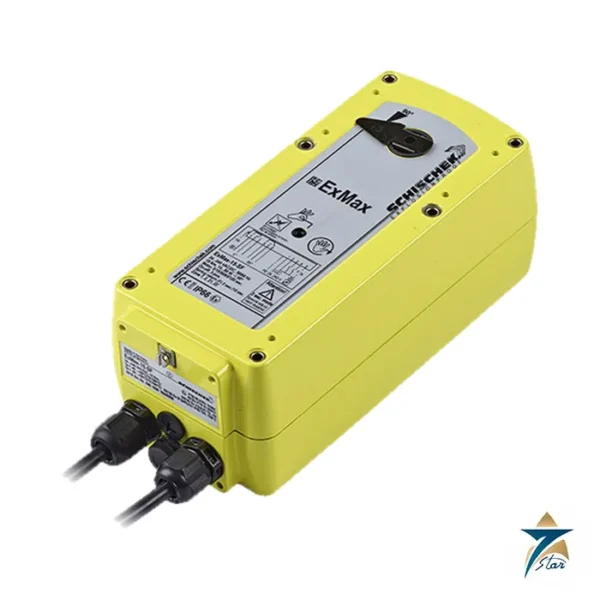
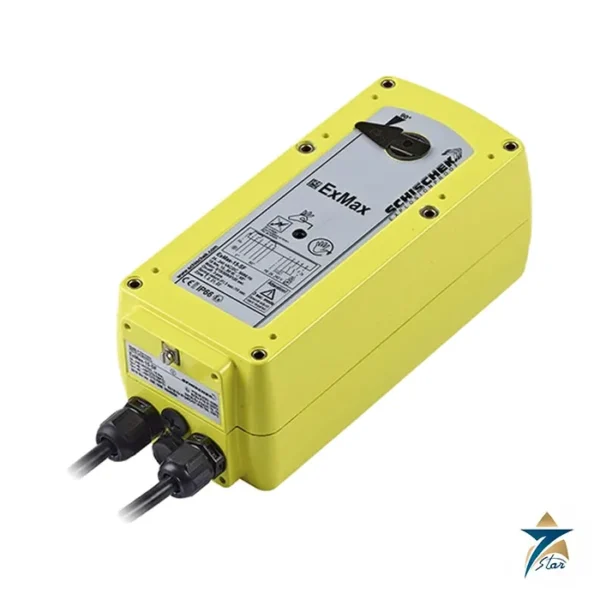
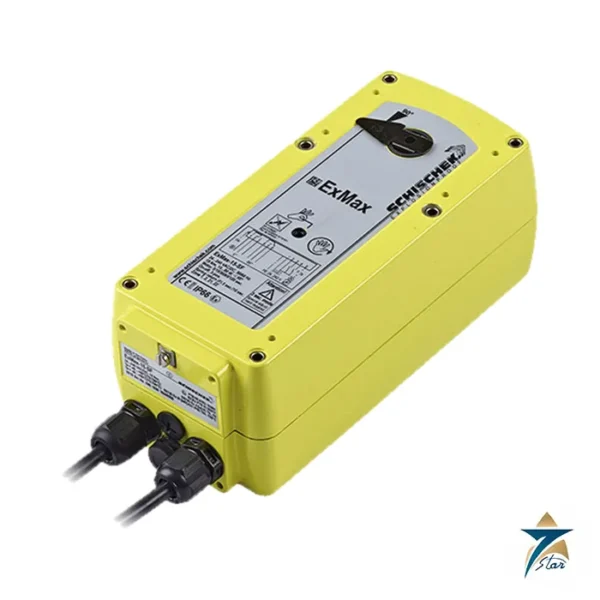
The Schischek ExMax-M-F3 is a size M actuator with a quick spring return of about 3 s per 90 degrees and a spring torque of 24 Nm (type 30-F3) or 40 Nm (type 50-F3). It is controlled on-off from a 24 to 240 VAC/DC supply and is offered with optional auxiliary switches (SF3) and an Ex-i tripping circuit (BF3). It targets fire and air dampers that must reach their safe position quickly.
Technical specifications
| Parameter |
Specification |
| Types |
30-F3 (motor 30 Nm, spring about 24 Nm), 50-F3 (50 Nm, about 40 Nm); SF3 with 2 aux switches; BF3 with switches and Ex-i circuit |
| Spring return time |
About 3 s per 90 degrees; min. 1,000 safety operations at 3 s |
| Minimum external load |
8 Nm (30-F3) and 15 Nm (50-F3) |
| Motor running time |
40 / 60 / 90 / 120 / 150 s per 90 degrees; 90 s at delivery |
| Control mode |
On-off; spring return on supply loss or opening of line 3 |
| Wiring diagrams |
SB 2.4/2.5; with aux switches SB 3.2; with Ex-i SB 7.4 |
| Supply |
24 to 240 VAC/DC; about 7 to 17 W holding |
| Cable |
About 7.0 mm; SF3 7.0 + 7.6 mm; BF3 about 9.6 mm |
| Output shaft |
Double square 16 x 16 mm |
| Dimensions / weight |
About 288 x 149 x 116 mm; about 9.5 kg; stainless about 15 kg |
| Working temperature |
-20 to +40 degrees C at T5 |
| Markings as printed |
Gas II 2 (2) G Ex db [ib Gb] IIC T5 Gb; dust II 2 (2) D Ex tb [ib Db] IIIC T95 degrees C Db; EPS 17 ATEX 1 132 X; IECEx EPS 17.0065X; IP66/IP67 |
F3 compared with the 20 s versions
The slower spring return types of the size M line take about 20 s per 90 degrees, while the F3 returns in about 3 s and is rated for temperature class T5 only, with working temperatures from -20 degrees C. The spring torque is below the motor torque, with 24 Nm and 40 Nm, so size the load against the spring figure. A minimum external load must be present because of the fast return.
What to confirm before ordering
Name the suffix (F3, SF3 or BF3), torque, running time, supply and zone. BF3 is used with an ExPro-TT trigger. Accessories listed include ExBox terminal boxes, an MKK-M bracket and a weather shield.
Selection checks for a fast spring-return Ex actuator
Choosing an ExMax-M-F3 starts with the damper, not the actuator. Obtain the damper manufacturer's torque requirement, including the torque needed at the end of travel and any increase from seals, linkages or dirt build-up over time, and compare it with the spring torque of the 30-F3 or 50-F3 rather than the motor torque. Because the spring return is fast, confirm that the damper and its blades are designed to tolerate a quick closing or opening stroke, and that the minimum external load given in the table is always present.
Next confirm the hazardous area classification of the installation point. The gas and dust markings printed above must cover the zone, gas group and temperature class or surface temperature required by the area classification drawing. If the actuator is part of a fire or smoke control system, the system designer should also confirm how often the actuator is expected to perform safety operations over its life, given the rated minimum number of operations at the 3 s return time.
Questions to settle before ordering
Decide whether the control system needs feedback of damper position, which leads to the SF3 version with auxiliary switches, or a tripping circuit from an intrinsically safe source, which points to the BF3. Agree which supply voltage will be used across the project so the same type can be stocked for every damper of the same size.
Installation and commissioning in hazardous areas
Installation of explosion-protected equipment should be carried out by personnel competent in Ex installation practice and in line with the relevant standards and the Schischek installation instructions. Mount the actuator on the damper shaft using the double square output, align it so the shaft is not side-loaded, and confirm that the actuator travel matches the damper travel as described in the manufacturer documentation. Use cable glands and terminal arrangements suited to the area and keep cable entries sealed.
At commissioning, run the actuator through a full motor stroke, then remove supply to confirm the spring returns the damper to its safe position in the expected direction. Check the selected motor running time suits the process, and record the settings, the wiring diagram used and the results of the spring-return test on the commissioning sheet for each damper tag.
Heat and dust in Omani oil, gas and process plants
The printed working temperature range of the F3 tops out at +40 degrees C, which needs careful attention in Oman and the GCC, where outdoor summer temperatures and solar heating of metal housings can exceed that figure. Locate the actuator in shade or indoors where possible, avoid mounting it near hot ducts or process equipment, and check the expected maximum temperature at the installation point during design.
Fine sand and dust settle on housings and can affect heat dissipation and the condition of cable entries. During planned maintenance, clean the housing, inspect glands and cables, check that the coupling to the damper shaft is secure, and repeat the spring-return test at the interval set by the fire or safety system documentation. Any damage to the flameproof enclosure means the actuator must be taken out of service and assessed.
Records and spares planning
Keep a register that links every actuator serial number to its damper tag, area classification, chosen running time and last spring-return test date. That register makes audits by safety authorities and insurers simpler and shows at a glance which dampers are due for testing. For projects with many dampers of the same size, standardising on one torque type and one supply voltage reduces the variety of units the maintenance team must hold, and makes a replacement quicker when a unit fails a test. Replacement units should always carry the same Ex markings as the original or markings that the area classification still accepts.
Documents and quotation
You can download the manufacturer’s datasheet PUB113-459 for the ExMax-M-F3 from this page. Seven Star LLC, an independent supplier in Muscat, handles the quotation. Please include the exact designation, torque, supply and quantity in your request so the quotation matches your order. Other actuators are listed in Valve Actuators.









Reviews
There are no reviews yet.