Brand:

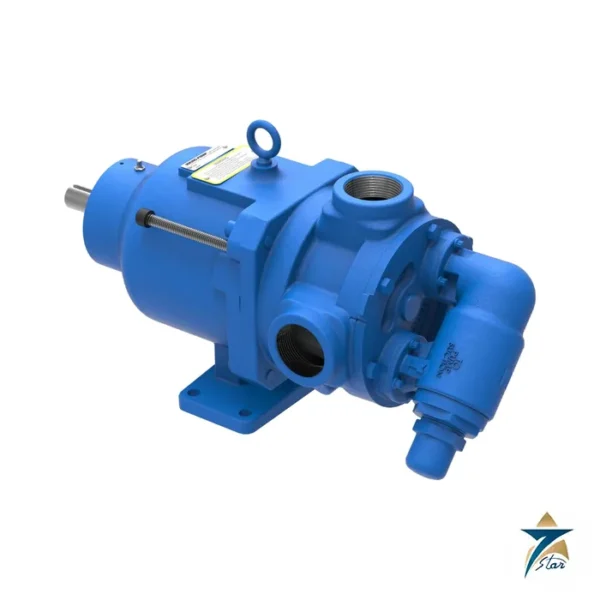
Viking Pump HL475 Close-Coupled Cast Iron Gear Pump

Description

Overview

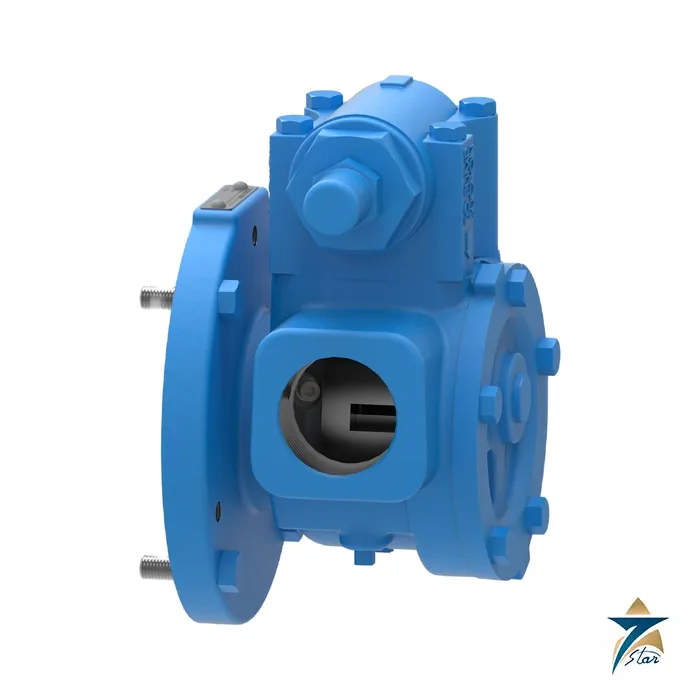
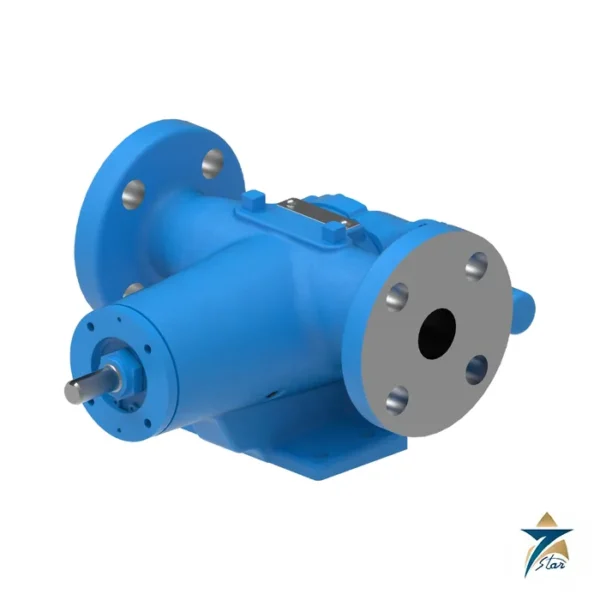
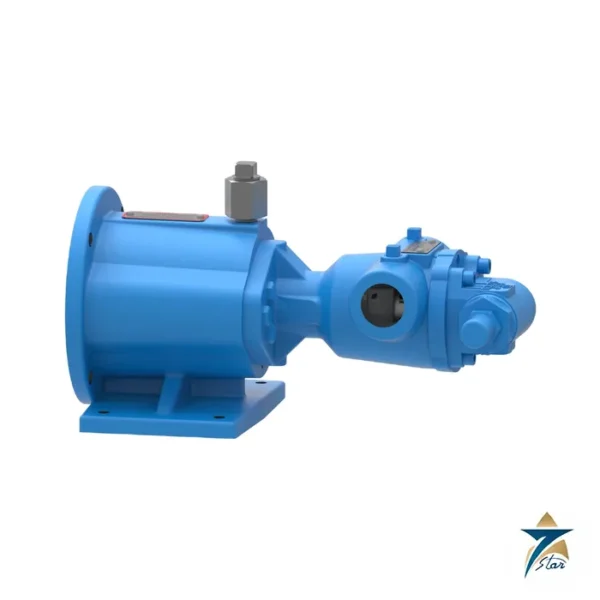
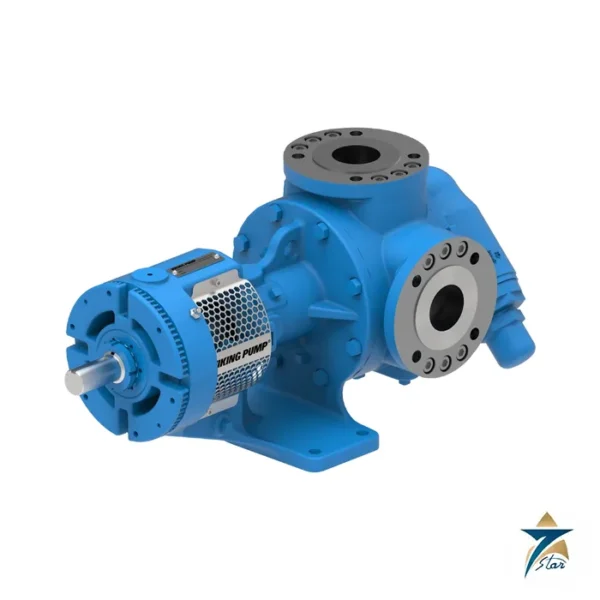
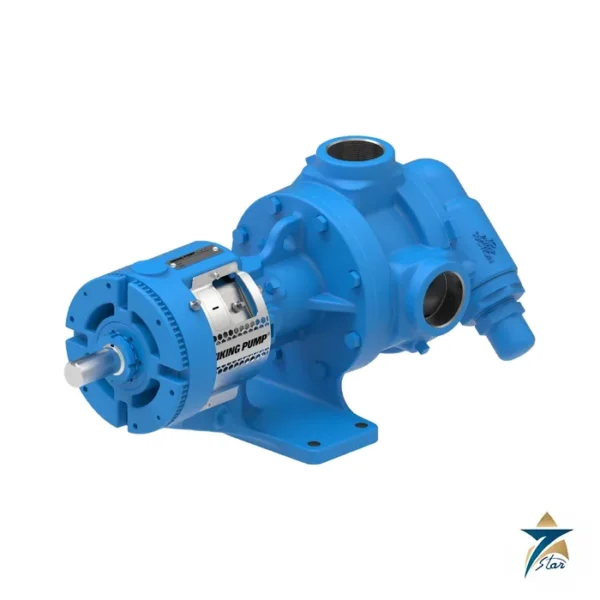
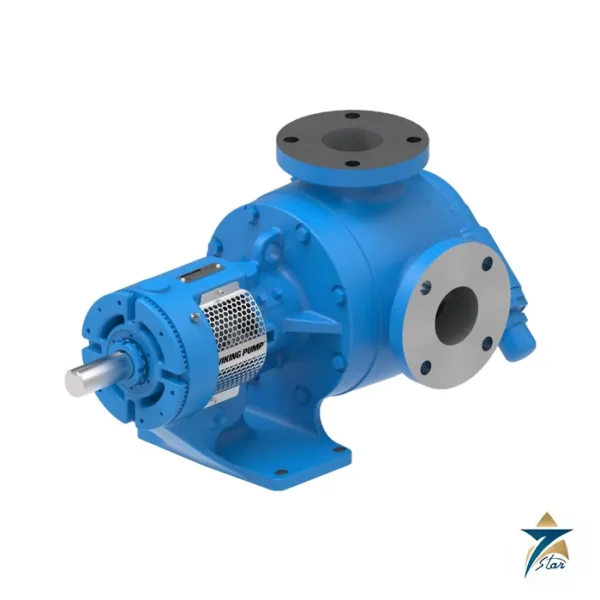
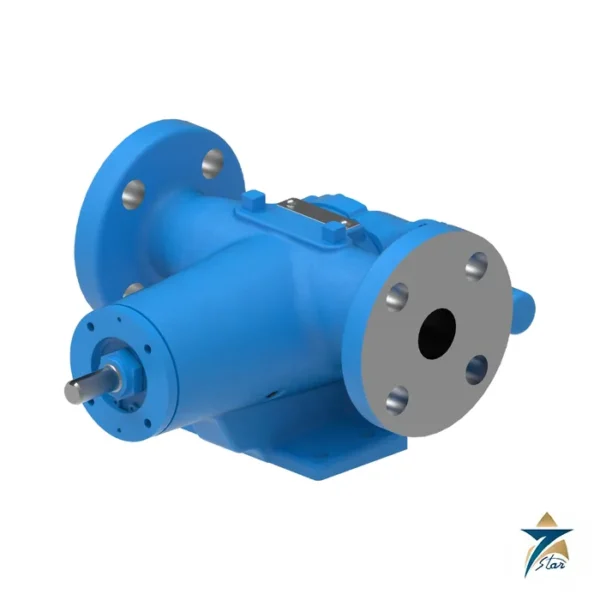
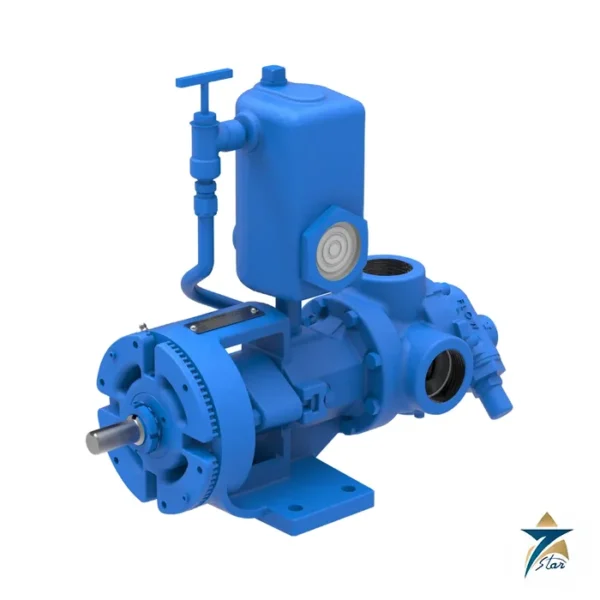
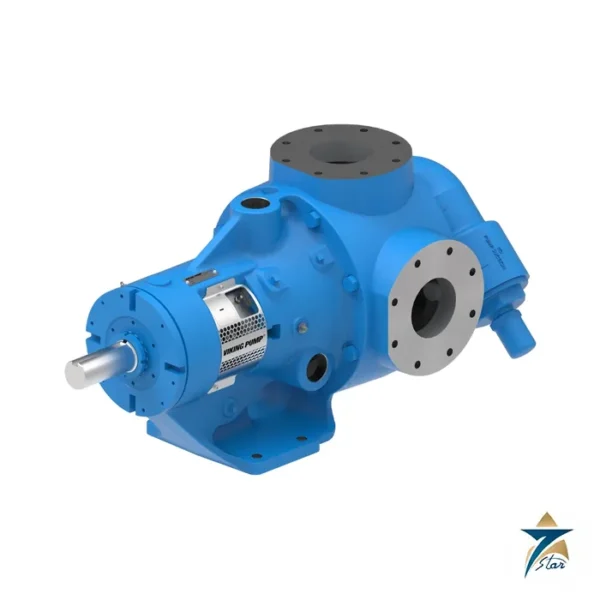
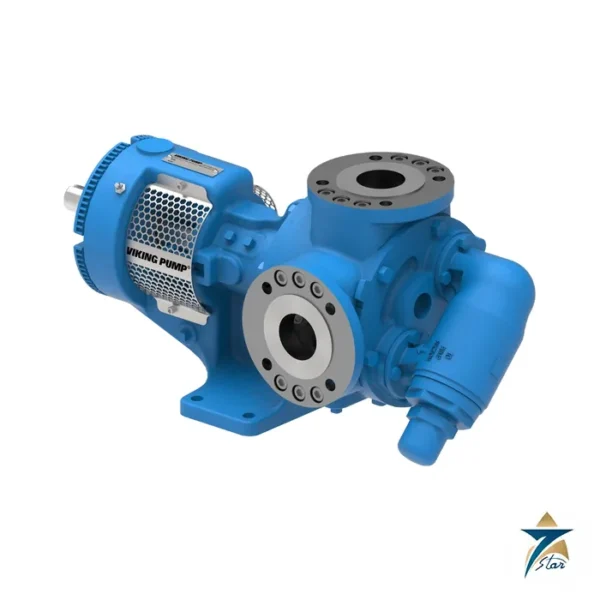
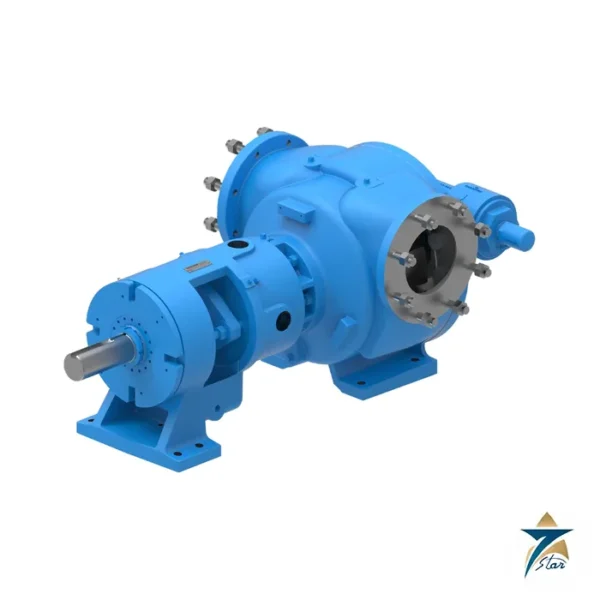
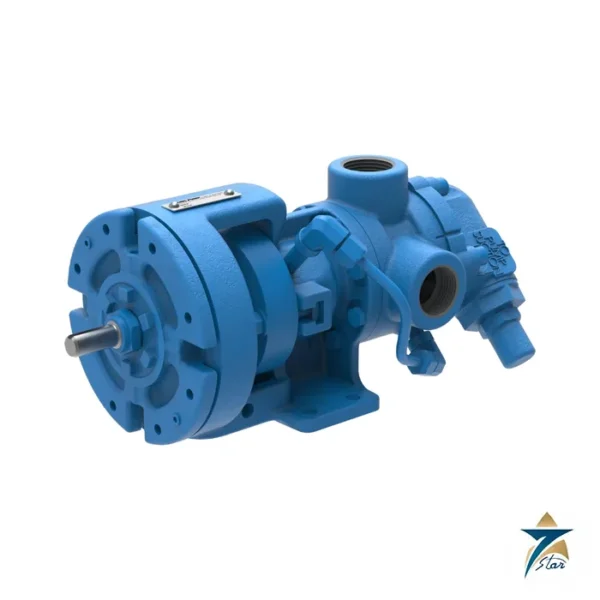
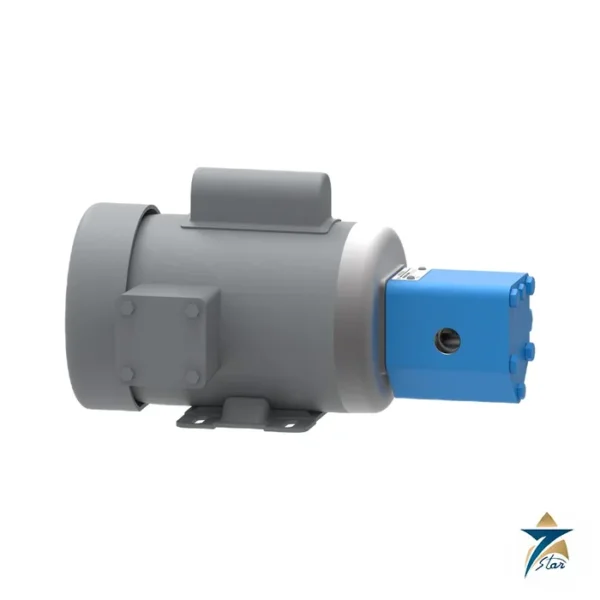
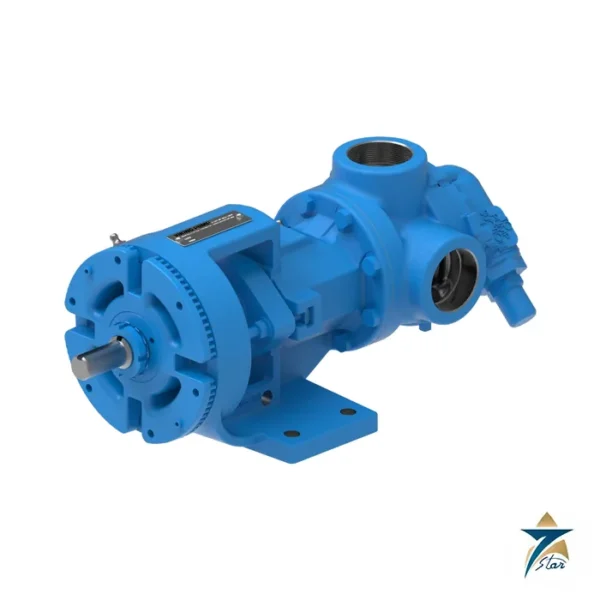
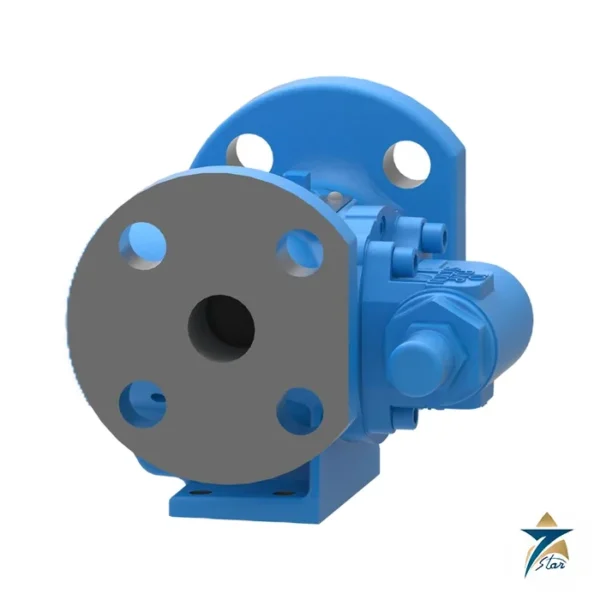
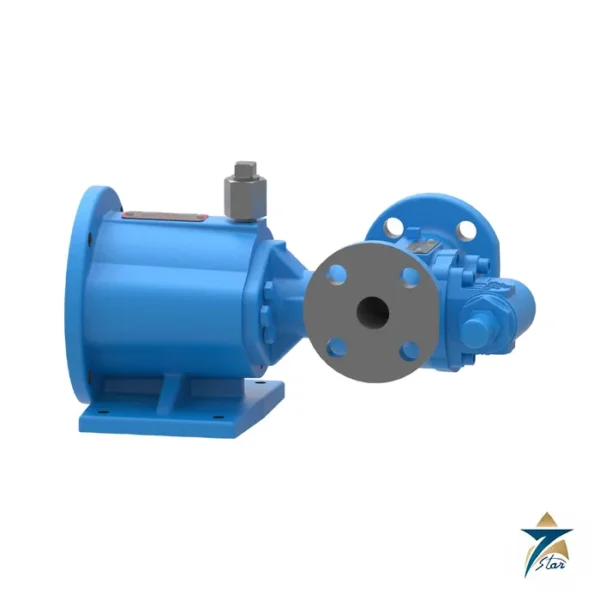
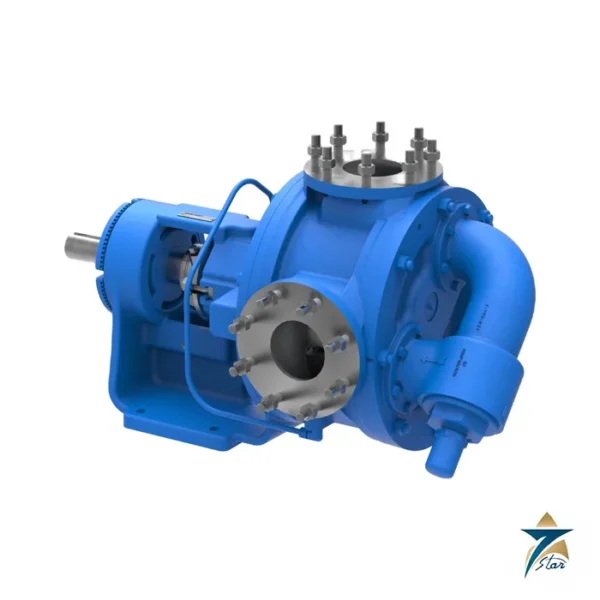
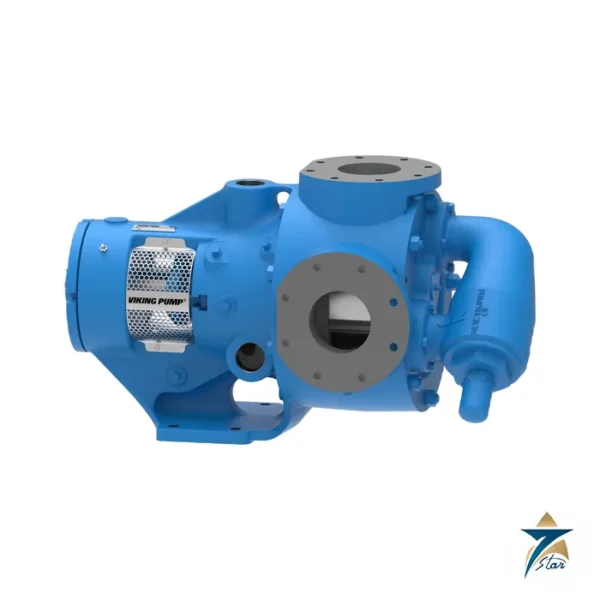
Thirty gallons a minute from a pump you can lift with one hand and mount straight on a motor flange: that is the proposition of Viking Pump HL475. It is the highest-flow pump in the close-coupled Viking 475 series, rated at 20 GPM (4.5 m3/h) at 1200 rpm and 30 GPM (7 m3/h) at 1800 rpm through 1 1/2 inch opposite ports. The bare pump weighs about 26 lb (12 kg), and a complete unit with a 145TC motor about 85 lb (39 kg). Seven Star LLC is an independent supplier serving Oman and the GCC.

Design in brief

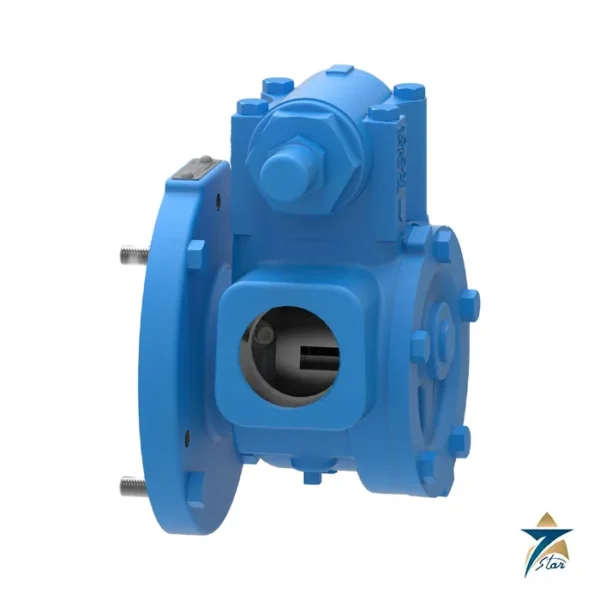
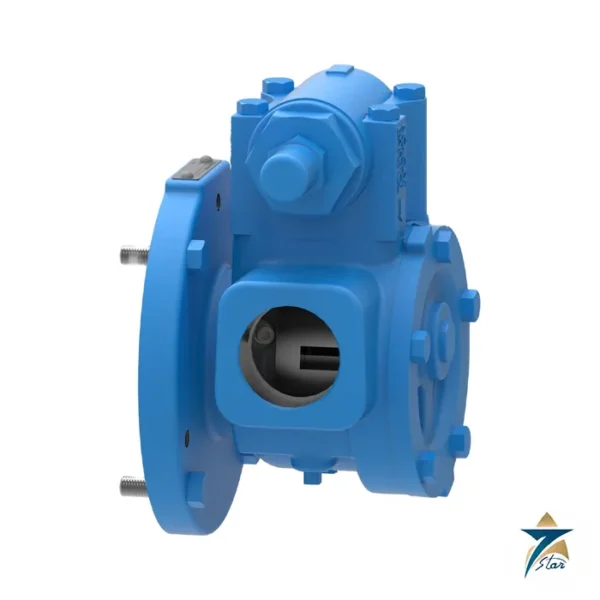
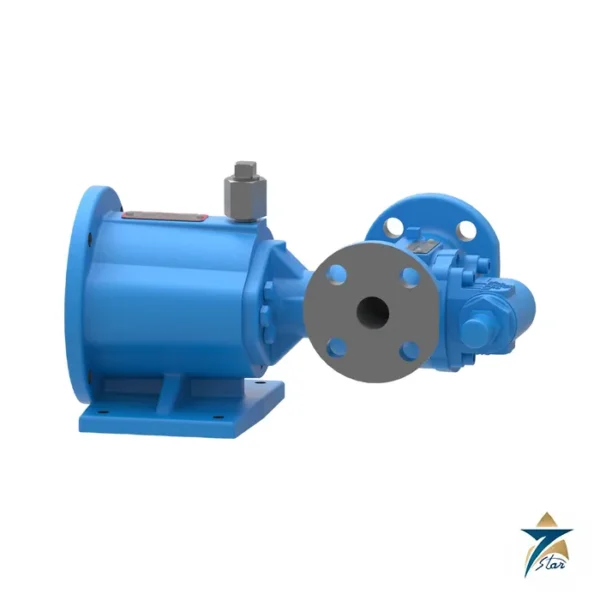
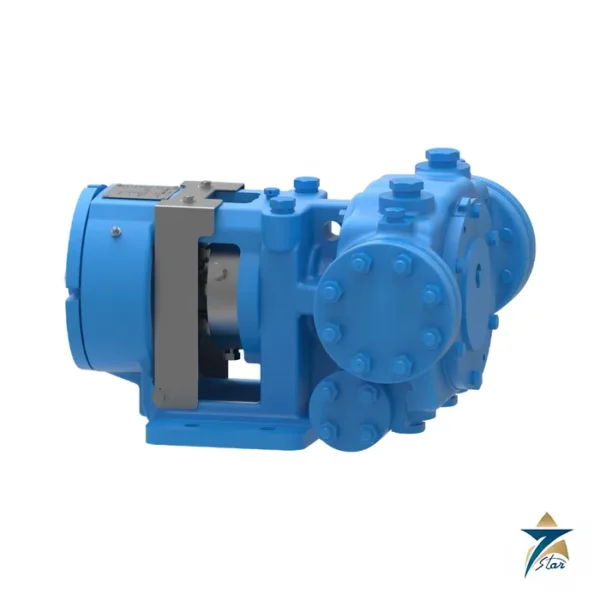
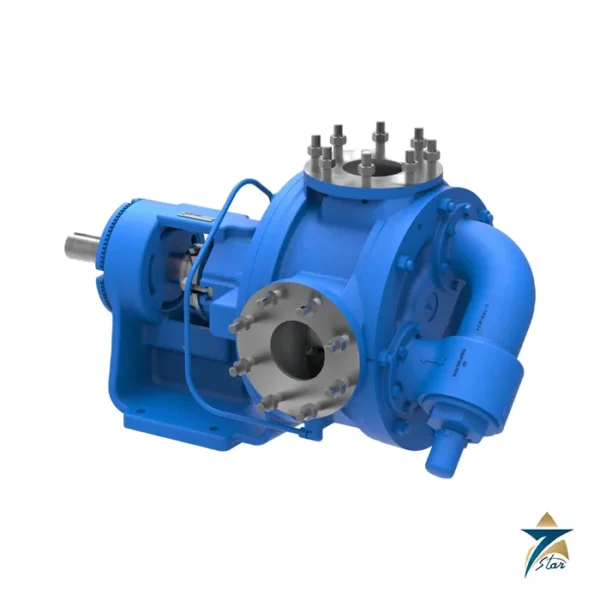
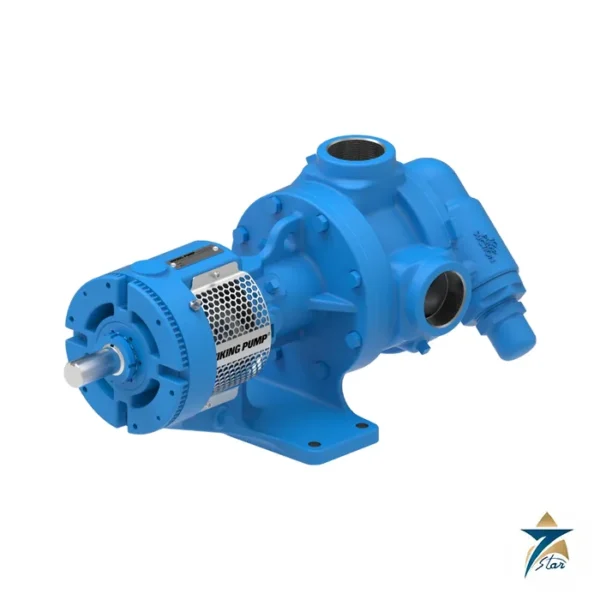
A rotor bore of 5/8 or 7/8 inch slides over the motor shaft and is locked with a full-length key, so the shaft of a standard NEMA C flange motor drives the gears directly. There is no coupling, base or outboard bearing. The cast iron casing and head, iron rotor, powdered metal idler and bronze bushing make a simple assembly; the mechanical seal uses Buna-N and FKM elastomers. A small integral relief valve is mounted on top of the casing to hold the compact envelope of about five inches.

Viking Pump HL475 data table

Parameter Value
Model Viking Pump HL475, series 475 (mechanical seal), close coupled, catalog section 1445
Port size 1 1/2 inch, opposite ports
Nominal rating at 1200 rpm 20 GPM (4.5 m3/h)
Nominal rating at 1800 rpm 30 GPM (7 m3/h)
Casing, head and rotor Iron
Idler Powdered metal
Idler bushing Bronze
Mechanical seal Buna-N and FKM; FKM construction handles up to 350 F (180 C)
Relief valve Iron, mounted on top of the casing
Series pressure rating, mechanical seal 100 PSI (7 bar); hydrostatic test 400 PSIG (28 bar)
Series temperature range minus 20 to 350 F (minus 25 to 175 C)
Series viscosity range 28 to 2,500 SSU (0.1 to 550 cSt)
Maximum suction pressure 15 PSI (1 bar)
Motor mounting NEMA C flange; 145TC frame for the Viking Pump HL475
Rotor bores 5/8 inch and 7/8 inch
Unmounted pump weight about 26 lb (12 kg)
Weight of unit with motor about 85 lb (39 kg) with a 145TC frame motor

Viking Pump HL475 versus the other close-coupled pumps

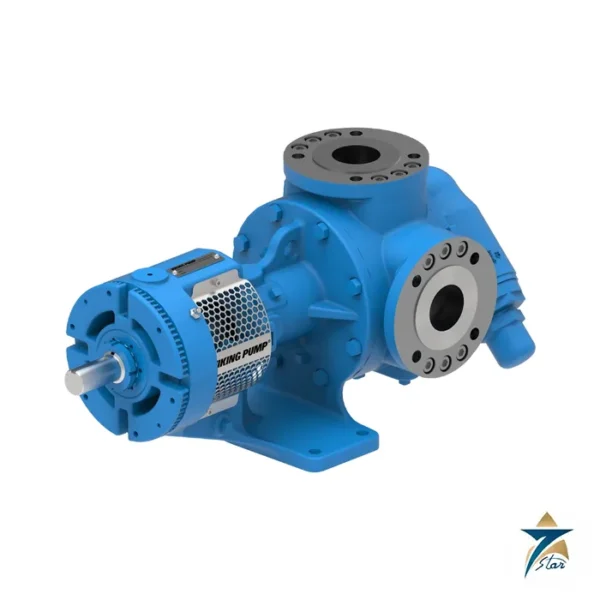
The five sizes use two casings: G and GG share the small one, H, HJ and HL share the larger. Within the larger casing, the HL has the longest gear set, so it delivers the most flow: 20 GPM against 13 for the HJ and 10 for the H at 1200 rpm. It is also the heaviest, though only by 2 lb. If your piping is 1 1/2 inch and you need more than 20 GPM, the Viking Pump HL475 is the pump; if you need more than 30 GPM from a Viking pump you must move to a larger series.

Typical uses

  • Filtering and circulation of oils in compressor and hydraulic systems.
  • Fuel and distillate transfer from drums and small tanks.
  • Coolant and glycol circulation.
  • Booster service in low pressure process lines.

Seal and pressure ratings

The 475 series has a mechanical seal that is suitable for 100 PSI (7 bar). The lip seal 75 series is limited to 50 PSI (3 bar). A mechanical seal pump withstands a hydrostatic test of 400 PSIG (28 bar), but a lip seal pump should never be tested that way. For temperatures above 225 F, use FKM construction, which is suitable up to 350 F (180 C). The series viscosity range is 28 to 2,500 SSU (0.1 to 550 cSt).

Installation and starting

Choose a motor with a C face and the 145TC frame shown in the catalog for this size. Slide the pump onto the shaft until it seats on the face, tighten the bolts evenly and connect the pipework. The pump will deliver in either direction, but the relief valve should be on the suction side. Do not start with the pump dry, and use a strainer. Keep the suction pressure below 15 PSI (1 bar).

Power and speed

The catalog contains a horsepower table for a 100 SSU liquid at 25 PSI and 50 PSI, and it should be used together with the 145TC frame data. On a 50 Hz network a four pole motor turns at about 1450 rpm, so expect a flow between the two catalog columns. Always select the motor for the highest pressure and lowest temperature you expect.

Service

Replace the mechanical seal when it leaks, and inspect the bronze bushing for play. Motor bearings carry the pump loads in a close-coupled unit, so include them in your lubrication schedule. Store spares dry.

Heavier liquids and the speed choice

The 475 series is rated up to 2,500 SSU. At the thicker end of that range, the pump should run at the 1200 rpm rating or slower, since a high speed on a thick liquid causes cavitation at the inlet and raises the power demand sharply. If the plant has only 50 Hz motors, a four pole motor at about 1450 rpm is acceptable for liquids up to a few hundred SSU, but a thicker product may call for a gear motor. Preheating the liquid is another solution, as viscosity falls rapidly with temperature.

Replacement and interchange

A lip seal HL75 can be changed to the mechanical seal Viking Pump HL475 without modifying the casing, head or rotor, according to the catalog. When replacing an old pump, compare the rotor bore, the motor frame, the port orientation and the valve position. Opposite ports allow in-line piping, so a pump with right-angle ports would not match the same pipe layout.

Spare parts to hold

For critical duty, keep a mechanical seal kit, a bronze bushing and a valve spring on the shelf. Because the motor is close coupled, a spare motor of the same frame is also advisable.

Acceptance checks on delivery

When the pump arrives, compare the nameplate with the order, look for transit damage on the ports and the relief valve, and turn the rotor by hand to confirm free movement. Keep the port plugs in until the pipework is ready, and record the serial number in the maintenance file, so that later spare part enquiries can be answered quickly and correctly.

Related items you may also need: KRACHT RG 42-Z50/55-Z75/42 Coupling for KF Gear Pump | KRACHT PT 350-A-160-228 Bellhousing for KF Gear Pump | KRACHT PT 250-A-080-124 Bellhousing for KF Gear Pump | All Viking Pump products.

Viking Pump HL475 ordering checklist

  • When the Viking Pump HL475 replaces an installed unit, check the existing nameplate against the code on this page before ordering.
  • Every enquiry for the Viking Pump HL475 is answered with a written confirmation of the code and expected lead time.
  • Use the attached datasheet to check the Viking Pump HL475 ratings, dimensions and connection details against your drawings.

Documents and quotation

The Viking catalog section for the 75 and 475 series is attached. To obtain a quotation on Viking Pump HL475, please send quantity, liquid, temperature, pressure, motor frame and delivery location in Oman or the GCC.

Other Models in the Viking 475 Range

Seven Star LLC supplies models from the Viking 475 range in Oman and the GCC. Compare the related models below and request a quote for the one that matches your application.

ModelCategory
Viking Pump HJ475 Close-Coupled Gear Pump 20 GPMPositive Displacement PumpsView details
Viking Pump G475 Close-Coupled Cast Iron Gear PumpPositive Displacement PumpsView details
Viking Pump H475 Close-Coupled Cast Iron Gear PumpPositive Displacement PumpsView details
Viking Pump HL475 Close-Coupled Cast Iron Gear PumpPositive Displacement PumpsYou are viewing this model
Datasheets & Documents
  • PDF Datasheet Viking Pump HL475 Close-Coupled Cast Iron Gear Pump Datasheet Download
Reviews (0)

Reviews

There are no reviews yet.

How would you rate this product?

It takes about 10 seconds — just tap a star. Your email is never published.

About brand

Viking Pump is the American maker of positive displacement pumps best known for the internal gear pump, often described as the "gear-within-a-gear" design. The principle goes back to Jens Nielsen, a Danish-born quarry owner in Cedar Falls, Iowa, who needed a better way to drain water from his quarry and patented his internal gear pump in 1904. In 1911 Nielsen and three local partners formed the Viking Pump Company in Cedar Falls, which is still the company's home. Viking has been part of IDEX Corporation since 1989.

Viking Pump company profile

Founded 1911, Cedar Falls, Iowa, USA, by Jens Nielsen with P.C. Petersen, W.L. Hearst and George Wyth
Headquarters Cedar Falls, Iowa, USA
Ownership A unit of IDEX Corporation since 1989
Core technology Internal gear pumps (rotor, idler gear and crescent), plus external gear, vane, lobe and circumferential piston pumps
Typical liquids Viscous and difficult liquids: fuel and lube oils, asphalt and bitumen, resins, polymers, chemicals, ammonia, molasses, inks and adhesives
Standards API 676 versions for refinery and petrochemical service; jacketed and heated versions for liquids that must be kept hot

Milestones

  • 1904: Jens Nielsen patents his internal gear pump design.
  • 1911: Viking Pump Company is founded in Cedar Falls, Iowa.
  • 1989: Viking becomes part of IDEX Corporation.
  • 2011: Viking marks 100 years in Cedar Falls.
  • Today: Internal and external gear pumps, mag drive pumps and API 676 pumps sold through distributors worldwide.

How a Viking internal gear pump works

An internal gear pump has two moving parts: an outer rotor gear and a smaller idler gear that turns inside it, offset on a pin. A crescent-shaped partition on the head fills the space between them. As the gears come out of mesh on the suction side, liquid fills the opening tooth spaces, is carried around both sides of the crescent and is pushed out as the teeth mesh again on the discharge side. Flow is smooth and almost proportional to speed, so the same pump can handle thin solvents or very thick liquids. The pump is reversible, and an internal relief valve is often fitted to protect it if the discharge is blocked. For thick liquids, choose a larger pump at a lower speed; for hot products such as asphalt, choose a jacketed or heated version.

Where Viking pumps are used in Oman and the GCC

In the region, Viking pumps move fuel oil, lube oil and base oils in refineries and terminals, bitumen and asphalt in road-building and storage plants, resins and chemicals in petrochemical plants, and ammonia in refrigeration systems. External gear pumps such as the GB series are used for chemical injection into pipelines, and mag drive pumps are chosen where a seal leak is not acceptable.

Viking Pump models we list

Family Examples
General-purpose internal gear pumps KK124C, H1124C O-Pro, QS124C, M124A, N324A, RS4324A
Jacketed and heated pumps KK224C, Q224C, M224A, KK124E asphalt
Steel and stainless steel pumps L123C, QS4123C, RS4323A, KK127C, Q4127C
API 676 pumps LS4223AX, Q4223AX, N4323AX, R4323AX, KK4223AA
Motor speed, external gear and mag drive pumps HL495, AK4195, GB-41013, GB-41430, SG-0741, AK893 mag drive
Special-duty pumps KK4924A ammonia, KK4624C abrasive, LVP41027 vane

Ordering Viking pumps: what we need

Send the full model number and serial number from the nameplate. The letters at the start of the model (for example G, H, KK, LS, Q or RS) give the pump size, and the digits give the construction, seal and material. For a new pump, tell us the liquid, its viscosity and temperature, the flow rate, the discharge pressure, the port size and whether you need a jacket, a relief valve, a motor and baseplate, or API 676 construction. For spares, send the model and serial number and say whether you need the rotor, idler, idler pin, bushing or seal kit.

Facts checked against Viking Pump and IDEX company history and published Viking product catalogues, November 2026.

FAQ

Questions about the Viking Pump HL475 Close-Coupled Cast Iron Gear Pump

Answers from our engineering team on installation, compatibility and integration.

01What flow does the Viking Pump HL475 deliver?
The catalog lists 20 GPM (4.5 m3/h) at 1200 rpm and 30 GPM (7 m3/h) at 1800 rpm through 1 1/2 inch opposite ports.
02How heavy is the HL475?
The bare pump weighs about 26 lb (12 kg), and a unit with a 145TC frame motor about 85 lb (39 kg).
03What motor frame does the HL475 use?
The catalog lists the 145TC frame for the HL size, with a NEMA C flange mounting.
04What is the HL475 pressure rating?
The mechanical seal version is suitable for 100 PSI (7 bar), and the hydrostatic test pressure is 400 PSIG (28 bar).
05What is the viscosity range of the HL475?
The series covers 28 to 2,500 SSU (0.1 to 550 cSt) according to the catalog.