Differential pressure monitoring for filter elements
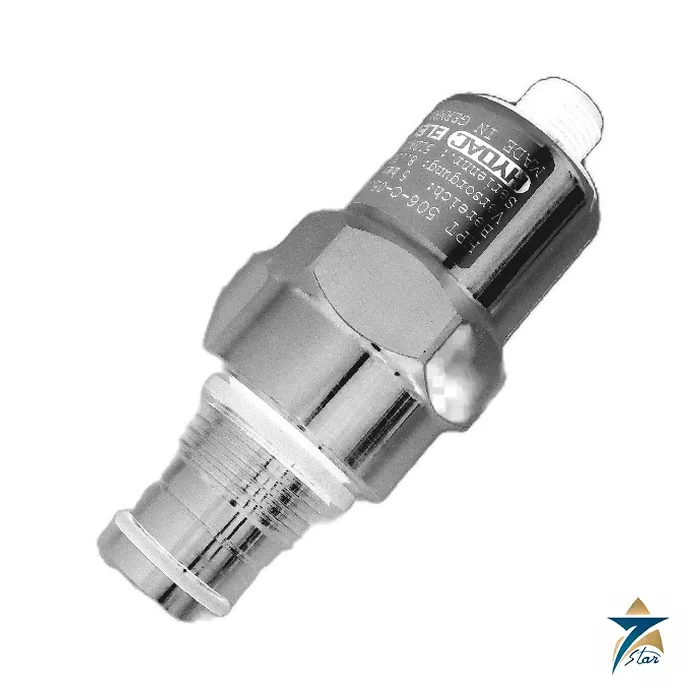
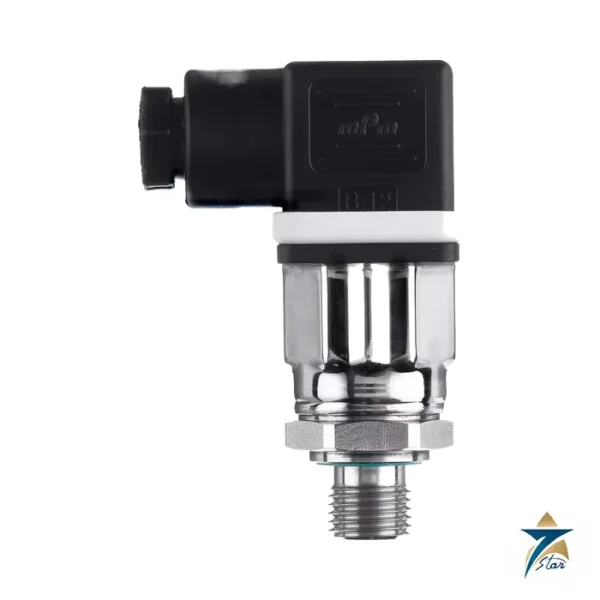
The Hydac HPT 506-C-05.0-S-000 (HYDAC part number 927145) is an electronic differential pressure transmitter. Inside, a piston moves against a spring as the pressure drop across a filter element rises, and a Hall sensor converts that movement into a continuous output. Instead of the on/off signal of a clogging indicator, the control system receives the real differential pressure, so it can track how quickly an element is loading.
HYDAC states that the series is compatible with hydraulic oils, lubrication oils, HFA, HFB and HFD fluids and further environment-friendly fluids. The stainless steel body takes line pressure up to 420 bar, which suits it to high-pressure filters.
Technical specifications
| Parameter |
Specification |
| HYDAC part number |
927145 |
| Model code |
HPT 506-C-05.0-S-000 |
| Differential pressure range |
0 to 5 bar |
| Max. operating pressure (high-pressure side) |
420 bar |
| Low-pressure side resistance |
100 bar |
| Overload pressure |
600 bar |
| Burst pressure |
1600 bar |
| Mechanical connection |
G1/2 HN 28-22, male; 100 N·m |
| Housing |
Stainless steel |
| Seals |
NBR O-ring; PTFE profile seal ring |
| Output signal |
4 to 20 mA, 3-conductor; load max. (UB – 3 V) / 20 mA |
| Supply voltage |
8 to 30 V DC |
| Current consumption |
Approx. 25 mA |
| Accuracy (DIN 16086, max. setting) |
3 % FS typical, 5 % FS maximum |
| Temperature drift |
0.05 %/°C max., zero point and range |
| Long-term drift |
0.5 % FS typical per year |
| Fluid temperature |
-20 to +85 °C |
| Compensated temperature |
+20 to +70 °C |
| Electrical connection |
Male M12x1, 4-pole |
| Protection class |
IP 67 (M12x1) |
| Vibration / shock |
20 g / 50 g |
| Weight |
Approx. 170 g (stainless steel) |
| Approvals as printed |
CE (EN 61000-6-1/2/3/4) |
Where the differential type is used
The transmitter is screwed into the differential-pressure port of a filter head, such as the standard G1/2 HN 28-22 connection on many HYDAC filters, and replaces a visual or electrical clogging indicator. A PLC can then log the pressure drop against operating hours and trigger a warning at a set limit, rather than a fixed switching point. Since cold oil raises differential pressure, the control logic should consider fluid temperature before declaring an element exhausted.
Code and variants
The pattern HPT 5 0 X – X – XXXX – X – 000 means: 6 is the M12x1 four-pole plug (K gives a Deutsch DT04 plug); C is 4 to 20 mA on three conductors (B is 0 to 10 V, R is ratiometric 0.5 to 4.5 V); 05.0 is the differential range in bar (2, 5 or 8 bar are listed); S selects stainless steel (A is aluminium). The accuracy figure refers to the differential pressure, so plan a margin for alarm thresholds. Datasheet: US 18.613.0/05.15.
Check the thread of the filter head before ordering, and note that the stainless steel version is heavier and uses PTFE profile seals, whereas the aluminium version is rated lower for pressure. A damping filter in the controller input avoids nuisance alarms during cold start.
A differential transmitter measures the pressure drop between two ports rather than a single pressure, so it is used across filters, strainers and orifices. State the line pressure and the medium with your enquiry, since the static pressure rating and the differential range are separate limits.
Fitting the transmitter to a filter head
Before installing the HPT 506-C-05.0-S-000, depressurise the filter and the connected circuit completely and allow hot oil to cool. If a clogging indicator is being replaced, remove it, clean the port and check that the bore is free of debris, then confirm that the connection on the filter head matches the G1/2 HN 28-22 form listed in the specification table. Install the transmitter with the O-ring and seal ring in good condition and tighten it to the torque value printed in the datasheet. Over-tightening or a damaged seal can cause leakage between the high- and low-pressure sides, which would falsify the differential reading.
Route the M12 cable away from hot surfaces and moving parts and allow a drip loop so that oil or wash water does not run along the cable into the connector. On skid-mounted power units, clamp the cable to the frame so that vibration is not carried to the plug.
Wiring the three-conductor output
The C output is a 4 to 20 mA signal on three conductors, which differs from the more common two-wire loop. Check the pin assignment in the datasheet and confirm that the PLC analogue input is configured to match the wiring shown there. A wiring mistake here is one of the most frequent reasons for a transmitter that appears dead at start-up.
Commissioning and setting alarm thresholds
With a clean element installed and the system at normal operating temperature, record the differential pressure shown by the PLC. This clean-element value is the reference for everything that follows. Set the warning and replacement thresholds in the control system relative to the filter manufacturer’s recommendation for the element, allowing for the stated accuracy, and add a time delay or temperature condition so that the high differential seen during cold start does not trigger unnecessary element changes.
Logging the differential pressure against running hours from the first day makes it possible to see how quickly elements load in each machine and to plan replacements around production stops.
Operating conditions in Omani plants and mobile equipment
Hydraulic and lubrication systems in Oman run hot for much of the year, and filters on outdoor equipment are exposed to dust and, in coastal areas, humid air. Check that the realistic oil temperature stays within the fluid temperature range in the table, and remember that measurement accuracy is specified over a narrower compensated range. Dusty sites load filter elements faster when breathers and reservoir seals are neglected, so a rising trend on the transmitter can also point to contamination ingress elsewhere in the system.
Inspection and maintenance
At each element change, inspect the transmitter connector and cable, wipe away oil and dust deposits, and check the seal for leaks. Compare the clean-element reading after the change with the original commissioning value; a clear difference may indicate a wrong element, a bypass issue or a sensor problem that should be investigated.
Documents and quotation
The datasheet is attached. Quote the full code and the filter it will be fitted to. Related: our pressure instrumentation range.















Reviews
There are no reviews yet.