A pressure transmitter that identifies itself to HYDAC test instruments
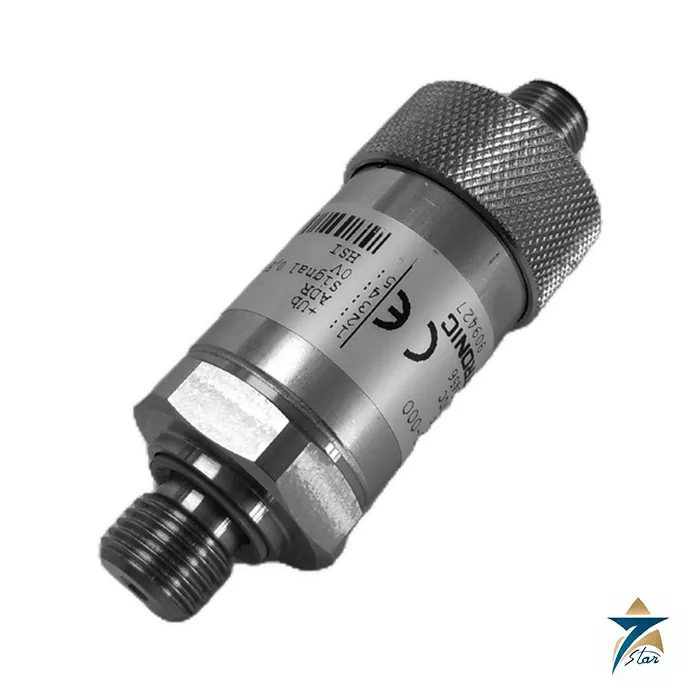
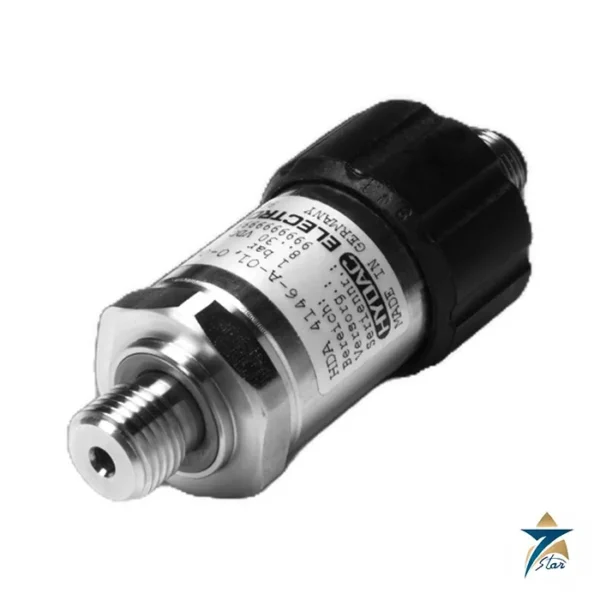
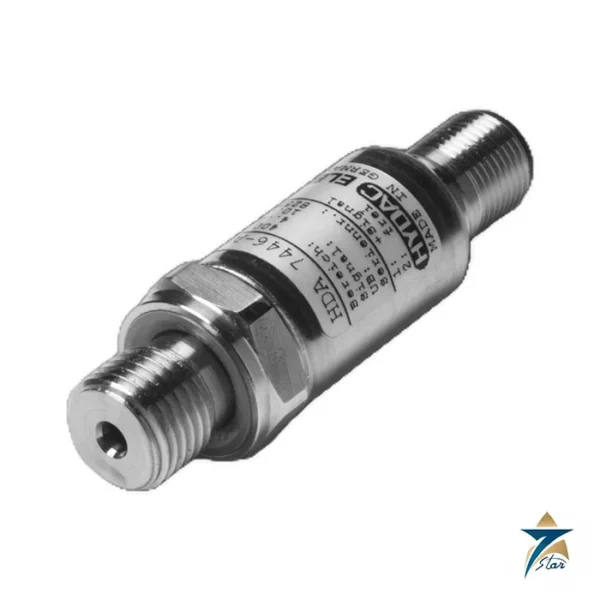
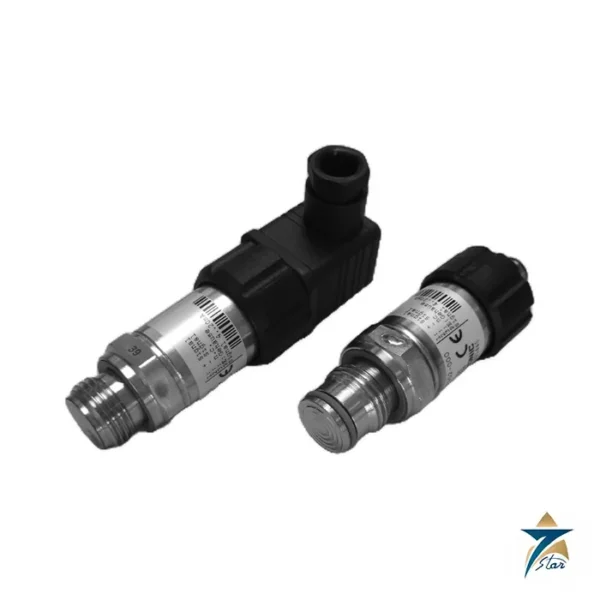
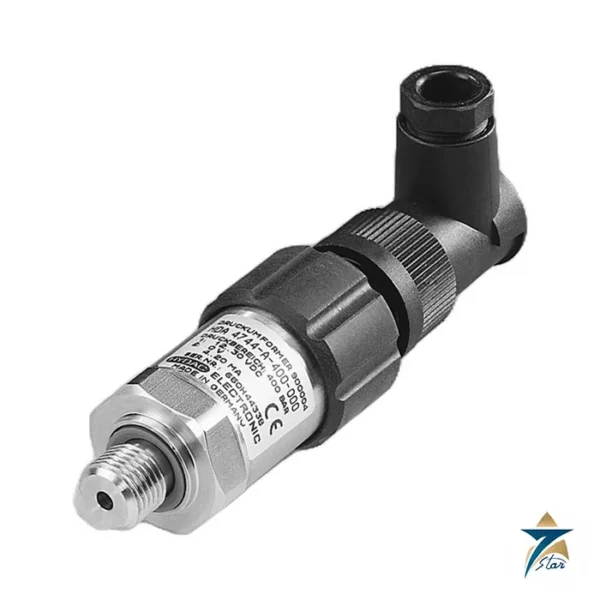
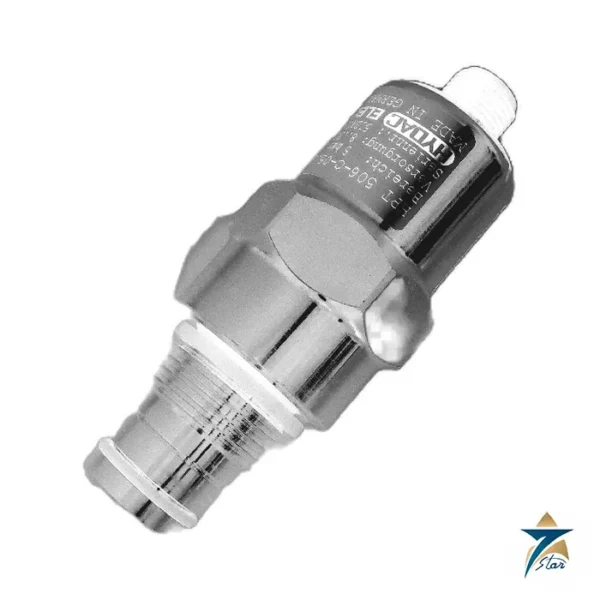
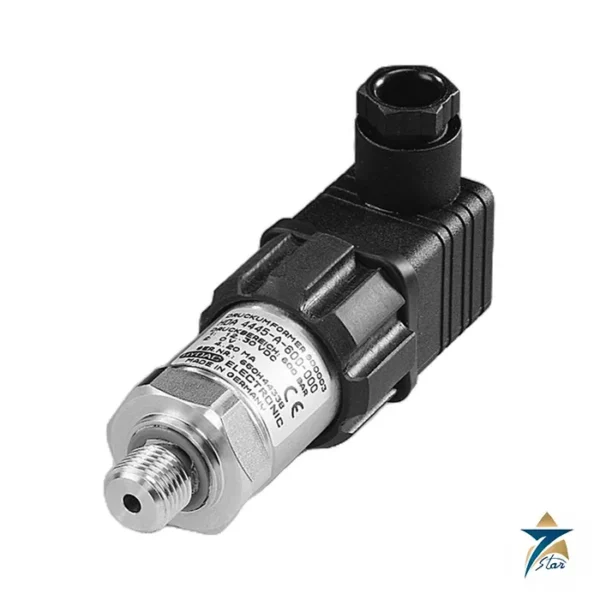
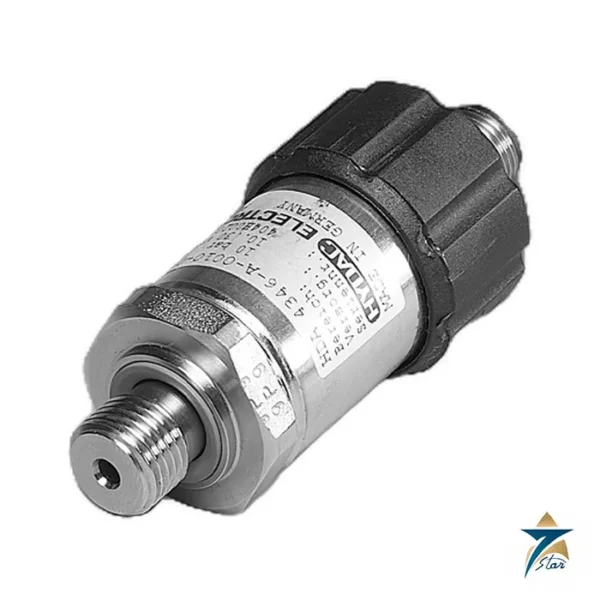
The Hydac HDA 4748-H-0100-000 (HYDAC part number 909426) is a version of the HDA 4700 for use with HYDAC portable and condition-monitoring instruments. Instead of an analogue current loop it has an HSI interface, short for HYDAC Sensor Interface. When it is plugged into an HMG 5X0, HMG 2500, HMG 4000 or CMU 1000, the instrument recognises the sensor, reads its range and unit, and applies the basic settings automatically.
The electronics are the same family as the analogue HDA 4700: a thin-film strain gauge cell on a stainless steel membrane with 0.25 % FS typical accuracy to DIN 16086.
Technical specifications
| Parameter |
Specification |
| HYDAC part number |
909426 |
| Model code |
HDA 4748-H-0100-000 |
| Measuring range |
0 to 100 bar |
| Overload pressure |
200 bar |
| Burst pressure |
500 bar |
| Mechanical connection |
G1/4 A ISO 1179-2, male; 20 N·m |
| Output signal |
HSI (HYDAC Sensor Interface), automatic sensor recognition |
| Electrical connection |
Male M12x1, 5-pole (mating connector not supplied) |
| Supply |
Via HMG 5X0, HMG 2500, HMG 4000 or CMU 1000 |
| Accuracy (DIN 16086, terminal based) |
0.25 % FS typical, 0.5 % FS maximum |
| Accuracy (BFSL) |
0.15 % FS typical, 0.25 % FS maximum |
| Non-linearity / hysteresis |
0.3 % / 0.1 % FS max. |
| Repeatability / rise time |
0.05 % FS / 1 ms max. |
| Temperature compensation |
0.008 % FS/°C typical, 0.015 % FS/°C maximum |
| Compensated temperature |
-25 to +85 °C |
| Operating temperature |
-25 to +85 °C (FKM seal; -40 °C on request) |
| Fluid temperature |
-25 to +100 °C |
| Storage temperature |
-40 to +100 °C |
| Wetted parts |
Stainless steel connection, FKM seal |
| Protection class |
IP 67 with mating connector |
| Vibration / shock |
20 g / 100 g, 6 ms |
| Life expectancy |
More than 10 million cycles |
| Weight |
Approx. 150 g |
| Approvals as printed |
CE (EN 61000-6-1/2/3/4) |
Using HSI sensors
HSI sensors are not intended for a PLC input. They are for service and test work: connect the sensor to an HMG handheld, and the instrument displays the measured pressure with the right range and unit without manual set-up. The same sensor can stay in a hydraulic test point or be moved between machines. For a permanently installed 4 to 20 mA signal choose the HDA 4745 instead.
Order code
HDA 4 7 X 8 – H – XXXX – 000: the fourth digit 4 selects G1/4 A (1 is G1/2 B DIN EN 837, only for 1600 and 2000 bar), the final 8 selects the five-pole M12x1 plug, H the HSI signal and 0100 the range in bar. The datasheet lists ranges of -1 to 9, 16, 60, 100, 250, 400, 600, 1000, 1600 and 2000 bar. Confirm that your HMG or CMU instrument supports HSI before ordering. Datasheet: EN 18.332.3/02.18.
Because the sensor takes its power and identity from the instrument, check the cable length and connector type supplied with your HMG or CMU, and do not hot-plug it into a live PLC loop. When several sensors are used on one measuring instrument, label each with its measuring point, since the automatic recognition shows range and unit but not where the sensor is installed. Calibration status is tied to the sensor itself, so keep it with its own record rather than swapping units between machines unrecorded.
Selection checks for the HDA 4748-H-0100-000
Before choosing this transmitter, list the pressures you actually expect at the test point, including peaks during valve switching, cylinder end stops and pump start-up. The 0 to 100 bar range suits circuits whose normal working pressure sits comfortably inside that span; if pressure spikes may approach the 200 bar overload figure, a higher range from the order code is the safer choice. Check the port on the machine as well: the sensor has a G1/4 A male thread to ISO 1179-2, so an adapter or test coupling may be needed where the circuit uses a different connection.
Confirm the fluid too. The wetted parts are stainless steel with an FKM seal, which is common in mineral oil hydraulics, but special fluids should be checked against the seal material with the fluid supplier. Finally, make sure the measuring team has a compatible HMG or CMU instrument and the right M12x1 cable, since the mating connector is not supplied with the sensor.
Installation and first connection
Fit the sensor with the system depressurised and drained back to tank at that point. Clean the port and check the sealing face for damage before screwing in the sensor, and tighten to the 20 N·m value given in the table using a spanner on the hexagon, never by turning the housing. Route the cable so it cannot be crushed by moving cylinders or guards and is not pulled tight when the instrument is carried around the machine.
When the sensor is first connected to the handheld, check that the instrument shows the expected range and unit, then compare the reading at zero pressure and at a known working pressure against a reference gauge if one is fitted. Record the measuring point, the date and the sensor serial number in the test log so later readings can be traced back to the same unit.
Bleeding and stable readings
Air trapped in front of the membrane can make readings unsteady during dynamic tests. Where the circuit allows it, bleed the line at the test point before recording data, and let the fluid reach normal working temperature so that readings taken on different days are comparable.
Use in Oman and GCC operating conditions
Hydraulic equipment in Oman frequently runs in hot enclosures, on mobile plant and in dusty quarry or port environments. Even though the operating and fluid temperature limits are listed in the table, the sensor body can become hotter than the surrounding air when mounted close to pumps, manifolds or engine compartments, or when left in direct sun. Where possible, choose a test point away from the hottest surfaces and shade portable instruments during long recording sessions.
Fine dust and salt-laden humidity are the main threats to the electrical connection. The IP 67 rating applies with the mating connector fitted, so keep a protective cap on the M12x1 plug whenever the cable is removed, and blow or wipe dust from the connector before plugging in. Inspect cables for cracked sheaths after outdoor use, and store sensors in a clean, closed case between jobs rather than loose in a toolbox.
Periodic checks and care
Include the sensor in the site’s calibration schedule and check it against a reference whenever readings look doubtful. Look for oil weeping at the thread, damage to the hexagon or connector, and bent pins. Because each unit carries its own calibration history, keep sensors and records together and replace any unit that shows drift or physical damage.
Documents and quotation
The datasheet for the HDA 4700-H is attached. Please include the instrument you will use it with. See also our pressure instrumentation range.










Reviews
There are no reviews yet.