Aluminium high-pressure blowers built for frequency converters
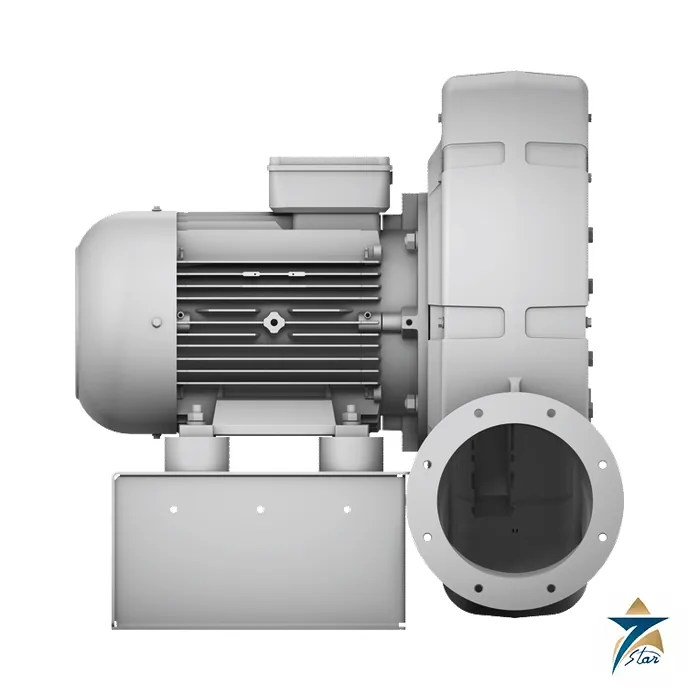
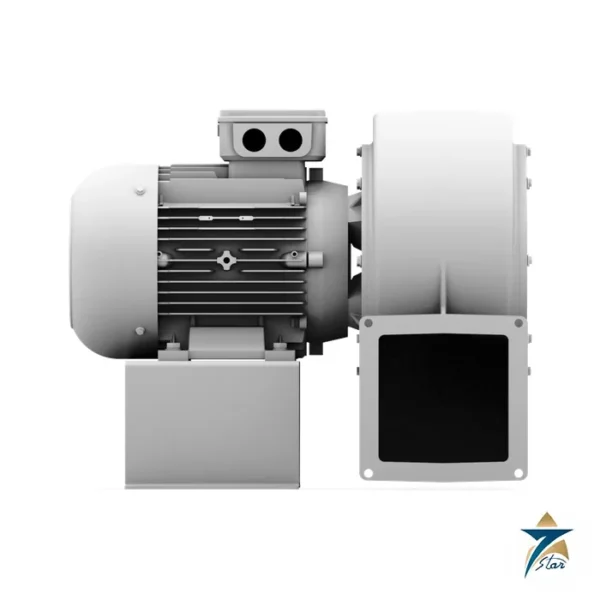
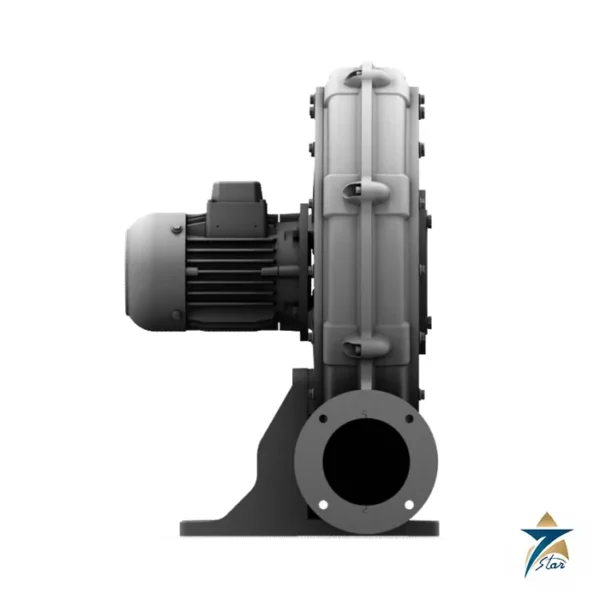
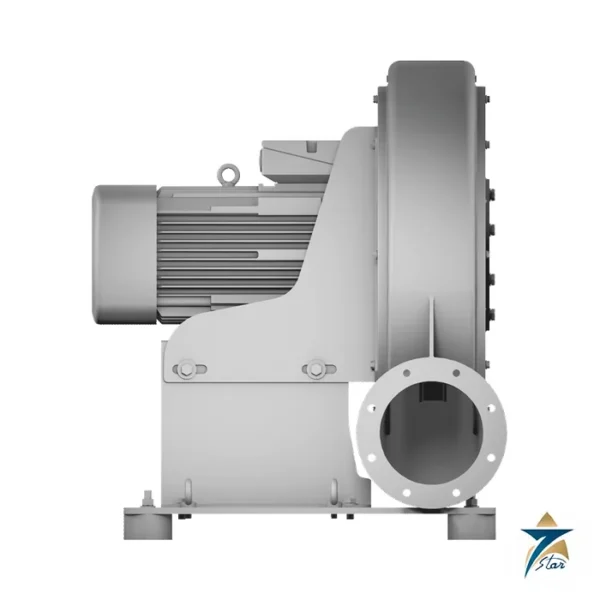
The Elektror A-HP series are aluminium high-pressure blowers with a direct-drive motor, designed to run with a frequency converter. Seven sizes, from the A-HP 225/37 to the A-HP 450/35, reach flow rates from 29.4 to 90.3 m³/min and pressures from 6,930 to 17,600 Pa. The high performance comes from the high rotational speed obtained by direct drive and converter operation.
The catalogue lists conveying medium air volumes at high system resistances, extraction of gases and vapours, cooling of apparatus, ventilation of systems with higher resistance, vacuum generation, air supply for gas, oil and coal-fired systems and for drying installations, and air-cushion tables as typical applications.
Technical specifications
| Parameter |
Specification |
| Construction |
Cast aluminium housing; balanced impellers of sheet aluminium and steel; low noise and vibration-free running |
| Drive |
Squirrel-cage direct-drive motor to EN 60034-1, IP 54; reinforced coil insulation and PTC thermistor as standard for converter operation |
| Maximum operating frequency |
100 to 140 Hz depending on blower type; see the nameplate |
| Converter options |
FU: converter in the control cabinet; FUK: compact converter on the motor up to 7.5 kW; EMC limit class B as standard |
| Ambient temperature |
-20 to +40 °C for the converter-duty motors (standard) |
| Medium temperature |
-20 to +80 °C for the standard version |
| Options |
IP 55, tropical insulation, PTFE shaft seal, ATEX on request, accessories |
Sizes in the A-HP series
Figures are the maximum flow and pressure listed in the manufacturer product overview.
| Model |
Max. flow rate (m³/min) |
Max. pressure (Pa) |
| A-HP 225/37 |
29.4 |
6,930 |
| A-HP 250/40 |
39.8 |
8,580 |
| A-HP 305/30 |
47.5 |
9,140 |
| A-HP 330/33 |
61.9 |
10,580 |
| A-HP 355/35 |
77.4 |
13,720 |
| A-HP 415/35 |
90.3 |
13,650 |
| A-HP 450/35 |
76.9 |
17,600 |
Selection and what to confirm before ordering
High-pressure blowers are chosen when the job needs pressure rather than volume, for example vacuum generation, air-cushion tables, drying plants or burner air against a high back-pressure. Use the A-HP where an aluminium high-pressure blower is wanted in a defined size family: the pressure column shows how the larger impellers trade flow for pressure. The speed range is set by the converter, so specify the converter type and parameters together with the blower; the nameplate gives the permitted maximum frequency. Compare with the HRD series when a different housing layout or the BOOSTED variant is needed. Confirm flow, pressure, supply, converter option (FU or FUK), housing position, medium temperature and density.
The catalogue (edition 05.24) is bilingual German and English. It lists the advantages of speed control as energy and cost savings through an optimised operating point, gentler running that extends service life, and no unnecessary noise or heat. When the speed changes, flow varies in proportion to speed, pressure with the square of speed and power with the cube, so a modest speed reduction cuts power consumption sharply. Related products are in HVAC & Combustion.
Working out the duty point before choosing a size
The seven A-HP sizes overlap in flow and pressure, so the right choice comes from a clear duty point rather than from the largest figure in the table. Start by calculating the total system resistance at the flow you need: duct or pipe losses, nozzles, burner or dryer back-pressure and any vacuum level the process demands. Then plot that point on the curves in the Elektror catalogue and pick the size whose curve passes through it at a comfortable converter frequency, below the maximum shown on the nameplate.
- Choose a size where the duty point sits inside the curve rather than at its extreme end, so speed control has room to adjust.
- Check the temperature of the conveyed air or gas against the standard medium range, and ask about the options if it falls outside.
- Decide early between the FU cabinet converter and the FUK motor-mounted converter, since this affects wiring and panel layout.
- Confirm whether the area needs an ATEX version, which the catalogue lists as available on request.
Installation and commissioning
Mount the blower on a rigid base so the low-vibration running of the balanced impeller is not lost to a flexible frame. Keep inlet and outlet ducting straight for a reasonable length close to the housing, and support the ducting independently so its weight does not load the cast aluminium housing. Electrical work should follow the converter documentation, with the PTC thermistor connected to the converter or a suitable relay so motor protection is active from the first start.
At commissioning, check direction of rotation, set ramp times and the frequency limit in line with the nameplate, and then step the speed up while measuring pressure and flow at the process. Recording current and pressure at several speeds gives a useful baseline for later troubleshooting.
Running in hot and dusty GCC sites
Plants in Oman and across the Gulf often see high ambient temperatures, fine sand and humid coastal air. The standard converter-duty motor has a stated ambient range, so check the real temperature at the blower location, especially inside plant rooms or under roofs exposed to the sun. Where dust or moisture is a concern, the catalogue options such as IP 55 and tropical insulation are worth discussing. Clean the motor surface regularly so cooling is not reduced, and inspect the impeller for deposits if the conveyed air carries dust or vapour. Speed control helps here too: running at the lowest speed that meets the process reduces heat, noise and wear.
Information that speeds up a quotation
Send the required flow and pressure at the duty point, the conveyed medium and its temperature and density, the supply voltage and frequency, the preferred converter option, housing position, ambient conditions and any ATEX or protection requirements. A short description of the application, such as vacuum generation, drying or burner air, helps confirm the most suitable A-HP size.
Documents and quotation
The Elektror A-HP aluminium high-pressure blower catalogue (bilingual German/English) is attached to this page and is the manufacturer’s own document, not a Seven Star summary. It contains curves and dimension drawings for every size.
State the size and converter option. Seven Star LLC, an independent supplier in Muscat, quotes the A-HP series against your application data; send the enclosure size, ambient temperature, supply voltage and quantity so the correct variant and article number can be confirmed before an offer is issued.


Reviews
There are no reviews yet.