Brand:

Bürkert 177454 Type 8611 Universal Flow Controller Wall Mount

Description

Overview

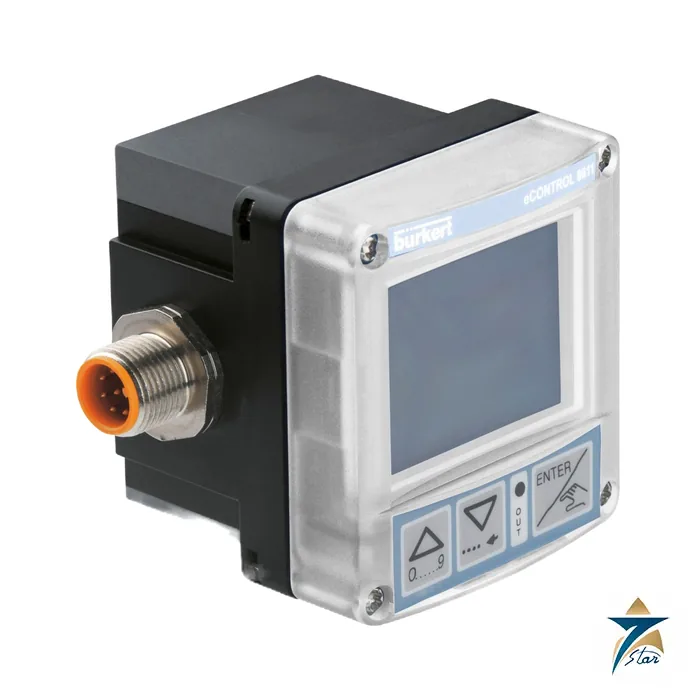
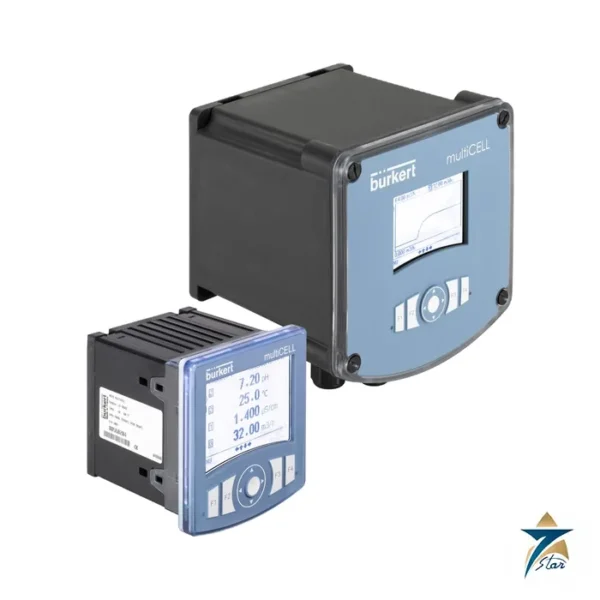
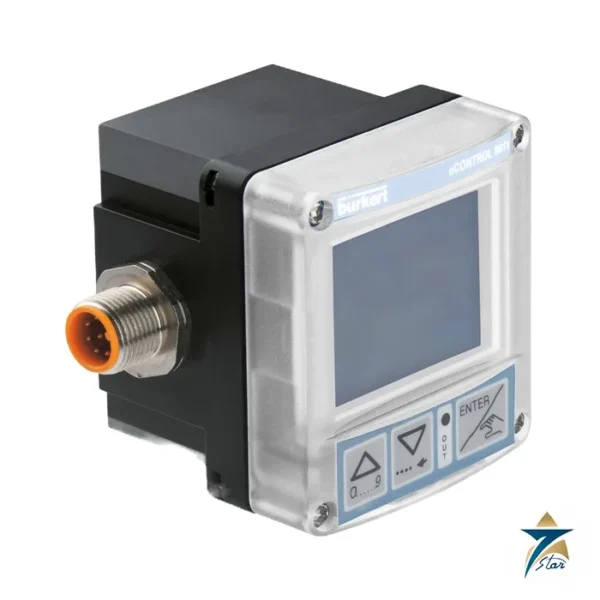
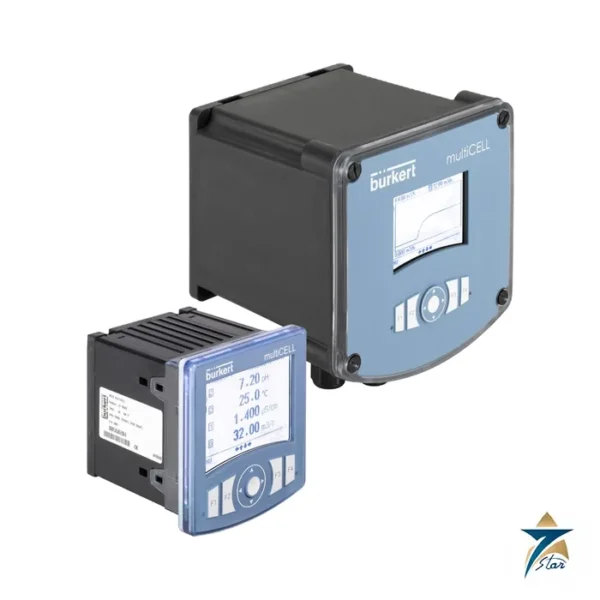
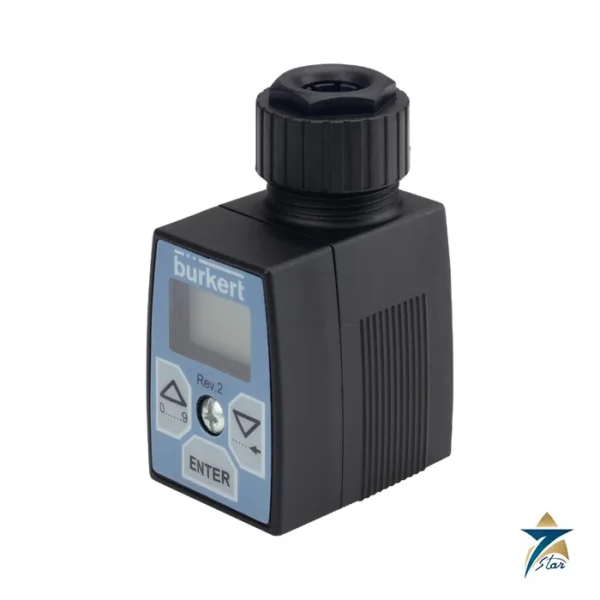
When the flow sensor is already in the plant, a controller for the wall is all that is needed. The Bürkert 177454 is the wall-mounted version of the Bürkert Type 8611 universal controller, designed to read a flow sensor with a frequency (NPN) output and to drive a proportional valve through a PWM or PTM output. Seven Star LLC is an independent supplier serving Oman and the GCC.

Wall variant explained

The wall installation consists of the electronic module Type 8611 and a wall-mounting adapter, which is included. No inline fitting is required with this number, because the input is the external frequency input of 0.25 Hz to 1 kHz. Any flow sensor with a suitable square, sine or triangle pulse of over 3000 mVpp (maximum 30 Vpp) can therefore be used, including sensors from other manufacturers.

Data on Bürkert 177454

Item Value
Article number Bürkert 177454
Display dual-line 8-digit backlit LCD
Operating voltage 24 V DC, plus/minus 10 percent, filtered and regulated
Power consumption approx. 2 W without valve and sensor
Controller modes PI control, 2-point and 3-point, cascaded up to 2 binary outputs
Actuator outputs 1 x PWM or 2 x PTM, 4 to 20 mA, 0 to 10 V
Set-point input 4 to 20 mA or 0 to 10 V
Binary I/O 1 binary input, 1 binary output (PNP, 1.5 A)
Sensor supply 24 V DC, maximum 1 A; total outputs maximum 1.5 A
Frequency input 0.25 Hz to 1 kHz
Pt100 range (where fitted) 0 to plus 200 degrees C, error below 0.5 degrees C
Power supply cable 0.5 mm2 maximum cross section, shielded, up to 100 m
Variant wall installation, flow rate from external frequency sensor (NPN)

How Bürkert 177454 differs from other Type 8611 variants

The fitting version 177455 reads the internal Hall sensor of an S030 fitting; this wall version reads an external frequency signal. The wall version 177457 has a Pt100 temperature input instead, and 177462 accepts all sensors with standard signals of 4 to 20 mA or 0 to 10 V. The standard rail module 177091 reads a frequency flow signal too but mounts on a DIN rail. Pick this number for a wall-mounted unit with an NPN frequency flow sensor.

Applications

Retrofit flow loops, dosing and filling machines and systems with existing flow meters. In Oman, existing sensors on water and chemical lines can be integrated into a control loop without replacing them. The controller can also work as a two-point or three-point controller with window and hysteresis.

Installation

Mount the wall holder on a flat surface with the screws and insert the module. Connect the sensor to the frequency input using the shielded cable, connect the valve to the PWM output and power the module with 24 V DC. Enter the K factor of the sensor, select flow units and verify the signal on the display before closing the loop.

Keep the cable below 100 m and separate from power lines. Tune the controller in steps, starting with proportional action only.

Care

Inspect the cable glands, check connectors and clean the display window if dirty. Re-check the K factor after the sensor is replaced.

Documentation for audits

Many industrial sites in the region now keep equipment databases that list every installed component by number, location and date of installation. For solenoid valves this takes a few minutes during the original installation and saves hours during audits and shutdown planning. Record the article number, the serial or date code on the nameplate, the tag, the supply voltage and the datasheet revision used for selection. When a number is replaced by a successor, add a note rather than overwriting the old entry, so that the history can be traced if the replacement shows different behaviour.

Environmental conditions in the Gulf

Equipment installed in Oman and the other Gulf countries faces heat, dust, salt and humidity, often in the same location. Direct sunlight can heat a valve body well above the ambient air temperature, and a coil that is already warm from its own losses has less margin. Shade valves where possible, and keep enclosures ventilated. Sand and dust can enter plugs and manual overrides, so check seals regularly. Coastal sites add salt, which accelerates corrosion on exposed metal parts and screws, so materials and coatings should be chosen with this in mind. Air drying is also more demanding in humid coastal conditions.

Lifetime expectations

Service life depends on the number of switching cycles, the medium, the temperature and the supply conditions. Elastomer seals gradually harden or swell, springs relax and coils age through thermal stress. A valve in clean, dry air at moderate temperature can outlast the machine, while the same valve in dirty or hot service might need replacement in a year. Rather than waiting for failure, track the switching count on critical valves where the control system can log it and replace them at a fixed interval based on experience. Planned replacement during a shutdown is much cheaper than a fault during production.

Substitution and alternatives

When a specified number is hard to obtain, engineers sometimes consider alternatives. The safe approach is to compare every parameter that matters: port thread, orifice, pressure range, voltage, seal material, circuit function, body material and electrical connection. Any difference should be reviewed against the process, not just the catalogue. Even a slightly larger orifice can change the speed of an actuator, and a different coil can change the heat in a cabinet. Ask your supplier whether the datasheet confirms the alternative, and record the decision in the maintenance file so that later technicians understand why a different number is installed.

Spare-part planning

Spare-part planning for valves works best when the plant keeps a list of installed article numbers and not just a list of types. Two valves of the same type may differ in orifice, seal material, voltage or port thread, and these differences are encoded in the number printed on the nameplate. During a shutdown walk-down, photograph each nameplate, record the number and the tag of the machine, and compare the list against the stock room. Criticality should drive stock levels: a valve whose failure stops a production line deserves a shelf spare, while a valve on a redundant branch may be ordered when needed. A short lead-time discussion with your supplier before the shutdown starts is almost always cheaper than expediting after a failure.

Related items you may also need: Bürkert Type 6026 Direct-Acting 2/2-Way Plunger Solenoid Valve | Bürkert Type 8681 Control Head for Hygienic Process Valves | Schneider Electric TAC Xenta Building Controller | All Bürkert products.

Bürkert 177454 ordering checklist

  • When the Bürkert 177454 replaces an installed unit, check the existing nameplate against the code on this page before ordering.
  • Every enquiry for the Bürkert 177454 is answered with a written confirmation of the code and expected lead time.
  • Use the attached datasheet to check the Bürkert 177454 ratings, dimensions and connection details against your drawings.
  • We supply the Bürkert 177454 as part of our controllers & data acquisition range to plants in Oman and the GCC.
  • For critical duty, keeping one Bürkert 177454 as a site spare shortens downtime after a failure.

Documents and quotation

The Type 8611 datasheet is attached. Send your RFQ with Bürkert 177454, the quantity and the delivery location in Oman or the GCC.

Other Models in the 8611 Range

Seven Star LLC supplies models from the 8611 range in Oman and the GCC. Compare the related models below and request a quote for the one that matches your application.

ModelCategory
Bürkert 177455 Type 8611 Universal Flow Controller Fitting VariantControllers & Data AcquisitionView details
Bürkert 177454 Type 8611 Universal Flow Controller Wall MountControllers & Data AcquisitionYou are viewing this model
Datasheets & Documents
  • PDF Datasheet Bürkert 177454 Type 8611 Universal Flow Controller Wall Mount Datasheet Download
Reviews (0)

Reviews

There are no reviews yet.

How would you rate this product?

It takes about 10 seconds — just tap a star. Your email is never published.

About brand

Bürkert is a German family-owned maker of fluid control systems, headquartered in Ingelfingen, Baden-Württemberg. Christian Bürkert founded the company in 1946, and it is known for solenoid valves, process and control valves, flow and analytical sensors, and mass flow controllers. Its products serve water treatment, hygienic processing, gas handling and laboratory applications.

Seven Star LLC lists Bürkert valves and valve automation devices and supplies Bürkert solenoid valves and spare parts to plants in Oman as an independent supplier.

Bürkert company profile

Founded 1946, by Christian Bürkert
Headquarters Ingelfingen, Germany
Ownership Family-owned
Product families Solenoid valves, angle seat process valves, positioners, flow meters, mass flow controllers

Bürkert types listed on this page

Two types are listed. Type 6026 is a direct-acting 2/2-way plunger solenoid valve, with a stainless steel bellows that separates the medium from the coil, and as a direct-acting valve it switches without needing a pressure difference. Type 8681 is the Bürkert control head that mounts on top of hygienic process valves to pilot the actuator and report valve position to the control system. Control heads of this kind are common in food, beverage and pharmaceutical plants in the GCC.

Ordering Bürkert valves: what we need

The type number alone is not enough. Send the identification number from the label, or else the type with orifice, port connection, body and seal material, coil voltage and frequency, circuit function and pressure range. For a Type 8681 control head add the communication variant and the make and model of the process valve it sits on.

Facts checked against Bürkert's published company history, October 2026.

FAQ

Questions about the Bürkert 177454 Type 8611 Universal Flow Controller

Answers from our engineering team on installation, compatibility and integration.

01Which sensor input does the Bürkert 177454 have?
An external frequency input (NPN) of 0.25 Hz to 1 kHz for a flow sensor.
02How is the Bürkert 177454 mounted?
On a wall using the wall-mounting holder that is included with the module.
03Which outputs does the 177454 provide?
One PWM or two PTM valve outputs, 4 to 20 mA or 0 to 10 V standard output, and a binary input and output.
04What power does the Bürkert 177454 need?
24 V DC, plus/minus 10 percent, about 2 W without valve and sensor.
05How does the 177454 differ from 177455?
177455 is the fitting variant reading a Type S030 Hall sensor, while 177454 is for the wall and reads an external frequency signal.