Horizontal plate clamps for single plates and bundles, sold in pairs
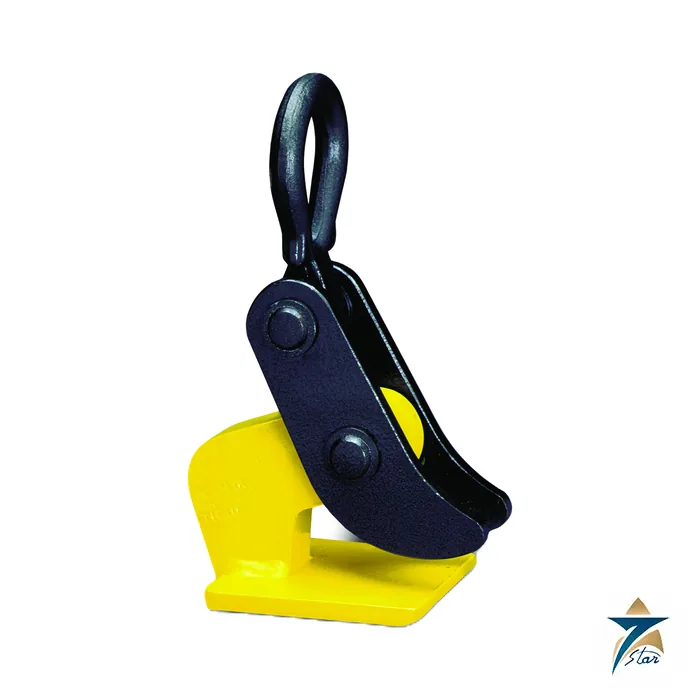
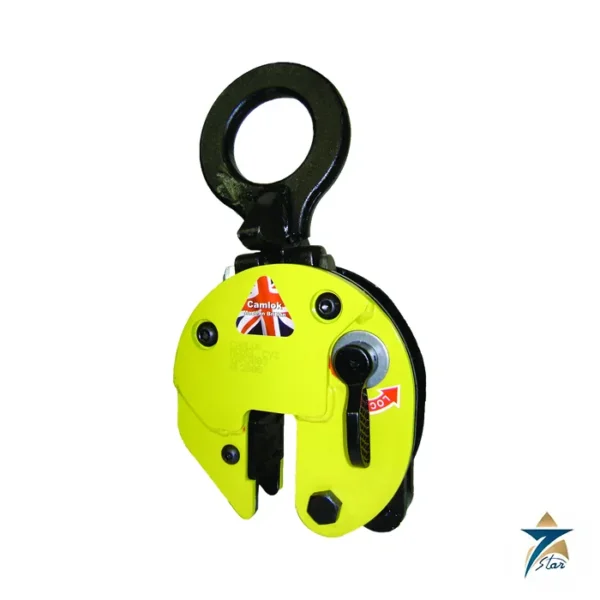
The Camlok CH is the industry-standard horizontal plate clamp in the Camlok range, sold in pairs for carrying single plates and bundles of plates horizontally. The datasheet gives a minimum plate thickness of 5 mm, and the capacity of 1000 to 20000 kg applies to the pair, not to each clamp. A pair used on a two-leg chain sling suits small plates; for larger plates the datasheet recommends two pairs with a spreader beam.
Clamps are supplied as standard with a smooth jaw. A hardened steel serrated jaw is offered for special applications, available on request, and is for single plates only, not bundles. The page lists a 4:1 design safety factor and the operating manual covers both the CH and the related HH clamps.
Features the datasheet and product page give
- Smooth jaws by default; optional hardened steel serrated jaws for special applications
- Single plates or bundles of plates of the same width with straight square sides
- Capacity quoted per pair, 1000 to 20000 kg across the range
- Two-leg chain sling for one pair; two pairs and a spreader beam for larger plates
- Standard and L (large jaw) models for thicker stock
- 4:1 design safety factor on the product page, product group I2
- Service-friendly with exchangeable parts; repairs by a trained person
Technical specification
Pair ratings, jaws and weights
| Model |
Art.-No. |
WLL per pair, kg |
Jaw Z, mm |
Weight per pair, kg |
| CH1 (single jaw) |
N4300000041 |
1000 |
5 – 32 |
8 |
| CH2 |
N50501511 |
2000 |
5 – 32 |
11 |
| CH2L |
N4300000048 |
2000 |
20 – 50 |
12 |
| CH4 |
N50501512 |
4000 |
5 – 50 |
17 |
| CH4L |
N4300000052 |
4000 |
50 – 100 |
23 |
| CH6 |
N50501513 |
6000 |
5 – 75 |
46 |
| CH6L |
N4300000056 |
6000 |
50 – 125 |
56 |
| CH8 |
N50501514 |
8000 |
5 – 75 |
53 |
| CH8L |
N4300000060 |
8000 |
50 – 125 |
60 |
| CH10 |
N50501515 |
10000 |
5 – 100 |
95 |
| CH10L |
N50501516 |
10000 |
50 – 150 |
108 |
| CH15 |
N4300012878 |
15000 |
5 – 100 |
110 |
| CH15L |
N4300012879 |
15000 |
50 – 150 |
123 |
| CH20 |
N4300014489 |
20000 |
5 – 100 |
165 |
| CH20L |
N4300014491 |
20000 |
50 – 150 |
172 |
Pair dimensions, mm
| Model |
A |
B |
C |
D |
E |
F |
G |
| CH1 |
30 |
82 |
60 |
100 |
32 |
44 |
13 |
| CH2 / CH2L |
30 |
82 |
60 |
100 |
50 |
73 |
18 |
| CH4 / CH4L |
40 |
112 |
80 |
100 |
64 |
92 |
25 |
| CH6 / CH6L |
55 |
172 |
100 |
130 |
90 |
130 |
35 |
| CH8 / CH8L |
55 |
172 |
105 |
130 |
90 |
130 |
35 |
| CH10 / CH10L |
65 |
215 |
120 |
150 |
114 |
114 |
37 x 50 |
| CH15 / CH15L |
71 |
230 |
120 |
150 |
114 |
114 |
37 x 50 |
| CH20 / CH20L |
70 |
220 |
118 |
220 |
80 |
120 |
38 x 60 |
Rules for use
| Parameter |
Specification |
| Maximum chain leg angle |
45 degrees from vertical; sling angle must not exceed 45 degrees |
| Plate thickness rule, bundles |
Same width, straight square sides, thicker than 10 percent of maximum jaw capacity |
| Serrated jaws |
Single plates only below 300 Brinell (32 HRC); not for bundles |
| Explosive atmospheres |
Not to be used in potentially explosive atmospheres (manual) |
Pairs, jaw sizes and the L models
Only the CH1 carries a footnote in the datasheet: it is fitted with a single jaw. Models without the L suffix start at 5 mm plate, while the CH2L starts at 20 mm and the other L models at 50 mm. Pick the base model when the stock is within its jaw range and the L model when it is thicker; a 60 mm bundle needs the CH4L (50 to 100 mm) rather than the CH4 (5 to 50 mm). Capacity is the same, but L models weigh more: the CH10L is 108 kg per pair against 95 kg (derived from the table).
Order in pairs and decide at the same time whether serrated jaws are needed, since the datasheet marks them as a special order. The manual forbids moving single sheets or bundles that flex substantially in transit, because they can slip out; for thin sheet that sags use the Camlok THK reversed-jaw clamp.
Fitting and lifting as in the CH/HH manual
Before fitting, confirm the plate is clean of grease, oil, scale and paint and thick enough not to sag badly. For one pair, the two clamps sit on opposite edges in line with the centre of gravity, with the plate pushed in against the back of the mouth; check this again as the sling tightens. Lift slowly, limit swing and side loading, and set the plate down gently.
Operating rules in the CH/HH manual include: crane hooks with a safety latch only; sling leg angle of 45 degrees or less; a spreader beam when more than two clamps are used; no four-leg or endless slings; reposition if the plate leans over 5 degrees; and never use the lifted plate as a hanging point for another lift. Inspection by a competent person is required before first use, after a shutdown or substantial change, and at least every six months, sooner in harsh settings such as galvanizing plants. Moving parts are lubricated with soft grease.
Plate yards, fabrication and bundle handling
CH pairs serve plate stores, laser and plasma cutting bays and structural fabrication shops carrying flat plate from rack to machine, and stockholder yards moving same-width bundles. The manual quotes -20 to +50 degrees C, so a summer GCC yard is inside the range, but heat soak on dark plate or hot-cut stock should be judged against it and the maker consulted for anything harsher. It also asks buyers to consult the maker before use in salty, caustic or alkaline atmospheres.
Related clamps
The product page lists the TTG girder stacking clamp, THK thin-sheet clamp, THS loading horizontal clamp, ACH adjustable horizontal clamp and RH/WH clamps as related. Chain slings and spreader beams are not included and are chosen for the lift.
Frequently asked questions
Is the CH rating per clamp or per pair?
Per pair. The datasheet states that the capacity applies to a pair of lifting clamps.
Can CH clamps lift plate bundles?
Yes, when the plates have the same width, straight square sides and are thicker than 10 percent of the maximum jaw capacity; serrated jaws are for single plates only.
What is the minimum plate thickness?
The datasheet gives 5 mm for the jaws with a 5 mm lower limit.
What sling angle may be used?
The manual says the chain sling angle must not exceed 45 degrees from vertical, and endless or four-leg slings are not allowed.
Does the CH suit hazardous areas?
The manual says the unit must not be used in potentially explosive atmospheres.
Documents and quotation
Hosted for download are the catalogue sheet and the multilingual CH/HH manual. Send the plate sizes, jaw type (smooth or serrated) and working conditions with your RFQ, and we will check them before quoting; Seven Star LLC is an independent supplier in Muscat.



Reviews
There are no reviews yet.