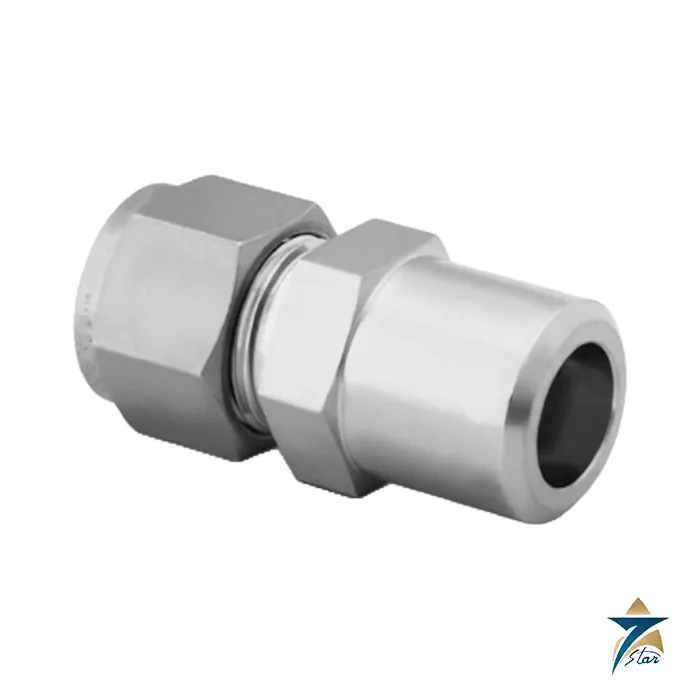
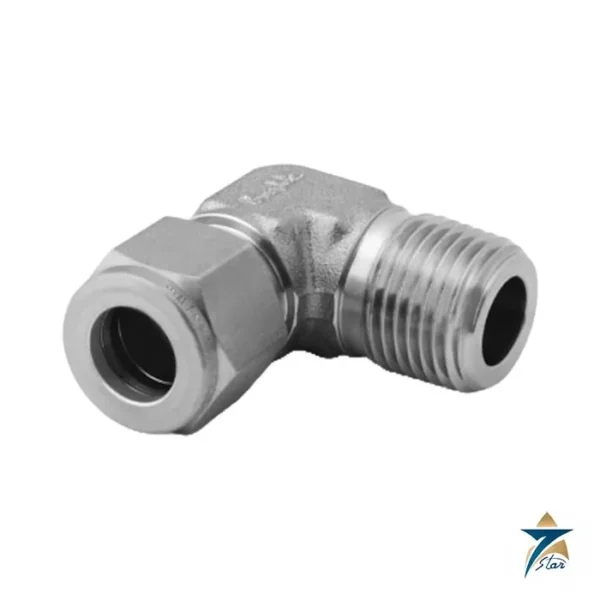
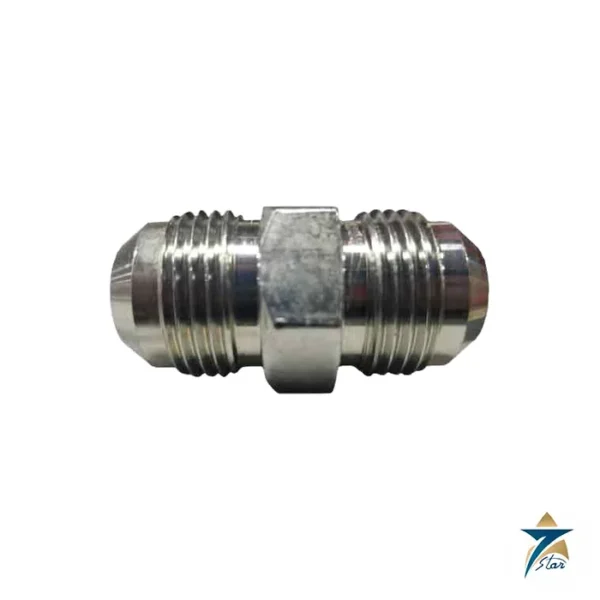
The Swagelok SS-810-1-8W turns a welded pipe branch into a demountable tube connection. One end is a 1/2 in. Swagelok tube-fitting port; the other is a machined male pipe weld stub for 1/2 in. pipe, so the stub is butt-welded into a process line or vessel nozzle and tubing then attaches with ferrules instead of another weld.
Technical specifications
| Parameter |
Specification |
| Part number |
SS-810-1-8W |
| Description |
Male connector with pipe weld end, 1/2 in. tube x 1/2 in. pipe weld |
| Body material |
316 stainless steel |
| Connection 1 |
Swagelok tube fitting, 1/2 in. tube OD |
| Connection 2 |
Pipe weld stub for 1/2 in. pipe (catalog pipe OD 0.840 in.) |
| Dimension A (overall length) |
1.93 in. |
| Dimension D (nut size) |
0.90 in. |
| Weld end bevel |
37.5 degree, as drawn in catalog |
| Pressure basis |
Tube end: tubing rating; weld end: governed by your pipe and weld procedure |
| Cleaning |
Standard cleaning and packaging SC-10 |
Why use a weld end
Threaded connections add leak paths and need sealant. A weld end removes the thread from the pressure boundary entirely, which is attractive in hydrocarbon, steam and high-temperature service where tapered threads can loosen under thermal cycling. The catalog lists the weld connectors in a dedicated section, with tube socket weld, male pipe weld and female pipe weld forms. SS-810-1-8W is the male pipe weld type: the 1/2 in. pipe size column pairs with the 0.840 in. pipe outside diameter shown in the table, and the stub end is prepared with a 37.5 degree bevel for butt welding.
The overall length is 1.93 in., the same A dimension as the NPT male connector SS-810-1-8, so layouts based on the threaded part change little when the weld version is chosen.
Ordering and related weld parts
The trailing W is the weld designator. SS-810-1-8W is therefore 316 stainless, 1/2 in. tube, male connector, 1/2 in. pipe size, weld end. Other weld forms in the catalog are the tube socket weld union (for example SS-810-6-8W) and female pipe weld ends. Choose a socket weld when the mating part is tube and a pipe weld stub when it is pipe.
Weld quality and procedure are the buyer’s responsibility; Swagelok publishes the geometry but the pressure rating of the finished joint depends on the pipe schedule, the weld procedure and any code requirements for the system.
Installing in a system
Weld the pipe end into the system following your approved procedure, allow the joint to cool and clean it, and then make up the tube connection. Do not make up the tube nut while hot or before the body has been secured. Use the Swagelok gap inspection gauge on the first pull-up of 1/2 in. tubing, one and one-quarter turns from finger-tight, and use annealed tubing whose material is softer than or equal to the fitting.
Weld end fittings should be specified at design stage so that pipe schedule, material grade and any post-weld cleaning needs are known. Quote the full part number when requesting a price.
Selection checks for a weld-end connector
Confirm the pipe material and schedule before choosing this part. The SS-810-1-8W body is 316 stainless steel, so the pipe it is welded to should be a compatible stainless grade, and the welding procedure must be qualified for that combination. Check that the pipe wall thickness at the joint matches the weld end geometry shown in the catalog drawing, since a large mismatch in wall thickness makes a sound butt weld harder to achieve. On the tube side, make sure the tubing is 1/2 in. outside diameter, of suitable wall thickness for the system pressure, and of a material and hardness that the Swagelok tubing data recommends. Finally, check that the pressure and temperature of the system are covered both by the tubing rating and by the design of the welded pipe joint.
Welding and post-weld checks
Plan the welding so heat does not damage the tube-fitting end. Remove the nut and ferrules from the body before welding where the procedure allows, keep them clean and in order, and refit them only after the body has cooled. Purge the inside of the joint with inert gas as required by the welding procedure for stainless steel to limit oxidation on the bore. After welding, inspect the joint as the project code demands, which may include visual inspection, dye penetrant or radiography, and clean any discolouration where the process requires it. Pressure test the completed line before the tube connection is put into service.
Making up and remaking the tube connection
Cut the tube square, deburr it, and insert it fully until it bottoms in the fitting body before tightening the nut. Follow the turns from finger-tight given above and check with the gap inspection gauge. When the connection is later disconnected for maintenance, mark the nut and body before loosening so it can be remade in the same position, then tighten it slightly beyond the marked position as described in Swagelok instructions. Keep the weld stub, nut and ferrules free of sand and grit while the joint is open, and cap the tube end to protect it.
Service in Oman and GCC process plants
Instrument and process tubing in Oman is commonly exposed to high daytime temperatures, strong sunlight, airborne sand and, in coastal plants, chloride-laden humid air. These conditions make clean installation particularly important: protect open fittings from dust during construction, and flush lines before start-up. Chlorides combined with heat can attack stainless steel surfaces that are contaminated or poorly cleaned after welding, so remove weld spatter and surface iron contamination carefully, and include tube connections in routine walk-down inspections for any sign of staining, leaks or loose supports.
Documents and quotation
Everything summarised here comes from the Swagelok catalog MS-01-140 (Gaugeable Tube Fittings and Adapter Fittings), which you can download from this page. To receive a quotation, reply with SS-810-1-8W, how many you need and whether special cleaning is required. Weld preparation drawings are in the catalog section for weld connectors.
Before ordering, please confirm the part number, tube size and thread type against the attached catalog, as nearby codes differ by one character. Related items: product category.




Reviews
There are no reviews yet.