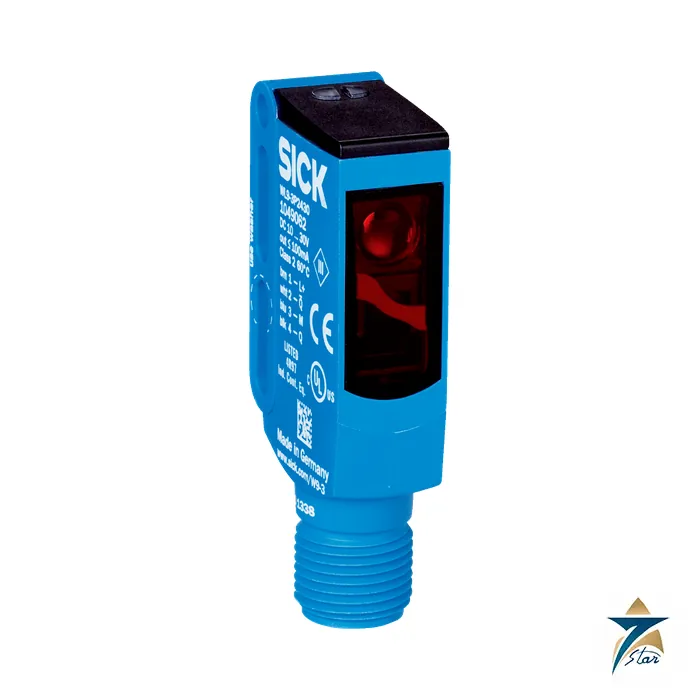
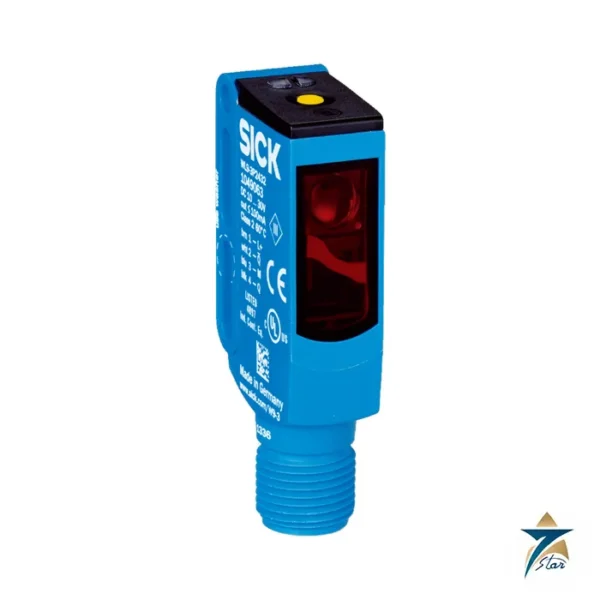
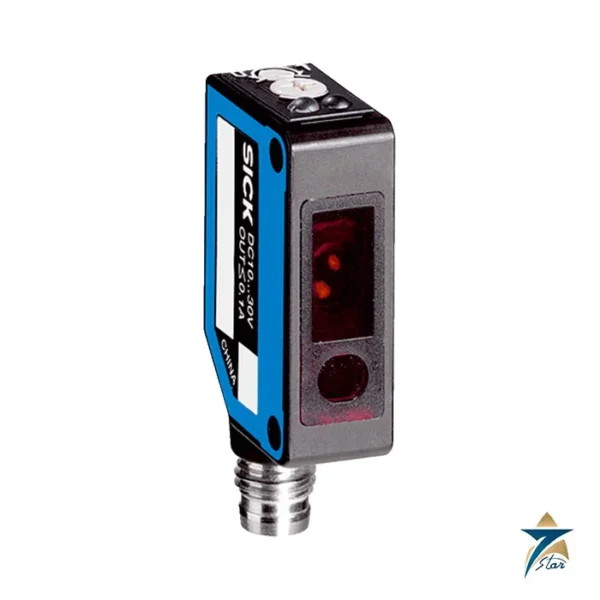
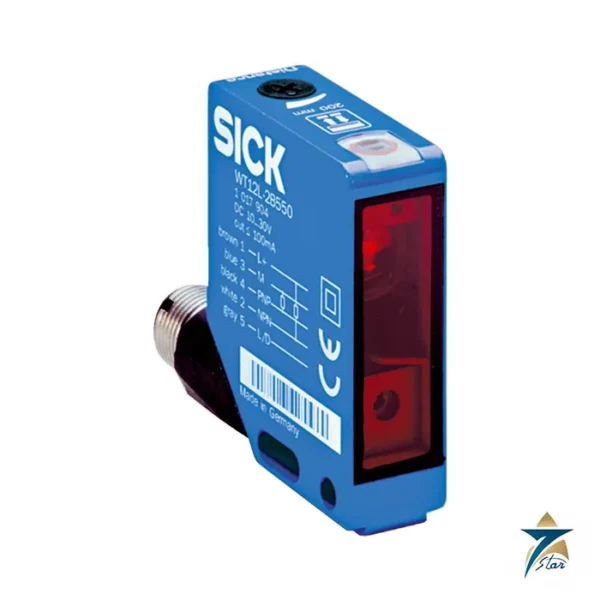
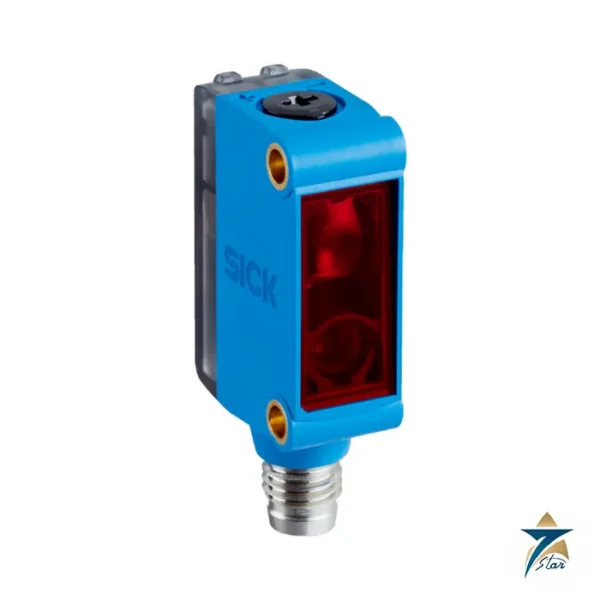
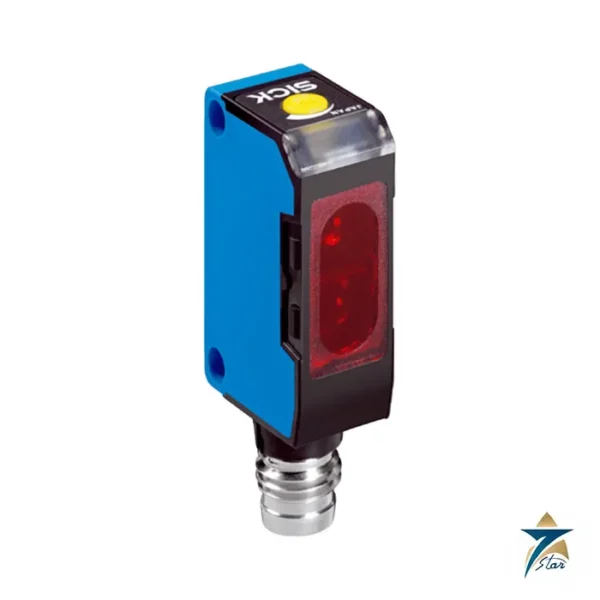
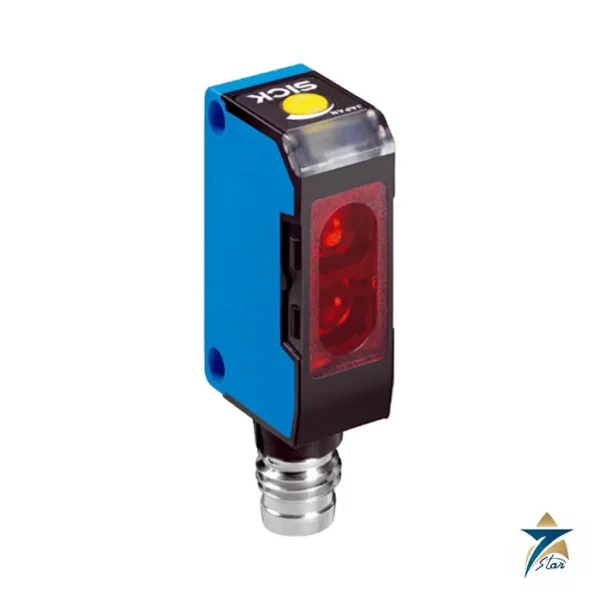
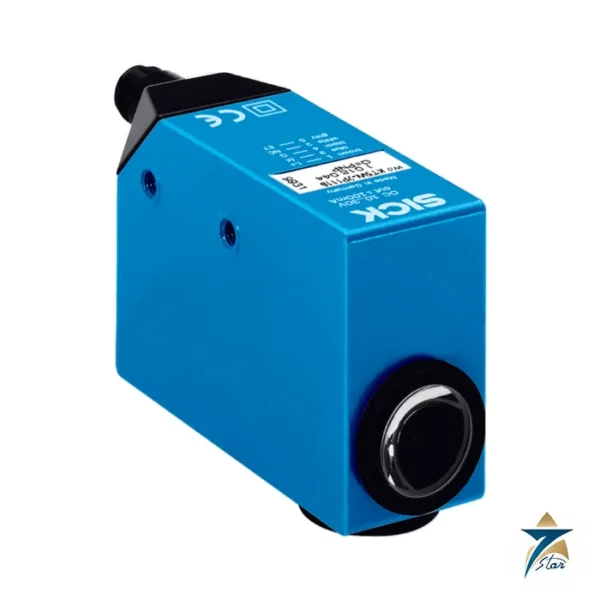
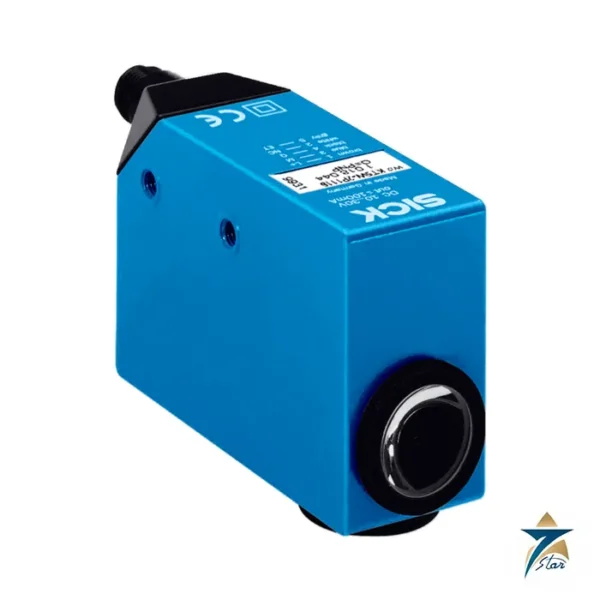
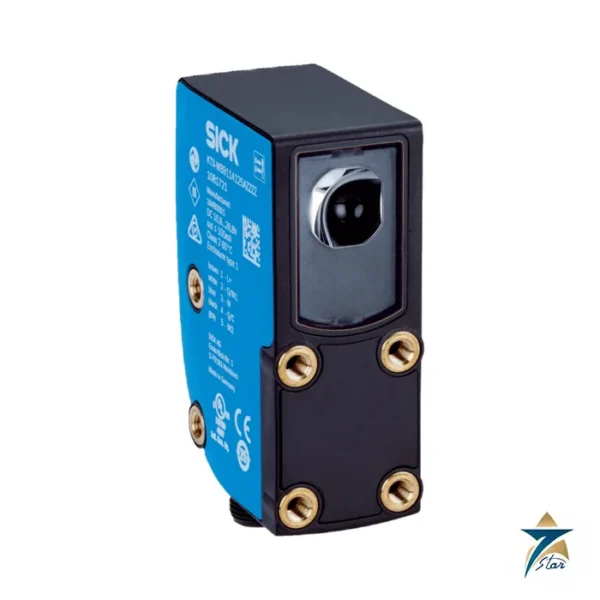
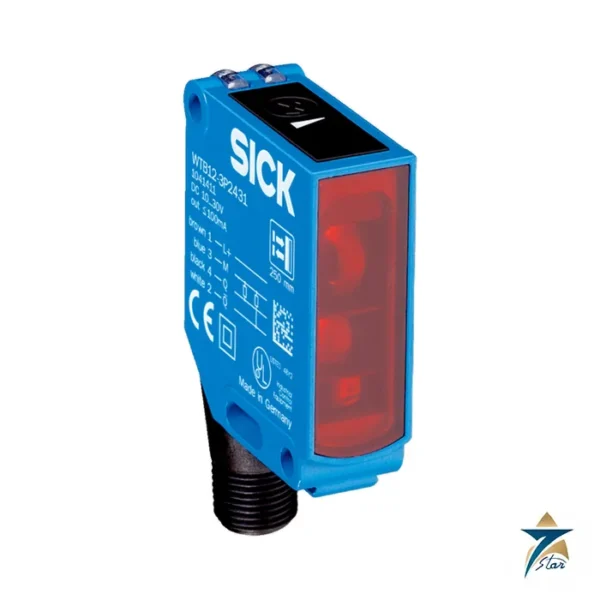
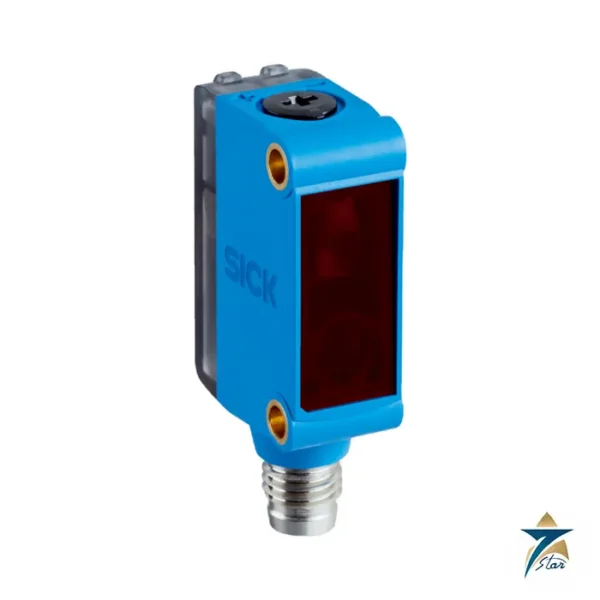
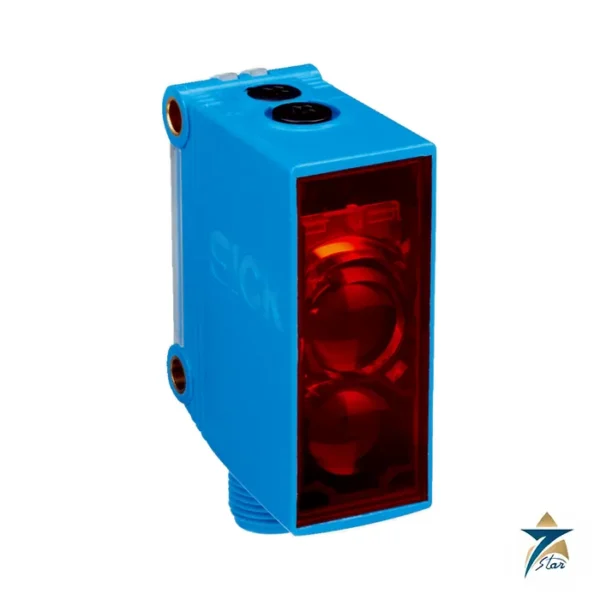
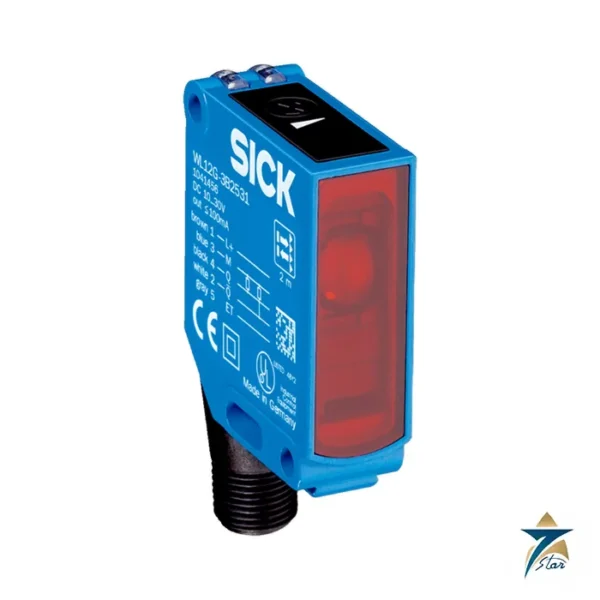
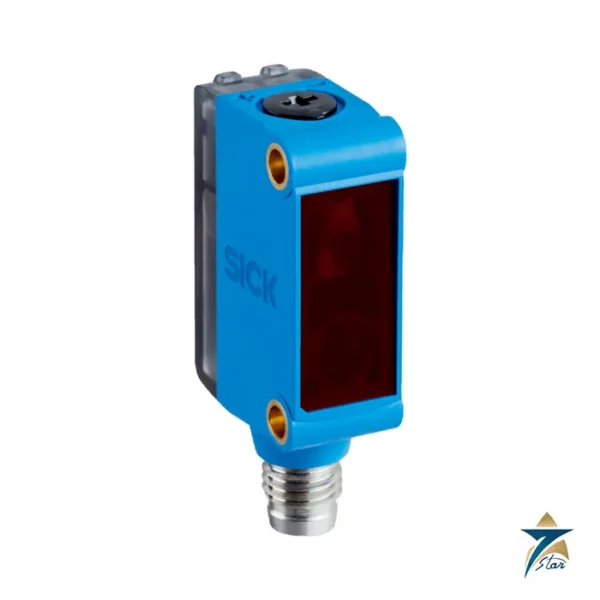
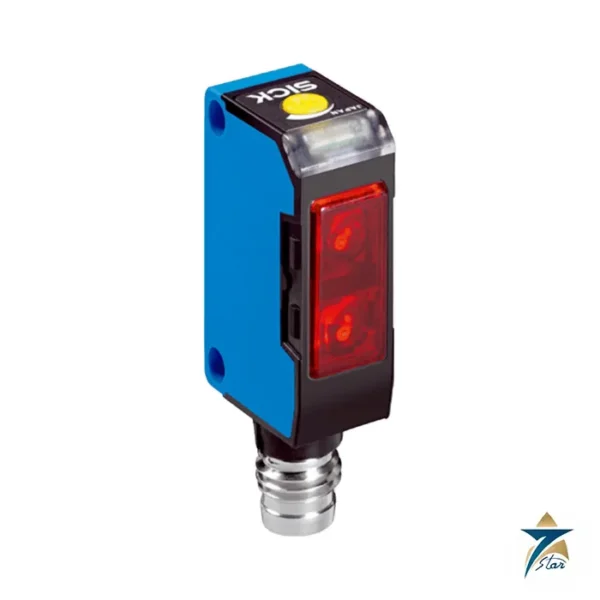
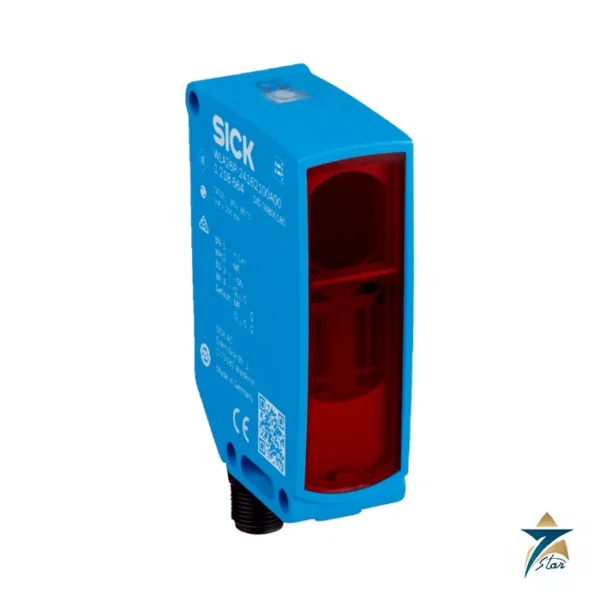
The WL9-3N2430, SICK part no. 1049073, is a retro-reflective sensor from the W9 family: one housing holds emitter and receiver, a reflector returns the beam, and an object in the path switches the output. The sensing range maximum is 0 m … 4 m (sensing range value 0 m … 2.5 m). Output: NPN, light/dark switching; connection: Male connector M12, 4-pin.
W9 retro-reflective operation in practice
The data sheet describes the optics as autocollimation (coaxial), without a reflector minimum distance. In practice that means the sensor can work close to the reflector, which helps in tight machine envelopes, and the receiver looks along the same axis as the sender. A polarisation filter is fitted: it passes only light that the reflector has rotated, so shiny objects are less likely to be mistaken for the reflector. A retro-reflective sensor sends its beam to a reflector and expects it back; an object in the path interrupts the beam and the output changes. Keep the beam path free of film, steam and heavy dust. Contamination eats operating reserve gradually, so cleaning the lens and the reflector belongs in the maintenance plan.
Light source: PinPoint LED, visible red light, light spot Ø 45 mm (1.5 m). Adjustment: none. Response time < 0.5 ms, switching frequency 1,000 Hz.
Technical specifications
| Parameter |
Specification |
| Type code |
WL9-3N2430 |
| Part number |
1049073 |
| EAN |
4047084217920 |
| Product family |
W9 |
| Functional principle |
Photoelectric retro-reflective sensor |
| Functional principle detail |
Without reflector minimum distance (autocollimation/coaxial optics) |
| Dimensions (W x H x D) |
12.2 mm x 52.2 mm x 23.6 mm |
| Housing design (light emission) |
Rectangular |
| Mounting hole |
M3 |
| Sensing range max. |
0 m … 4 m |
| Sensing range |
0 m … 2.5 m |
| Type of light |
Visible red light |
| Light source |
PinPoint LED |
| Light spot size (distance) |
Ø 45 mm (1.5 m) |
| Wave length |
650 nm |
| Adjustment |
None |
| Supply voltage UB |
10 V DC … 30 V DC |
| Ripple |
< 5 Vpp |
| Current consumption |
30 mA |
| Switching output |
NPN |
| Output function |
Complementary |
| Switching mode |
Light/dark switching |
| Output current Imax. |
≤ 100 mA |
| Response time |
< 0.5 ms |
| Switching frequency |
1,000 Hz |
| Connection type |
Male connector M12, 4-pin |
| Circuit protection |
A ; B ; C |
| Protection class |
III |
| Weight |
13 g |
| Polarizing filter |
Yes |
| Housing material |
Plastic, VISTAL® |
| Optics material |
Plastic, PMMA |
| Enclosure rating |
IP66; IP67; IP69K |
| Ambient operating temperature |
–40 °C … +60 °C |
| Ambient temperature, storage |
–40 °C … +75 °C |
| MTTFD |
2,894 years |
| DCavg |
0 % |
| Declarations and certificates in the data sheet |
EU declaration of conformity; UK declaration of conformity; ACMA declaration of conformity; Moroccan declaration of conformity; China RoHS; China Compulsory Product Certification (CCC) exempt; ECOLAB certificate; cULus certificate; Photobiological safety (DIN EN 62471) certificate |
Type code WL9-3N2430 and part number 1049073
WL9-3N2430 is the type code and 1049073 the part number. The prefix WL9 covers more than one electrical version, so a replacement should be matched by part number rather than by the visible housing, and the reflector must be considered separately.
Neighbouring versions of this family that SICK lists as active, with their part numbers:
- WL9-3N2432 (part no. 1049074)
- WL9L-3N2432 (part no. 1058173) – Light source: Laser
- WL9G-3N2432 (part no. 1054152)
- WL9-3P2432 (part no. 1049063) – Switching output: PNP
- WL9-3P2430 (part no. 1049062) – Switching output: PNP
Mounting, wiring and alignment notes
Electrical supply: 10 V DC … 30 V DC. Environmental limits: IP66; IP67; IP69K and –40 °C … +60 °C ambient in operation. The body measures 12.2 mm x 52.2 mm x 23.6 mm and weighs 13 g. No reflector is listed as supplied, so add a suitable reflector to the order and check the operating reserve against the distance you need. Verify the supply and ripple of your 24 V DC source against the limits in the table; marginal supplies are a frequent cause of random switching.
Selection checks for a retro-reflective application
Before choosing the WL9-3N2430 for a new position, confirm that a retro-reflective arrangement suits the task. The sensor needs a reflector on the opposite side of the detection path, so there must be a stable surface to mount it on and a clear line between the two. Consider the size of the smallest object to be detected compared with the light spot at the working distance, and whether objects may be transparent or highly reflective. The polarisation filter helps with shiny objects, but very glossy or wrapped products should still be tested on the actual line before the design is fixed.
Electrically, check that the controller input accepts an NPN signal. Some PLC input cards are designed for PNP sensors, and an NPN sensor connected to a sourcing input will not switch the input as expected. The PNP versions listed above are the alternative when the input card requires it.
Commissioning and alignment on the machine
Mount the sensor and reflector rigidly, using the M3 mounting hole and a mounting surface that will not move under machine vibration. Align the visible red light spot on the centre of the reflector, then check the switching with and without an object in the beam at the actual working distance. Run the machine at normal speed and confirm that the response time is adequate for the product spacing. Note the alignment position, for example with a marking on the machine frame, so that a replacement sensor can be set up the same way.
Dust, heat and humidity on GCC production lines
Packaging, bottling and material handling plants in Oman often see airborne dust, high hall temperatures and, in coastal locations, humid air or condensation. Dust settling on the lens and reflector reduces the received light gradually until the sensor starts to switch erratically, so set a cleaning interval that matches the dust level of each area rather than relying on a single plant-wide schedule. Check the ambient limit in the table against the conditions near ovens, shrink tunnels or sunlit loading bays, where local temperatures can exceed the general hall temperature.
Maintenance routine
Clean the optical surfaces with a soft cloth, check that the sensor and reflector have not been knocked out of alignment, and inspect the M12 connector and cable for damage. When an intermittent fault appears, look at alignment, contamination and supply quality before replacing the sensor.
Documents and quotation
We attach SICK’s own data sheet for part no. 1049073 (WL9-3N2430) as an unaltered PDF; use it to compare dimensions, connections and ratings with the device on your machine. Send the type code and part number with quantity and delivery location through the RFQ form and we will quote. Related items are listed under Sensors & Transmitters. Please verify the variant against the nameplate of the device you are replacing, since similar types differ in small details. The data sheet is the authority.


Reviews
There are no reviews yet.