W250-2 compact sensor with 150 to 500 mm suppression range
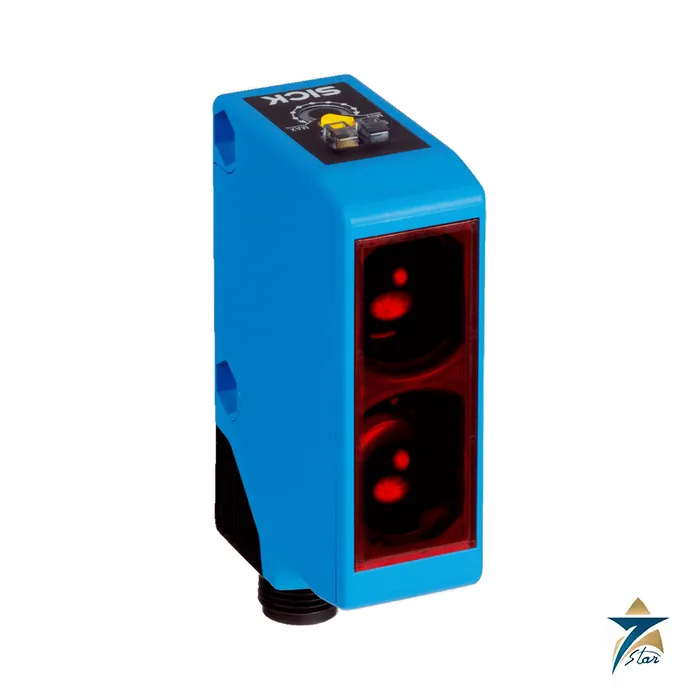
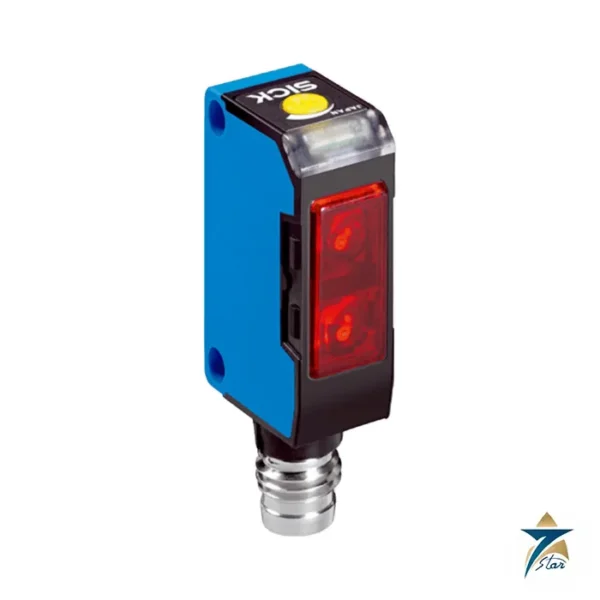
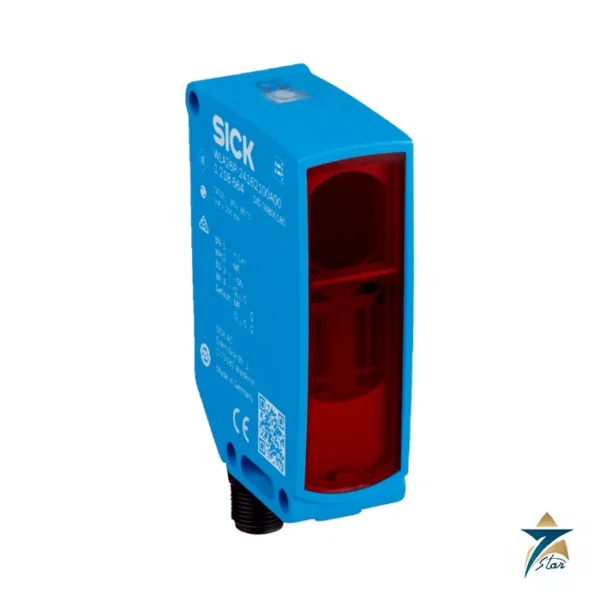
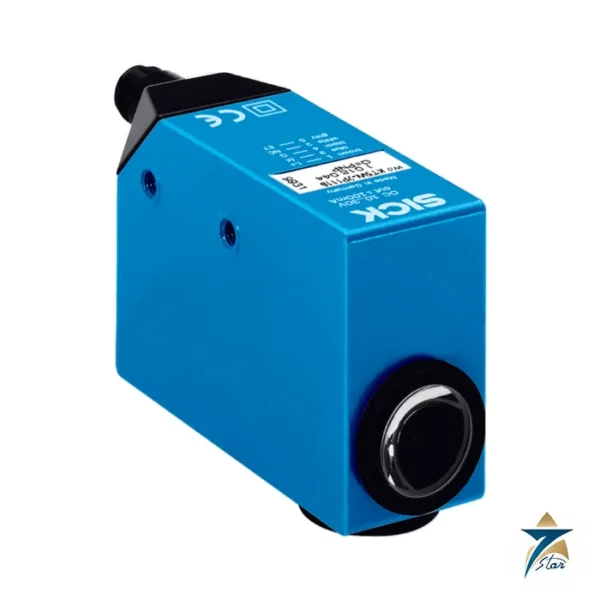
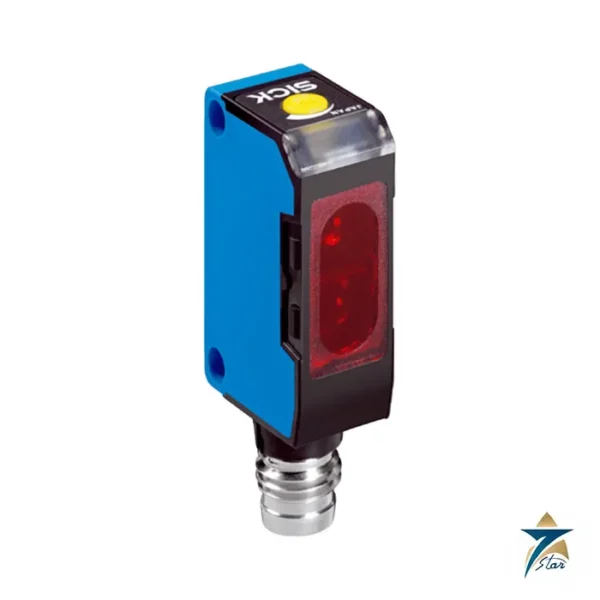
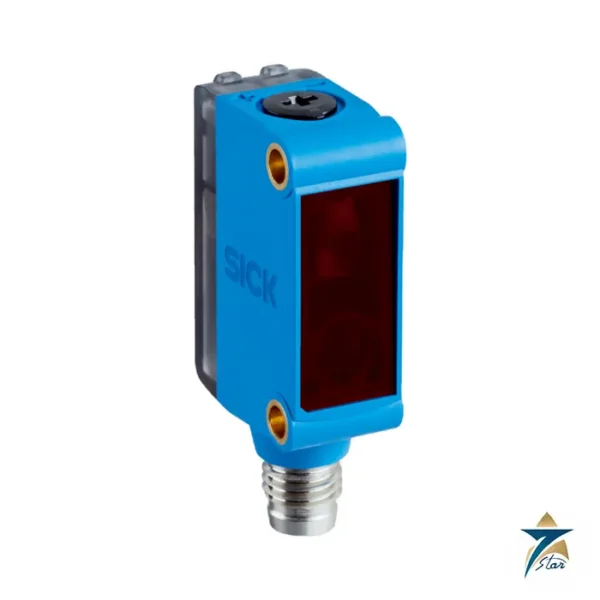
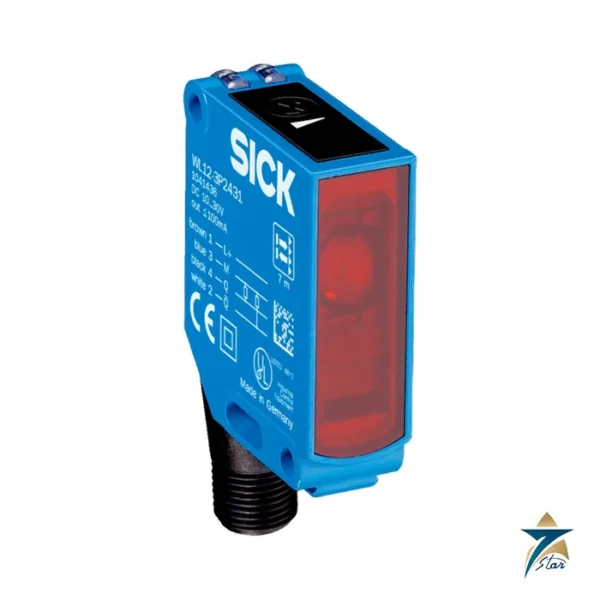
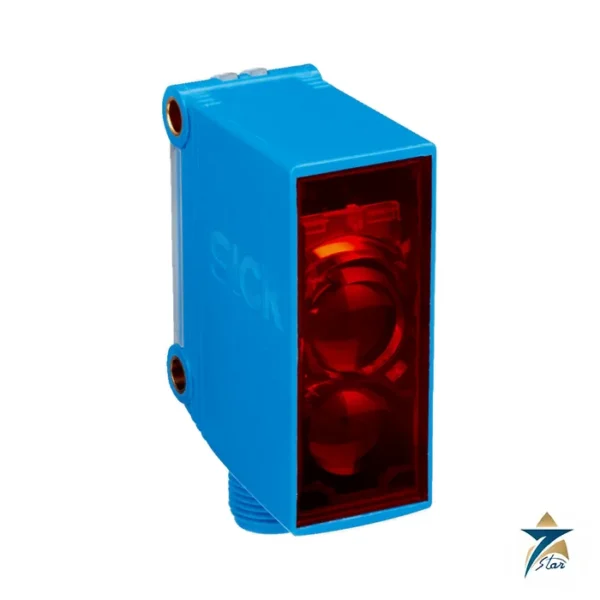
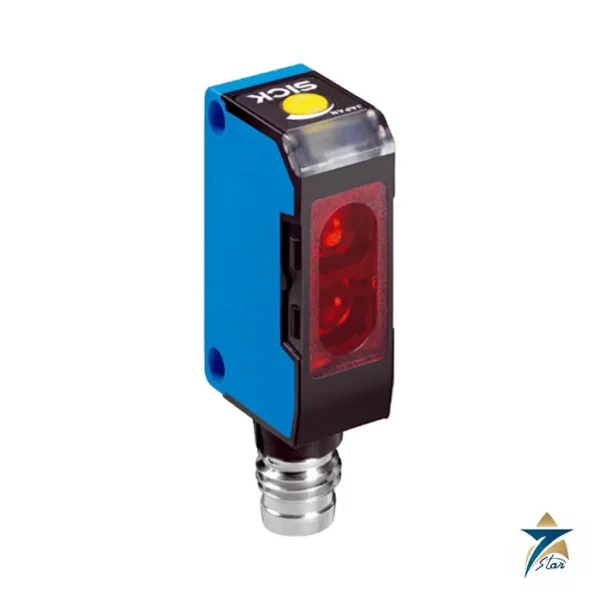
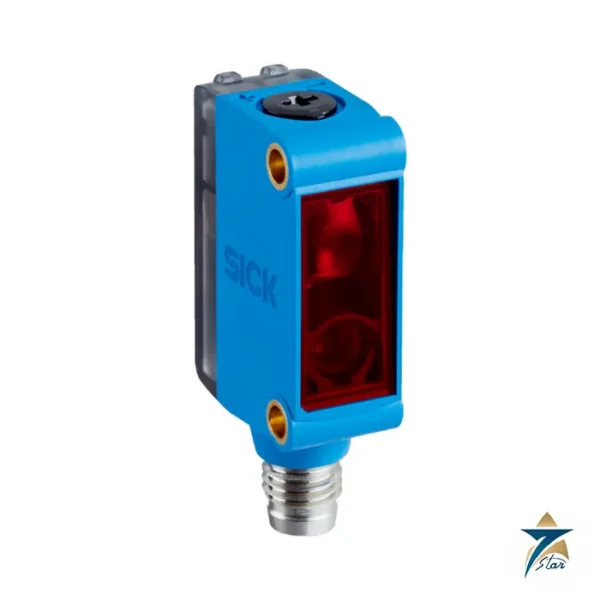
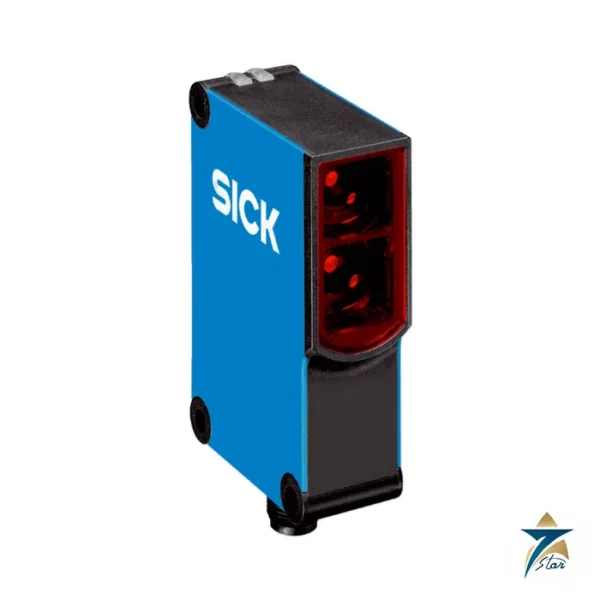
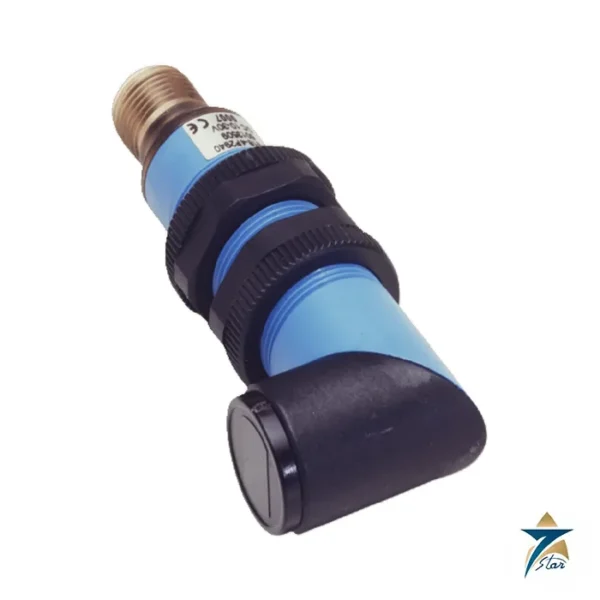
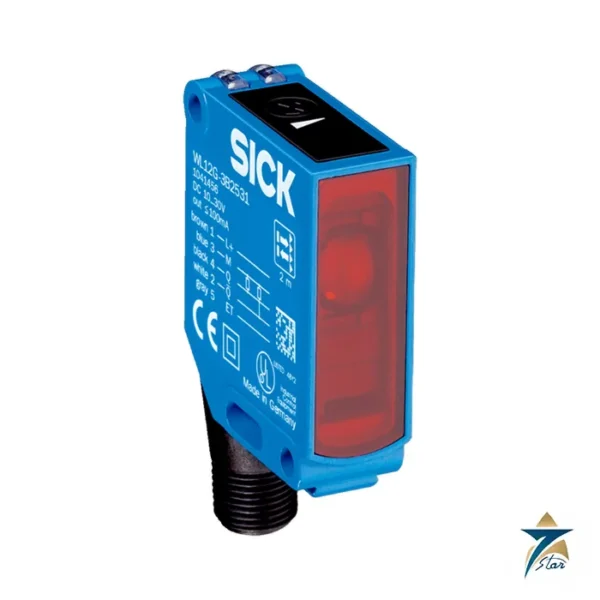
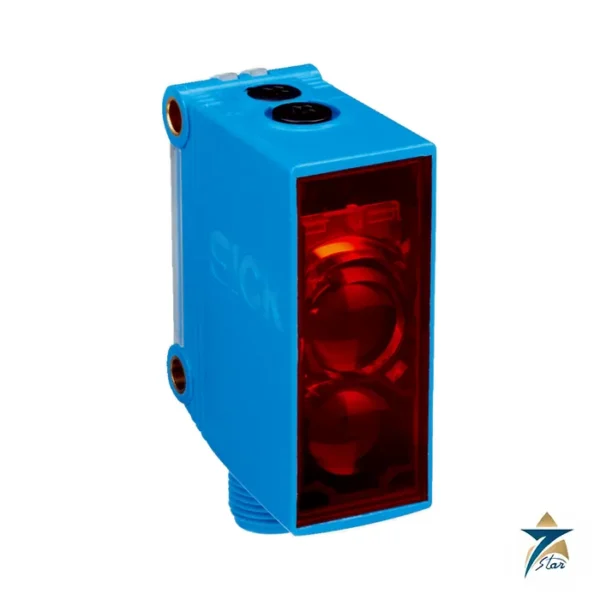
The SICK WTB250-2P2441 (part no. 6044682) is a W250-2 compact photoelectric sensor with background suppression for a 150 mm to 500 mm sensing range. A visible red LED spot of 30 mm diameter at 500 mm is projected through PMMA optics, and a two-turn potentiometer with position indicator sets the switching distance. The 20 mm by 65 mm by 43.9 mm plastic housing carries an M12 4-pin connector that can be rotated through 90 degrees, helping with cable routing.
The BEF-W250 mounting bracket is supplied.
Technical specifications
| Parameter |
Specification |
| Manufacturer |
SICK |
| Type / family |
WTB250-2P2441 / W250-2 |
| Part no. |
6044682 |
| Functional principle |
Photoelectric proximity sensor, background suppression |
| Sensing range |
150 mm … 500 mm (90 % remission) |
| Light source / type |
LED, visible red light |
| Light spot size |
30 mm diameter at 500 mm; focus approx. 3 degrees |
| Adjustment |
Potentiometer, 2 turns, with position indicator |
| Supply voltage UB |
10 V DC … 30 V DC |
| Ripple |
below 5 Vpp |
| Current consumption |
35 mA |
| Output |
PNP, light/dark switching selectable via control cable L/D |
| Output current Imax. |
100 mA |
| Response time / switching frequency |
3 ms max. / 160 Hz |
| Protection class |
III |
| Dimensions (W x H x D) |
20 mm x 65 mm x 43.9 mm |
| Housing / optics |
Plastic ABS / plastic PMMA |
| Connection |
Male connector M12, 4-pin (rotatable by 90 degrees) |
| Weight |
40 g |
| Enclosure rating |
IP67 |
| Items supplied |
BEF-W250 mounting bracket |
| EMC |
EN 60947-5-2 |
| Ambient temperature |
-25 °C … +55 °C operation; -40 °C … +70 °C storage |
| MTTFD |
516 years (DCavg 0 %) |
| UL file no. |
NRKH2.E300503 and NRKH8.E300503 |
Choosing between W250 variants
The WTB250-2P2441 is the background-suppression version of the W250-2 housing, and the retro-reflective WL250-2P2431 of the same family is also in this order list. Use the suppression type when only one side of the object can be reached and the background is unpredictable.
The sensor switches in 3 ms and up to 160 Hz, which is adequate for conveyors with moderate belt speed but not for very fast product streams. For high speeds, a sensor with 0.5 ms response, such as the W150 or W9 series, is better suited. The data sheet warns that AC/DC types of this family may cause radio interference in residential areas; this DC type works within industrial EMC limits stated as EN 60947-5-2.
Ordering reference
Quote WTB250-2P2441 and part no. 6044682. The bracket BEF-W250 is in the delivery; reflectors are not needed for this proximity type. Where a different connector, cable version or sensing range is required, SICK lists other W250-2 types on sick.com.
Application checks before selecting the WTB250-2P2441
Background suppression works by evaluating the distance to the object, which makes the sensor useful when items of different colours pass in front of a varied background. Even so, the target surface still matters. Very dark, glossy or transparent objects reflect light differently from the white reference used for the data sheet range, so test with real production samples where possible. Check the minimum and maximum object distances along the conveyor, allow a margin between the farthest object position and the nearest background surface, and confirm that the light spot is smaller than the object at the intended distance.
Also review the electrical interface: the PNP output must match the input card of the PLC or controller, and the light/dark switching choice made with the L/D control wire should be agreed with the programmer before installation.
Mounting and alignment on the line
Fix the sensor with the supplied BEF-W250 bracket on a rigid part of the machine frame, away from vibration sources where possible. Point the beam so that it meets the object surface as squarely as practical and so that shiny machine parts behind the object are not directly in its path. Use the rotatable connector to lead the cable away along the frame without tight bends, and secure the cordset so that it cannot be caught by moving products.
Setting the switching distance
With a typical object at the detection point, turn the potentiometer and watch the output change, then repeat with the background alone to make sure the sensor does not switch on it. Setting the point between these two positions gives the most stable operation. Note the indicator position after adjustment so it can be restored if the setting is changed accidentally during cleaning.
Use in Omani factories and warehouses
Many packaging halls and warehouses in Oman are not fully air-conditioned, and summer temperatures near roofs or around ovens and shrink tunnels can approach the upper operating limit. Mount the sensor away from hot air streams and direct sunlight through doors or skylights, as strong ambient light can also disturb optical sensing. Dust from cartons, cement, flour or sand settling on the optics reduces the received signal, while condensation can form when cold-store goods meet humid air.
Simple maintenance routine
Wipe the front optics with a soft, clean cloth at intervals that suit the dust level of the area, avoiding abrasive cleaners that could scratch the plastic. Check that the bracket has not been knocked out of position, inspect the M12 cordset for damage, and re-test detection with a sample object after any cleaning or mechanical work on the conveyor.
Documents and quotation
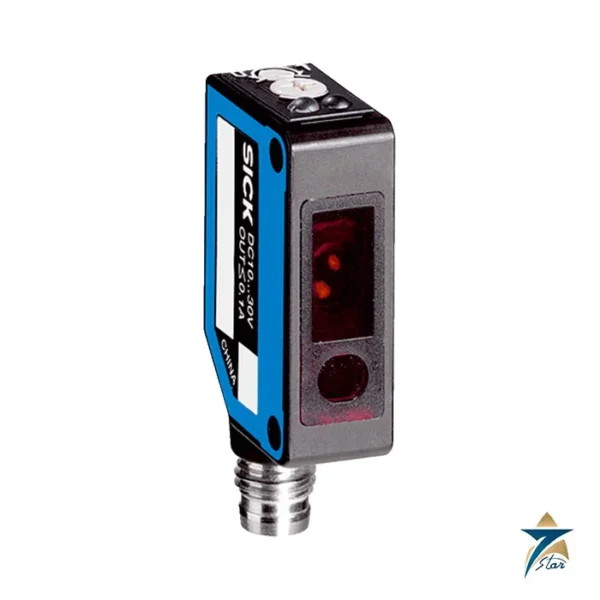
The official SICK data sheet for WTB250-2P2441 (part no. 6044682) is attached to this page, and the figures in the table above are taken from it. Seven Star LLC is an independent supplier in Muscat and quotes SICK items against a written request. In your enquiry, give the exact type code, part number, quantity and delivery location, and say whether you need accessories such as a mounting bracket or matching M12 cordset. Data sheets carry a note that content is subject to change without notice, so confirm current details before ordering. More items are listed under sensors and transmitters, and you may also look at the SICK WTB4-3 miniature photoelectric sensor.




Reviews
There are no reviews yet.