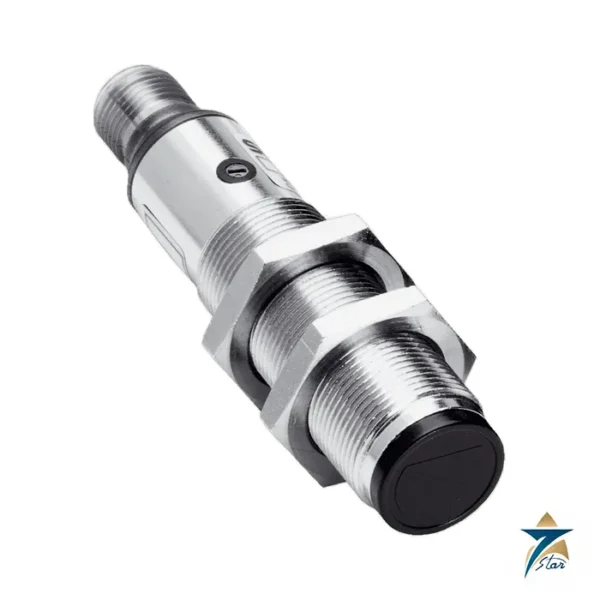
V18 laser reflex sensor for long beams and small objects
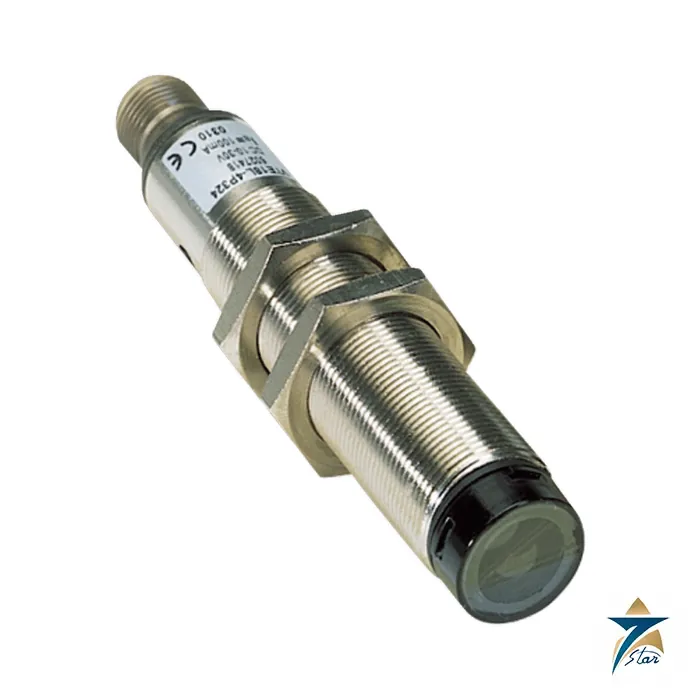
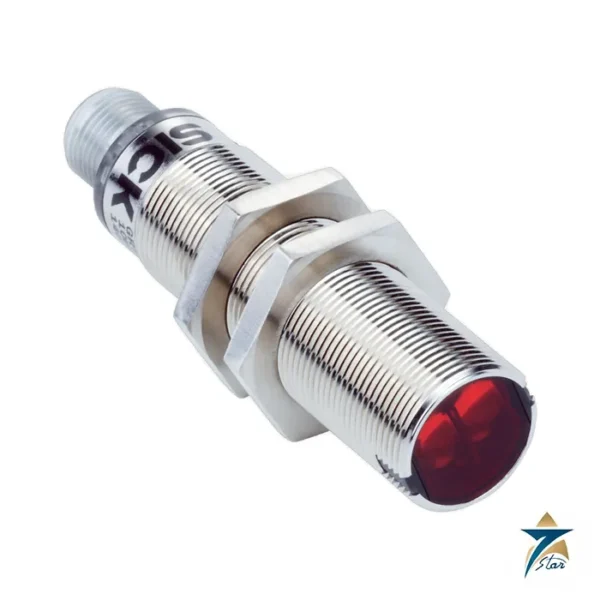
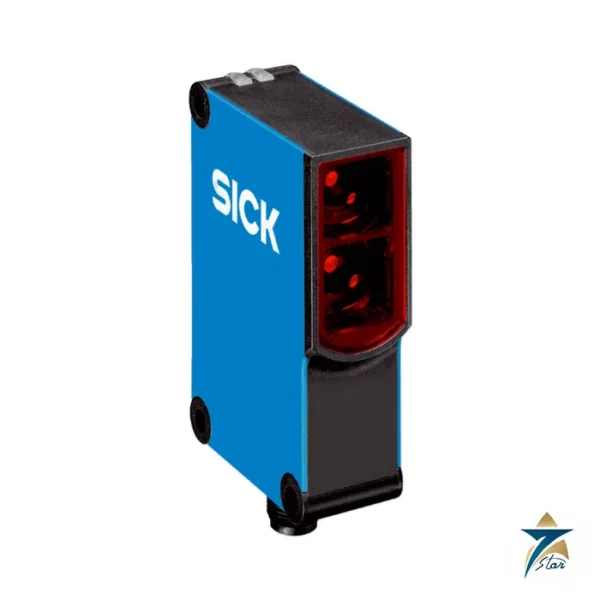
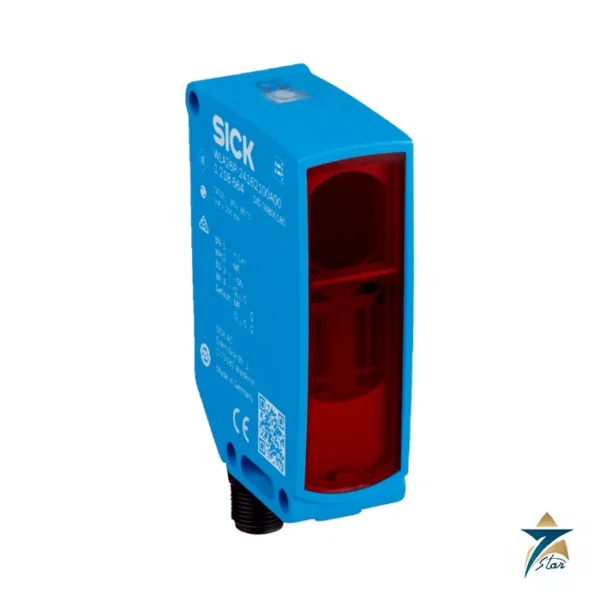
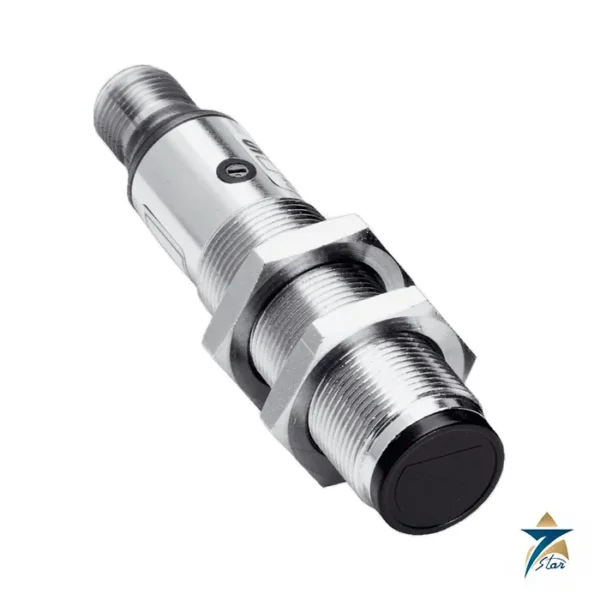
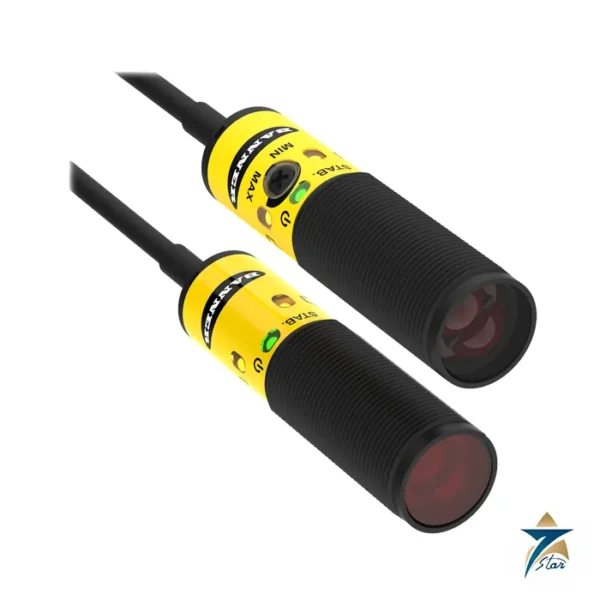
The SICK VL18L-4P324 (part no. 6027430) is a V18 laser retro-reflective sensor with a range of 0.1 m to 30 m (maximum 35 m) using the P250F fine triple reflector. The visible red laser is class 1 (IEC 60825-1) with 0.4 mW output power, the beam divergence is only 0.04 degrees, and the spot at 35 m is 9 mm in diameter. The nickel-plated brass and PC housing is 97.7 mm long with an M18 x 1 thread.
Sensitivity can be taught via a button or electronically through control input C, and detecting small objects is listed as a special application.
Technical specifications
| Parameter |
Specification |
| Manufacturer |
SICK |
| Type / family |
VL18L-4P324 / V18 |
| Part no. |
6027430 |
| Functional principle |
Photoelectric retro-reflective sensor, dual-lens system |
| Sensing range max. / typical |
0.1 m … 35 m / 0.1 m … 30 m (reflector P250F) |
| Polarising filter |
Yes |
| Light source / type |
Laser, visible red light, 650 nm |
| Laser class / power |
Class 1 (IEC 60825-1) / 0.4 mW |
| Light spot / divergence |
9 mm diameter at 35 m / 0.04 degrees |
| Special application |
Detecting small objects |
| Adjustment |
Single teach-in button (manual) or electronic teach via control input C (0 V) |
| Supply voltage UB |
10 V DC … 30 V DC |
| Ripple |
10 % |
| Current consumption |
20 mA |
| Output |
PNP, light/dark switching via control input C |
| Output current Imax. |
100 mA |
| Response time / switching frequency |
0.625 ms max. / 800 Hz |
| Protection class |
III |
| Dimensions |
M18 x 1 thread; 18 mm x 18 mm x 97.7 mm |
| Housing / optics |
Metal, nickel-plated brass/PC / plastic PC with protective glass pane |
| Connection |
Male connector M12, 4-pin |
| Weight |
60 g |
| Enclosure rating |
IP67 |
| Standards |
CDRH-conform (0312012-00) |
| Ambient temperature |
-15 °C … +55 °C operation; -25 °C … +70 °C storage |
| MTTFD |
451 years (DCavg 0 %) |
Long beams with a narrow laser spot
A beam divergence of 0.04 degrees keeps the spot small across the whole 30 m range, which allows detection of small objects at long distances and between narrow gaps, such as rails, racking and gates. The P250F fine-prism reflector is the recommended partner, since a standard reflector would lose part of the narrow beam between prisms.
At this distance alignment is critical: a small angular error moves the beam off the reflector. Use the teach button once the reflector is aligned, and fix both parts on rigid brackets. The data sheet carries the usual laser warning not to look into the beam, and Seven Star LLC recommends including the sensor in the machine laser-safety documentation.
Ordering information
Order VL18L-4P324, part no. 6027430. The reflector P250F (5308843) is a separate article in this order list. Axial LED siblings in the same M18 family have shorter ranges and different adjustment, so check the reference reflector and range before buying.
Mounting and alignment over long distances
Fix the sensor by its M18 thread in a rigid holder, and mount the reflector on a bracket that will not flex when doors close, conveyors run or forklifts pass. Vibration that looks small near the sensor becomes a large movement of the spot at the far end of the beam. Align roughly by eye, then use the visible red spot to centre the beam on the reflector, and only then carry out the teach-in so the sensitivity is set for the real installed position. Keep the beam path clear of shiny surfaces such as polished steel or stretch-wrapped pallets that could return light; the polarising filter helps here, but a clean layout is still the best protection against false signals.
Electrical connection and commissioning
Connect through the 4-pin M12 male connector using a shielded or industrial-grade cordset routed away from motor and power cables. Check that the supply stays within 10 to 30 V DC with acceptable ripple, and that the PNP output load is below the maximum output current. Decide whether the application needs light or dark switching and set it through control input C. Test the response with the actual target object at the near, middle and far parts of the beam, because small objects can behave differently near the reflector than near the sensor.
Dust, heat and sun in Oman and the GCC
On long outdoor or semi-outdoor beams, dust on the front glass or on the reflector is the most common reason for a falling signal. Plan cleaning of both optical faces with a soft cloth and mild cleaner, avoiding solvents that could harm plastic optics. The operating range ends at +55 °C, and a sensor in direct summer sun on a metal frame can run hotter than the surrounding air, so shade the housing or choose a mounting point out of the sun where possible. Low-angle sunlight at dawn and dusk can also shine into the receiver; aim the beam so neither end faces east or west into the sun if the layout permits. In humid coastal areas, condensation on the reflector can scatter light, so allow for it when testing the margin.
Routine checks
As part of planned maintenance, confirm alignment, inspect the M12 connector for corrosion or loosening, and check that brackets have not been knocked. If the output becomes unstable, clean the optics and repeat the teach-in before replacing parts. Keep the laser warning label legible and record the sensor in the machine safety file.
Before ordering
Confirm the beam length, the size of the smallest object to be detected, the supply voltage and output type your controller expects, and whether a reflector, bracket or cordset is needed with the sensor. Sharing a sketch of the layout helps us check the application against the SICK data sheet.
Documents and quotation
This page links the original SICK data sheet for VL18L-4P324 (part no. 6027430). Values in the specification table were copied from that document. Seven Star LLC supplies SICK products as an independent supplier in Muscat; send your request with the exact type and part number, the quantity and the delivery point, and mention any need for a reflector, bracket or mating cordset. Please verify the details with us before placing an order, since the manufacturer may change data without notice. See also sensors and transmitters and the SICK WTB4-3 miniature photoelectric sensor.




Reviews
There are no reviews yet.