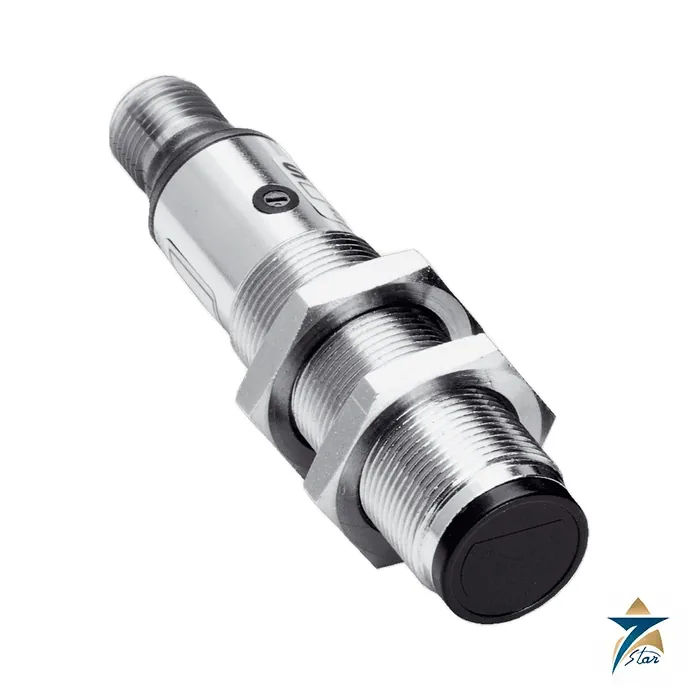
V18 metal-housed reflex sensor with 270-degree sensitivity trimmer
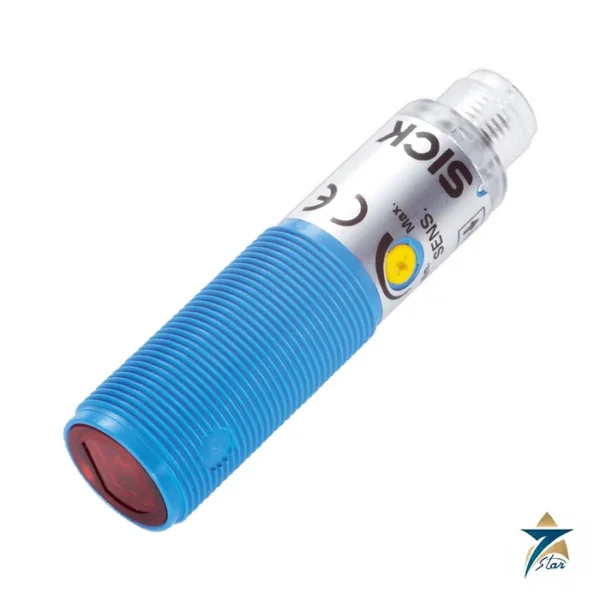
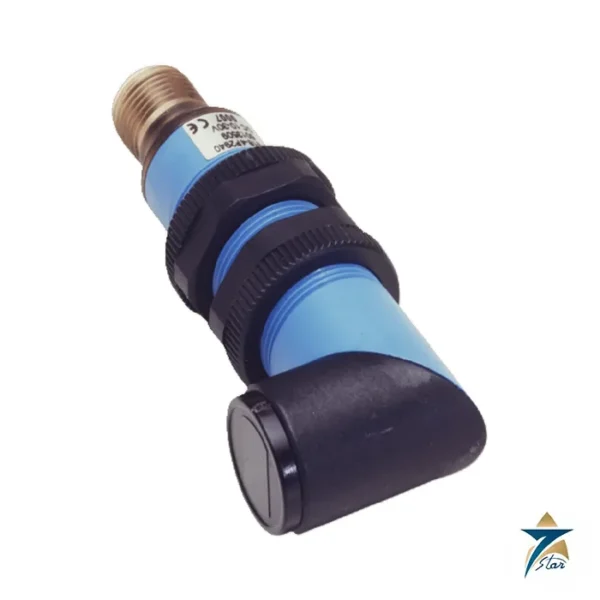
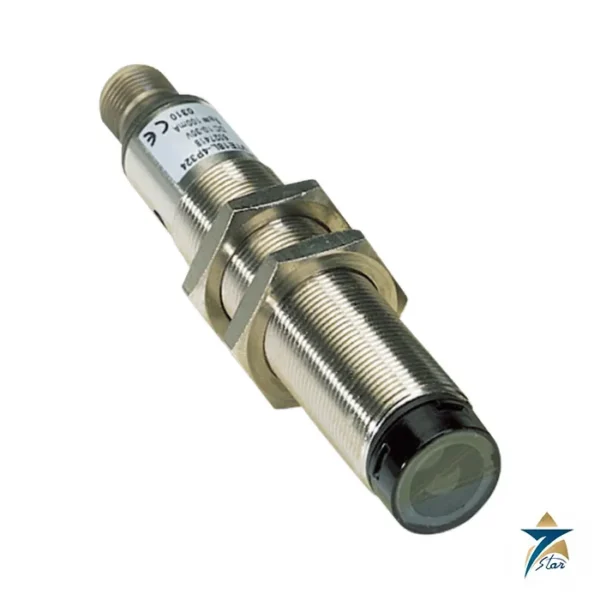
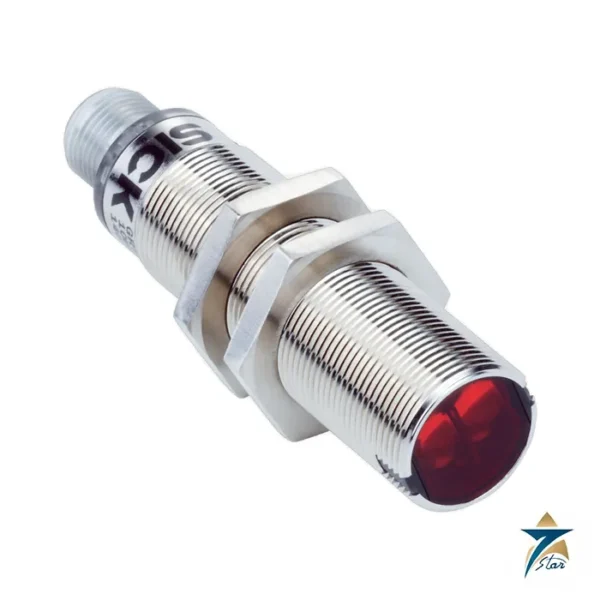
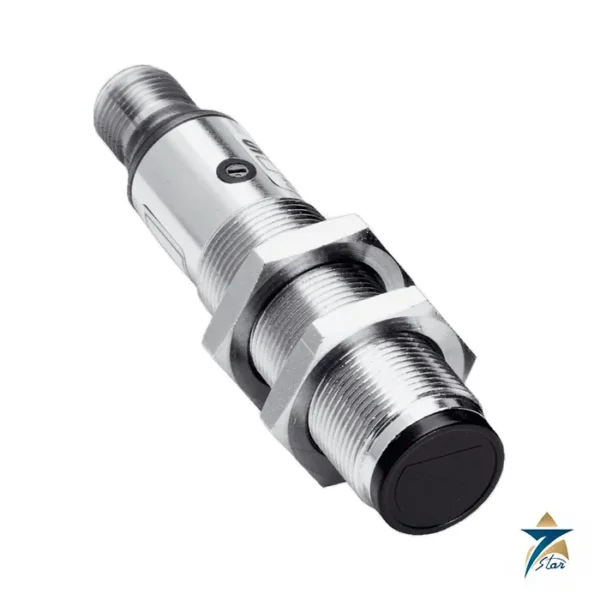
The SICK VL18-4P3240 (part no. 6013551) is the nickel-plated brass version of the V18 retro-reflective sensor, with axial optics and a 78 mm M18 x 1 housing. The metal body suits environments with mechanical knocks. Range is 0.05 m to 3 m typical (maximum 3.7 m) with a C110A reflector, a potentiometer with 270 degrees of travel sets sensitivity, and the PNP output is selectable between light and dark switching via the L/D control cable.
SICK lists this type in its catalogue archive, so confirm availability and successor information.
Technical specifications
| Parameter |
Specification |
| Manufacturer |
SICK |
| Type / family |
VL18-4P3240 / V18 |
| Part no. |
6013551 |
| Functional principle |
Photoelectric retro-reflective sensor |
| Sensing range max. / typical |
0.05 m … 3.7 m / 0.05 m … 3 m (reflector C110A) |
| Polarising filter |
Yes |
| Light source / type |
LED, visible red light; focus approx. 2.8 degrees |
| Light spot size |
150 mm diameter at 3 m |
| Adjustment |
Potentiometer, 270 degrees (sensitivity) |
| Supply voltage UB |
10 V DC … 30 V DC |
| Ripple |
10 % |
| Current consumption |
30 mA |
| Output |
PNP, light/dark switching via L/D control cable |
| Output current Imax. |
100 mA |
| Response time / switching frequency |
2 ms max. / 250 Hz |
| Protection class |
III |
| Dimensions |
M18 x 1 thread; 18 mm x 18 mm x 78 mm |
| Optical axis |
Axial |
| Housing / optics |
Metal, nickel-plated brass / plastic PMMA |
| Connection |
Male connector M12, 4-pin |
| Weight |
120 g |
| Enclosure rating |
IP67 |
| Ambient temperature |
-25 °C … +70 °C operation |
| MTTFD |
708 years (DCavg 0 %) |
| UL file no. |
NMFT2.E175606 |
Brass housing, same optics
The optics and electronics match the plastic VL18-4P3940 and the axial plastic VL18-4P3640, but the brass body weighs 120 g against 100 g and withstands clamping and impact better. Choose it for brackets that clamp the sensor tightly or for areas where plastic housings are damaged by tools.
Adjust the sensitivity trimmer with the C110A reflector in place. Because the output is PNP, the sensor connects to a standard 24 V DC input; confirm the wiring for the L/D control cable in the connection diagram of the data sheet.
Lifecycle note and ordering
Order VL18-4P3240 with part no. 6013551. The type is in SICK archive status on sick.com; Seven Star LLC can quote it subject to confirmation of availability, and a successor must be confirmed by SICK.
Positioning the sensor and the C110A reflector
A retro-reflective system has two parts, and both need a solid mounting. Fix the VL18-4P3240 on one side of the conveyor or doorway and the reflector on the opposite side, at the same height, so that the red light spot lands in the middle of the reflector. The visible red light makes this easy to check by eye during set-up. Mount the reflector on a rigid bracket rather than on a guard panel that flexes, because even small movement at the reflector end of a long path can move the spot off the reflecting surface and cause random switching.
Objects should cross the beam fully, interrupting it rather than grazing the edge. Where shiny products such as foil-wrapped packs, polished metal or glossy cartons pass through, the polarising filter helps the sensor separate light from the reflector and light returned by the object itself, but it is still worth testing the most reflective product the line will run before production starts.
Setting the sensitivity at start-up
With the reflector in place and nothing in the beam, turn the trimmer towards full sensitivity and confirm that the output is stable. Then pass the smallest or most transparent product through the beam and check that it is detected every time. If thin or translucent items are missed, reduce the sensitivity in small steps until they switch the output reliably while the clear beam still holds. Choose light or dark switching on the L/D control cable to match the logic the PLC program expects, and write down the setting for the maintenance file.
Reliable detection in Gulf climate conditions
Across Oman and neighbouring GCC countries, airborne dust settles on both the lens and the reflector, and the reflector is often forgotten during cleaning. A dusty reflector returns less light, so the sensor gradually loses margin until a passing object, or even nothing at all, gives an unstable signal. Clean both faces together with a soft, damp cloth. In loading bays and outdoor gates, direct sunlight can shine into the receiver at certain times of day; if switching problems appear only in the morning or afternoon, change the angle of the sensor or shade it. Heat from roofs and nearby machinery should be checked against the operating temperature range in the data sheet, and at humid coastal plants the M12 coupling nut should be kept tight so the connector stays sealed.
Maintenance routine for the reflex barrier
At each planned stop, look at the output indicator with the beam clear and with it blocked, wipe the optics and the reflector, and check that neither bracket has been bent by passing pallets or forklifts. Replace a scratched or cracked reflector, since damage to its surface reduces the returned light. If a sensor has to be exchanged, set the new one with the same reflector and repeat the start-up checks above.
Documents and quotation
Download the manufacturer data sheet for VL18-4P3240 (part no. 6013551) from this page; it is the source of every specification listed here. SICK lists this type in its catalogue archive, so lifecycle status and any named successor should be checked first. To request a price, send the type code and part number to Seven Star LLC, an independent supplier based in Muscat, together with the quantity and the site where the goods are needed. Please confirm before ordering that the version, connector and accessories (a reflector, cordset or protective hood) match your drawings, because published data may change without notice. Related items can be found in sensors and transmitters and in the SICK WTB4-3 miniature photoelectric sensor.
Before ordering, compare the type code and part number on your existing unit or drawing with the details on this page, and confirm supply voltage, output type, connector and mounting against the data sheet. Send the nameplate details with your enquiry and we will check them against the manufacturer data before quoting.


Reviews
There are no reviews yet.