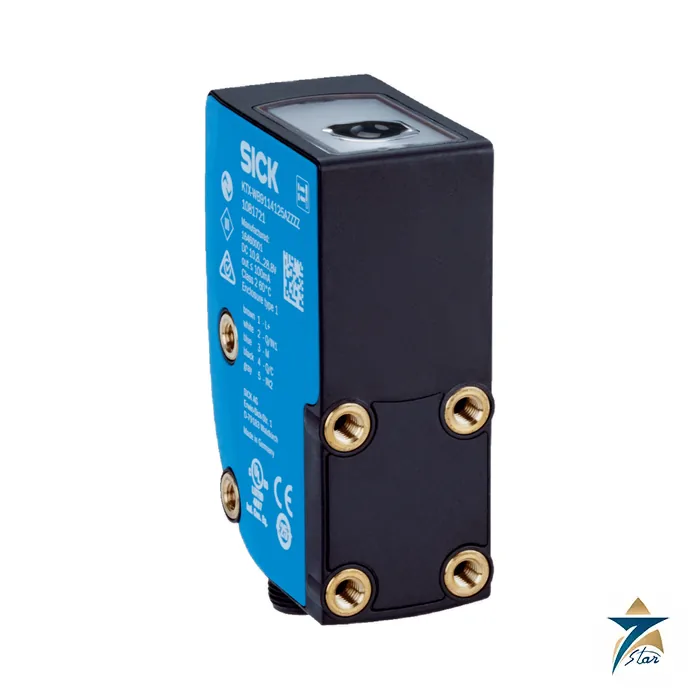
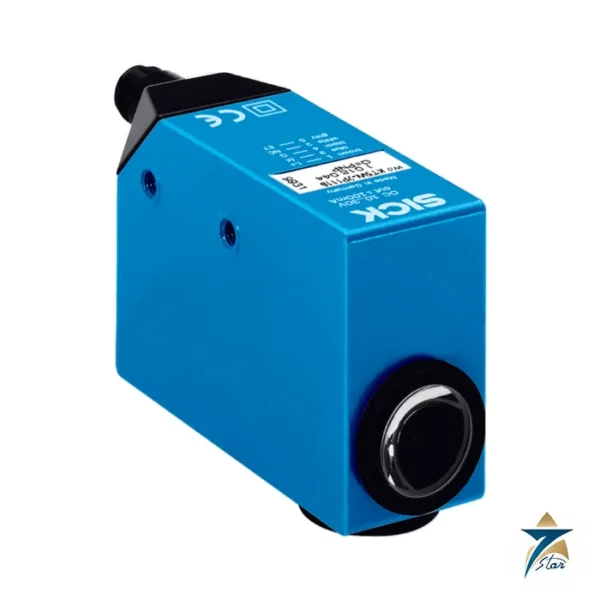
KTX high-speed contrast sensor with short-side light emission
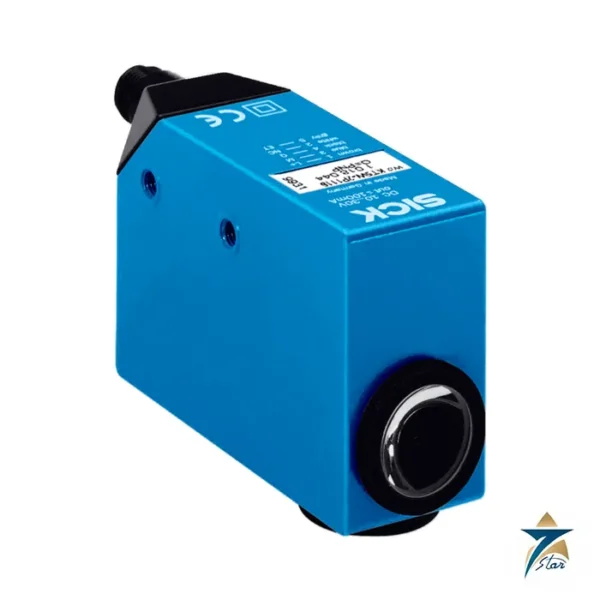
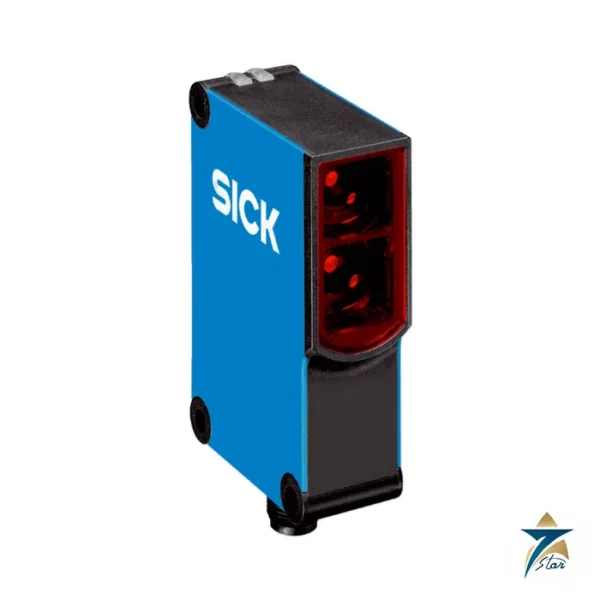
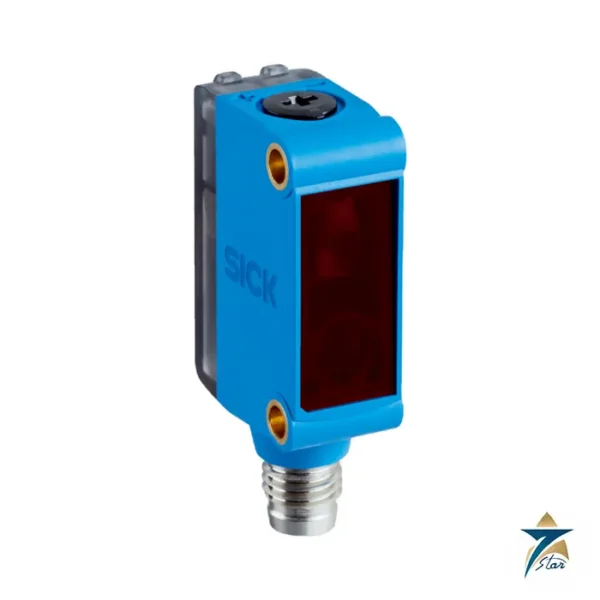
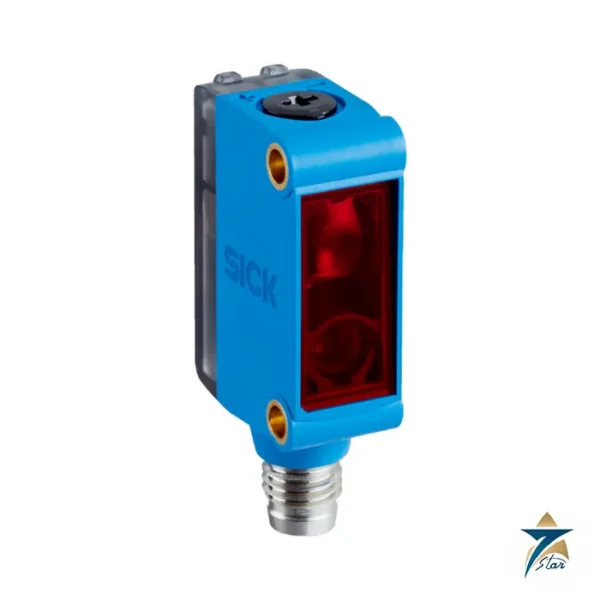
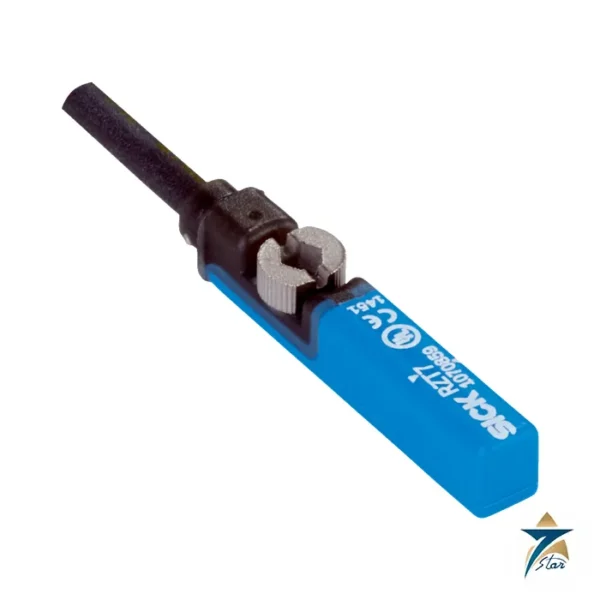
The SICK KTX-WP91142252ZZZZ (part no. 1078066) is a KTX contrast sensor with TwinEye technology and an RGB LED source at 470, 525 and 625 nm. It detects colour or brightness differences at a sensing distance of up to 13 mm (plus or minus 5 mm tolerance) with a vertical spot of 0.9 mm by 3.8 mm, and switches at up to 50 kHz with a 10 microsecond response time. This version emits light from the short side of the housing.
The large VISTAL housing, 30 mm by 53 mm by 78.5 mm, weighs 94 g, has an M12 5-pin plug and an IP67 rating.
Technical specifications
| Parameter |
Specification |
| Manufacturer |
SICK |
| Type / family |
KTX-WP91142252ZZZZ / KTX |
| Part no. |
1078066 |
| Device type / housing |
Standard / large |
| Dimensions (W x H x D) |
30 mm x 53 mm x 78.5 mm |
| Light source |
LED, RGB, TwinEye technology |
| Wavelengths |
470 nm, 525 nm, 625 nm |
| Light emission |
Short device side |
| Light spot size / direction |
0.9 mm x 3.8 mm / vertical |
| Sensing distance |
up to 13 mm (tolerance plus or minus 5 mm) |
| Teach-in modes |
1-point, 2-point, teach-in dynamic, auto mode |
| Delivery status |
2-point teach-in |
| Output function / delay |
Light/dark switching; delay time adjustable |
| Supply voltage |
10.8 V DC … 28.8 V DC |
| Current consumption |
below 100 mA |
| Switching frequency / response time / jitter |
50 kHz / 10 microseconds / 5 microseconds |
| Switching output |
PNP (HIGH = VS minus 3 V / LOW = 0 V), 100 mA |
| Inputs |
Teach (ET), blanking (AT), fine/coarse (F/C), light/dark (L/D) |
| Retention time (ET) |
25 ms, non-volatile memory |
| Protection class |
III |
| Connection |
Plug, M12, 5-pin |
| Housing / optics |
VISTAL / COP |
| Weight |
94 g |
| Enclosure rating |
IP67 |
| Shock load |
IEC 60068-2-27 (30 g / 11 ms) |
| Ambient temperature |
-20 °C … +60 °C operation; -25 °C … +75 °C storage |
| MTTFD |
291 years |
Colour and mark detection at speed
A switching frequency of 50 kHz and a 10 microsecond response time let the sensor follow fast webs and indexing machines. The TwinEye approach, with several evaluation channels, helps with difficult mark-and-background combinations. Four teach modes cover simple two-point jobs, dynamic teaching at running speed and an automatic mode.
Extra inputs provide remote teach, blanking, fine/coarse sensitivity and light/dark selection through the PLC, which saves trips to the machine. Short-side emission means the light leaves through the narrow end of the housing, so choose it when the sensor must be mounted with the narrow face towards the target.
Short side or long side
The data sheet identifies this article by its light emission on the short device side. The otherwise identical KTX-WP91141252ZZZZ (part no. 1078097) emits from the long side. The dimension, optics and electronics match, so the choice depends purely on the mounting direction; quote the full type to avoid errors.
Matching the KTX to the mark and the machine
Before choosing this sensor, look closely at the print mark and the background it sits on. The RGB source with three wavelengths lets the KTX pick the colour channel that gives the strongest difference, which is what makes low-contrast pairs, such as a dark blue mark on black or a yellow mark on white, detectable at all. The vertical 0.9 x 3.8 mm spot should be aligned with the mark so that the long axis follows the mark’s longer dimension; a mark narrower than the spot will reduce the usable contrast. The sensing distance of up to 13 mm keeps the sensor close to the web, so plan the bracket so that flutter of the material stays inside the tolerance band.
The short-side emission of the KTX-WP91142252ZZZZ suits installations where the sensor body must stand upright or lie along the machine frame with only its narrow end facing the material. Where there is space to face the broad side towards the target, the long-side KTX-WP91141252ZZZZ is the equivalent choice.
Setting up and teaching the sensor
- Wire the M12 5-pin plug to a 10.8 to 28.8 V DC supply and route the PNP output to a fast PLC input or a high-speed counter if the mark rate is high.
- Start with the factory 2-point teach-in: present the mark, then the background, and check that the output switches reliably.
- Use dynamic teach-in when the material can only be shown at running speed, or auto mode when the operator should not have to stop the line.
- Choose light or dark switching and fine or coarse sensitivity either on the device or through the L/D and F/C inputs from the PLC.
- Adjust the delay time if the downstream control needs a longer pulse than the mark itself produces.
- Use the blanking input (AT) to suppress the output during sections of the cycle where false marks may appear.
Fault finding on a running line
Missed marks at higher speeds usually come from a PLC input too slow for the short pulses rather than from the sensor; the KTX itself responds in 10 microseconds. Erratic switching often follows a change of material, ink batch or laminate gloss, in which case a fresh teach-in is the first step. A glossy or metallised film may reflect the spot strongly; tilting the sensor slightly can reduce mirror reflection. Check that the optical window is clean and that the distance to the web has not drifted after a bracket was moved.
Packaging lines in Oman and the GCC
Food, beverage and packaging plants in Oman often run in halls where summer temperatures approach the upper end of the -20 to +60 °C operating range, especially near ovens, shrink tunnels and sealing jaws. Mount the sensor away from these heat sources and allow for air movement around the housing. Fine dust and paper fibre collect on the optics, so clean the front window with a soft cloth at each shift change. IP67 protection supports wash-down areas, provided the M12 connector is fully screwed in. In plants near the coast, humid air can cause condensation on cold optics after air-conditioned shutdowns, so allow the sensor to adjust before teaching.
Documents and quotation
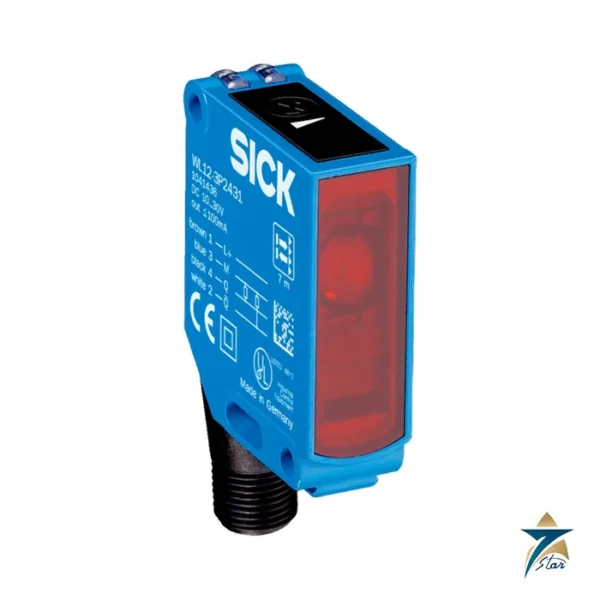
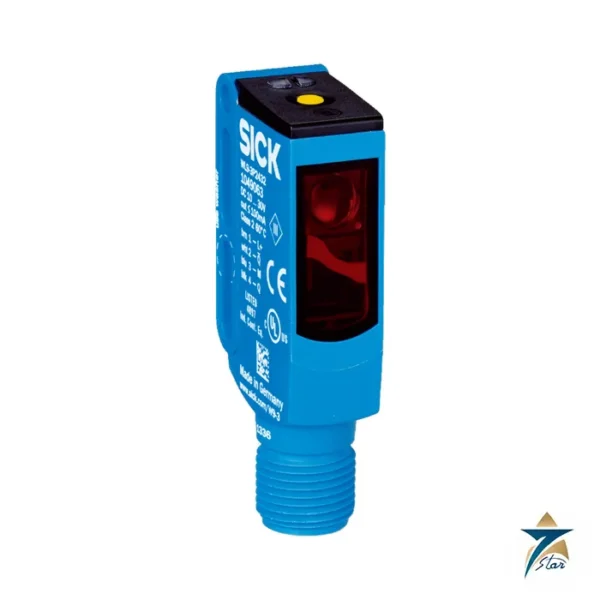
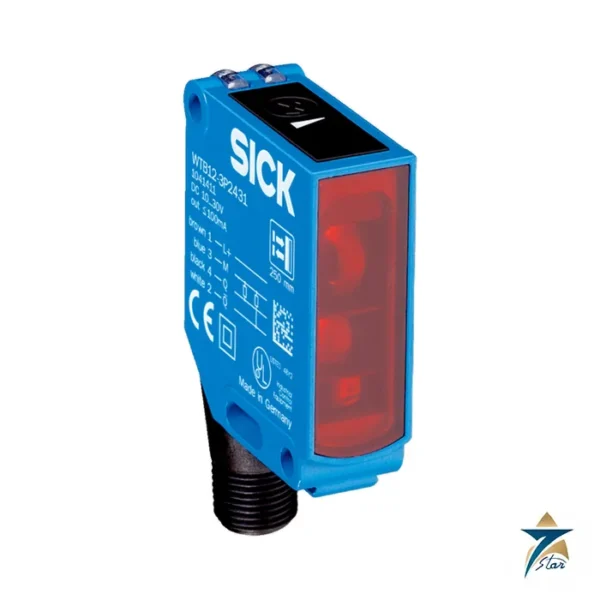
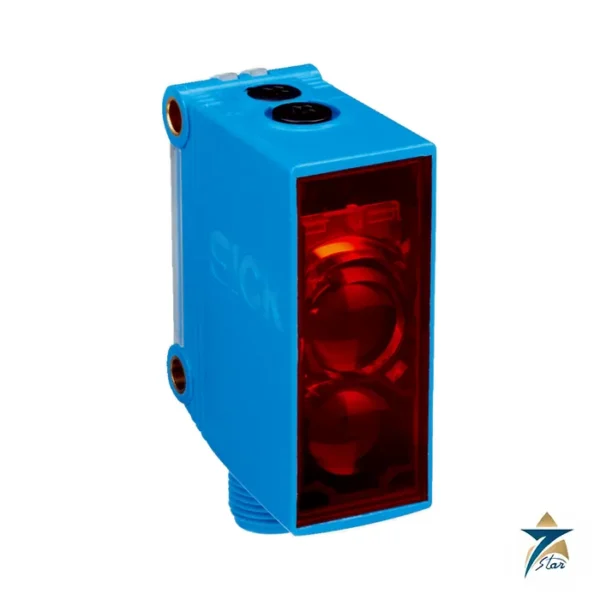
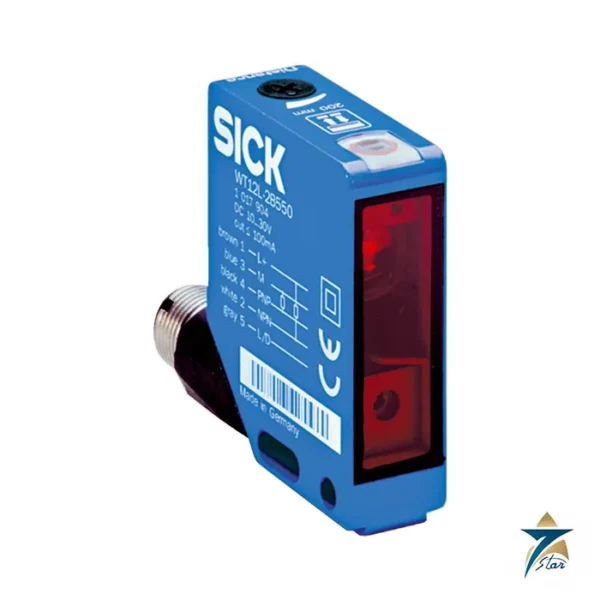
The official SICK data sheet for KTX-WP91142252ZZZZ (part no. 1078066) is attached to this page, and the figures in the table above are taken from it. Seven Star LLC is an independent supplier in Muscat and quotes SICK items against a written request. In your enquiry, give the exact type code, part number, quantity and delivery location, and say whether you need accessories such as a reflector, bracket or mating cordset. Data sheets carry a note that content is subject to change without notice, so confirm current details before ordering. More items are listed under sensors and transmitters, and you may also look at the SICK WTB4-3 miniature photoelectric sensor.






Reviews
There are no reviews yet.