An online double-conversion UPS for harsh power environments
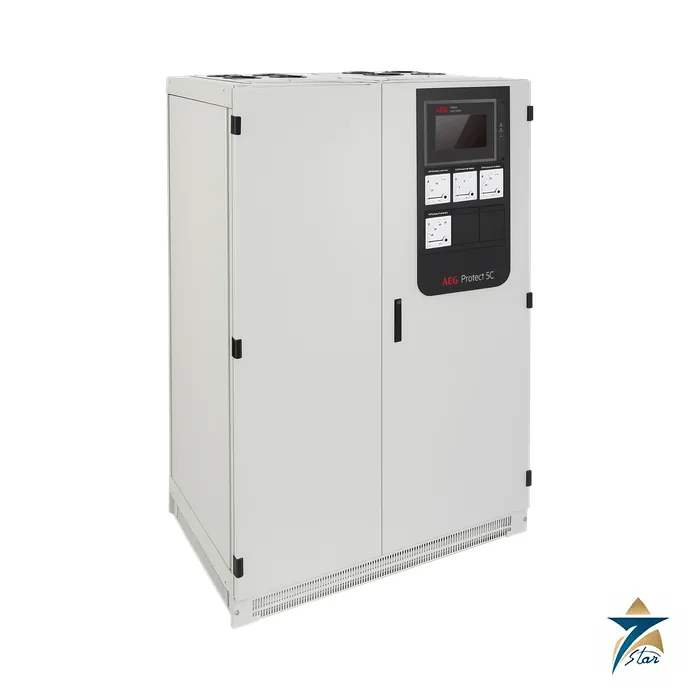
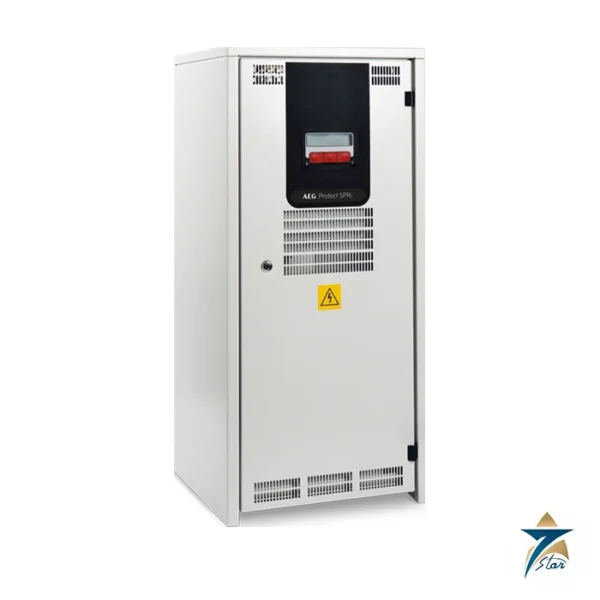
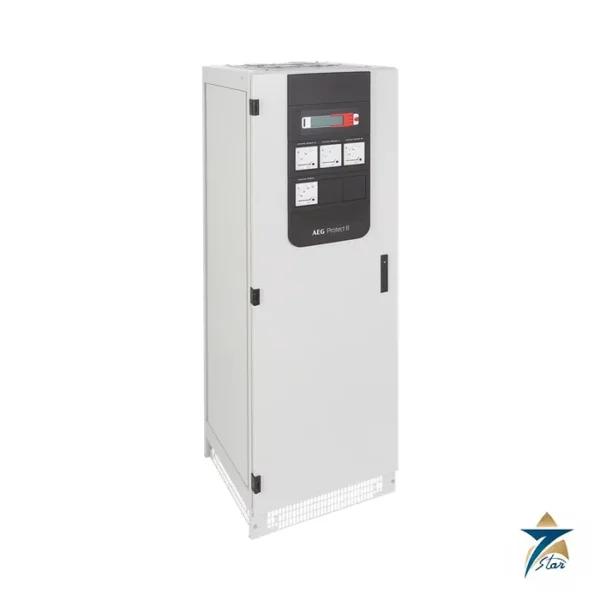
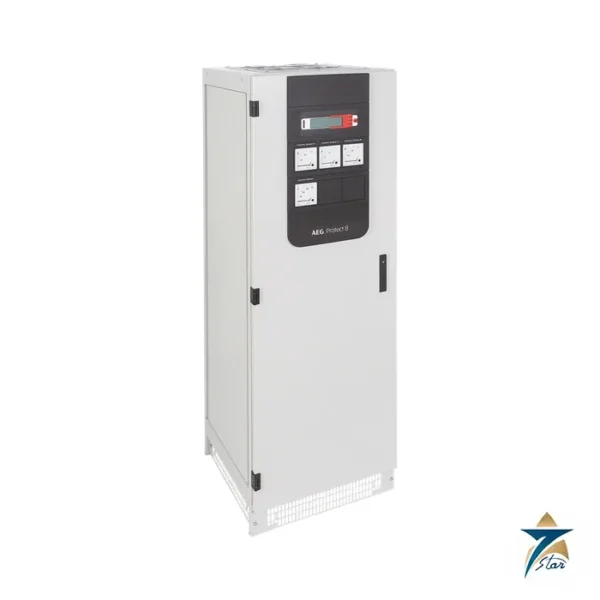
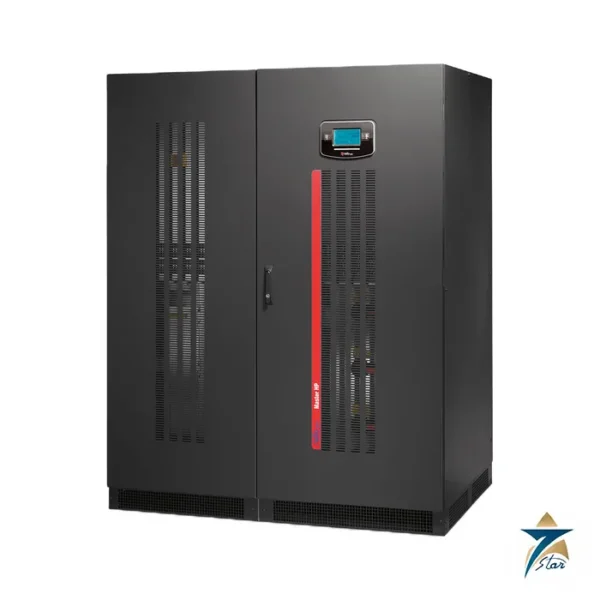
The AEG Protect 5C is an industrial UPS series rated 10 to 200 kVA that combines online double-conversion technology with digital intelligent control. AEG Power Solutions describes it as engineered for harsh power environments where uptime is critical. Input is 380/400/415 VAC three-phase; output is 380/400/415 VAC three-phase or 220/230/240 VAC single-phase, and other values are available on request.
The output power factor is 0.9. The unit has input and output galvanic isolation, a special protective circuit board design, multiple battery technologies and voltages (lead-acid, Ni-Cad, Li-ion, SMC and others), and a multilingual HMI with a large 7-inch colour touchscreen. The datasheet is the newest of the AEG industrial UPS sheets, issued in June 2025.
Technical specifications
| Parameter |
Specification |
| Rating |
10-100 kVA (108 V DC bus) and 10-200 kVA (216/384 V DC bus), 3-phase or 1-phase output |
| Rectifier |
3 x 400 V (380, 415 V); 50/60 Hz +/-10 %; range 285-498 V |
| Nominal DC voltage |
108 V, 216 V, 384 V |
| Rectifier type |
6-pulse standard; 5th/11th filter or 12-pulse optional |
| Inverter DC input |
108 V (86-140 V); 216 V (170-279 V); 384 V (307-499 V) |
| Voltage response |
Static below +/-1 %; dynamic below +/-3 %; recovery 20 ms or less |
| Frequency |
50/60 Hz; +/-0.05 % static; sync +/-0.5 to +/-3 Hz (setting) |
| Power factor / crest factor |
Cos phi 0.9; 3:1 |
| Overload |
150 % for 1 min; 125 % for 10 min; short circuit 2.2 In for 60 ms |
| Efficiency |
Up to 90 %; above 95 % in ECO mode |
| Degree of protection |
IP20 (option up to IP43) |
| Audible noise |
60-70 dB(A) at 1 m from front |
| Operating / storage temperature |
0 to +40 C without derating; -25 to +70 C |
| HMI / ports |
7-inch LCD colour touchscreen, 3 LEDs; RS232, RS485, dry contacts, optional RJ45 |
| Protocols |
Modbus RTU; optional Modbus TCP/IP, SNMP, IEC 61850 |
| Standards |
IEC 62040-1, -2, -3 |
Where it is used and what it offers
Typical applications listed by AEG Power Solutions are oil and gas refineries, petrochemical, water and wastewater, transportation and continuous process industries. Benefits include a robust design, low noise, very fast dynamic response, high short-circuit resistance, an output short-circuit proof design, high overload capability, easy operation, long lifespan and convenient capacity expansion.
Further listed features are an efficient heat-dissipation duct, intelligent battery management and multiple communication protocols.
Selection and what to confirm before ordering
Rating depends on the DC bus: 10 to 100 kVA on the 108 V bus and 10 to 200 kVA on the 216 V and 384 V buses. The datasheet gives no dimensions or weights, so request them in the quotation. Confirm the battery chemistry, DC voltage and autonomy, mains and bypass supply, IP degree, communication protocol and any filter or 12-pulse option for harmonic limits.
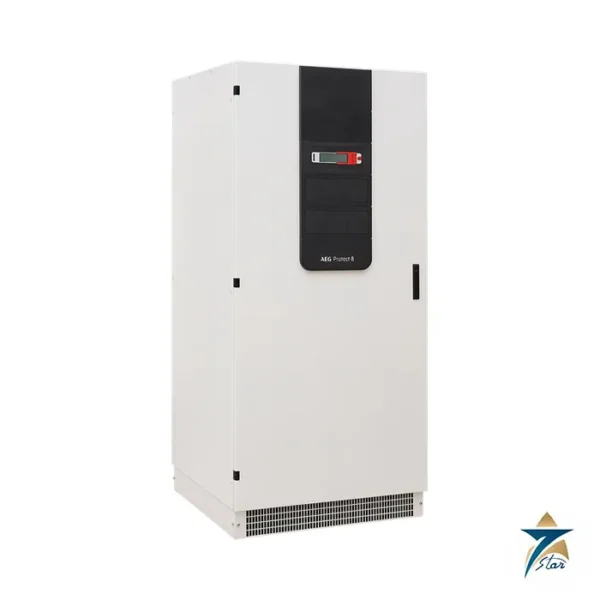
For the older Protect 8 range see the Protect 8 S10, S14 and PLUS pages. The Protect 5C datasheet states an output power factor of 0.9, so check kW capacity rather than kVA alone when sizing the load.
Installation planning for the Protect 5C
Before the Protect 5C arrives on site, the electrical room should be prepared around the rating and DC bus chosen for the project. Because the datasheet does not list dimensions or weights, the floor layout, access route and lifting method can only be finalised once those figures are supplied with the quotation. Plan cable routes for the rectifier input, the bypass supply where it is separate, the inverter output and the battery circuit, and keep power and communication cabling apart so that Modbus or other signal lines are not run alongside heavy current conductors.
The standard IP20 enclosure is intended for a clean, indoor electrical room. Where the room is shared with process equipment or is not fully sealed, discuss the optional higher IP degree at enquiry stage rather than after delivery. Upstream protection, cable sizing and earthing should be designed by the project electrical engineer to the installation drawings and local regulations, taking into account the overload and short-circuit behaviour given in the specification table.
Battery room coordination
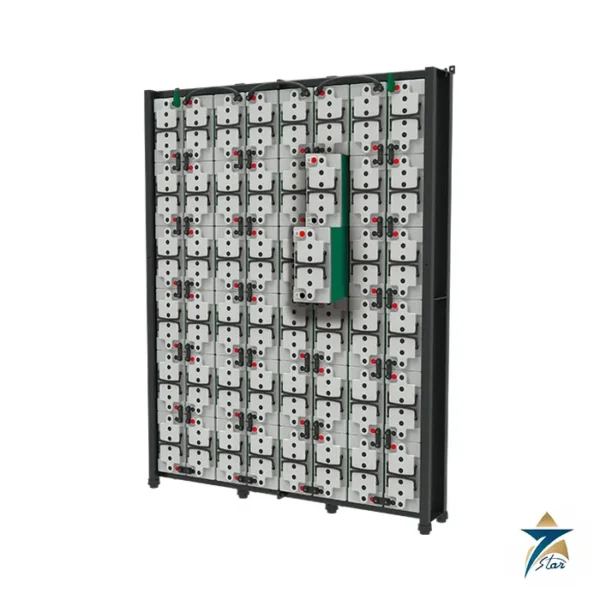
The Protect 5C supports several battery technologies and three nominal DC voltages, so the battery room, ventilation arrangement and DC protection depend on which combination is chosen. Lead-acid, Ni-Cad and Li-ion banks each have their own handling, charging and ventilation requirements set by the battery manufacturer. Agree the chemistry and DC voltage first, then the battery supplier and the UPS settings can be aligned during commissioning.
Commissioning and handover checks
Commissioning of an industrial UPS of this class should follow the AEG Power Solutions procedure and be carried out by qualified personnel. A practical sequence is to verify the incoming supply against the rectifier input range, confirm phase rotation and earthing, check the DC bus voltage against the selected battery configuration, and then bring the rectifier and inverter on line before transferring the critical load.
Useful handover items include a record of the configured synchronisation window and operating mode, confirmation that ECO mode is enabled or disabled as the site requires, a test of the dry contacts and the selected communication protocol with the plant control or building management system, and a review of the alarm messages shown on the touchscreen HMI. Operators should be shown how to read the status display and how the bypass path behaves during a fault or overload.
Operating in Oman and GCC conditions
The specification gives 0 to +40 C as the operating range without derating, which matters in Oman, where outdoor summer temperatures regularly exceed that figure. The UPS should therefore sit in an air-conditioned room, and the cooling design should allow for the heat released by the UPS and its batteries in addition to other equipment in the same space. Battery service life is also strongly affected by room temperature, so the battery manufacturer’s recommended temperature range should be respected.
Fine desert dust and coastal humidity are the other common concerns at refinery, petrochemical and water sites in the region. Keep the room door sealed, maintain the air-conditioning filters, avoid opening the electrical room during sandstorms where possible, and inspect the heat-dissipation path regularly so that airflow is not restricted.
Routine maintenance considerations
Preventive maintenance intervals should follow AEG Power Solutions and battery manufacturer guidance. Typical routine activities are visual inspection, cleaning of air paths, checking tightness of power connections during planned shutdowns, reviewing the event history on the HMI and periodic battery condition checks. Keeping a simple log of room temperature, load level and alarms helps engineers plan battery replacement and capacity expansion before they become urgent.
Documents and quotation
The manufacturer document for the Protect 5C is listed under Documents on this page: AEG Protect 5C datasheet (EN, 06/2025 V1). Browse related items in UPS and Batteries. For price, availability and lead time, send an RFQ with the exact part number, quantity and project details; Seven Star LLC is an independent supplier based in Muscat and confirms stock and delivery on quotation.








Reviews
There are no reviews yet.