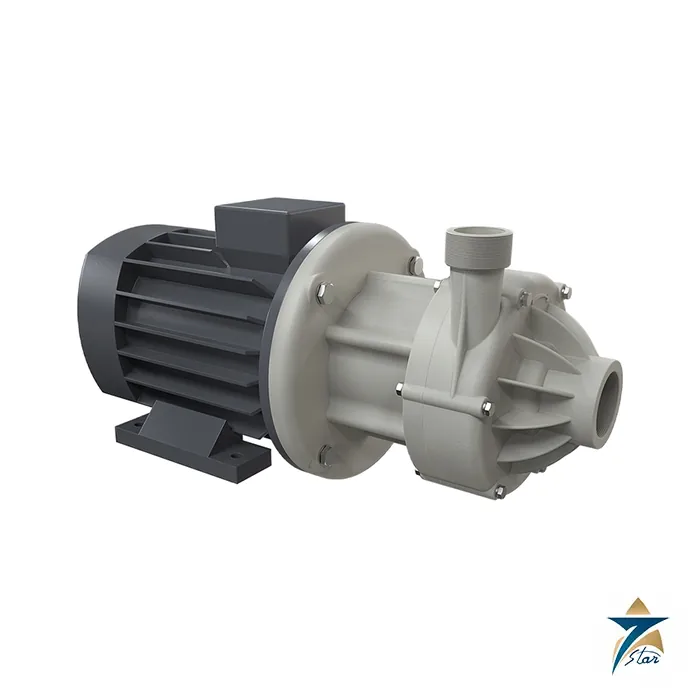
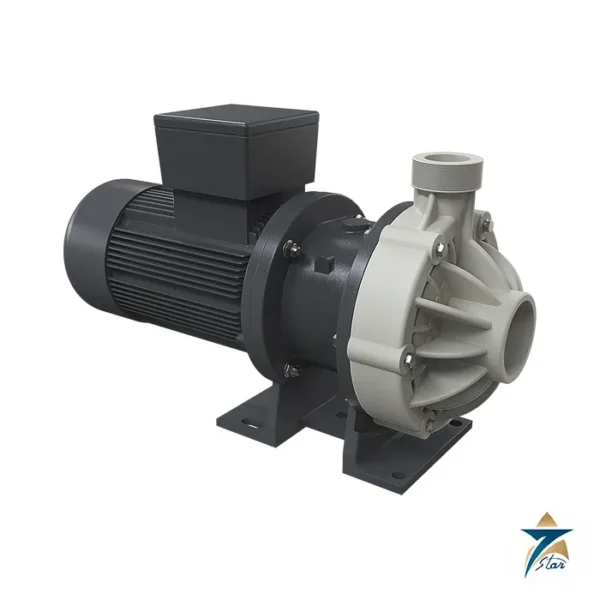
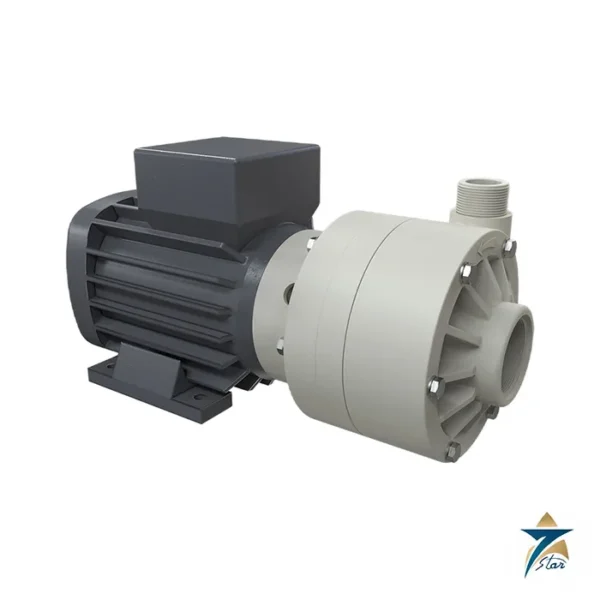
A magnetic-drive chemical pump with no shaft seal, up to 35 m3/h
The DM 30 is the largest model of the Debem DM series of sealless magnetic-drive centrifugal pumps, with a 2 inch suction, a 1 1/2 inch delivery and a flow of up to 35 m3/h. Polypropylene or PVDF casings contain no metal parts in contact with the liquid, so the series is aimed at acids and corrosive products in galvanic and chemical plants, water treatment, filtering systems, heat exchangers and similar duties listed on the Debem DM page.
Technical specifications
| Parameter |
Specification |
| Suction connection |
2 inch female BSPP or DN 50 (NPT) |
| Delivery connection |
1 1/2 inch male BSPP or DN 40 (NPT) |
| Flow rate |
4 to 35 m3/h |
| Maximum head |
24 m |
| Viscosity |
Up to 150 cps |
| Impeller diameters |
134 mm (standard), 122 mm, 110 mm |
| Standard motors, polypropylene |
2.2 kW (3 HP), 3 kW (4 HP), 4 kW (5.5 HP); three-phase 230/400 V, 50/60 Hz, 2 poles, 2900 rpm, IE3, IP55, B3+B5, ambient -30 to +45 C |
| Standard motors, PVDF |
2.2 kW (3 HP) and 3 kW (4 HP), single-phase |
| Motor options on request |
Single-phase up to 3 kW, ATEX, NEMA 145TC or 184TC flange (pump only for American flange) |
| Operating temperature |
Polypropylene 0 to 70 C; PVDF -10 to 100 C (measured with agitated water) |
| Liquid density by impeller and motor |
Up to 1.1, 1.5 or 1.8 g/cm3 with the 134 mm impeller; up to 1.4 or 2 g/cm3 with 122 mm; up to 1.8 or 2 g/cm3 with 110 mm, depending on motor |
Why the impeller trim and motor matter
With magnetic-drive pumps the density of the liquid is a limit as well as head and flow: the datasheet pairs each impeller diameter and motor power with a maximum density, so a 2.2 kW motor with the standard 134 mm impeller suits liquids up to 1.1 g/cm3, while a 4 kW motor allows 1.8 g/cm3. Specify the specific gravity with every enquiry, together with the temperature and any suspended matter, because the pump must be sized for the real liquid and not only for water. The ordering code in the DM manual, for example DM10 P-SD1NE071, lists model, body (P polypropylene or FC PVDF with carbon fibre), thrust washer, O-ring (D EPDM or V Viton), impeller size, connection (B BSP or N NPT) and motor type and casing.
Operating rules from the manual
The manual states that the pump must never run without liquid in the container and never with the suction valve closed. Pumps fitted with PTFE or ceramic bushes cannot run dry without damage, while carbon bushes tolerate limited dry operation, for a time that depends on the conditions. Solid particles are limited to 100 micron for waste and 0.4 mm for rare particles, with hardness up to 80 HS and a concentration of 10 percent by weight, and pumping solids increases wear. The magnets are powerful, so people with pacemakers must keep away from the exposed magnet, and iron particles must be kept out of the pump.
Why a magnetic drive suits corrosive transfer
In a conventional centrifugal pump the shaft passes through the casing, and the point where it does so is a frequent source of leaks when the liquid is an acid, an alkali or another aggressive chemical. A magnetic-drive pump avoids this path entirely: the motor turns an outer magnet, which drives the impeller through the wall of a closed casing, so the liquid stays inside a fully enclosed plastic body. For galvanic lines, chemical dosing and transfer, and water treatment plants, this means fewer drips around the pump, a cleaner and safer working area and less exposure of operators to hazardous fluids. Polypropylene or PVDF casings with no metal in contact with the liquid also avoid the corrosion that would affect metallic pumps in the same service.
Choosing between polypropylene and PVDF
The body material is chosen on chemical compatibility and temperature. Polypropylene is a common choice for many acids and alkalis at moderate temperatures, while PVDF covers a wider temperature window and a broader range of aggressive chemicals. The chemical resistance of both materials should be checked against the actual liquid, its concentration and its temperature before ordering, because a liquid that is harmless at ambient temperature may attack a plastic when hot. The O-ring material in the ordering code should be selected on the same basis. Once the material is fixed, the impeller trim and motor follow from the required flow, head and the liquid density table described above.
Installation and operating practice
Because the pump must not run without liquid or against a closed suction valve, the installation should keep the suction line flooded and as short and direct as practical, with the pump placed below the liquid level of the source tank where possible. Suction piping should be supported independently so that its weight does not load the plastic connections, and the suction line size should not be reduced below the pump connection. Before start-up, operators should confirm that the casing is full of liquid and that valves are in the correct position. Keeping iron particles out of the pump, as the manual requires, matters during first commissioning when new pipework may still contain debris from construction.
Plant conditions in Oman and the GCC
Chemical storage and dosing areas in Oman and across the GCC are often outdoors or in lightly ventilated shelters, where high ambient temperatures and direct sunlight raise both the liquid temperature and the temperature of plastic pipework and pump bodies. The listed operating temperature limits should be compared with the warmest expected liquid temperature, not only the process design value, and the motor ambient limit should be checked against the installation location. Providing shade over the pump and motor, and keeping the area clean and dry, supports long service in the hot climate typical of the region. Recording the liquid, its density and the selected impeller and motor against each pump tag also helps maintenance teams order the correct configuration later.
Documents and quotation
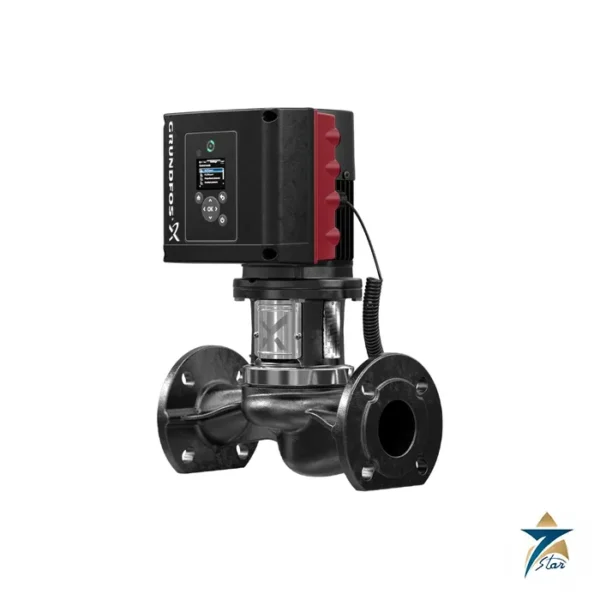
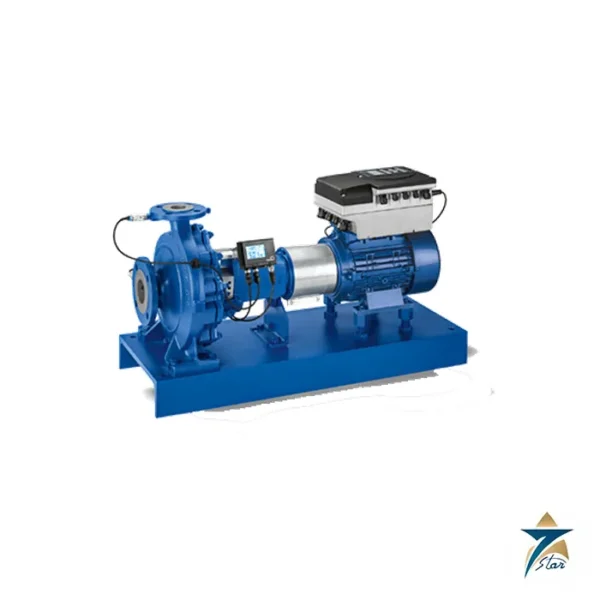
The DM 30 sheet carries curves, NPSH, power and the motor and density table. Send fluid, density, temperature, flow, head and electrical supply when asking for a quotation. See also other pumps or the Grundfos NB end-suction pump for non-corrosive duties.







Reviews
There are no reviews yet.