- Automation & ControlView all 3,098 products
- Automation Accessories
- AC Drives
- PLC & I/O Cards
- Industrial Communications
- Vibration Monitoring
- Isolator & Barrier
- Controllers & Data Acquisition
- Safety Switches & Guard Locking
- Encoders
- Motor Soft Starters
- CCTV & Security
- Pneumatic Cylinders
- HMI Displays
- Servo Drives
- Industrial Computers
- Machine Vision
- Automation Software
- Robotics
Brand: Bürkert
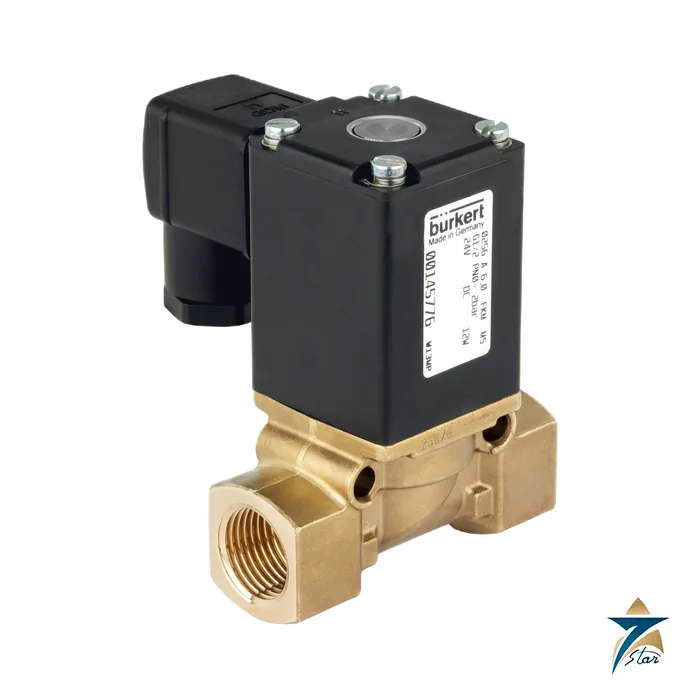
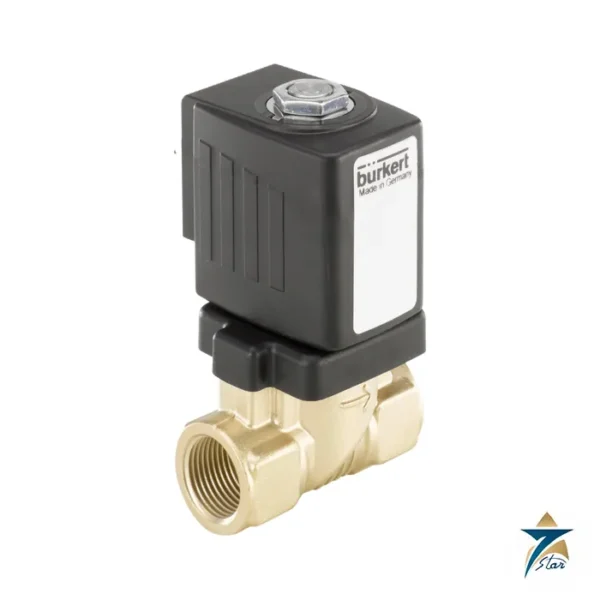
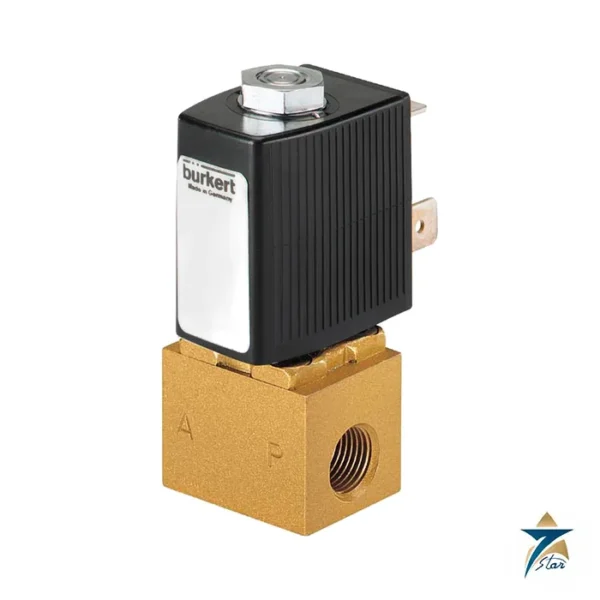
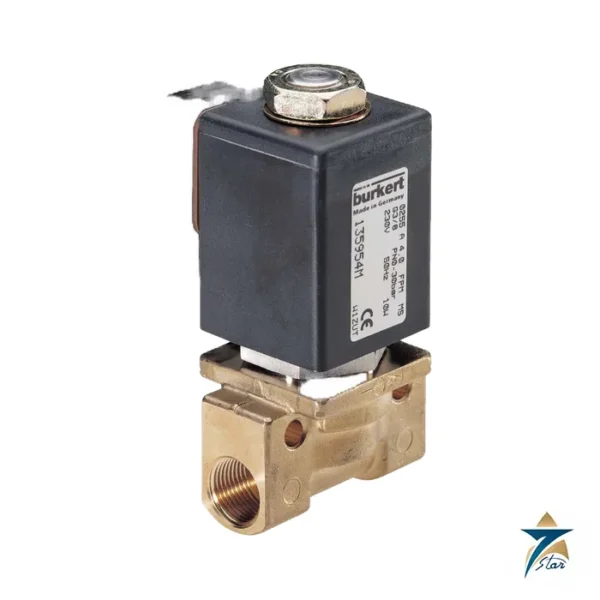
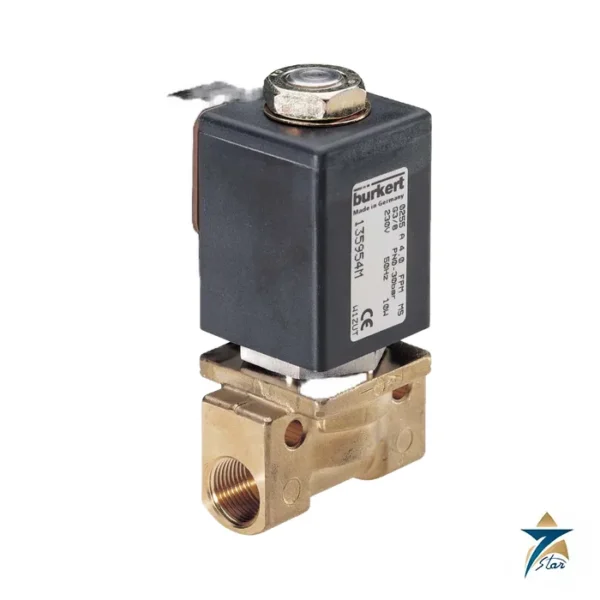
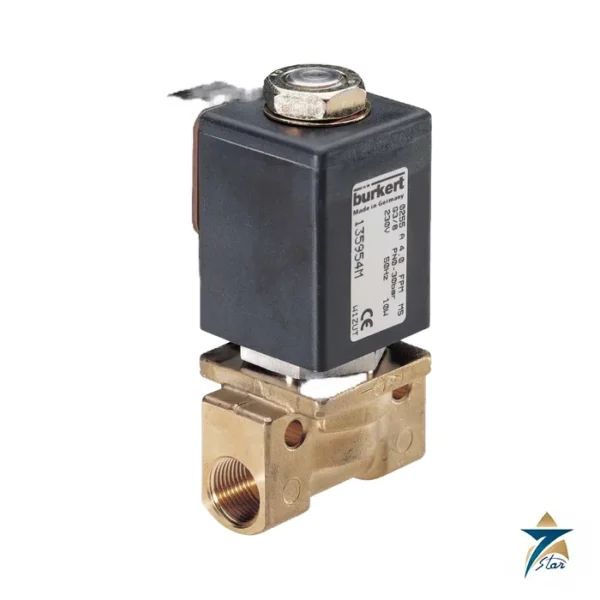
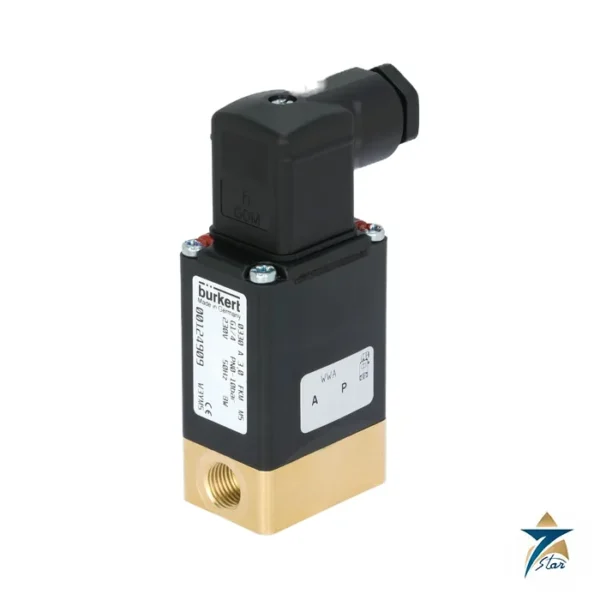
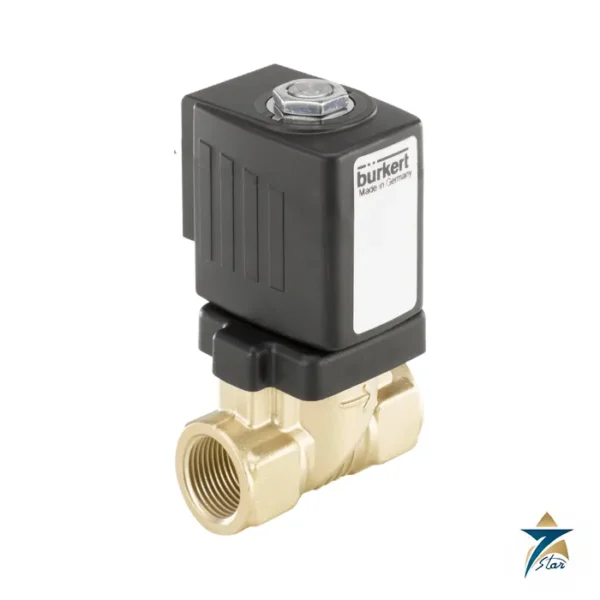
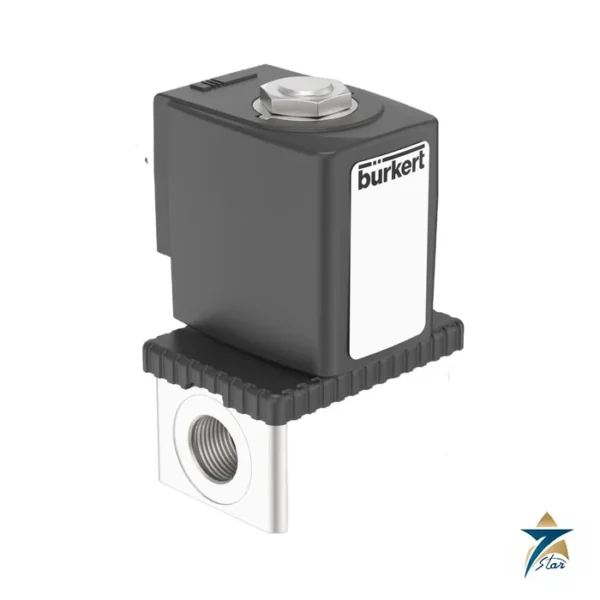
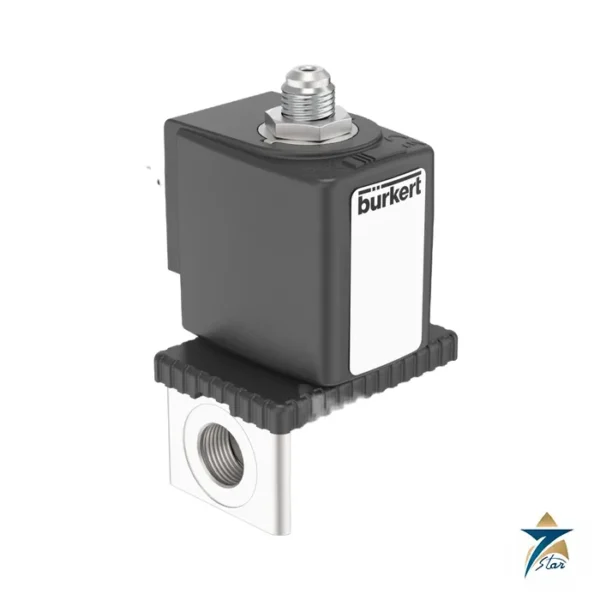
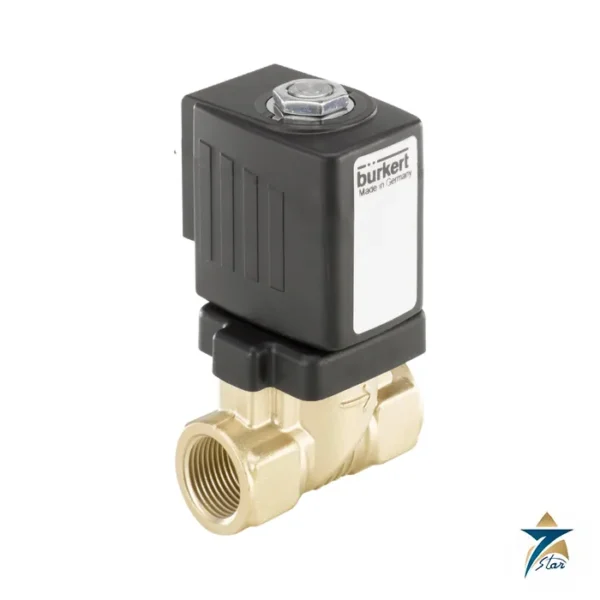
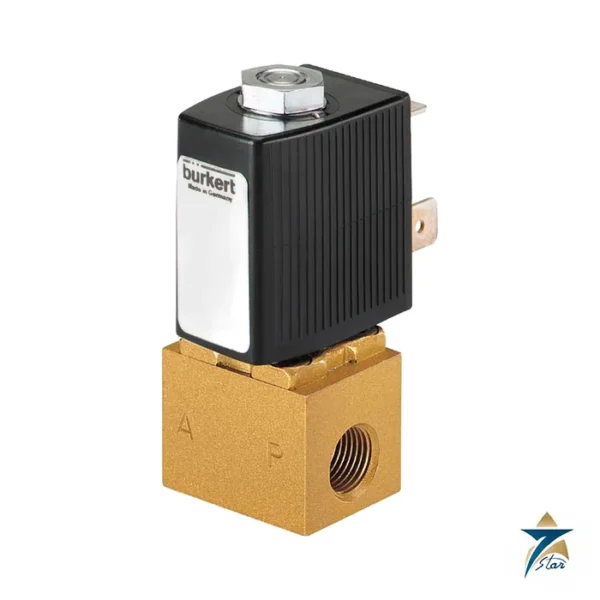
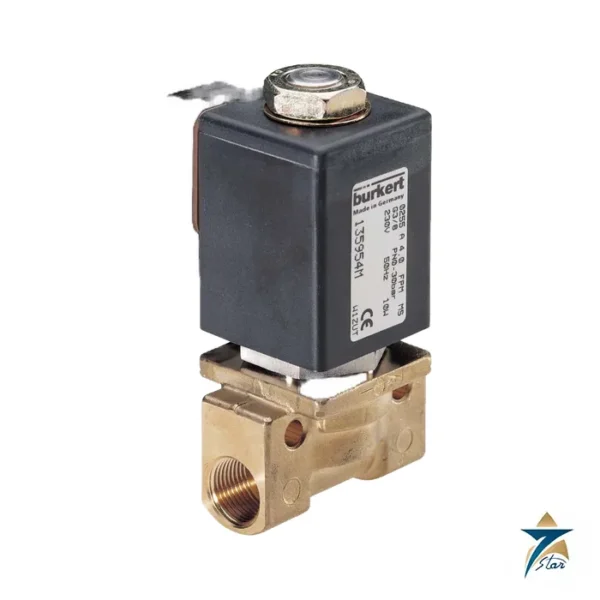
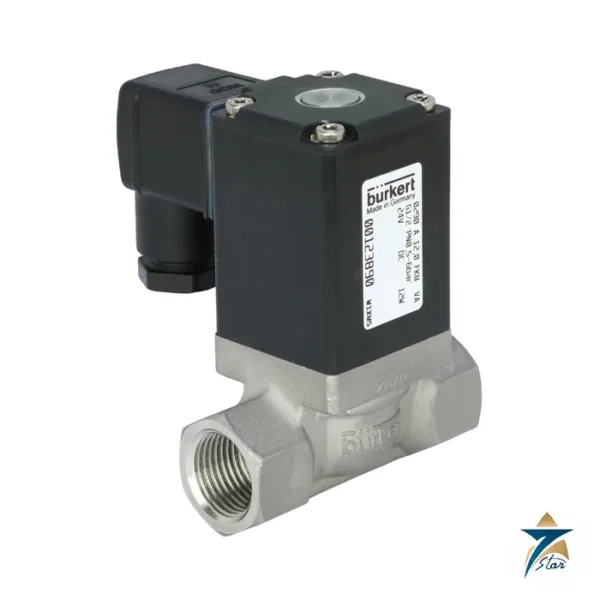
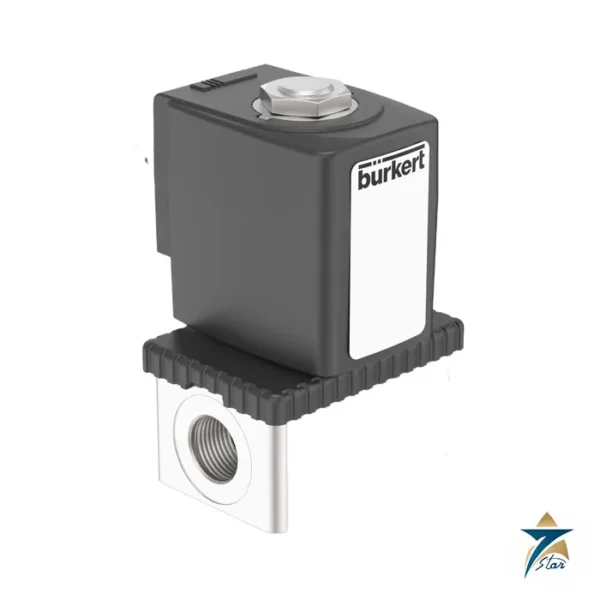
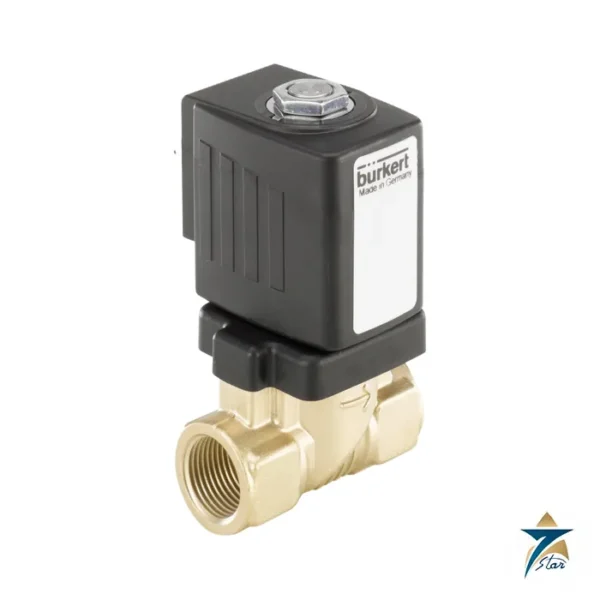
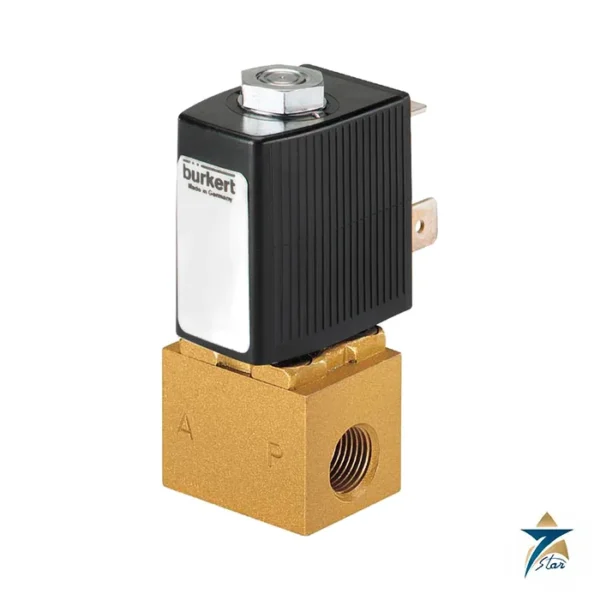
Bürkert 145731 Type 0256 Brass 2/2-Way Solenoid Valve G1/4 230 V AC
Description
Overview
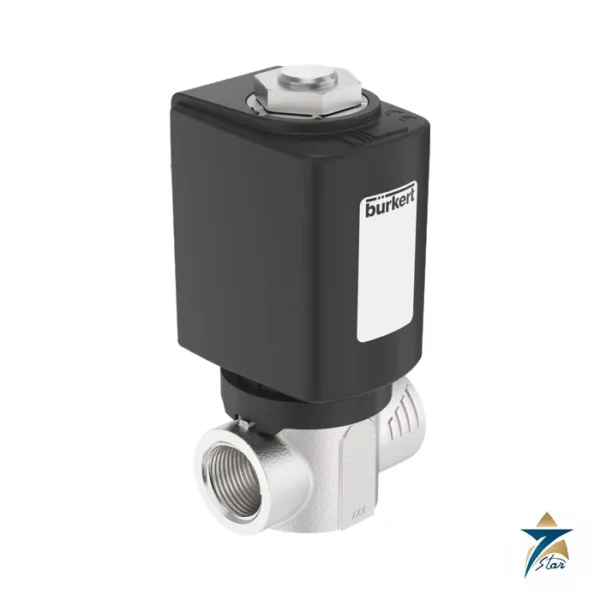
Mains-powered machines rarely have a 24 V DC rail handy, and that is where the Bürkert 145731 earns its keep. It is the 230 V, 50 Hz alternating-current version of a compact brass 2/2-way solenoid valve in the Bürkert Type 0256 series, with G1/4 threaded ports, a 4 mm seat and NBR sealing. Energise the coil and the valve opens; remove power and the spring closes it again. Seven Star LLC is an independent supplier serving Oman and the GCC.
Reading the number: AC instead of DC
Two valves in the Type 0256 chart can share every mechanical detail and still carry different article numbers because the coil is part of the number. The Bürkert 145731 is the 230/50 column of the G1/4, 4 mm, NBR row. Its siblings in the same row are 145727 for 24 V DC, 145728 for 24 V 50 Hz and 145730 for 110 V 50 Hz. An AC coil raises the permitted liquid pressure compared with DC: where the DC valve is rated 0 to 6 bar for liquids, the AC valve is rated 0 to 12 bar, and the gas rating is 0 to 16 bar for both.
The switching behaviour also changes. According to the datasheet an AC coil opens in 10 to 20 ms and closes in 20 to 30 ms, which is noticeably quicker to open than the 20 to 80 ms of the DC version.
Technical data for Bürkert 145731
| Item | Value |
|---|---|
| Article number | 145731 |
| Valve body | brass, 56 mm group |
| Port connection | G1/4 |
| Orifice | 4 mm |
| Kv value (water) | 0.5 m3/h |
| Pressure, liquids DC coil | 0 to 6 bar |
| Pressure, liquids AC coil | 0 to 12 bar |
| Pressure, gases | 0 to 16 bar |
| Rated voltage | 230 V 50 Hz |
| Seal material | NBR |
| Operating medium | neutral media, compressed air, water and oil with NBR; hot air and oils with additives with FKM; technical vacuum with all materials |
| Circuit function | A, 2/2-way, direct-acting, normally closed |
| Coil | epoxy, thermal insulation class H, 100 percent duty cycle |
| Electrical connection | plug contacts to DIN EN 175301-803 form A, cable plug Type 2518 supplied |
| Degree of protection | IP65 with cable plug |
| Voltage tolerance | plus/minus 10 percent |
| Maximum viscosity | 21 mm2/s (21 cSt) |
| Maximum ambient temperature | 55 degrees C |
| Switching time AC | opening 10 to 20 ms, closing 20 to 30 ms |
| Switching time DC | opening 20 to 80 ms, closing 20 to 30 ms |
Where a 230 V brass valve fits
Valves in this size class are chosen when the application needs a dependable shut-off for modest flows rather than a large process line. Typical homes for this valve are packaged machines that already run from a single-phase supply: air-blow-off stations, small wash systems, water-fed cooling circuits on workshop equipment, and lubrication units. In Oman and across the GCC, the same duty shows up on generator-set auxiliaries, small boiler feed arrangements and pneumatic gates at industrial sites, where electricians prefer to tap mains directly and avoid adding a power supply for a single coil. The 4 mm orifice keeps the valve physically small while still passing 0.5 m3/h of water at the datasheet test condition.
How Bürkert 145731 compares with its neighbours
A few comparisons help when you must decide between near-identical codes. Keep the following numbers in mind when you decide on this exact code. The 3 mm orifice sibling flows only 0.25 m3/h but handles up to 22 bar on AC; the 5 mm sibling flows 0.65 m3/h but only to 6 bar; and the 6 mm sibling flows 0.8 m3/h to 4 bar. The Bürkert 145731 therefore trades a modest flow for a comfortable pressure window of 12 bar on liquids. When a larger flow is required at low pressure, move to the G3/8 or G1/2 ports with 8 to 12 mm orifices in the longer 74 mm body.
Electrical and mechanical points to check
The coil is epoxy encapsulated to insulation class H and may stay energised continuously. Voltage tolerance is plus/minus 10 percent, which equals roughly 207 to 253 V on a nominal 230 V supply; weak sites with significant voltage drop should be measured before the valve is blamed. Connection is by plug contacts to DIN EN 175301-803 form A, and a cable plug is delivered with the valve. Ambient temperature must not exceed 55 degrees C, which matters in sunlit control panels in summer.
The medium may be neutral gas, water or oil with a viscosity up to 21 mm2/s, between minus 10 and plus 80 degrees C for NBR. Anything outside that window should move to an FKM or stainless variant.
Installation steps
Isolate and depressurise, flush the pipe, then screw the valve into the G1/4 connections without overtightening the brass. Wire the plug with a protective earth to the terminal provided, replace the seal, and fasten the screw. An AC coil hums slightly; a loud buzz suggests that the armature is jammed by debris or that the voltage is too low. Switch on, check for leaks at the threads, and operate the valve a few times under line pressure. If the valve is installed outdoors, protect the plug from direct spray and fit a drip loop in the cable so that water cannot run along the cable into the plug housing. Record the date of commissioning and the supply voltage measured at the coil, because these two values are the first things a maintenance engineer will ask for when a problem appears months later.
Care and spares
Because a mains-voltage coil is involved, isolate the circuit and prove it dead before touching the plug during maintenance work. Keep an eye on the cable plug seal and the thread joints at planned stoppages. Spare coils and complete valves are different orders, so record the full article number from the type plate before you start a shutdown job. A valve that fails to close usually indicates dirt on the seat, and cleaning the line upstream is cheaper than replacing the valve repeatedly.
Related items you may also need: Bürkert Type 6026 Direct-Acting 2/2-Way Plunger Solenoid Valve | Bürkert Type 8681 Control Head for Hygienic Process Valves | Komatsu 600-815-7550 – Stop Solenoid Assembly | All Bürkert products.
Documents and quotation
The datasheet for Type 0256 contains the dimensional drawings, material list and the ordering chart that defines this article number; it is attached to this page. Please send your RFQ with Bürkert 145731, the quantity and the delivery destination in Oman or the GCC.
Other Models in the 0256 Range
Seven Star LLC supplies models from the 0256 range in Oman and the GCC. Compare the related models below and request a quote for the one that matches your application.
| Model | Category | |
|---|---|---|
| Bürkert 145727 Type 0256 Brass 2/2-Way Solenoid Valve G1/4 24 V DC | Solenoid Valves | View details |
| Bürkert 145731 Type 0256 Brass 2/2-Way Solenoid Valve G1/4 230 V AC | Solenoid Valves | You are viewing this model |
Datasheets & Documents
- Datasheet Bürkert 145731 Type 0256 Brass 2/2-Way Solenoid Valve G1/4 230 V AC Datasheet Download
Reviews (0)
How would you rate this product? Cancel reply
About brand
Bürkert is a German family-owned maker of fluid control systems, headquartered in Ingelfingen, Baden-Württemberg. Christian Bürkert founded the company in 1946, and it is known for solenoid valves, process and control valves, flow and analytical sensors, and mass flow controllers. Its products serve water treatment, hygienic processing, gas handling and laboratory applications.
Seven Star LLC lists Bürkert valves and valve automation devices and supplies Bürkert solenoid valves and spare parts to plants in Oman as an independent supplier.
Bürkert company profile
| Founded | 1946, by Christian Bürkert |
|---|---|
| Headquarters | Ingelfingen, Germany |
| Ownership | Family-owned |
| Product families | Solenoid valves, angle seat process valves, positioners, flow meters, mass flow controllers |
Bürkert types listed on this page
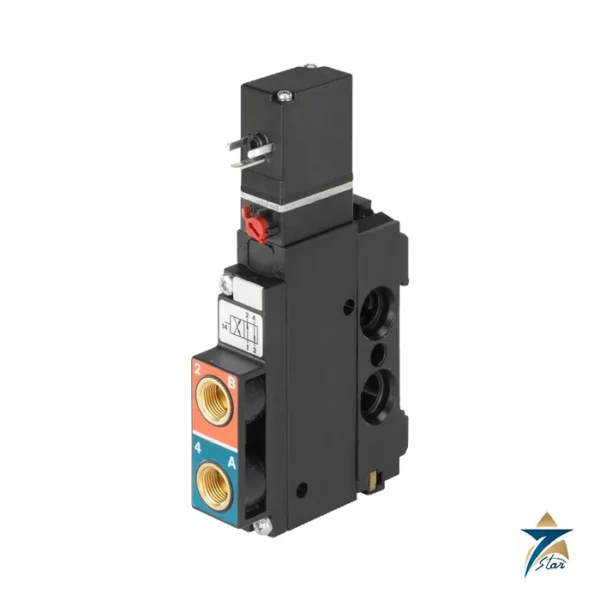
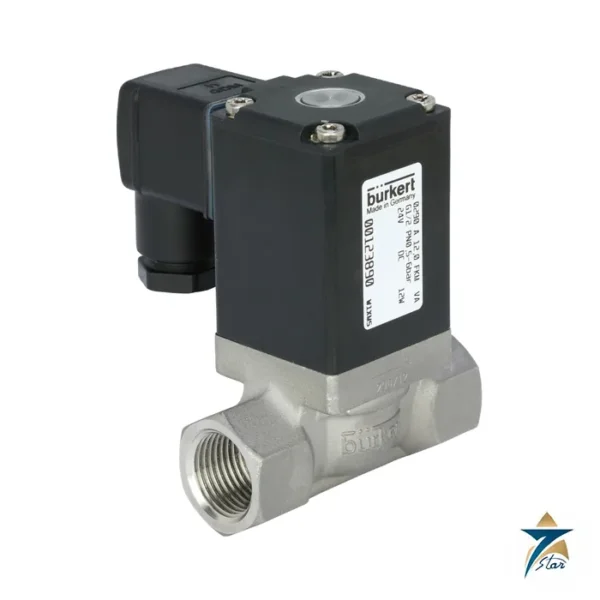
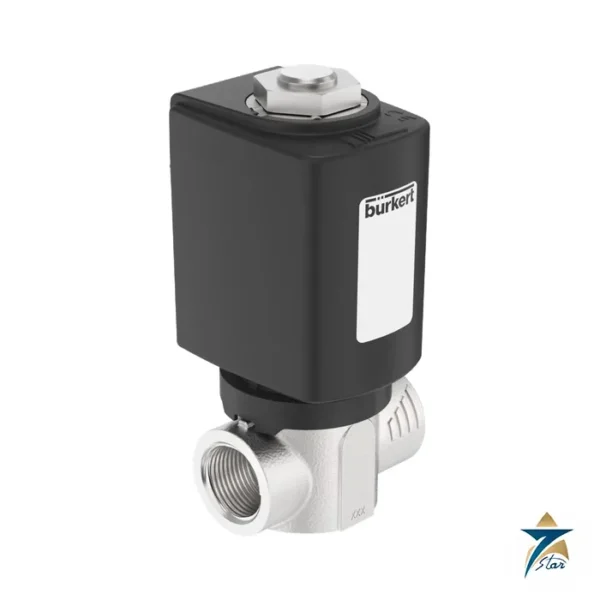
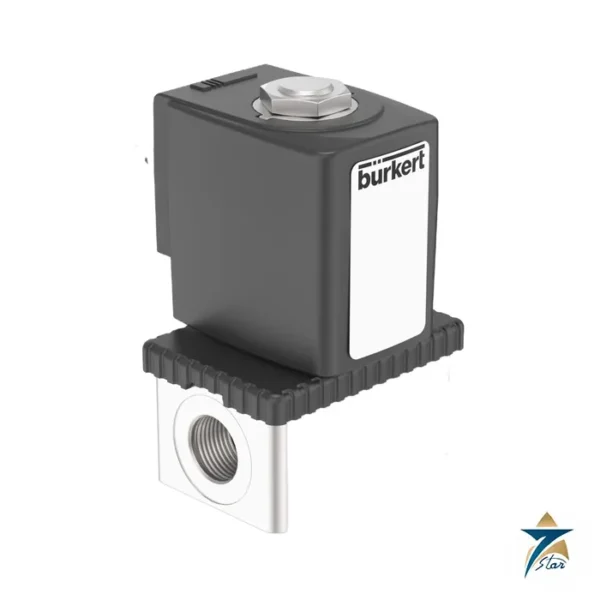
Two types are listed. Type 6026 is a direct-acting 2/2-way plunger solenoid valve, with a stainless steel bellows that separates the medium from the coil, and as a direct-acting valve it switches without needing a pressure difference. Type 8681 is the Bürkert control head that mounts on top of hygienic process valves to pilot the actuator and report valve position to the control system. Control heads of this kind are common in food, beverage and pharmaceutical plants in the GCC.
Ordering Bürkert valves: what we need
The type number alone is not enough. Send the identification number from the label, or else the type with orifice, port connection, body and seal material, coil voltage and frequency, circuit function and pressure range. For a Type 8681 control head add the communication variant and the make and model of the process valve it sits on.
Facts checked against Bürkert's published company history, October 2026.
Browse Bürkert products by category: Solenoid Valve, Control Valves.
FAQ
Questions about the Bürkert 145731 Type 0256 Brass 2/2-Way Solenoid
Answers from our engineering team on installation, compatibility and integration.
01Which voltage does the Bürkert 145731 operate on?
It is the 230 V, 50 Hz alternating-current coil version of the G1/4, 4 mm orifice NBR valve in the Type 0256 chart.
02What liquid pressure range applies to the Bürkert 145731?
With the AC coil the chart gives 0 to 12 bar for liquids and 0 to 16 bar for gases; the type plate states the exact value for the delivered valve.
03How fast does the Bürkert 145731 switch?
AC coils in this series open in 10 to 20 ms and close in 20 to 30 ms, measured at 20 degrees C and 6 bar.
04What is the water Kv of the Bürkert 145731?
The 4 mm orifice gives a Kv of 0.5 m3/h for water, measured at 20 degrees C with 1 bar at the inlet and free outlet.
05Which numbers cover the same valve at other voltages?
145727 is 24 V DC, 145728 is 24 V 50 Hz and 145730 is 110 V 50 Hz, all in the same G1/4, 4 mm NBR configuration.


Reviews
There are no reviews yet.