An electric chain hoist built for combustible dust locations
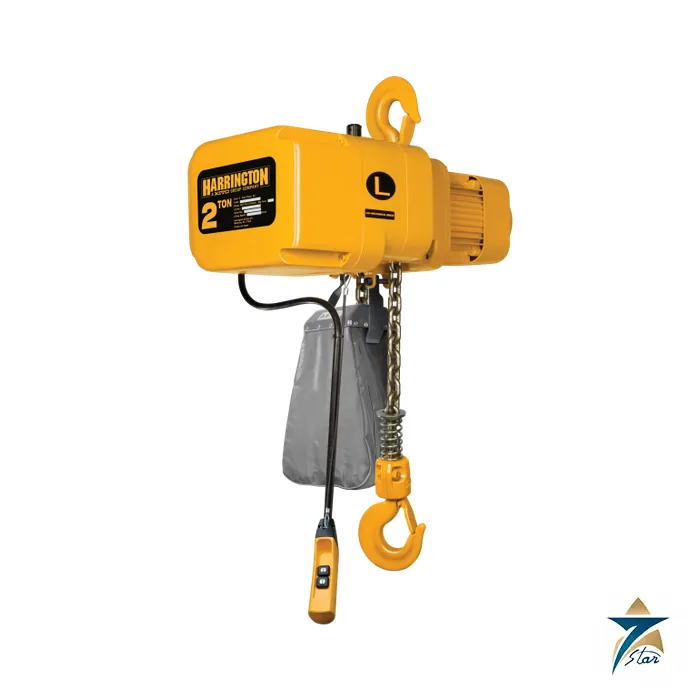
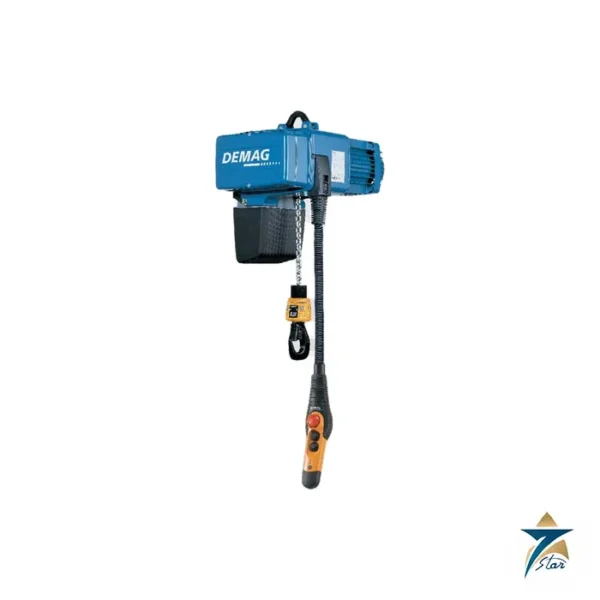
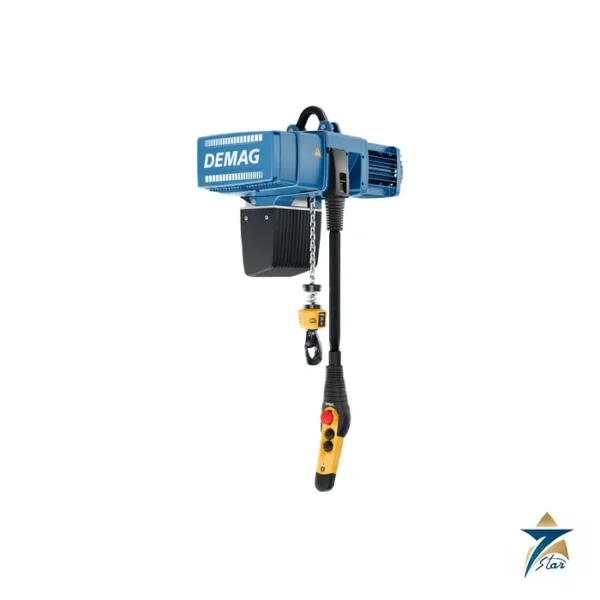
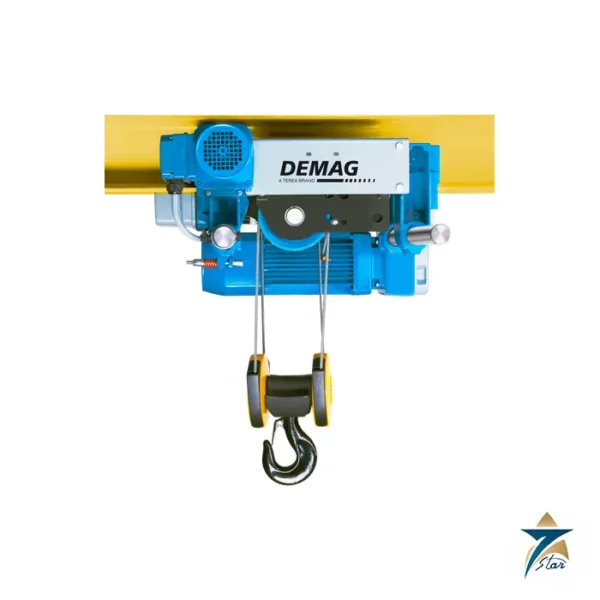
The Harrington RNER2 CII/D2 is the RNER2 series hoist configured for Class II, Division 2 hazardous dust locations, Groups F and G, with a T4 temperature rating. The owner’s manual defines the scope plainly: the product is intended solely for standard conditions or for Class II Division 2, Group F (example: coal dust) and Group G (example: grain dust) locations at T4. It covers 1 ton to 5 ton and has a friction clutch that provides over-winding protection.
The manual also warns that the hoist must not be operated where flammable or explosive gas is present, and that a qualified person must be consulted on hazardous-location classification and equipment selection. It is therefore a dust-location hoist, not a gas-location hoist.
Technical specification
| Parameter |
Specification |
| Operational environment |
Class II, Division 2, Groups F and G; T4 (surface temperature of 135 C / 275 F) |
| Dust groups |
Group F (e.g. coal dust), Group G (e.g. grain dust) |
| Supply voltage |
Single speed standard: reconnectable 208/230 and 460 V, 3-phase, 60 Hz (the table footnote states voltage cannot be changed because components are voltage specific) |
| Operating (control) voltage |
110 V |
| Enclosure |
Hoist IP55; pendant IP65 |
| Temperature / humidity |
-4 to +104 F (-20 to +40 C) / 85% or less, no condensation |
| Noise level |
85 dB(A) or less at 1 m |
| Hoist duty rating |
ISO M4/M5; ASME H4 |
| Intermittent duty |
60% ED, 360 starts per hour |
| Short-time duty |
60 min |
| Motor insulation / winding limit |
Class B per IEC 60034-1; temperature rise limit 120 C / 248 F for the short-time rating |
| Over-winding protection |
Friction clutch |
| Hoist sizes |
Three body sizes D, E and F (nameplate item ‘Size’) |
| Code |
Cap. (ton) |
Speed (ft/min) |
Motor (Hp) |
Current 208-230 V / 460 V (A) |
Chain (mm) x falls |
Net weight, 10 ft lift (lb) |
Per extra foot (lb) |
| RNER2010L |
1 |
14 |
1.2 |
4.8 / 2.5 |
7.7 x 1 |
104 |
0.89 |
| RNER2010S |
1 |
28 |
2.4 |
8.6 / 4.2 |
7.7 x 1 |
119 |
0.89 |
| RNER2015S |
1 1/2 |
18 |
2.4 |
8.6 / 4.2 |
10.2 x 1 |
159 |
1.6 |
| RNER2020L |
2 |
14 |
2.4 |
8.6 / 4.2 |
10.2 x 1 |
161 |
1.6 |
| RNER2020S |
2 |
28 |
4.7 |
16.4 / 7.9 |
10.2 x 1 |
201 |
1.6 |
| RNER2025S |
2 1/2 |
22 |
4.7 |
16.4 / 7.9 |
11.2 x 1 |
227 |
1.9 |
| RNER2030C |
3 |
17 |
4.7 |
16.4 / 7.9 |
10.2 x 2 |
234 |
3.2 |
| RNER2050L |
5 |
11 |
4.7 |
16.4 / 7.9 |
11.2 x 2 |
289 |
3.8 |
Standard lift is 10 ft. Pendant drop is listed as 8.2 ft for the 1 to 2 1/2 ton rows and 9.2 ft for the 3 and 5 ton rows (assigned from the table layout). The manual also lists metric tables and versions with push or geared trolleys (RNER2P/G) and motorized trolleys (RNER2M).
How to read the nameplate
The manual’s nameplate breakdown explains each marking: Class II is the dust classification, Division 2 the usage location, Groups F and G the dust types, T4 the maximum surface temperature of 135 C. The short-time rating is the time the hoist can run at rated output within the motor-winding temperature rise limit, and the intermittent rating combines the percentage on-time with the maximum starting frequency. Size D, E or F refers to the hoist body, and H4 is the ASME duty class. Check the marking on the unit, because the manual states that replacement parts and modifications must keep the original classification.
Selecting the model
Choose first by load, then by speed: RNER2010L moves 1 ton at 14 ft/min while RNER2010S moves the same load at 28 ft/min with a 2.4 Hp motor. RNER2030C is the double-fall 3 ton unit at 17 ft/min and RNER2050L the double-fall 5 ton unit at 11 ft/min. Because the supply voltage is fixed by the components fitted, state 208-230 V or 460 V when ordering. For a hoist on a beam, choose the P/G or M trolley variant.
Installation and operation
Install only after the area classification has been confirmed by a qualified person. Keep dust layers off the hoist and pendant according to site housekeeping rules, since dust accumulation is the hazard the classification is meant to manage. Provide supply overload protection and lockout facilities, and follow the manual’s trial operation and inspection routine. A hoist classified for Division 2 is not a general-purpose hoist for Division 1 or gas areas.
Applications
Locations where combustible dust is not normally present in ignitable quantities but may occur abnormally include grain handling and silos, flour and animal-feed mills, coal and fuel handling, and some chemical and wood-processing areas. In the GCC this includes food-grain terminals and feed mills, and fuel handling at power plants, subject to the site’s own classification. Heat is relevant: the rated ambient temperature is +40 C, so shaded installation and ventilation should be considered in the Gulf summer.
Selection and installation notes
A hoist is selected from the rated capacity, the lift height, the duty cycle and the supply or air available, and it must be used only within its rated load under the site lifting procedure by trained people. Check the support structure and the trolley or hook, inspect the hoist, chain and hooks before use, test the brake and the limits at commissioning, never lift people or pull the load at an angle and have periodic examinations carried out by a competent person as the local rules require. Damaged equipment is taken out of service.
For a hazardous dust location, check that the classification of the area matches the marking on the hoist and keep the unit clean of dust build-up.
Information needed for a quotation
Send the full model code, the quantity, the delivery location in Oman or the GCC, the intended use and any accessories needed, so that the complete package can be quoted together.
Documents and supply information
The manufacturer data sheet is attached to this page and should be read together with the project specification and the site risk assessment before a purchase is confirmed. Ratings, standards and dimensions are quoted as printed on that sheet. Lead time, stock position and certificates available with the shipment are confirmed in the quotation, and we supply to Oman and the wider GCC region for industrial, utility and building services projects.
Related equipment
The standard-duty alternative is the Harrington NER/ER hoist. For spark-resistant air hoists suitable for gas atmospheres, see the Harrington TCE. Other lifting equipment is in Material Handling & Lifting Equipment.
Frequently asked questions
Is the RNER2 CII/D2 suitable for gas hazards? No. The manual forbids operation where flammable or explosive gas is present.
What temperature class does it have? T4, a surface temperature of 135 C (275 F).
Documents and quotation
The attached RNER2 owner’s manual (effective 26 June 2025) is the source for all values. It uses US units and 60 Hz supply; confirm voltage, frequency and area classification before ordering. Include capacity, speed code, lift, voltage and trolley type in the enquiry.



Reviews
There are no reviews yet.