Membrane-covered amperometric sensor for free chlorine
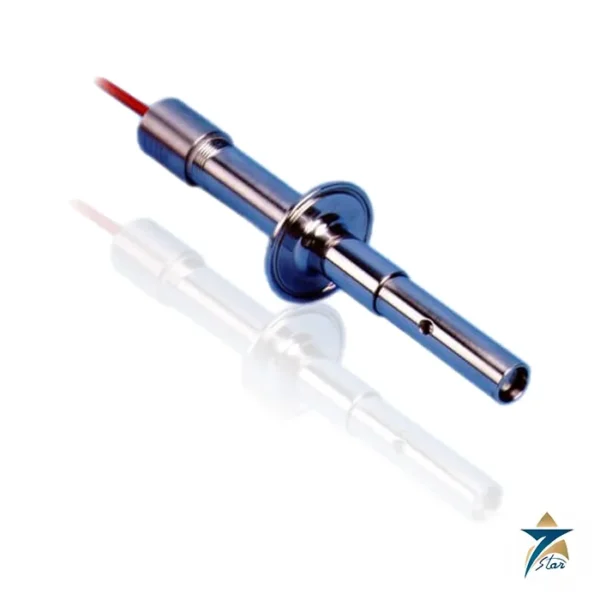
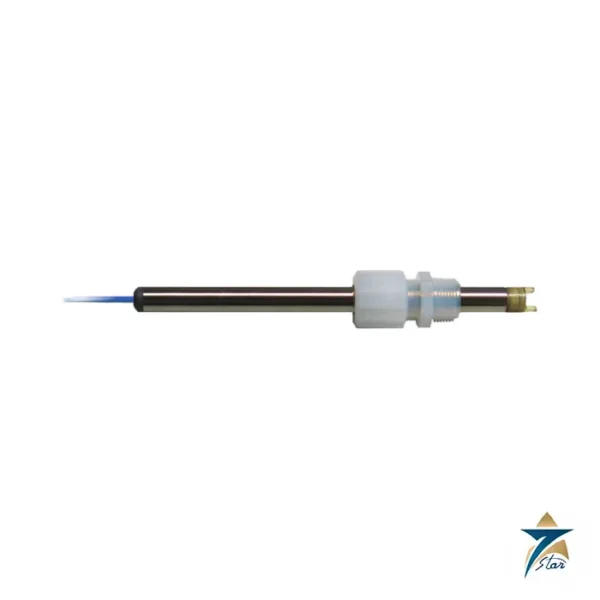
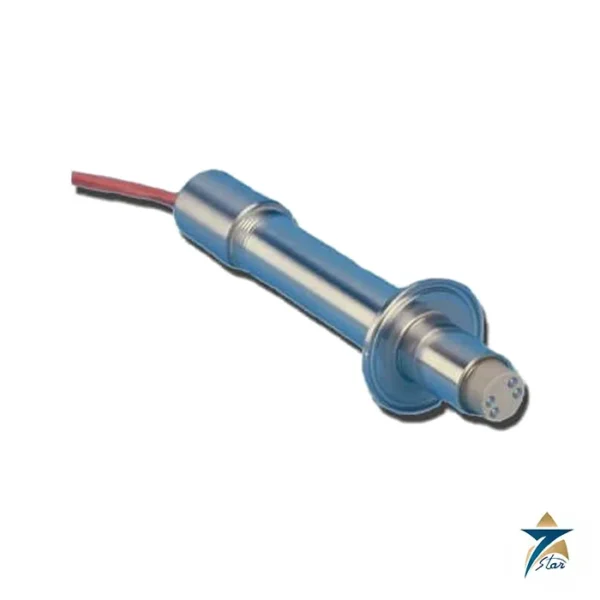
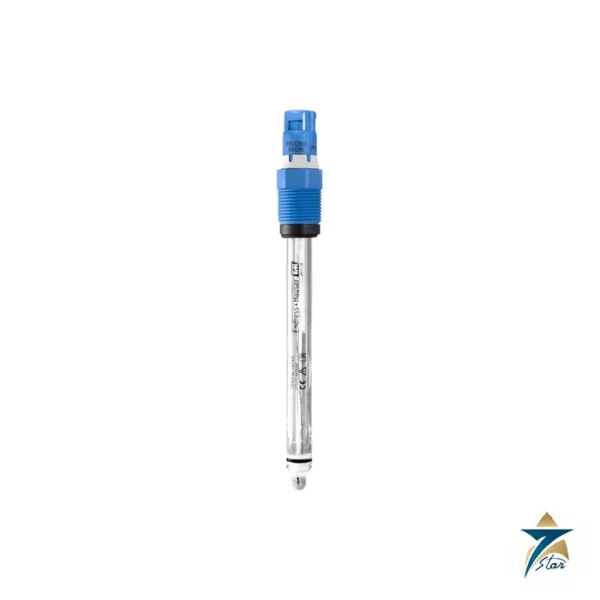
The JUMO tecLine Cl2 (type 202630) is a membrane-covered, amperometric two-electrode sensor for free chlorine in drinking water, swimming pool water, service water and process water. It measures inorganic chlorine compounds such as sodium hypochlorite, calcium hypochlorite and chlorine gas, as well as chlorine produced by membrane electrolysis. JUMO states that it is not suitable for detecting the absence of free chlorine.
Two output families exist. The /40 and /43 versions give a temperature-compensated 4 to 20 mA signal on a two-wire connection, and the /50 and /53 versions give a Modbus RTU signal through an M12 plug. The /43 and /53 variants have reduced pH dependence, which matters when water drifts above pH 7.
Technical specifications
| Parameter |
Specification |
| Data sheet type |
202630 (/40, /43 analog; /50, /53 digital) |
| Measuring principle |
Membrane-covered amperometric, 2-electrode system with integrated electronics; hydrophobic PTFE membrane |
| Measuring ranges |
0.5, 2, 5, 10, 100 or 200 mg/l (analog); 2 or 20 mg/l (digital) |
| Lower limit |
0.05 mg/l |
| Supply and output |
/40: DC 12 to 30 V, 4 to 20 mA; /50: DC 22.5 to 26 V, Modbus RTU |
| Settling time / t90 |
1 h settling; response t90 approx. 30 s |
| Inflow speed |
Approx. 15 cm/s, about 30 l/h in the JUMO flow fitting (part no. 00392611) |
| Slope drift |
Approx. below -1 % per month |
| Operating pH range |
pH 6 to pH 8; loss of slope at pH 8 approx. 65 % and at pH 9 approx. 95 % (standard version) |
| Sample temperature |
0 to 45 C, automatic compensation; ambient 0 to 55 C |
| Pressure resistance |
Pabs max. 2 bar; Prel max. 1 bar |
| Dimensions and weight |
Diameter 25 mm; length 220 mm (/40) or 205 mm (/50); about 125 g |
Order code and stock versions
Type 202630 is followed by the output code (40, 43, 50 or 53) and the measuring-range code (10 for 0 to 0.5 mg/l, 20 for 2, 25 for 5, 35 for 10, 37 for 20, 40 for 100, 45 for 200 mg/l). The data sheet warns that the order code is not modular and recommends choosing from the stock versions where possible.
The listed stock versions, with a quoted three working days, are 202630/40-10 (4 to 20 mA, 0 to 0.5 mg/l, part no. 00391395), 202630/40-20 (0 to 2 mg/l, 00391396), 202630/50-20 (digital, 0 to 2 mg/l, 00649742) and 202630/50-37 (digital, 0 to 20 mg/l, 00649745). Delivery includes the membrane cap, electrolyte, abrasive paper for cathode cleaning and the manual.
Installation and calibration notes
Calibration is carried out in the downstream indicator, controller or PLC against an analytical DPD-1 chlorine determination; the sensor needs no zero adjustment. The data sheet shows connection to JUMO dTRANS AS 02, AQUIS touch and similar devices, which also supply the sensor voltage. Hold the sample flow near 30 l/h in the JUMO flow fitting so the inflow speed stays around 15 cm/s.
Keep the pH inside the stated operating range, because the free chlorine signal falls as pH rises. Chlorine dioxide is recorded with a concentration factor of 9 and ozone is also picked up, and electrolysis without a membrane can cause disturbances, so the chlorine source should be considered when the sensor location is chosen.
Choosing the variant for your water
Start with the expected chlorine concentration and the pH of the water. Drinking water networks and most process water run at low residuals, where the 0.5 or 2 mg/l ranges give the best resolution; disinfection loops or concentrated process streams may need the 10, 100 or 200 mg/l analog ranges or the 20 mg/l digital range. The choice between the analog /40 and /43 and the digital /50 and /53 depends on the control system: a 4 to 20 mA input on an existing controller or PLC points to the analog version, while a Modbus RTU network favours the digital one. Because the signal of the standard version falls sharply as pH rises above 8, water with a pH that drifts upward, such as some pool water or water after softening, is better served by the /43 or /53 with reduced pH dependence. Where pH varies widely, measuring pH alongside chlorine is worth considering.
Putting the sensor into service
- Install the sensor in the JUMO flow fitting so that the flow is steady and close to 30 l/h; an unstable flow produces an unstable reading.
- Fill the membrane cap with electrolyte as described in the manual, avoiding air bubbles beneath the membrane.
- Connect the sensor to the downstream instrument, which supplies the voltage, and allow the one-hour settling time before calibrating.
- Take a water sample at the sensor and determine free chlorine with the DPD-1 method, then enter that value as the calibration in the controller.
- Repeat the comparison after a few days of operation, since a new membrane may still be settling.
Keeping readings reliable
A slope drift of less than about 1 % per month is listed, so regular DPD checks and recalibration keep the reading accurate. If the reading falls gradually despite stable dosing, the membrane may be fouled or the electrolyte exhausted; replace the membrane cap and electrolyte and clean the cathode with the abrasive paper supplied. A sudden drop in reading often means the flow through the fitting has stopped or air has become trapped. Readings that are higher than DPD values can be caused by chlorine dioxide or ozone in the water. Pressure above the listed limits can damage the membrane, so check the sample line pressure if membranes fail early.
Water treatment in Oman and the GCC
Desalinated water distribution, hotel and resort pools, district cooling and industrial process water are typical uses in Oman. Water temperatures in tanks and pipes can rise considerably in summer, so check that the sample stays within the 0 to 45 °C limit, particularly in sample lines exposed to the sun. Sensor panels installed outdoors should be shaded so the ambient around the electronics stays below 55 °C. Sand and silt in some supplies can foul the membrane, so a sample filter upstream of the flow fitting can extend service life. In coastal facilities, mount the transmitter and its connections in an enclosure that keeps salt air away.
Documents and quotation
Use the request form to ask for this model with your exact code. The attached JUMO tecLine Cl2 data sheet 202630 (EN) lists all variants and options, and the measuring range, output type and pH of the water should be confirmed before the order is released. Other products of this kind can be found in Liquid Analysis Sensors.










Reviews
There are no reviews yet.