W4 V-optics sensor for small parts with IO-Link
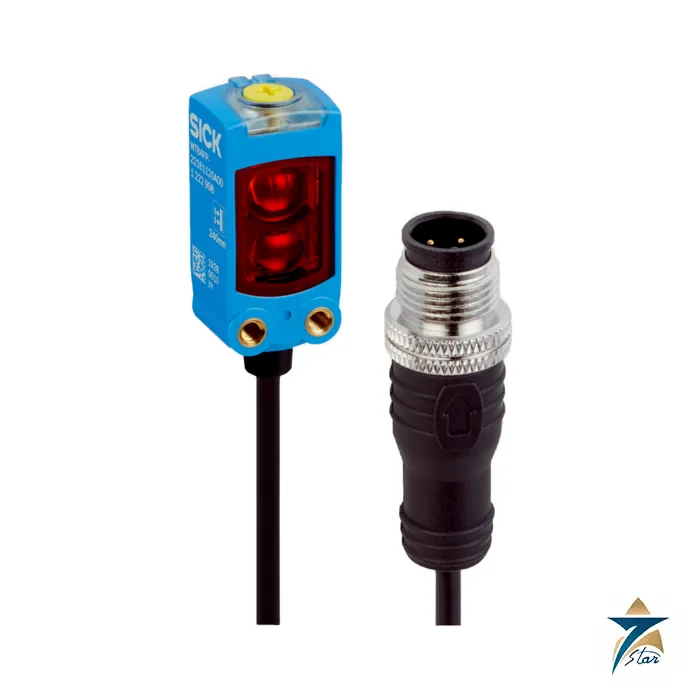
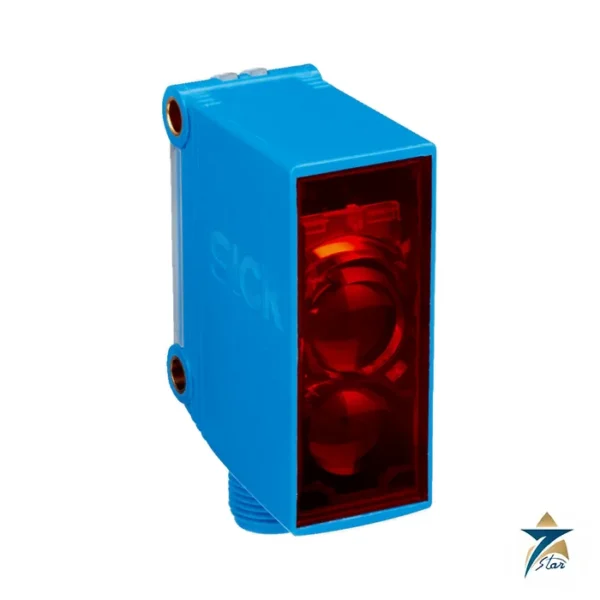
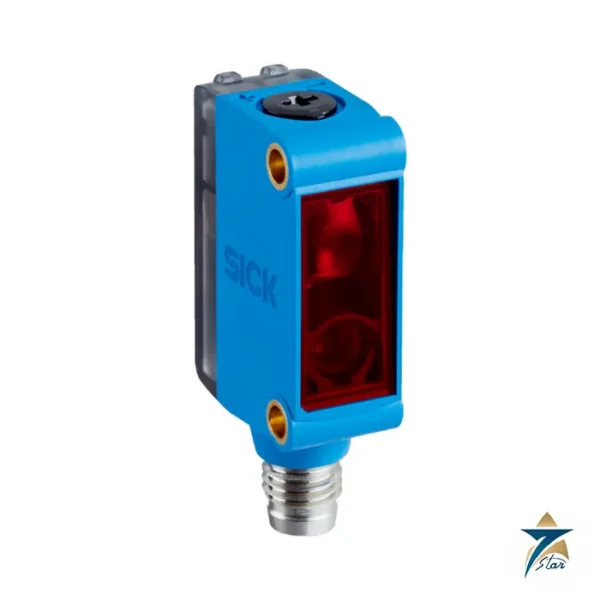
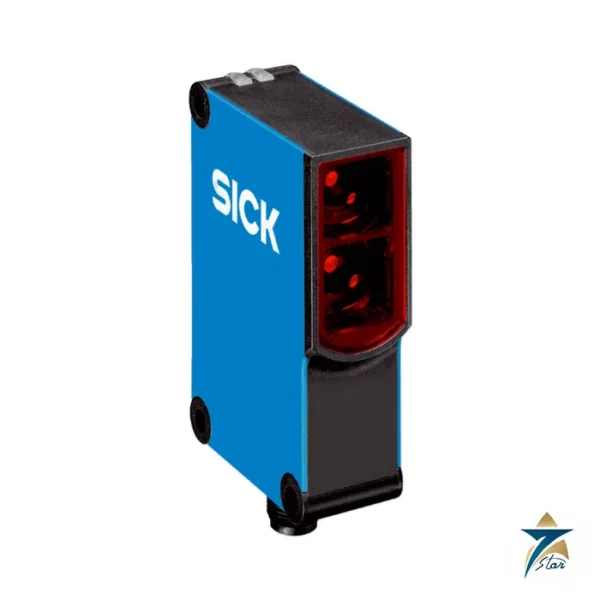
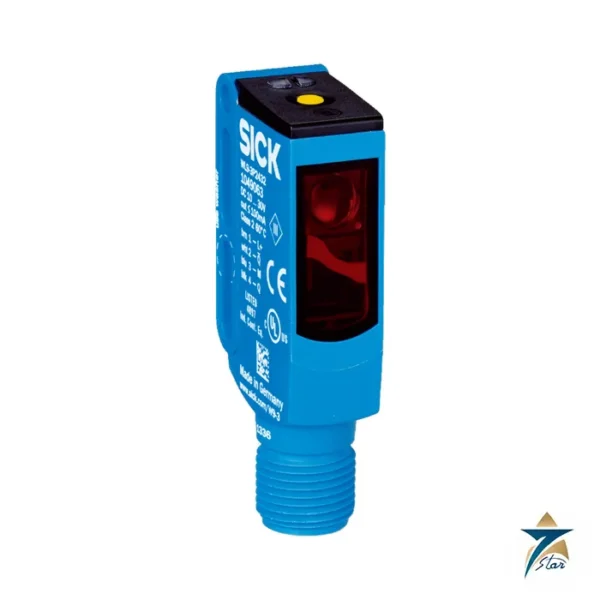
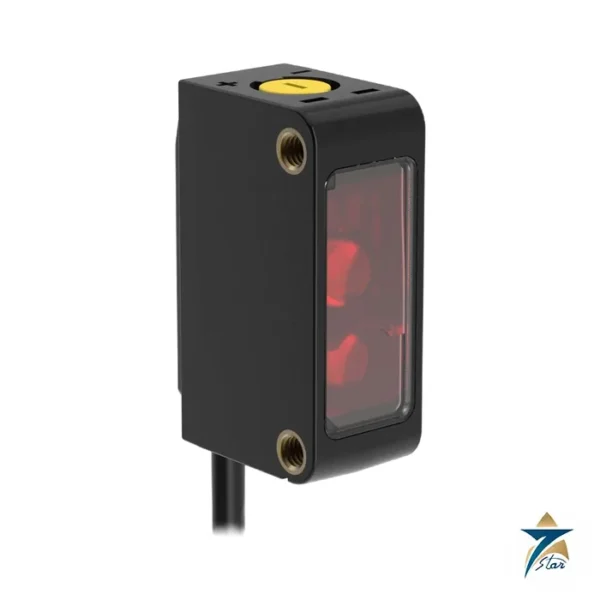
The SICK WTV4FE-8416A120A00 (part no. 1123755) is a flat W4 photoelectric proximity sensor with V-optics and background suppression for very short distances. The sensing range is 2 mm to 50 mm, with an adjustable background-suppression threshold of 15 mm to 50 mm and a recommended range of 15 mm to 30 mm. A PinPoint LED projects a rectangular 0.5 mm by 1.9 mm spot at 30 mm, giving a smallest detectable object of 0.1 mm.
The sensor communicates over IO-Link V1.1 and carries a short cable with M12 4-pin plug, which makes it suitable for tight machine spaces.
Technical specifications
| Parameter |
Specification |
| Manufacturer |
SICK |
| Type / family |
WTV4FE-8416A120A00 / W4 |
| Part no. |
1123755 |
| Functional principle |
Photoelectric proximity sensor, background suppression, V-optics |
| Sensing range min. / max. |
2 mm / 50 mm |
| Switching threshold for background suppression |
15 mm … 50 mm adjustable |
| Recommended range for best performance |
15 mm … 30 mm |
| Light source / type |
PinPoint LED, visible red light, 635 nm |
| Light spot size |
0.5 mm x 1.9 mm at 30 mm, rectangular |
| Smallest detectable object (MDO) |
0.1 mm at 30 mm distance (typical) |
| Adjustment |
Teach-Turn adjustment, BluePilot |
| IO-Link |
V1.1, COM2 (38.4 kBaud), cycle time 2.3 ms, 16-bit process data |
| Vendor ID / Device ID |
26 / 0x8002EA (8389354) |
| Supply voltage UB |
10 V DC … 30 V DC |
| Current consumption |
25 mA max. without load at 24 V |
| Output |
1 x push-pull PNP/NPN, light switching, 100 mA |
| Response time / switching frequency |
500 microseconds / 1,000 Hz |
| Dimensions (W x H x D) |
16 mm x 40.1 mm x 12.1 mm |
| Connection |
Cable with plug M12, 4-pin, 182 mm (cable length 140 mm) |
| Weight |
approx. 30 g |
| Enclosure rating |
IP66, IP67 |
| Ambient temperature |
-40 °C … +60 °C operation; -40 °C … +75 °C storage |
| Ambient light immunity |
up to 50,000 lx (artificial light and sunlight) |
| Smart Task |
Base logics (direct, AND, OR), timer functions, inverter |
| MTTFD |
661 years (DCavg 0 %, TM 20 years) |
Why V-optics and IO-Link matter
V-optics arranges the emitter and receiver so that the sensing window is very short and very stable regardless of target colour. This is ideal for detecting small parts in feeder bowls, transparent films or fine electronic components. The BluePilot LED shows the sensing range at a glance, and Teach-Turn adjustment sets the range without a PC.
Through IO-Link the sensor delivers its switching signal and the live receiver level, supports remote parameter changes and offers diagnostic data including device temperature, operating hours counter and quality-of-teach. If no IO-Link master is available, the sensor runs in SIO mode as a standard switching sensor, with the Smart Task base logics available in both modes.
Ordering reference and decoding
Order as WTV4FE-8416A120A00 with part no. 1123755. W4 identifies the family, the data sheet describes the optics as V-optics, and IO-Link is listed under the communication interface. Because the cable length and connector are part of this article, a variant with a different cable or connector carries a different part number.
Choosing the right distance and target position
The most common mistake with short-range background suppression sensors is mounting them at the edge of their capability. For the WTV4FE-8416A120A00, the published recommended range of 15 mm to 30 mm should be treated as the design window: place the conveyor, nest or feeder track so that the parts pass inside it, and leave the remainder of the 2 mm to 50 mm sensing range as margin for mechanical tolerances. If the part height varies from batch to batch, set the background-suppression threshold with the tallest and shortest parts in mind, not only the nominal one.
- Check what lies behind the target. A shiny machine bed or a moving belt just beyond the switching threshold can still affect detection if the threshold is set too close to it.
- For thin or edge-presented parts, confirm the 0.5 mm by 1.9 mm light spot orientation against the direction of travel, because a rectangular spot behaves differently depending on how it is turned.
- Decide early whether the machine controller has an IO-Link master port. If it does, plan to use the receiver level and diagnostics; if not, the sensor will work in SIO mode with its switching output.
- Confirm that the push-pull output setting and the light-switching behaviour suit the input logic of the controller.
Installation and teach-in
Fix the sensor rigidly; at such short distances even small bracket movement shifts the effective switching point. Route the short cable so the M12 plug is not under strain and is supported close to the housing, then connect a mating cordset to the controller. With the target in place, use Teach-Turn to set the threshold, and check the BluePilot indication to confirm the range visually. Run a sample of real parts, including any transparent, dark or reflective variants, before releasing the station for production.
Where IO-Link is used, store the parameter set in the master or the PLC project. If the sensor is replaced later, the new unit can then receive the same settings without repeating the teach procedure by hand, and the quality-of-teach value can be compared with the original commissioning record.
Keeping the sensor reliable in service
Most field problems come from a dirty front window, a knocked bracket or a damaged cable. Use the live receiver level available over IO-Link as an early warning: a gradual fall usually means contamination on the optics or a change in the target surface, long before the output starts to miss parts. Clean the window with a soft cloth rather than solvents unless the SICK documentation permits them, and recheck the switching point after any mechanical work near the station.
Using it in Oman and GCC plants
The published operating range of -40 °C to +60 °C covers most indoor production halls in the region, but sensors mounted close to ovens, sealers or sun-facing machine walls can see local temperatures well above the hall average, so measure at the actual mounting point. IO-Link device temperature data makes this easy to monitor. The IP66 and IP67 rating suits wash-down and dusty conditions, yet fine dust settling on the window still reduces signal, so include window cleaning in the shift routine on packaging and bottling lines. In coastal facilities, protect the M12 connection from salt-laden moisture by using sealed cordsets and tightening the coupling nut properly.
Documents and quotation
Download the manufacturer data sheet for WTV4FE-8416A120A00 (part no. 1123755) from this page; it is the source of every specification listed here. To request a price, send the type code and part number to Seven Star LLC, an independent supplier based in Muscat, together with the quantity and the site where the goods are needed. Please confirm before ordering that the version, connector and accessories (a reflector, bracket or mating cordset) match your drawings, because published data may change without notice. Related items can be found in sensors and transmitters and in the SICK WTB4-3 miniature photoelectric sensor.






Reviews
There are no reviews yet.