A quartz pressure probe for shock tubes and blast waves
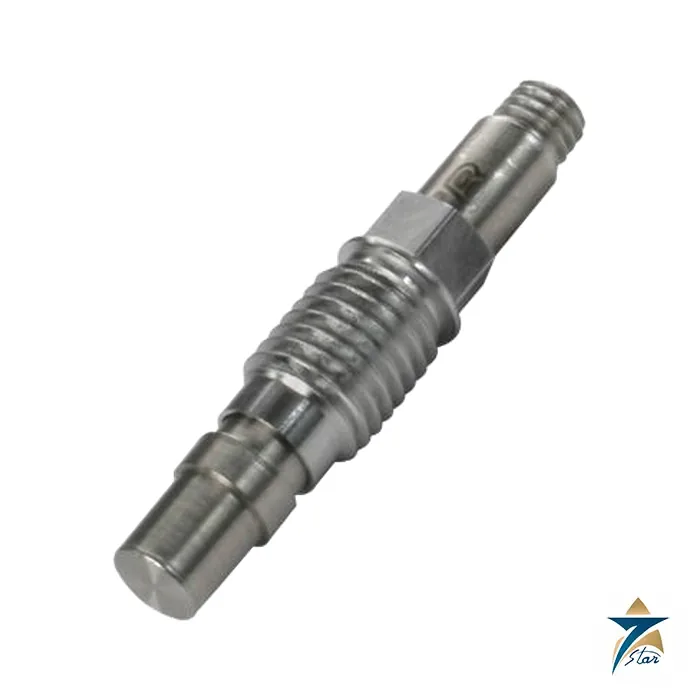
The PCB Piezotronics 113B28 is a miniature ICP dynamic pressure sensor in the Series 113 probe style, designed for shock tube and blast wave measurements and other work that needs very high frequency, near non-resonant response. The measurement range is 50 psi (344.7 kPa) for a +/-5 V output, with a sensitivity of 100 mV/psi.
It uses an acceleration-compensated quartz element and miniature source follower electronics in an inseparable sealed assembly, with a 0.218 in diameter diaphragm. The probe is installed with a hollow clamp nut (5/16-24 thread, or M7 x 0.75 in the metric version) and the housing is at electrical ground potential.
Technical specifications
| Parameter |
Specification |
| Measurement range (for +/-5 V output) |
50 psi (344.7 kPa) |
| Useful overrange (for +/-10 V output) |
100 psi (689.4 kPa) |
| Sensitivity (+/-15 %) |
100 mV/psi (14.5 mV/kPa) |
| Maximum pressure |
1,000 psi (6,895 kPa) |
| Resolution |
0.001 psi (0.007 kPa) typical |
| Resonant frequency |
500 kHz or more |
| Rise time |
1.0 us or less |
| Low frequency response (-5 %) |
0.5 Hz |
| Non-linearity |
1.0 % FS or less |
| Acceleration sensitivity |
0.002 psi/g |
| Operating temperature |
-100 to +275 F (-73 to +135 C) |
| Temperature coefficient of sensitivity |
0.03 %/F or less |
| Maximum flash temperature |
3,000 F (1,649 C) |
| Maximum vibration / shock |
2,000 g pk / 20,000 g pk |
| Discharge time constant |
1.0 s or more |
| Excitation / constant current |
22 to 30 VDC / 2 to 20 mA |
| Output impedance / bias |
Below 100 ohm / 8 to 15 VDC |
| Sensing element / geometry |
Quartz / compression |
| Housing / diaphragm |
17-4 stainless steel / Invar; coating Emralon |
| Sealing / connector |
Welded hermetic / 10-32 coaxial jack |
| Weight (with clamp nut) |
0.16 oz (4.5 g) |
| Supplied accessories |
Clamp nuts 060A03 and 060A05, seal ring 065A02 (3), seal sleeve 065A05, calibration PCS-1AZ |
Options, installation and powering
The spec sheet lists CA (ablative coating), E (Emralon coating), J (ground isolated, with an isolation ring and seal), N (negative output polarity), S (316L stainless steel diaphragm) and W or WM (water resistant cable, with matching clamp nuts). A silicone rubber coating of about 0.010 in on the diaphragm is also mentioned by the manual as an effective thermal protection.
Mounting ports must be prepared to the installation drawing, with special attention to sealing surfaces. The sensor is supplied with a 2 to 20 mA constant current at +20 to +30 VDC through a current-regulating diode or equivalent circuit. Low-noise cable is not required, and a 070B09 solder connector adaptor allows ordinary two-wire cable. In extreme environments the cable connections should be protected with shrink tubing.
Some figures on the spec sheet need care. The 100 psi useful overrange at a +/-10 V output requires a supply of at least 26 VDC, and a negative 10 V output may be limited by the output bias. The sensor tolerates a maximum flash temperature of 3,000 F, 2,000 g pk of vibration and 20,000 g pk of shock, and its 0.002 psi/g acceleration sensitivity keeps vibration pick-up small for a probe of this size.
What to confirm before ordering
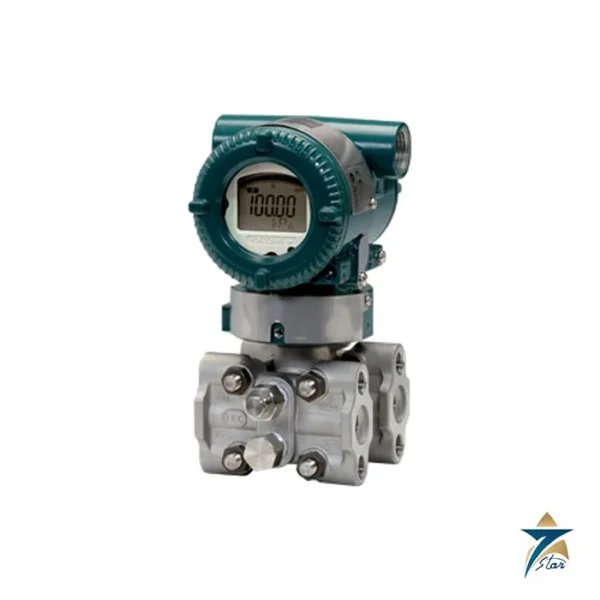
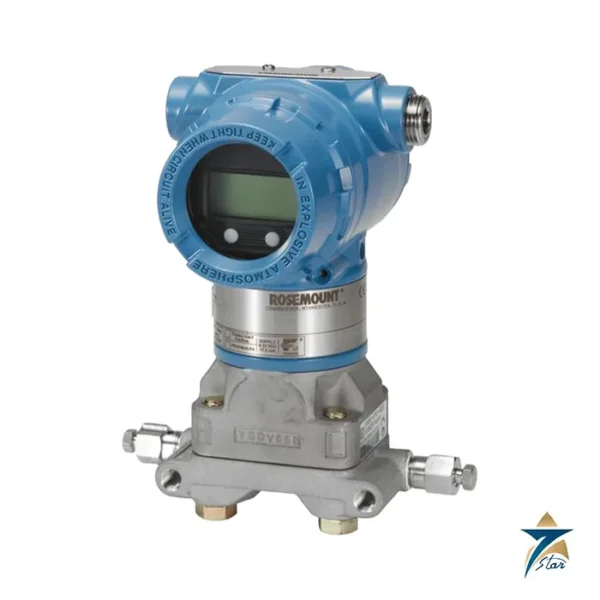
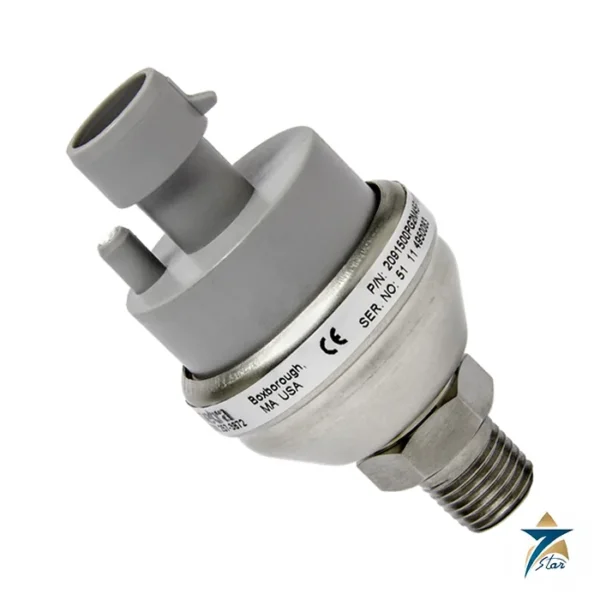
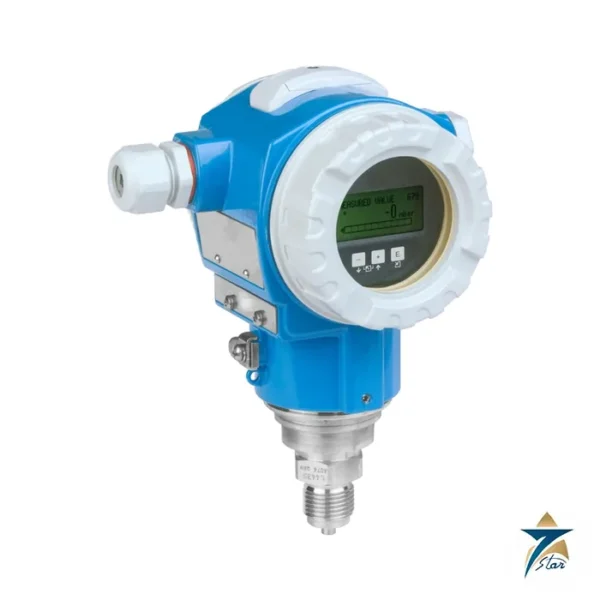
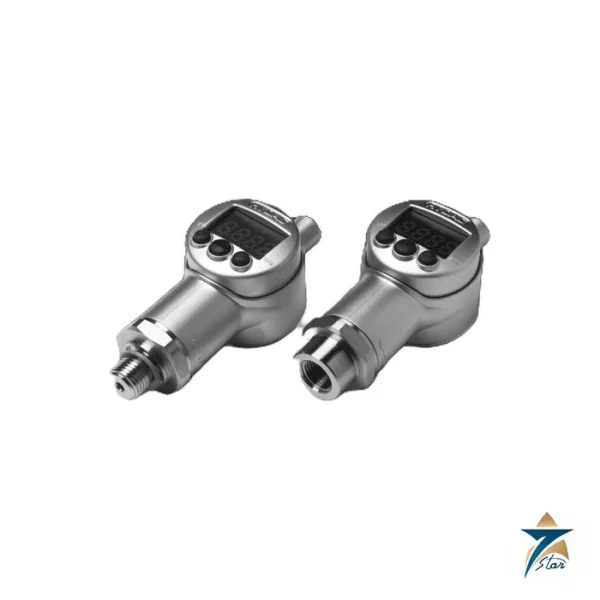
This is a laboratory and test grade dynamic sensor, not a static process pressure transmitter, so confirm the application. Send the pressure range, temperature pulse, coating needed and mounting adaptor. The photo on the manufacturer page shows the sibling 113B26.
How the PCB Piezotronics 113B28 works
The 113B28 has a quartz element that makes an electric charge when pressure bends the diaphragm. A small source follower circuit inside the probe turns this charge into a low impedance voltage. The probe is powered by a constant current from a signal conditioner, and the signal rides on a DC bias on the same coaxial cable. The quartz element is compensated for acceleration, so shock and vibration of the mount add little error. It reads fast pressure changes, but not steady pressure, because the signal decays with the discharge time constant.
Where the 113B28 is used
- Shock tubes
- Blast wave and explosion tests
- Combustion and detonation research
- Wind tunnel and aero acoustic work
- Fast pressure pulses in test cells
Selection checklist for the 113B28
- Measurement range of 50 psi for a 5 V output
- Sensitivity of 100 mV/psi
- Resonant frequency of 500 kHz or more
- Rise time of 1 microsecond or less
- Temperature range of -100 to 275 degrees F
- Thread: 5/16-24 or the metric M7 x 0.75
- Options such as the ground isolated or the ablative coating
- Signal conditioner with 2 to 20 mA constant current
Installation, commissioning and maintenance notes
Fit the probe in a bore with the supplied clamp nut and seal ring, and tighten the nut as the manual states. Keep the diaphragm flush with the wall. Connect the 10-32 coaxial cable to a signal conditioner with 22 to 30 VDC excitation. Check the bias level, then run a calibration. Do not touch the diaphragm, and keep the sensor and its cable clean and dry.
Requesting a quotation for the PCB Piezotronics 113B28
Please send the option letters, the thread type, the signal conditioner needs and the quantity. Seven Star LLC serves industrial customers in Oman and the GCC and replies with a quotation based on the information provided.
113B28 pressure limits
The useful overrange is 100 psi for a 10 V output and the maximum pressure is 1,000 psi. The typical resolution is 0.001 psi and the non-linearity is 1.0 percent of full scale or less.
113B28 low frequency response
The low frequency response is 0.5 Hz at minus 5 percent, and the discharge time constant is 1.0 s or more.
113B28 temperature data
The temperature coefficient of sensitivity is 0.03 percent per degree F or less. The maximum flash temperature is 3,000 degrees F.
113B28 materials and size
The housing is 17-4 stainless steel with an Invar diaphragm, and the sealed assembly is welded. The probe weighs 4.5 g with the clamp nut.
Sensor records for 113B28
Keep the calibration sheet, the serial number and the option letters with the test file.
Choosing the right 113B28 option
Choose the ground isolated version where ground loops disturb the signal, and the ablative or silicone coating where the diaphragm sees heat.
Documents and quotation
The PCB Series 102/113 operation manual covering the 113B28 is attached; the spec sheet is rev G. Seven Star LLC is an independent supplier in Muscat. See Pressure Instrumentation.










Reviews
There are no reviews yet.