- Automation & ControlView all 3,111 products
- Automation Accessories
- AC Drives
- PLC & I/O Cards
- Industrial Communications
- Vibration Monitoring
- Isolator & Barrier
- Controllers & Data Acquisition
- Safety Switches & Guard Locking
- Encoders
- Motor Soft Starters
- CCTV & Security
- Pneumatic Cylinders
- HMI Displays
- Servo Drives
- Industrial Computers
- Machine Vision
- Automation Software
- Robotics
Brand: Bürkert
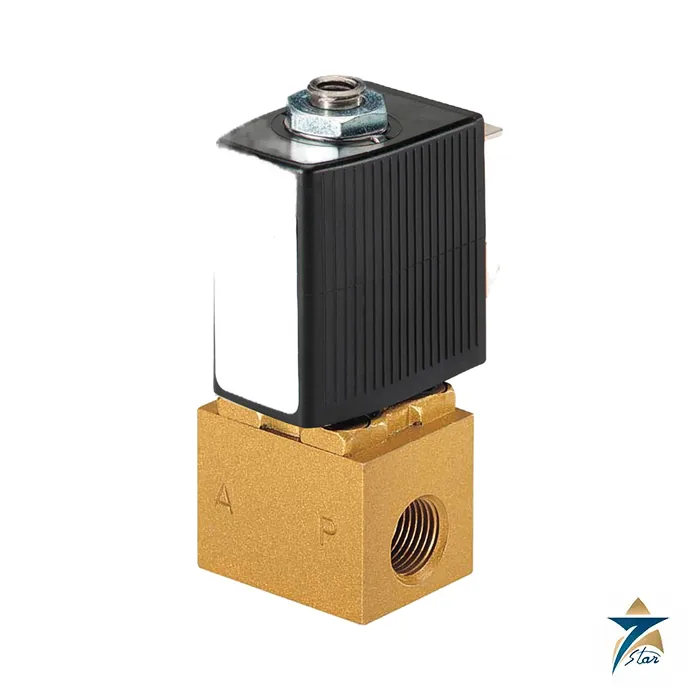
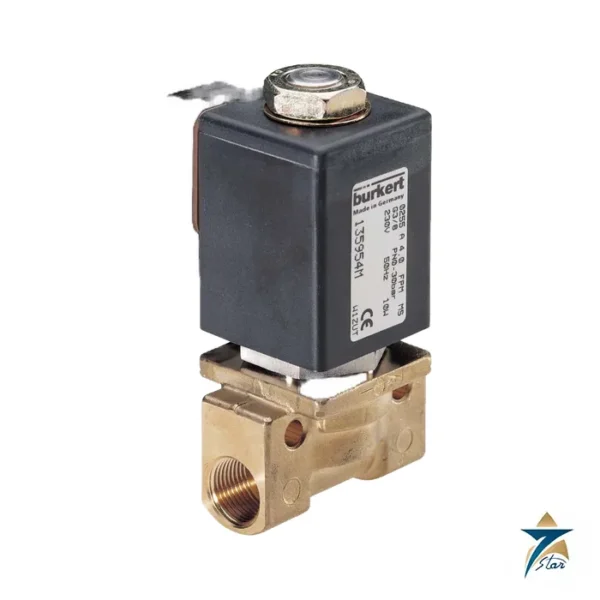
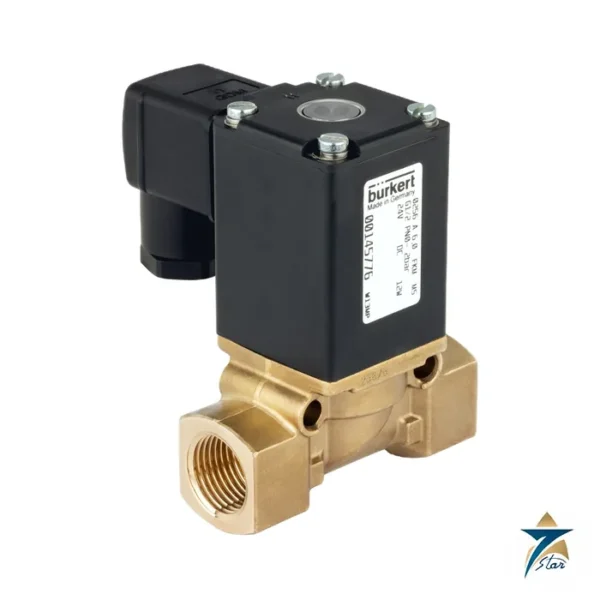
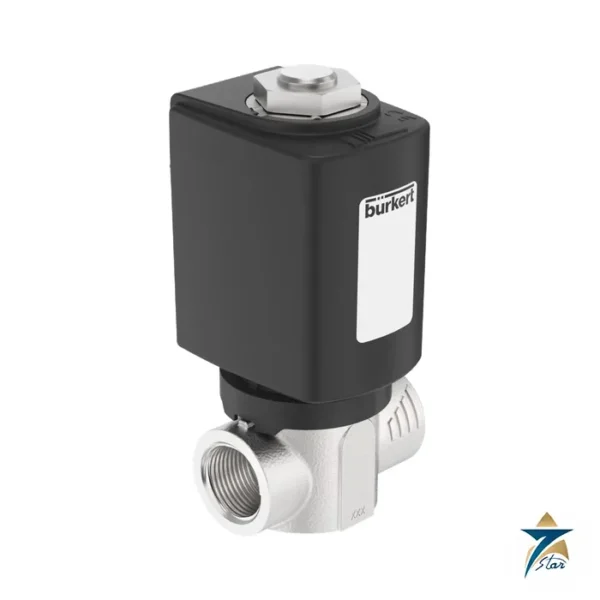
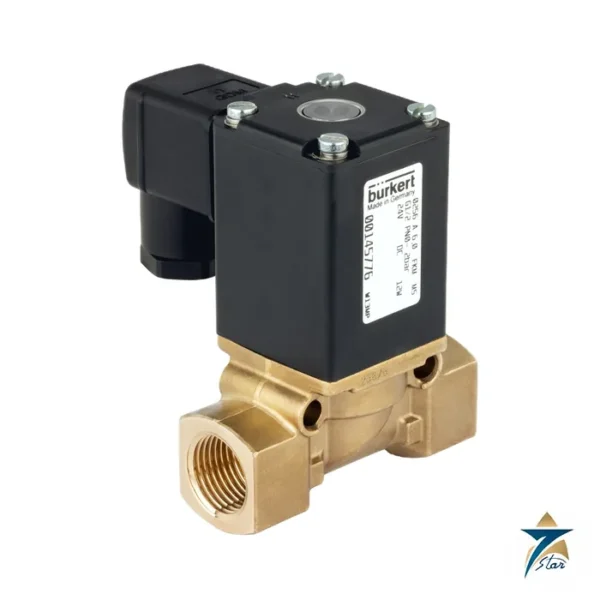
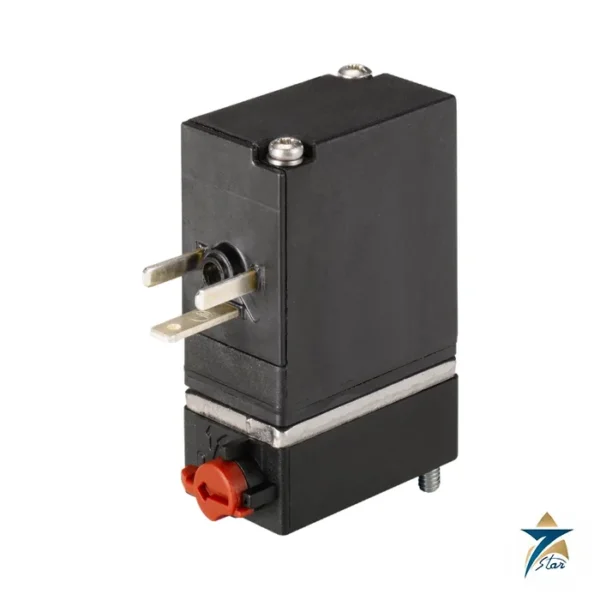
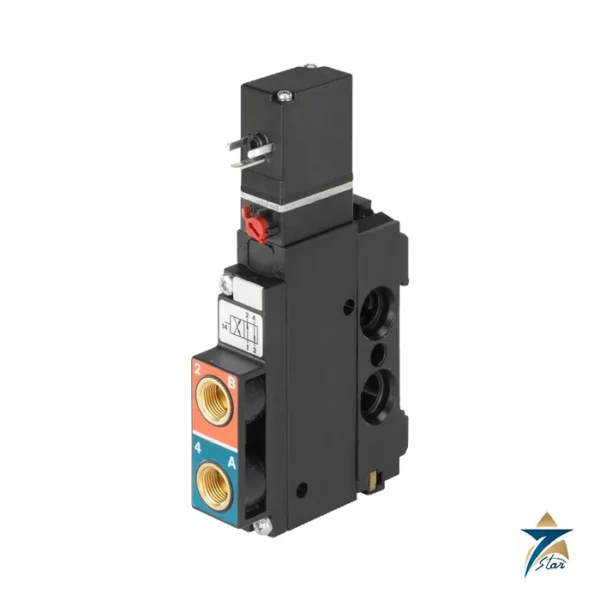
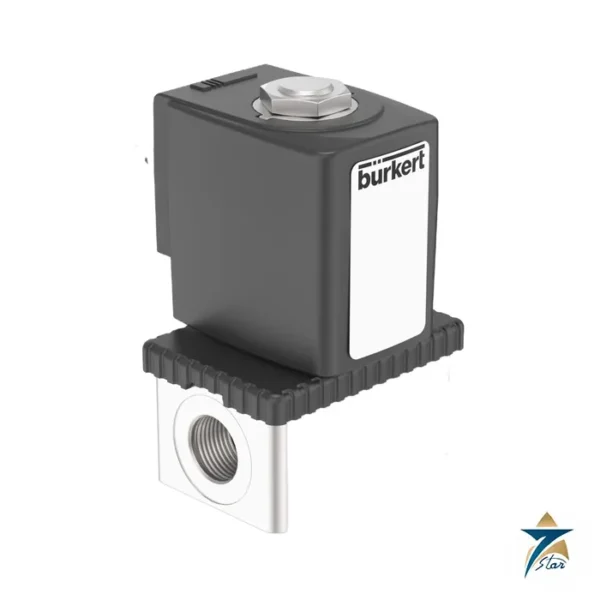
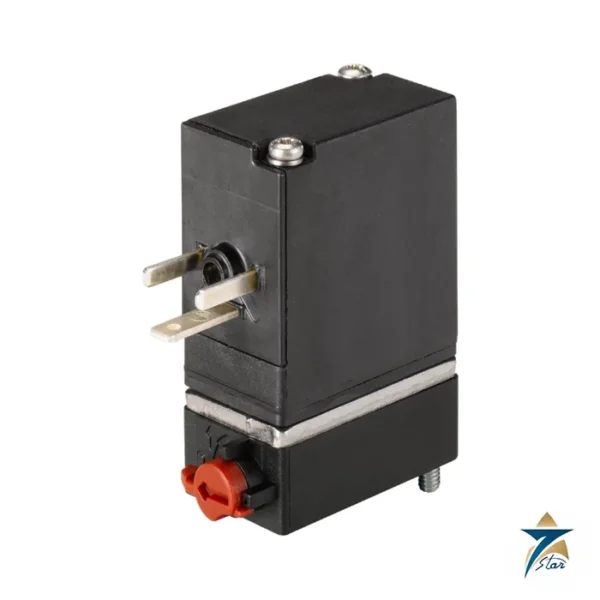
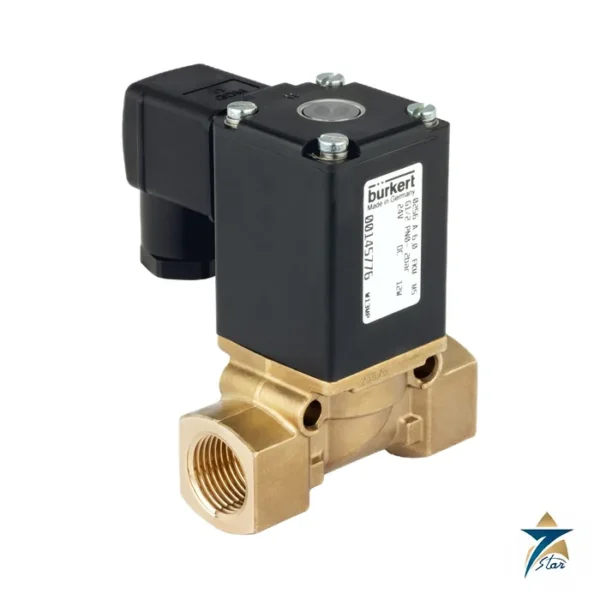
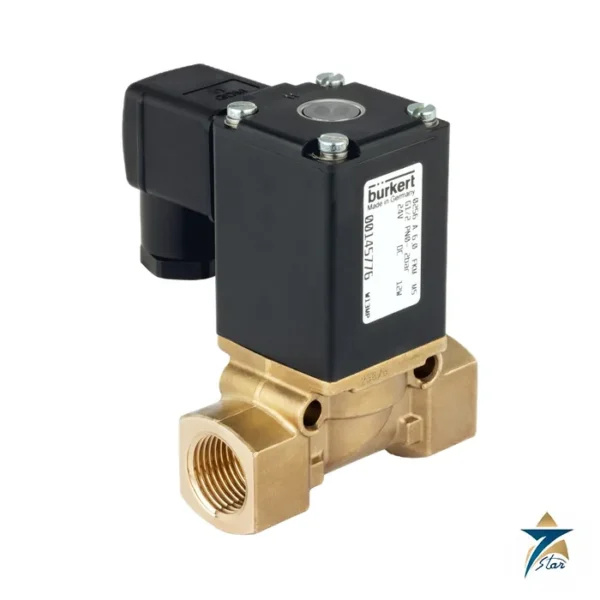
Bürkert 134143 Type 6012 3/2-Way Plunger Solenoid Valve M5 24 V DC
Description
Overview
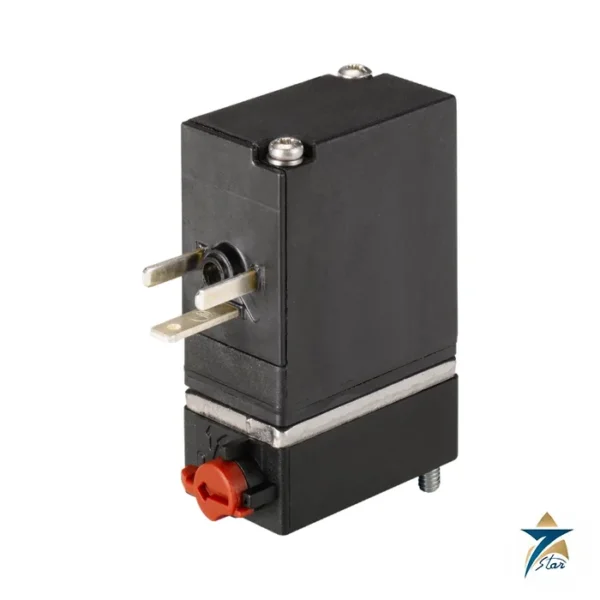
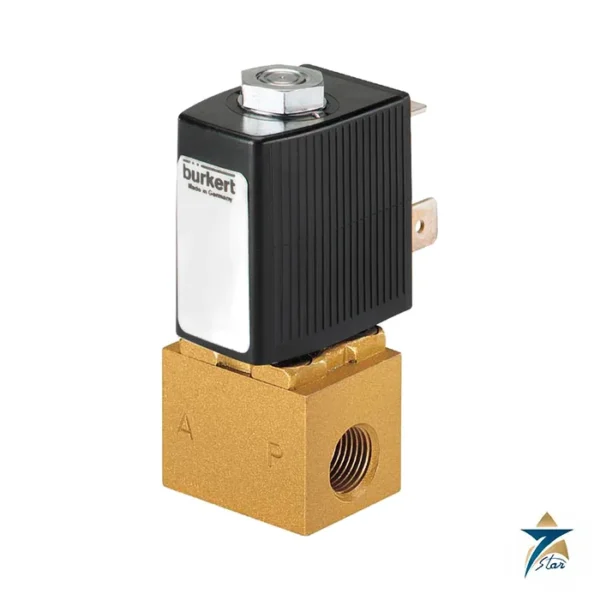
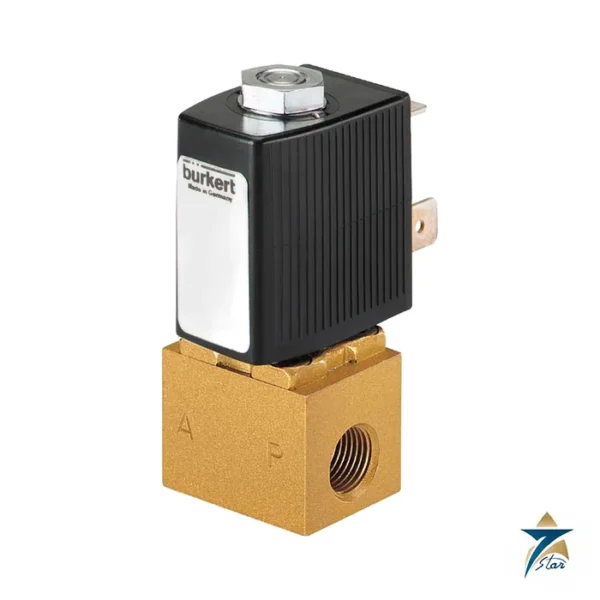
Valves that fit between a pilot signal and a pneumatic actuator have to be small, quick and cheap to cycle millions of times. The Bürkert 134143 is Bürkert’s answer in its smallest threaded form: a direct-acting plunger valve of Type 6012 with 3/2-way, normally closed function, an M5 thread, a 1.2 mm orifice and a 24 V DC coil. The brass body is only a few centimetres long, yet the stopper and guide tube are welded together to resist pressure and keep the seat tight. Seven Star LLC is an independent supplier serving Oman and the GCC.
The M5 thread and what it implies
Where its relatives use G1/8 or a manifold flange, the Bürkert 134143 is the version with the M5 inline thread. An M5 port is roughly the size of the connection on a small pneumatic cylinder, so the valve is typically screwed directly into a cylinder, a tubing adapter or a custom block. This also explains the modest Kv of 0.045 m3/h for water: the valve is meant for pilot and small-actuator service where flow is limited by the port as much as by the seat. The 1.2 mm orifice allows pressures up to 10 bar, whereas the 1.6 mm orifice of the same family handles only 6 bar.
Technical data for Bürkert 134143
| Item | Value |
|---|---|
| Article number | 134143 |
| Body material | brass |
| Port connection | M5 |
| Voltage | 24 V DC |
| Circuit function | C, 3/2-way, direct-acting, normally closed |
| Seal material | FKM |
| Coil | polyamide coil, 4 W DC (inrush 9 VA and hold 6 VA on AC), thermal class B |
| Duty cycle | 100 percent for a single valve |
| Switching time DC, 1.2 mm | opening 7 to 12 ms, closing 7 to 12 ms |
| Operating medium | neutral gases and liquids such as compressed air, water, hydraulic oil, technical vacuum |
| Medium temperature | minus 10 to plus 100 degrees C (standard variant) |
| Maximum viscosity | 21 mm2/s |
| Ambient temperature | up to 55 degrees C |
| Electrical connection | plug contacts form C to DIN EN 175301-803, cable plug Type 2516, supplied separately |
| Degree of protection | IP65 with cable plug |
| Orifice / Kv | 1.2 mm / 0.045 m3/h water; pressure 0 to 10 bar |
How Bürkert 134143 differs from other Type 6012 variants
The chart offers the same electrical choices for every row: 24 V DC, 24 V 50 Hz, 110 V 50 Hz and 230 V 50 Hz. For the M5 brass 1.2 mm valve those are 134143, 134144, 134145 and 134146. The 1.6 mm version in the same thread has 134147 for 24 V DC and a 6 bar limit. The G1/8 valves of the same chart exist in brass, in stainless steel and with manual override, and a sub-base version suits manifolds. Only the M5 rows are available in brass without alternatives, so there are no stainless or polyamide versions of this thread in the chart.
Where it is used
Expect it in analytical instruments, dosing units, small pneumatic cylinders, laboratory automation and pilot circuits on process valves. In Oman and the GCC, such valves appear on instrument skids for oil and gas, on water treatment dosing panels and on machines imported with metric M5 pneumatics. The medium range covers neutral gases and liquids, including compressed air, water, hydraulic oil and technical vacuum, with a viscosity of up to 21 mm2/s and a medium temperature from minus 10 to plus 100 degrees C.
Mounting and wiring
Screw the valve into the M5 port using a suitable sealant or the thread’s sealing washer, and avoid excessive torque on the small brass body. Install it with the coil upright if you can. Connect through a cable plug Type 2516 to DIN form C for IP65; Type 2507 plugs of industry form B are also listed in the datasheet for other coil variants. The plug is not part of the valve delivery.
Switching is very quick, 7 to 12 ms on DC, so control sequences can run at high repetition. This also means pressure surges at the connected cylinder, which is why tubing should be short and rigid.
Maintenance
Keep the air clean and dry: particles and condensate are the usual cause of small-seat leakage. A weekly drain of the filter bowl and a periodic check of the plug gasket are sufficient for most sites. If the valve sticks, a cleaning cycle with clean dry air may free it, but a persistently leaking valve should be replaced and the cause of contamination investigated.
Material compatibility
Seal and body materials decide the service life more than any other design feature. Elastomers swell, harden or crack when exposed to the wrong chemical, and brass can suffer dezincification in aggressive water. Before approving a valve for a new medium, check the chemical resistance of both the body and the seal against the exact composition, concentration and temperature of the fluid, and not only against its common name. Manufacturers publish resistance charts and online tools for this purpose. When data is missing, ask for a sample trial or choose a more resistant material. A seal that is slightly oversized for the duty usually costs little compared with an unplanned stoppage.
Testing after installation
A simple test protocol after installation avoids surprises at start-up. First pressurise the line slowly with the valve closed and look for leaks at the threads with a leak-detection spray or soapy water. Then energise the valve and confirm full flow, listening for chatter that might indicate low voltage or excessive pressure. De-energise it and watch the pressure gauge downstream: it should hold or decay in the manner expected for the circuit function. Finally, simulate a power loss and verify that the valve moves to its safe position within the time the process requires. Record the results so that the test can be repeated after maintenance.
Related items you may also need: Bürkert Type 8681 Control Head for Hygienic Process Valves | Bürkert Type 6026 Direct-Acting 2/2-Way Plunger Solenoid Valve | Parker Lucifer 322K4706 2-Way Solenoid Valve | All Bürkert products.
Documents and quotation
The Type 6012 datasheet with the full ordering chart, circuit symbols, dimensions and manifold information is attached. Send your RFQ with Bürkert 134143, quantity and delivery location in Oman or the GCC.
Datasheets & Documents
- Datasheet Bürkert 134143 Type 6012 3/2-Way Plunger Solenoid Valve M5 24 V DC Datasheet Download
Reviews (0)
How would you rate this product? Cancel reply
About brand
Bürkert is a German family-owned maker of fluid control systems, headquartered in Ingelfingen, Baden-Württemberg. Christian Bürkert founded the company in 1946, and it is known for solenoid valves, process and control valves, flow and analytical sensors, and mass flow controllers. Its products serve water treatment, hygienic processing, gas handling and laboratory applications.
Seven Star LLC lists Bürkert valves and valve automation devices and supplies Bürkert solenoid valves and spare parts to plants in Oman as an independent supplier.
Bürkert company profile
| Founded | 1946, by Christian Bürkert |
|---|---|
| Headquarters | Ingelfingen, Germany |
| Ownership | Family-owned |
| Product families | Solenoid valves, angle seat process valves, positioners, flow meters, mass flow controllers |
Bürkert types listed on this page
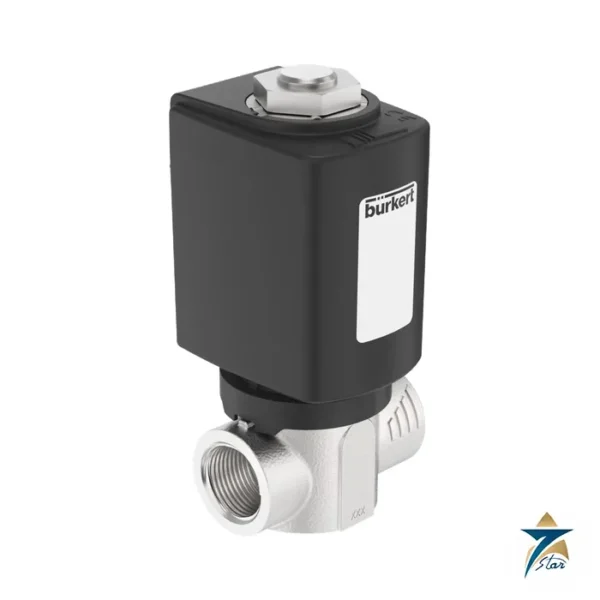
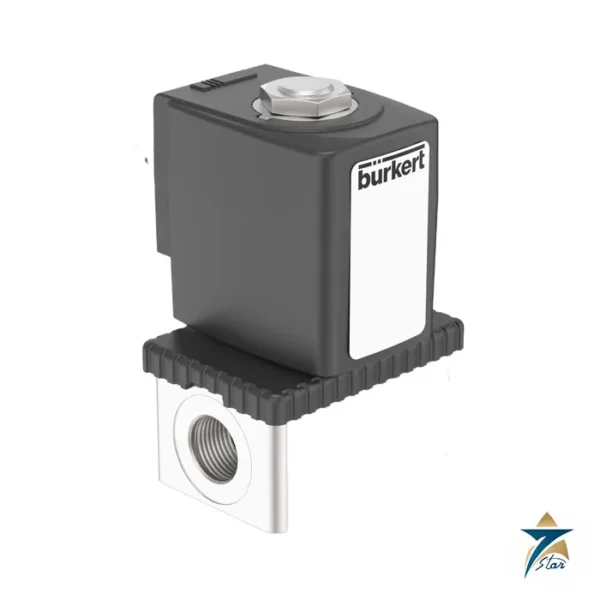
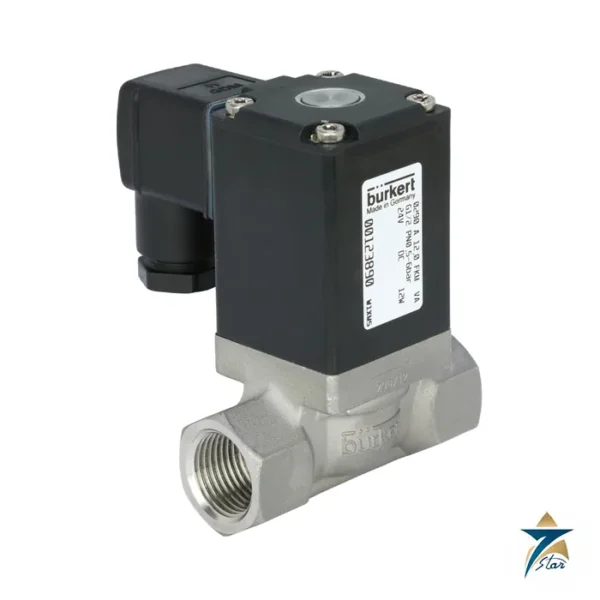
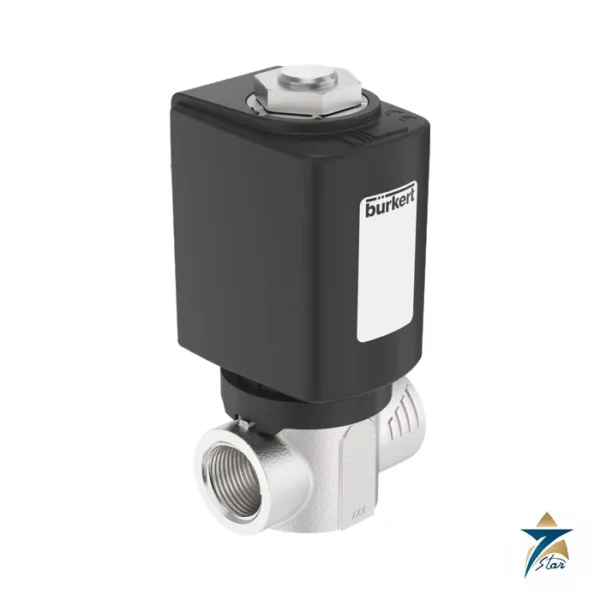
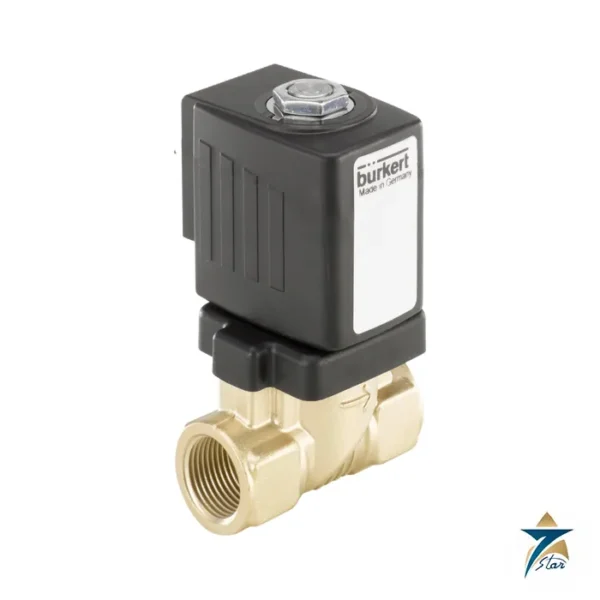
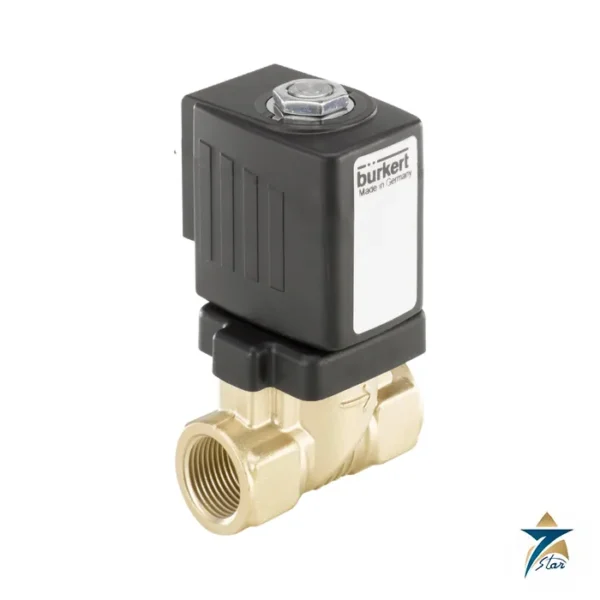
Two types are listed. Type 6026 is a direct-acting 2/2-way plunger solenoid valve, with a stainless steel bellows that separates the medium from the coil, and as a direct-acting valve it switches without needing a pressure difference. Type 8681 is the Bürkert control head that mounts on top of hygienic process valves to pilot the actuator and report valve position to the control system. Control heads of this kind are common in food, beverage and pharmaceutical plants in the GCC.
Ordering Bürkert valves: what we need
The type number alone is not enough. Send the identification number from the label, or else the type with orifice, port connection, body and seal material, coil voltage and frequency, circuit function and pressure range. For a Type 8681 control head add the communication variant and the make and model of the process valve it sits on.
Facts checked against Bürkert's published company history, October 2026.
Browse Bürkert products by category: Solenoid Valve, Control Valves.
FAQ
Questions about the Bürkert 134143 Type 6012 3/2-Way Plunger Solenoid
Answers from our engineering team on installation, compatibility and integration.
01What thread does the Bürkert 134143 have?
It has an M5 thread, the smallest port option in the Type 6012 ordering chart, with a brass body and FKM seal.
02What are the flow and pressure data of the Bürkert 134143?
The 1.2 mm orifice gives a Kv of 0.045 m3/h for water and a pressure range of 0 to 10 bar.
03Which voltages are listed for the same M5 valve?
134143 is 24 V DC, 134144 is 24 V 50 Hz, 134145 is 110 V 50 Hz and 134146 is 230 V 50 Hz.
04Is the Bürkert 134143 normally closed?
Yes, it is circuit function C, a direct-acting 3/2-way valve that is normally closed.
05Does the 134143 come with a cable plug?
No, it is supplied without a cable plug; a Type 2516 form C plug gives IP65 protection and is ordered separately.


Reviews
There are no reviews yet.