An all-metal variable area meter for high pressure and extreme temperature
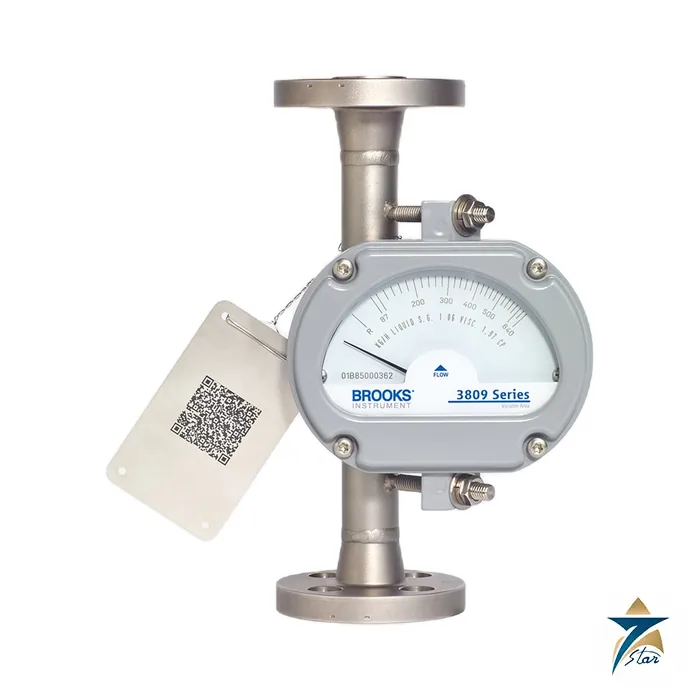
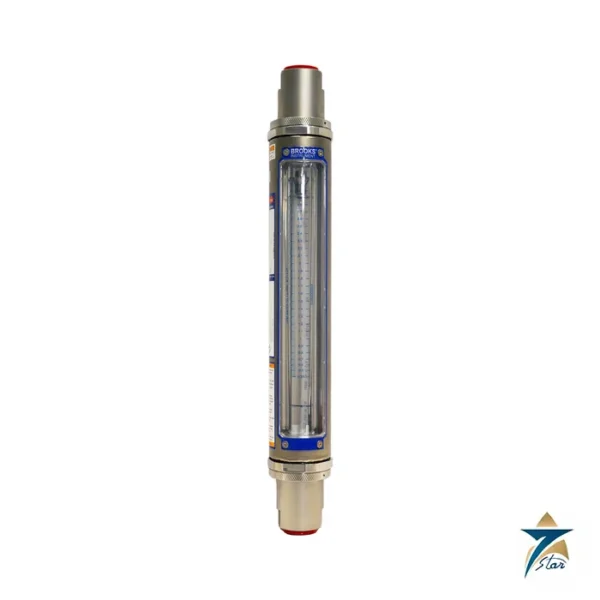
The MT3809G is the Brooks Instrument all-metal variable area flow meter that the datasheet calls the go-to meter for decades and a regular choice of engineering, procurement and construction companies. It measures gas, liquid and steam on the variable area principle and is aimed at services where high pressure or high temperature rules out glass-tube meters. The primary meter is available in 316/316L dual-certified stainless steel and with an ETFE liner, and Brooks lists premium materials such as Alloy 625, Hastelloy C and titanium for aggressive fluids.
The G revision brings a redesigned 316 stainless steel flameproof housing, a three-line LCD that can be adjusted with a magnet in hazardous areas, improved gasket sealing surfaces that meet ASME so special gaskets are not required, and weldneck flanges that allow full-penetration welds. The mechanical indicator needs no power, and the optional alarm design meets SIL 2.
Technical specifications
| Parameter |
Specification |
| Measuring principle |
Variable area, metal metering tube with magnetically coupled indicator |
| Fluids |
Gas, liquid and steam |
| Fluid temperature |
-198 to +420 C (-325 to +788 F) with the flameproof housing, transmitter and alarm options; maximum 300 C / 570 F on some constructions |
| Model 3809G |
Vertical inlet, vertical outlet; 2% of full scale or 2.5 VDI/VDE class |
| Model 3810G |
Vertical inlet, vertical outlet; 5% of full scale or 6 VDI/VDE class |
| Rangeability |
10:1 on most sizes; see capacity tables for each size |
| Wetted materials |
316/316L dual-certified stainless steel; ETFE/TFE lined 316/316L; Hastelloy C-276, Inconel 625 or titanium grade II options; Kalrez, Viton or Teflon O-rings |
| Process connections |
ASME B16.5 equivalent flanges 1/2 to 4 inch 150#, 1/2 to 2 inch 900/1500# and 2500# RTJ; DIN PN40; female NPT/Rc 1/2 to 2 inch; male NPT |
| Flange design |
Weldneck, designed to ASME B31.3, 3.2 to 6.3 micrometre Ra finish |
| Housing |
Cast 316L stainless steel or die-cast aluminium with epoxy paint; IP66/67 and NEMA 4X |
| Hazardous area |
Flameproof Ex db IIC T6 to T1 Gb (ATEX/IECEx), intrinsically safe and CSA options; IIC / Class I Div 1 |
| Transmitter |
4-20 mA with HART 7, or FOUNDATION Fieldbus; 21 to 30 Vdc, 2-wire loop; loop current 3.8 to 22 mA |
| Transmitter functions |
Two totalizers, scalable pulse output, high and low flow alarms, open-collector alarm output |
| Safety |
Mechanical and alarm design meets SIL 2 |
| Approvals listed |
CCOE, CE (EMC, RoHS, PED), CRN, ECAS, IP66/IP67, KOSHA, NAMUR, NEMA 4X, SIL 2 on alarms, TR-CU |
| Installation |
Vertical, within 5% of true vertical, bottom inlet, top outlet |
| Minimum pressure for gas |
7 psig / 0.48 bar; TFE-lined gas service above 29 psia / 2 bar(a) |
| Accessories |
Needle control valves, flow controllers, inductive alarms, high-temperature or stainless indicator housings |
How the model code works
The first positions define the base model (3809 or 3810) and the revision G. Position VI chooses material and certification: 316L dual certified, with or without a 3.1 material certificate, a Code 5 certificate for pressure-bound material from Western Europe, Japan, Canada or the USA, a CRN version, an ETFE/TFE lined body, titanium float, or Hastelloy C-276, Inconel 625 or titanium bodies. Position VII sets the construction: raised-face flange in standard, oversized or two to four times standard connection size, or threaded female or male, including a 2500 lb threaded female design. Meter size and connection size, then the electronics and housing codes, complete the order number.
What to confirm before ordering
Send the fluid with density or molecular weight and viscosity, minimum, normal and maximum flow, operating pressure and temperature, connection size and rating, indicator type (mechanical, HART or Fieldbus), alarm requirements and the area classification. The datasheet capacity tables list the flow of air and water by meter size and pressure drop, and the supplied meter should be sized to the actual fluid. Flange and temperature limits for the chosen construction should be read from the pressure and temperature tables in the datasheet.
How the Brooks Instrument MT3809G works
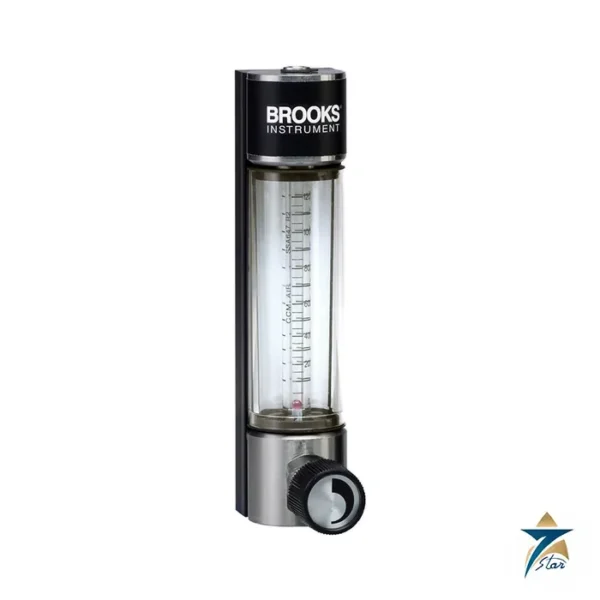
The fluid flows up through a metal tube and lifts a float. The float rises until the flow area around it passes the flow. A magnet in the float drives an indicator outside the tube, so the reading follows the float height.
Where the MT3809G is used
- High pressure gas lines
- Steam lines
- Hot liquid lines
- Aggressive fluids
- Engineering and construction projects
Selection checklist for the MT3809G
- Fluid type
- Flow range
- Process temperature
- Process pressure
- Wetted materials
- Process connection
- Indicator or transmitter
- Alarm need
Installation, commissioning and maintenance notes for the MT3809G
Mount the meter vertically with the flow going up. Fit the flanges and check the gasket faces. Check the indicator and the float at regular intervals.
Requesting a quotation for the Brooks Instrument MT3809G
Please send the fluid, the flow range, the pressure and the temperature. Seven Star LLC serves industrial customers in Oman and the GCC and replies with a quotation based on the information provided.
MT3809G meter type
It is an all-metal variable area flow meter.
MT3809G maker
It is made by Brooks Instrument.
MT3809G fluids
It measures gas, liquid and steam.
MT3809G indicator
The mechanical indicator needs no power.
MT3809G magnetic coupling
The indicator is magnetically coupled to the float.
MT3809G temperature range
Fluid temperature runs from minus 198 to plus 420 degrees C.
MT3809G housing
The G revision has a redesigned 316 stainless steel housing.
MT3809G display
A three-line LCD is available.
MT3809G magnet adjustment
The LCD can be adjusted with a magnet.
MT3809G gasket surfaces
The gasket sealing surfaces are improved so special gaskets are not required.
MT3809G flanges
Weldneck flanges allow full-penetration welds.
MT3809G model 3810G
The 3810G is the companion model with vertical inlet and outlet.
MT3809G rangeability
Rangeability is 10:1 on most sizes.
MT3809G body material
The primary meter is 316/316L stainless steel.
MT3809G lined option
An ETFE lined version is available.
MT3809G premium materials
Alloy 625, Hastelloy C and titanium are available.
MT3809G O-rings
O-rings can be Kalrez, Viton or Teflon.
MT3809G flange sizes
Flange sizes run from 1/2 to 4 inch.
MT3809G threaded connections
Female NPT connections run from 1/2 to 2 inch.
MT3809G transmitter
The transmitter output is 4-20 mA with HART 7.
MT3809G alarm
An optional alarm is available.
Flow meter records for the MT3809G
Record the float position, the fluid and the date of each inspection.
Choosing the right MT3809G build
Choose the materials and connections from the fluid, the pressure and the temperature.
Documents and quotation
The manufacturer datasheet (25 pages) is attached to this page as a download. For a quotation, send the full model code and the process data to Seven Star LLC in Muscat; browse more instruments in the Flowmeters category. We supply this item as an independent supplier, so please confirm availability and delivery with us.











Reviews
There are no reviews yet.