An industrial rotameter built for viewing and for retrofits
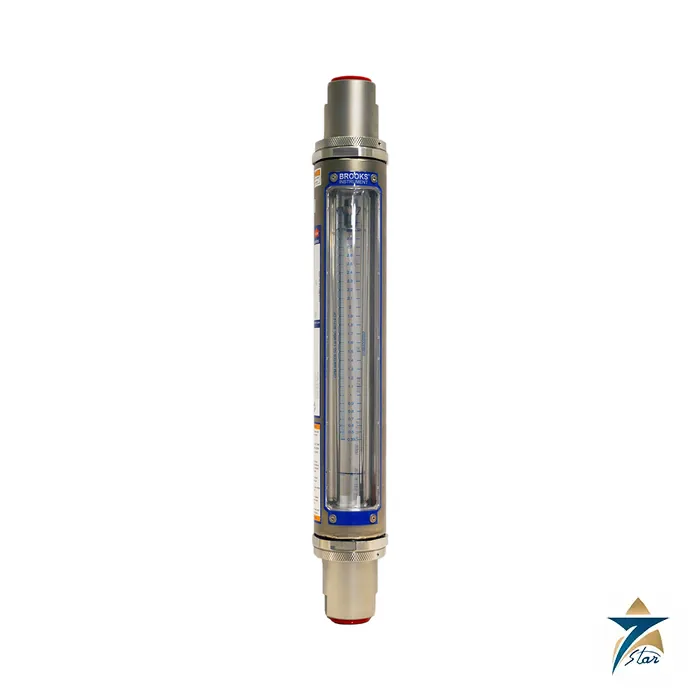
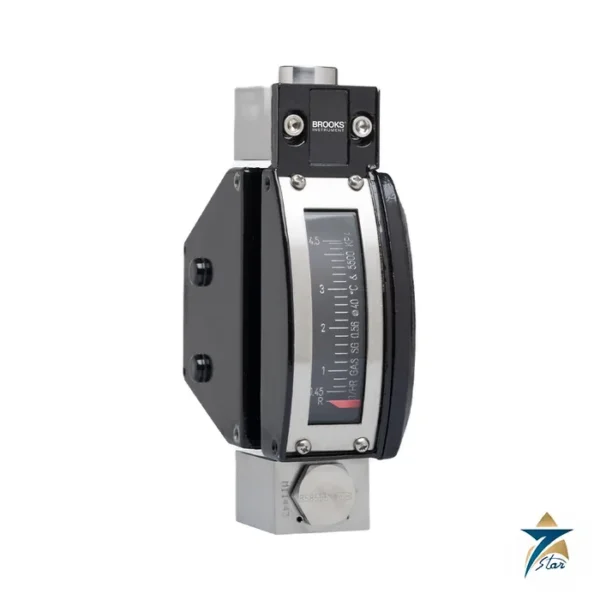
The GT1600 Series is a family of industrial glass tube variable area flow meters (rotameters) from Brooks Instrument for liquids and gases where seeing the flow matters. The datasheet puts typical accuracy between 1 and 10 percent of full scale depending on the model, and names purge service, seal oil systems, bearing lubrication and cooling water indication as typical uses. The design is described as rugged, with 316/316L dual-certified stainless steel process fittings, a 316 stainless steel frame, a polycarbonate safety shield and a 180 degree viewing window.
The GT1600 can be configured to retrofit existing Brooks GT1000, GT1300 and Full-View 1100 series meters (models 1110, 1114, 1140 and 1144). The frame rotates vertically through 360 degrees, and the tube and float can be cleaned or replaced without removing the meter from the pipework. Optional high and low flow alarms can be fitted at order or in the field.
Technical specifications
| Parameter |
Specification |
| Principle |
Glass tube variable area flow meter (rotameter), no power needed for the indicator |
| Metering tube |
Borosilicate glass; tube sizes 02, 06, 07, 08, 09, 10 |
| Process fittings |
316/316L dual-certified stainless steel |
| Floats |
Sizes 2 and 6: Carboloy or 316/316L; sizes 7 to 10: 316/316L |
| Float stops |
Teflon |
| O-rings |
Viton, Buna-N, Kalrez, EPDM |
| Housing and hardware |
316 stainless steel; polycarbonate window and safety shield with UV inhibitor |
| Water range |
1.9 cc/min (0.11 l/h) up to 21 gpm (4800 l/h) depending on tube and float |
| Air range |
0.11 SLPM up to 86.1 SCFM depending on tube and float |
| Accuracy |
Standard +/-10%, +/-5% or +/-2% of full scale (class 2.5 VDI/VDE); optional +/-1% (class 1.6); 10% and 5% only on R-8M-75-1 and R-10M-75-3 tubes |
| Repeatability |
0.5% of full scale or better |
| Scale |
Transparent adjustable scale, 75, 127 or 250 mm nominal length; direct units, millimetre or percent of maximum flow |
| Pressure, threaded |
500 psi (02), 450 (06), 300 (07), 250 (08), 200 (09), 175 (10); 02 and 06 limited to 300 psi with alarm |
| Pressure, ANSI 150 RF flange |
240 psi (sizes 02 to 08), 200 psi (09), 175 psi (10) |
| Fluid temperature |
33 to 250 F (1 to 121 C) |
| Ambient temperature |
-4 to 125 F (-20 to 52 C) |
| Connections |
NPT female or ANSI 150# RF flange; horizontal and vertical in and out in four combinations |
| Alarms |
Inductive sensor high/low (tube 02 and 06); reed switch high/low (tube 07 to 10) |
| Hazardous area |
Zone 1/Zone 2 ATEX/IECEx Ex m (no barrier); Div 1 UL intrinsically safe |
| Mounting |
In-line, panel or wall mount; optional integral needle valve |
| Certifications |
International calibration certificate; material certification to DIN 3.1; declaration of compliance 2.1 oxygen service |
Choosing the tube, float and fitting
The tube code defines the flow range. Low-flow 127 mm tubes in sizes 02 and 06 use inductive-alarm hardware, while high-flow tubes in sizes 07 to 10 come in 75, 127 and 250 mm scale lengths with reed-switch alarms. The datasheet capacity tables give water in gph or cc/min and l/h and air in SCFM and normal cubic metres per hour with pressure drops, and flag codes that need 30 psig back pressure to reach the higher listed air flows.
The ordering code selects the fitting material (316 stainless steel, or with CRN), connection size from 1/4 inch low flow to 1 inch high flow, connection type including GT1000 and GT130x retrofit and Full-View 11xx retrofit versions, and the O-ring material.
What to confirm before ordering
The datasheet carries a warning that glass tubes can break and must not be used with toxic fluids or fluids that attack glass, such as water above 60 C, steam, alkalis, fluorine or hydrofluoric acid. Please send the fluid, density, viscosity, flow range, pressure and temperature, connection, whether the meter replaces a GT1000, GT1300 or Full-View unit, and any alarm or valve need so that the tube and float can be matched correctly.
Installing the GT1600 in the pipework
A variable area meter reads correctly only when the metering tube stands vertical with flow entering from the bottom, so check the alignment with a level after mounting. Support the adjacent piping independently so that pipe weight, thermal movement or vibration is not carried by the meter frame or the glass tube. Flush the line before the meter is installed, because scale, weld spatter or debris can jam the float or scratch the tube. Leave enough free space in front of the meter for reading the scale and around it for removing the tube and float later.
Open isolation valves slowly when the line is first pressurised. A sudden surge of liquid or gas can drive the float hard against its stop, and liquid hammer is something glass tube meters should be protected from. On gas service, the reading depends on the pressure and temperature at the meter, so note where the stated calibration conditions apply.
Commissioning and reading the scale
Confirm that the scale units and range match the duty in the process documents, and compare the first readings with the expected flow. If high or low alarms are fitted, set them at agreed points and test that the signal reaches the control system. Record the fluid, scale range and alarm settings on a tag or in the maintenance system so later checks use the same reference.
Operating conditions in Oman and the Gulf
The ambient limit of 52 °C can be reached in outdoor locations across Oman during summer, especially where meters are exposed to direct sun on skids or in unventilated shelters. Shade the installation or place it indoors where possible, even though the polycarbonate window and shield include a UV inhibitor. Wind-blown dust can coat the shield and make the float difficult to read, and coastal humidity can cause condensation on the outside of the tube when the process fluid is cooler than the air.
Routine care
Clean the shield and window with a mild cleaning agent compatible with polycarbonate, inspect the tube for deposits that hide the float, and check connections for leaks. Use the in-line removal feature to clean the tube and float during planned maintenance, and replace O-rings with the compound originally selected for the fluid.
Documents and quotation
The manufacturer datasheet (11 pages) is attached to this page as a download. For a quotation, send the full model code and the process data to Seven Star LLC in Muscat; browse more instruments in the Flowmeters category. We supply this item as an independent supplier, so please confirm availability and delivery with us.







Reviews
There are no reviews yet.