KTX contrast sensor with long-side light emission
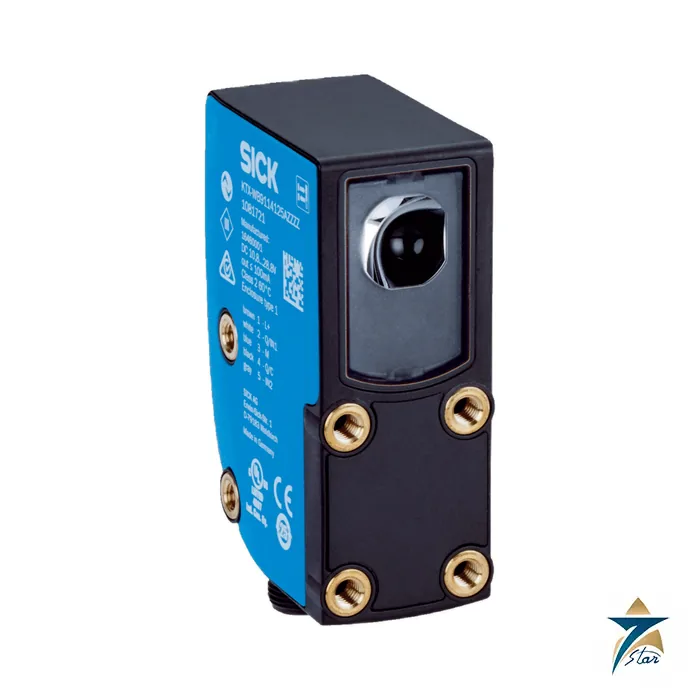
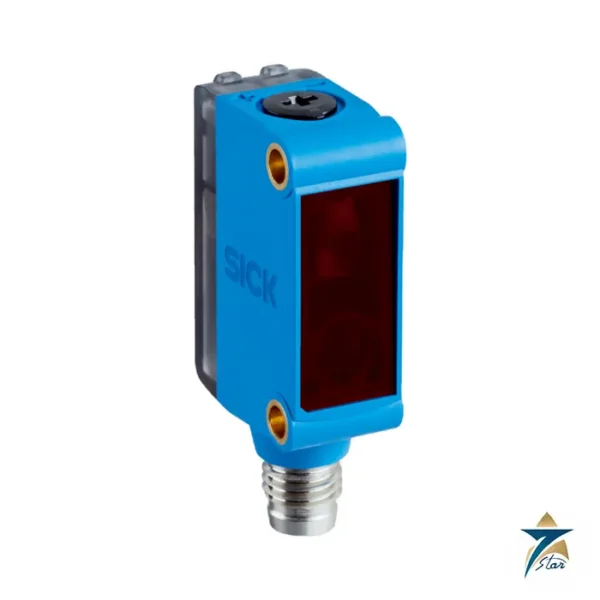
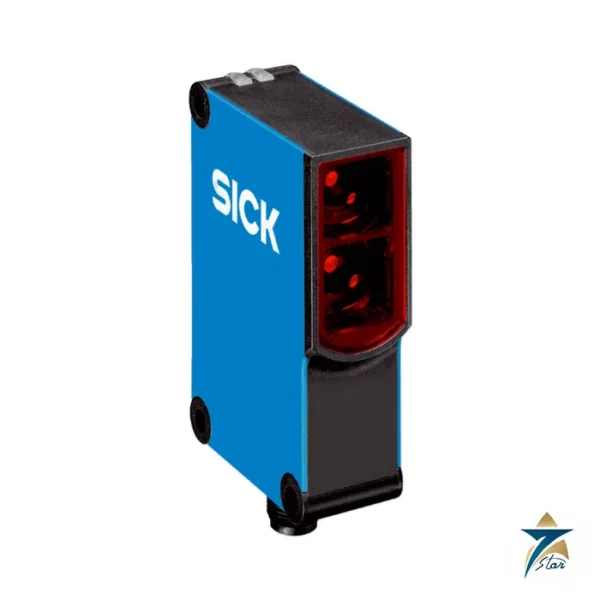
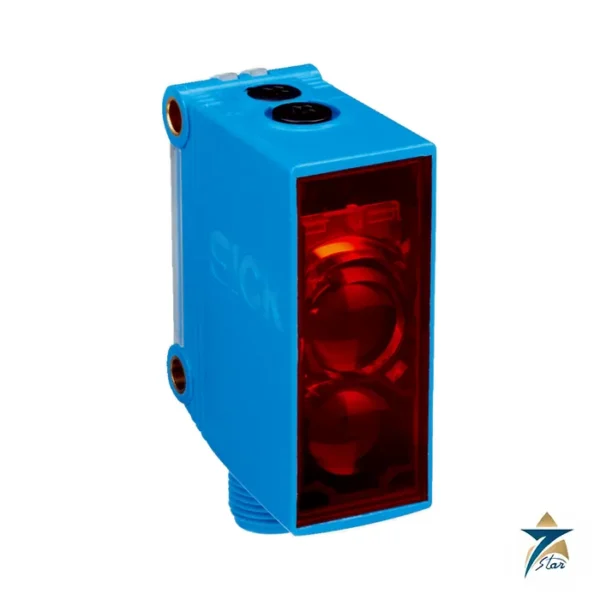
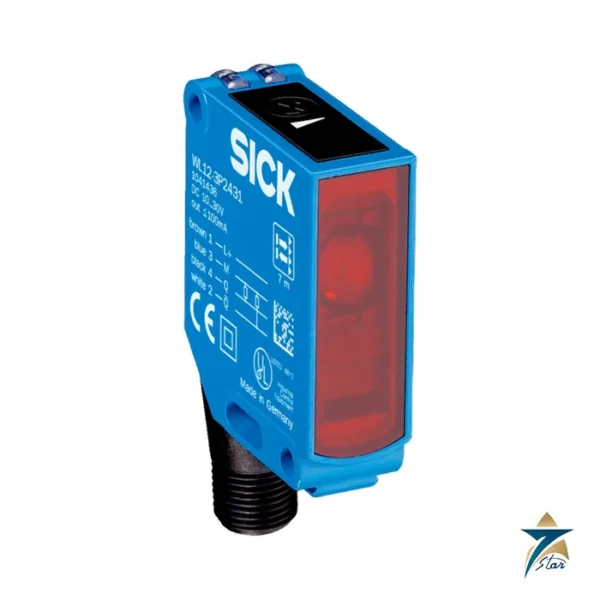
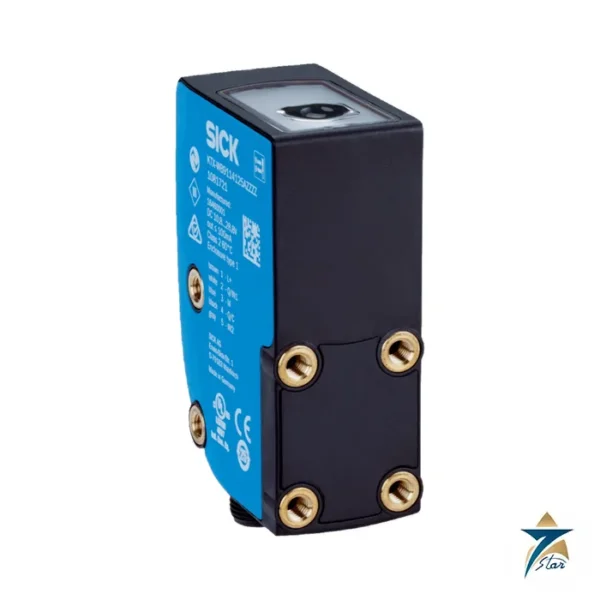
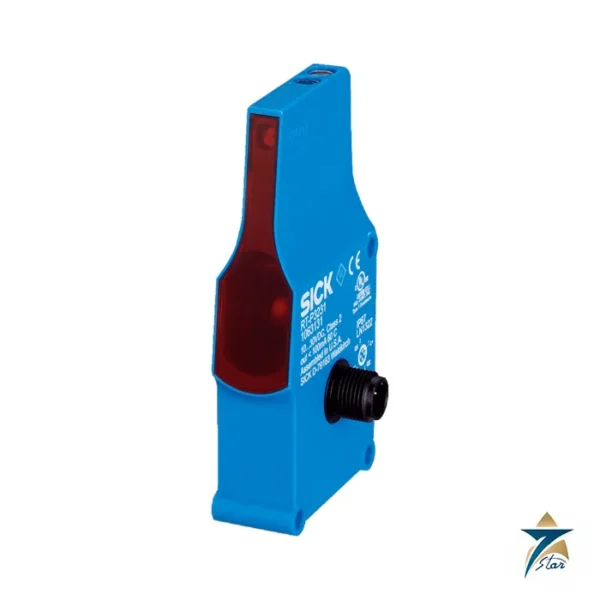
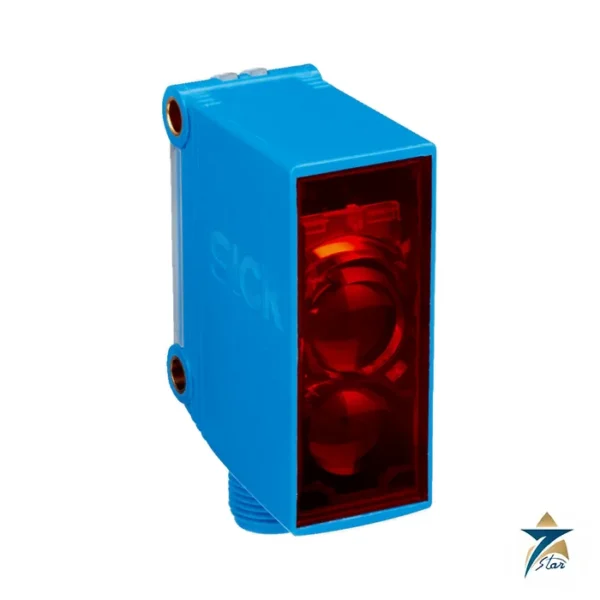
The SICK KTX-WP91141252ZZZZ (part no. 1078097) is the long-side light emission version of the KTX contrast sensor. It carries the same TwinEye RGB optics and the same electronics as the short-side type, with a sensing distance of up to 13 mm and a vertical light spot of 0.9 mm by 3.8 mm, but the beam exits through the long face of the 30 mm by 53 mm by 78.5 mm housing.
That orientation suits installations where the sensor is mounted parallel to a web or conveyor and looks sideways at the mark.
Technical specifications
| Parameter |
Specification |
| Manufacturer |
SICK |
| Type / family |
KTX-WP91141252ZZZZ / KTX |
| Part no. |
1078097 |
| Device type / housing |
Standard / large |
| Dimensions (W x H x D) |
30 mm x 53 mm x 78.5 mm |
| Light source |
LED, RGB, TwinEye technology |
| Wavelengths |
470 nm, 525 nm, 625 nm |
| Light emission |
Long side of housing |
| Light spot size / direction |
0.9 mm x 3.8 mm / vertical (relative to long housing side) |
| Sensing distance |
up to 13 mm (tolerance plus or minus 5 mm) |
| Teach-in modes |
1-point, 2-point, teach-in dynamic, auto mode |
| Delivery status |
2-point teach-in |
| Output function / delay |
Light/dark switching; delay time adjustable |
| Supply voltage |
10.8 V DC … 28.8 V DC |
| Current consumption |
below 100 mA |
| Switching frequency / response time / jitter |
50 kHz / 10 microseconds / 5 microseconds |
| Switching output |
PNP (HIGH = VS minus 3 V / LOW = 0 V), 100 mA |
| Inputs |
Teach (ET), blanking (AT), fine/coarse (F/C), light/dark (L/D) |
| Retention time (ET) |
25 ms, non-volatile memory |
| Protection class |
III |
| Connection |
Plug, M12, 5-pin |
| Housing / optics |
VISTAL / COP |
| Weight |
94 g |
| Enclosure rating |
IP67 |
| Ambient temperature |
-20 °C … +60 °C operation; -25 °C … +75 °C storage |
| MTTFD |
291 years |
Choosing the emission side
With long-side emission the sensor is mounted with its broad side towards the product, so the connector points away from the line and the cable can follow a rail. The light spot stays vertical relative to the long side, and the sensing distance is measured with respect to that face.
Everything else follows the KTX data sheet: teach modes, remote teach input, blanking input for ignoring known marks, a fine/coarse input and light/dark selection. The data sheet lists a non-volatile memory for the teach input, so taught values are retained after a power cycle.
Ordering note
Order KTX-WP91141252ZZZZ, part no. 1078097, when you need long-side emission. The short-side twin is KTX-WP91142252ZZZZ (1078066). Confirm the mounting orientation in your drawing before you order.
Setting up the sensor on the line
Selection starts with the mark and the background. Note the colour of the print mark, the colour of the substrate, and whether the material is glossy, since shiny films can reflect light straight back and confuse a contrast reading. The RGB light source lets the sensor choose the colour with the best contrast during teach-in, but a clear difference between mark and background still gives the most stable result. Then measure the actual gap available between the long face of the housing and the material, and keep it inside the sensing distance and its tolerance.
- Mount the sensor so the light spot crosses the mark at its full length; the vertical spot orientation should line up with the direction of the printed mark.
- Tilt the sensor slightly away from perpendicular on glossy material to reduce direct reflection.
- Fix the bracket rigidly; vibration on high-speed lines changes the distance to the web and shifts the switching point.
Commissioning and teach-in
The sensor is delivered in 2-point teach-in mode. Present the background, teach it, then present the mark and teach that, so the switching threshold is set between the two. On a moving web where stopping the line is inconvenient, dynamic teach-in lets the sensor learn while material passes. Use the light/dark input to match the logic expected by the PLC or registration controller, and the fine/coarse input to trade sensitivity against tolerance to small variations in print. If the process has known marks that must be ignored, the blanking input can be wired to the control system. Check the switching output under production speed, not just at slow jog.
Maintenance and troubleshooting
Missed or extra switching on a contrast sensor is most often caused by dirt on the optics, a change of material batch, or the sensor moving on its bracket. Clean the front window with a soft cloth and a mild cleaner, check the mounting distance, and repeat the teach-in after any change of substrate or ink. If the output does not switch at all, measure the supply at the M12 connector and check the cordset for damage before replacing the sensor. Because taught values are retained in memory, keep a short note of the teach mode and settings used on each line so a replacement can be set up the same way.
Using the KTX in Oman and GCC plants
The IP67 housing and wide operating temperature range suit most packaging and printing halls in the region, but in summer, sensors mounted near heat tunnels, sealing jaws or roof-level conveyors can still run hot, so avoid mounting them directly in hot air streams. Dust and fibres from cartons and film settle on the optics, so include window cleaning in the shift checks. In humid coastal factories, condensation can form on the front window when cold product or chilled air meets warm, moist air; locating the sensor where airflow keeps the window clear helps keep switching reliable. Use an M12 cordset with a jacket suitable for washdown or oils if the area is cleaned with chemicals.
Documents and quotation
Download the manufacturer data sheet for KTX-WP91141252ZZZZ (part no. 1078097) from this page; it is the source of every specification listed here. To request a price, send the type code and part number to Seven Star LLC, an independent supplier based in Muscat, together with the quantity and the site where the goods are needed. Please confirm before ordering that the version, connector and accessories (a mounting bracket or matching M12 cordset) match your drawings, because published data may change without notice. Related items can be found in sensors and transmitters and in the SICK WTB4-3 miniature photoelectric sensor.
Before ordering, compare the type code and part number on your existing unit or drawing with the details on this page, and confirm supply voltage, output type, connector and mounting against the data sheet. Send the nameplate details with your enquiry and we will check them against the manufacturer data before quoting.







Reviews
There are no reviews yet.